Sydney Fish Market in Pyrmont is best visited on a quiet weekday morning, ideally before 9am, allowing two to three hours to browse stalls and enjoy oysters, sashimi and prawns waterside for roughly $30-40 per person. It's reached via the L2 light rail from Central Station, a direct eight-to-ten-minute ride with level boarding. Mobility is moderate — the main floor is flat but can get congested, with some uneven paving outdoors.
Why a Sydney Fish Market morning works so well for a group of friends
There is a particular pleasure in arriving somewhere with good appetite, good company, and no fixed agenda beyond eating well. Sydney Fish Market is built for exactly that kind of morning. It is not a restaurant, so nobody is rushing you through a booking window. You choose your own pace, order what appeals, and find a spot — ideally outside, facing the water — to settle in properly.
For a group of women who have been planning this trip from regional Victoria for a few months, the market offers something that feels genuinely local rather than tourist-arranged. Sydneysiders come here on weekend mornings for their weekly fish shop; you will sit alongside people who have been doing this for decades. That ordinariness is part of the appeal.
The market operates across several retail stalls and fish shops under one roof, each with its own display, pricing, and specialty. You are not locked into one operator. You can pick up oysters from one counter, a sashimi tray from another, some cooked prawns from a third, and bring it all to a shared table. It is informal, sociable, and genuinely good value if you keep a clear head about what you are ordering.
What time should you arrive — and does it matter on a weekday?
Arriving early — by 8am or shortly after — gives you the best access to the full catch before popular lines sell out, and it means you are eating before the mid-morning crowd builds. The market is open early, and the traders are set up and ready well before most visitors arrive. On weekday mornings, the atmosphere is noticeably calmer than weekends: fewer families with prams, fewer large tour groups, and more room at the outdoor tables.
A Tuesday or Wednesday morning is often the quietest window. Friday mornings pick up considerably as Sydneysiders stock up for the weekend, and Saturday can feel genuinely hectic — which is not necessarily unpleasant, but it does mean longer queues at the popular counters and more competition for waterside seating.
For a group that wants to take its time — reading the displays, asking questions, sitting down without rushing — a weekday morning is the clear recommendation. You can arrive, get oriented, order in stages, and spend two to three hours without feeling crowded out. Confirm current trading hours directly with the market before you visit, as hours can shift seasonally and during the transition to the new building.
Getting there: the light rail from Central Station
The L2 Dulwich Hill light rail line runs from Central Station to a stop called Fish Market, which is almost directly outside the market entrance on Pyrmont Bridge Road. It is one of the more straightforward public transport journeys in Sydney: one line, no transfers, and a ride of roughly eight to ten minutes from Central. If your group is arriving by train from interstate or from the airport, Central Station is your interchange point.
You will need an Opal card to use the light rail — the same card works across trains, buses, and ferries in Sydney. Cards can be loaded at convenience stores, newsagents, and at some station machines. Concession Opal cards are available for Australian seniors who qualify; check Transport NSW's website for eligibility details, as the criteria differ from Victoria's Myki concession arrangements.
The light rail platform at Central is signposted, though the station is a large and sometimes confusing one. Allow extra time if your group is not familiar with it. The light rail carriages have level boarding and good handrails, making them reasonably accessible. The Fish Market stop itself is at street level, with a short flat walk to the market entrance. Confirm current transport arrangements with Transport NSW, particularly if the market has moved to the new Blackwattle Bay site, as stop locations may change.
What to order — and what a generous morning might cost
Oysters are the obvious starting point. Sydney rock oysters in particular are something the east coast does exceptionally well, and eating them at the source, freshly shucked, at a waterfront table with a strong flat white is one of those simple pleasures that does not need any embellishment. A half-dozen is a reasonable opening move; a dozen between two people who are planning to order more is sensible pacing. Indicatively, oysters have been priced at around $3 to $4 each at the market counters, though you should confirm current pricing on the day.
Sashimi trays — typically salmon, kingfish, or tuna — are another strong choice. They are portioned generously at the market, come with soy and wasabi, and travel well to an outdoor table. Cooked school prawns, a small container of seafood salad, or a piece of grilled fish from one of the cooked-food counters round out a proper spread. For a group of four sharing across a few orders, a total spend of roughly $30 to $40 per person covers a genuinely satisfying meal with room for a coffee. These are indicative figures only — confirm current prices directly with the traders.
There are coffee and drinks options within the market precinct. If your group wants to sit down with something hot while you plan your orders, that is easy to arrange before the main food run. Bringing a small soft cooler bag is worth considering if anyone wants to take fresh fish home to Victoria — though check airline or transport requirements if you are flying back.
Accessibility and pacing: what to know before you go
The existing market building in Pyrmont has some genuine accessibility challenges that are worth knowing about honestly. The main floor is flat, but it can become very congested on busy mornings, and the narrow corridors between stalls make it difficult for anyone using a walking frame or wheelchair to move freely when crowds build. The outdoor seating areas are generally more manageable, and arriving early significantly reduces these congestion issues.
The new Blackwattle Bay building, when fully operational, is expected to offer wider circulation paths and improved facilities — but the transition timeline has shifted more than once, so it is important to check the current status on the official Sydney Fish Market website before your visit. Do not assume the new building is open; equally, do not assume the old one is still the operating location.
For a group with mixed mobility — say, one member who uses a walking stick and another who tires on long standing queues — a practical approach is to designate one or two people to do the ordering while others secure a table, preferably one of the outdoor spots near the water's edge. Flat shoes are a practical choice; the wharf area has some uneven paving in sections. Seating at outdoor tables is first-come, first-served, so arriving before 9am gives you the best chance of a comfortable spot with a view.
The seagulls, the atmosphere, and what makes it memorable
It would be dishonest not to mention the seagulls. They are numerous, confident, and entirely unbothered by human presence. They will not steal food from your hand if you are paying attention, but a tray of prawns left unguarded on a table while the group is distracted is a risk you take at your own peril. Keep a hand over your plate, particularly at the outdoor tables, and treat the whole situation as part of the experience rather than an inconvenience.
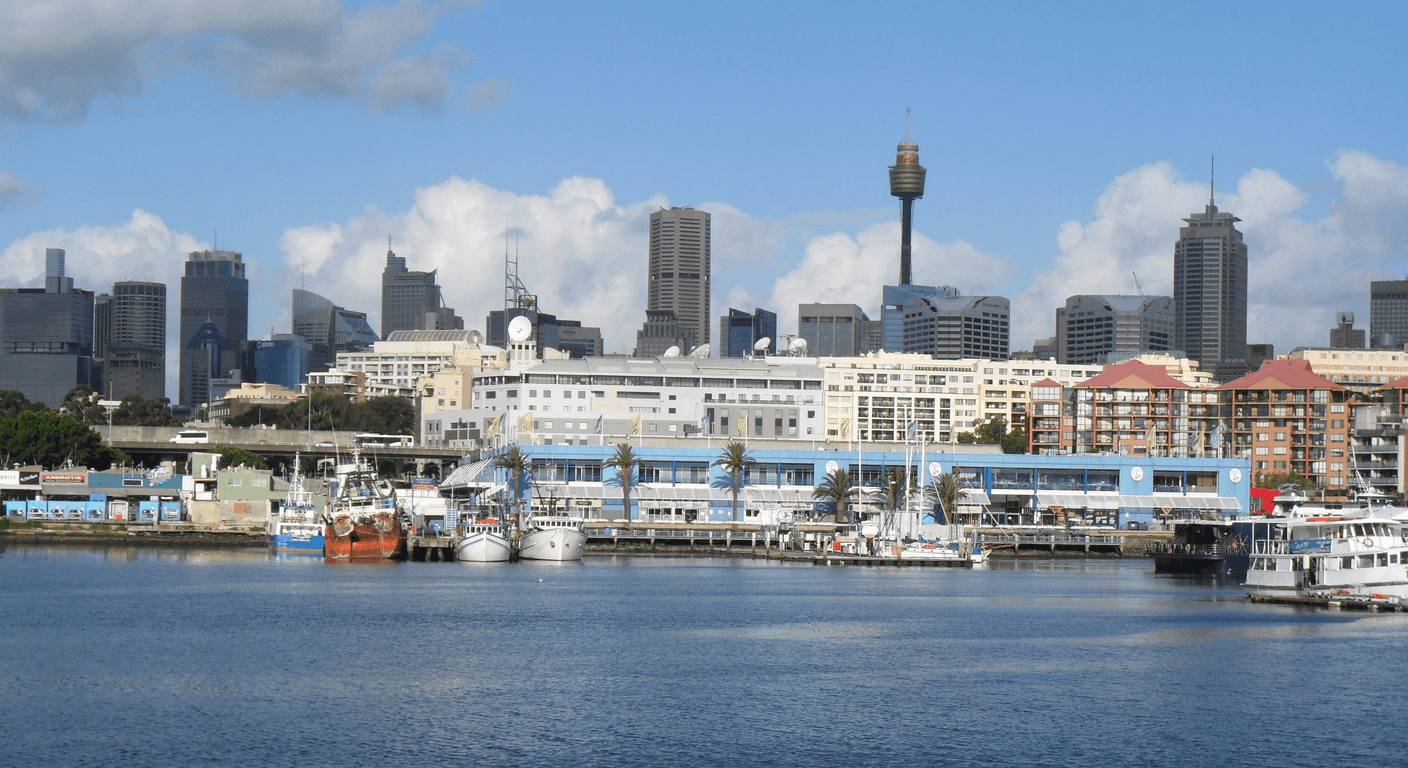
What the market does well, beyond the food itself, is atmosphere that feels earned rather than manufactured. The smell of the sea, the sound of the fish auction in the early hours (audible but not intrusive by the time most visitors arrive), the sight of working boats in the harbour, and the mix of chefs, home cooks, and tourists all moving through the same space — it adds up to something that feels like real Sydney rather than a curated version of it.
For a group of women who have made the trip from regional Victoria specifically to do this, the morning tends to linger in conversation for a while afterwards. Not because it was extravagant, but because it was well-chosen. Good seafood, good company, a manageable price, and a harbour view. That is a morning done properly.
The new building: what is actually known, and what to confirm
Sydney Fish Market's new home at Blackwattle Bay has been in development for several years and has attracted considerable public interest. The new building is significantly larger than the existing Pyrmont facility, with a design intended to improve the visitor experience, expand retail and dining space, and provide better accessibility throughout. As of 2025-2026, the project is progressing, but the transition from the old site is a process rather than a single event.
The honest advice for anyone planning a visit is to check the official Sydney Fish Market website — sydneyfishmarket.com.au — directly before your trip. Confirm which site is currently operating, what the hours are, and whether any services have shifted. Do not rely on older travel guides or social media posts that may reflect a previous state of the market.
If the new building is operating by the time you visit, the light rail access arrangements may also have changed. Transport NSW's trip planner at transportnsw.info is the reliable source for current stop locations and journey planning. Building a ten-minute buffer into your travel time is always sensible, particularly if the group is navigating an unfamiliar part of Sydney.
Quick planning guide
| Ideal pace | Slow and unhurried, ordering in stages across multiple stalls |
|---|---|
| Best months | No fixed season — weekday mornings, especially Tuesday or Wednesday, are consistently quieter |
| Suggested stay | Two to three hours |
| Mobility level | Moderate — flat floors but narrow, congestible corridors and some uneven outdoor paving |
| Cost level | Budget-friendly, roughly $30-40 per person for a generous shared spread |
| Comfort level | Casual and informal, self-serve style with shared outdoor seating |
| Best for | Small groups of friends who enjoy relaxed, no-fuss seafood dining |
| Main planning consideration | Confirm which site is currently operating and current trading hours, given the ongoing transition to the new Blackwattle Bay building |
Key takeaways
- A weekday morning — Tuesday or Wednesday before 9am — gives you the best access to the catch and the quietest atmosphere at Sydney Fish Market.
- The L2 light rail from Central Station to the Fish Market stop is the most direct and straightforward way to arrive, with level boarding and no transfers required.
- A generous seafood spread of oysters, sashimi, and prawns comes in at roughly $30 to $40 per person — confirm current prices directly with market traders.
- Sydney Fish Market is transitioning to a new Blackwattle Bay building; always check the official site before visiting to confirm which location is operating.
- The existing market has some accessibility limitations in peak hours — arriving early and designating table-holders while others queue is a practical approach for mixed-mobility groups.
- Opal card concessions for Australian seniors differ from Victoria's Myki arrangements — check Transport NSW's eligibility criteria before your visit.
Recommended partners and links
Indicative prices only — always confirm with the operator before booking.
Frequently asked questions
How do you get to Sydney Fish Market by public transport from Central Station?
Take the L2 Dulwich Hill light rail from Central Station to the Fish Market stop, which is a short flat walk from the market entrance. The journey takes roughly eight to ten minutes and requires an Opal card. Confirm current stop locations with Transport NSW if the market has moved to its new Blackwattle Bay site, as arrangements may have changed.
How much does a seafood meal at Sydney Fish Market cost?
A generous morning of oysters, a sashimi tray, cooked prawns, and coffee comes in at roughly $30 to $40 per person based on indicative pricing — but costs vary between traders and change over time. Always confirm current pricing directly with the market stalls on the day.
Is Sydney Fish Market accessible for older visitors or those with limited mobility?
The market is flat and reachable by level-boarding light rail, but the existing Pyrmont building can become congested in its internal corridors on busy mornings. Arriving early — before 9am on a weekday — reduces crowding significantly. The new Blackwattle Bay building is designed with wider circulation paths. Check the official site for current conditions and confirm which building is operating before your visit.
What is the best time of the week to visit Sydney Fish Market to avoid crowds?
Tuesday and Wednesday mornings are generally the quietest. Friday mornings are busier as locals stock up for the weekend, and Saturdays can be very crowded. For a group that wants to take its time and secure outdoor seating, a mid-week arrival before 9am is the practical recommendation.
Has Sydney Fish Market moved to its new building yet?
As of 2025-2026, Sydney Fish Market is in transition to a new facility at Blackwattle Bay. The timeline has shifted previously, so the only reliable way to confirm which site is currently operating is to check the official Sydney Fish Market website at sydneyfishmarket.com.au before your visit.