Tenterfield rewards a slow, history-focused day (or better, an overnight stay), pairing Peter Allen's Saddler's Shop with the School of Arts, where Henry Parkes gave his 1889 federation speech. Spring or autumn offer the most comfortable conditions on this 895-metre-high plateau, where winters turn genuinely cold. The heritage precinct is flat and easy to walk, though Bald Rock's summit scramble is harder. From Melbourne it's a two-day drive or a Gold Coast flight plus a 90-minute hire-car trip.
Getting to Tenterfield from Victoria — the honest road reality
From Melbourne, Tenterfield sits around 1,200 kilometres north — a serious drive that most travellers sensibly break into two days, overnighting somewhere like Albury, Gundagai or Armidale on the New England Highway. The highway is well-maintained and genuinely scenic once you climb onto the New England Plateau, but the distances are not to be underestimated, particularly if you prefer not to push past four or five hours of driving in a day.
A practical alternative for couples flying from Melbourne is to take a direct flight to Gold Coast (roughly two hours), collect a hire car, and drive the 90-odd kilometres south-west through the Border Ranges to Tenterfield. That route takes around 90 minutes and turns the whole thing into a manageable overnight trip without the long haul. Confirm current hire car availability and road conditions via the Queensland and NSW road authorities before you go.
Tenterfield itself has no train service — the old line closed decades ago — so a car is essential once you arrive. The good news is that everything worth seeing in town is within easy walking distance of the main street, and Bald Rock National Park is a 30-minute drive north on sealed road.
The Saddler's Shop — more than a song lyric
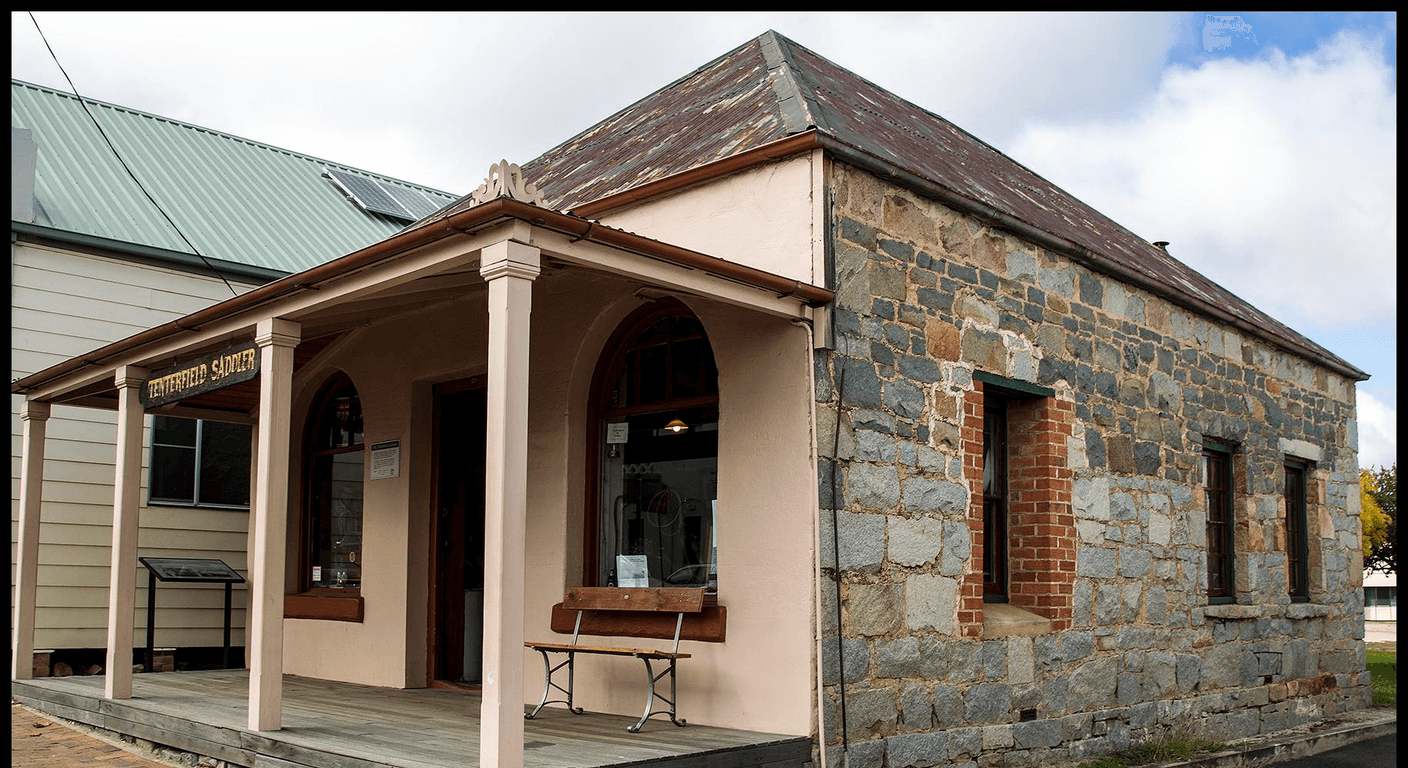
Peter Allen's 1971 song 'Tenterfield Saddler' turned a quiet craftsman's life into something approaching mythology. The shop at 122 High Street is real, and it's been operating as a working saddlery and museum since the 1970s. Gordon Parsons — Allen's maternal grandfather — hand-stitched leather here for decades, and the interior still carries the particular smell of worked hide and lanolin that no restoration can fake.
What strikes most visitors is how small and ordinary the space is. A single craftsman's bench, worn tools on the wall, the kind of room where a man spent his whole working life without any expectation of fame. The song transformed that ordinariness into elegy, and standing in the actual room gives the lyrics a weight they don't quite carry on a speaker. For anyone who grew up with Peter Allen's music — and for Greek-Australian families who found their own immigrant experience in his outsider's longing — this is a quietly affecting stop.
The saddlery is privately operated; opening hours can vary, particularly in the off-season or on public holidays. Ring ahead or check locally before making it the centrepiece of your day. Entry is typically modest or by donation — confirm on arrival.
The Federation Speech — where Australia was argued into existence
On 24 October 1889, Henry Parkes stood in the Tenterfield School of Arts and delivered the speech that is generally credited with setting the federation movement in motion. He was 74 years old, five times Premier of New South Wales, and he chose this small country town — rather than Sydney — to make the case for a united Australia. The choice of Tenterfield was deliberate: he was speaking to the interior, to the people who would have to believe in the idea before the politicians in the capitals would act on it.
The School of Arts building still stands on Rouse Street, a short walk from High Street. It now houses the Tenterfield School of Arts & Federation Museum, which tells the story of Parkes, the federation movement, and the town's role in Australian history. The museum is modest in scale — this is a country town, not Canberra — but the curatorship is careful and the interpretive panels are well written. Entry fees are modest, with concessions available; confirm current pricing before you visit as these can change.
There is something particularly resonant about visiting this site as a Greek-Australian. Parkes was arguing for a national identity at a moment when Australia was still a collection of competing colonies. The federation story is, at its core, a story about belonging — about what kind of country this would become and for whom. That question did not have a clean answer in 1889, and it still doesn't. The museum handles this with more nuance than you might expect.
Walking the main street — lunch, coffee and unhurried country service
High Street, Tenterfield, is the kind of main street that Australian country towns used to all have and many have lost: wide enough for a bullock team to turn around, lined with two-storey Victorian commercial buildings, and operating at a pace that rewards dawdling. The footpaths are flat and even, the distances short, and the cafes and heritage buildings cluster within a comfortable few hundred metres.
Lunch options are solid rather than fashionable, which is exactly what you want after a morning of history. Several cafes serve good pies, focaccias and home-baked slices; the coffee has improved markedly in recent years, as it has across regional NSW. Expect to pay roughly what you'd pay in a Melbourne suburb — Tenterfield is not bargain-basement country-town pricing, but it's fair. A relaxed lunch with coffee for two comes in at around $40–$55; confirm current prices locally.
The service in country towns like this has a particular quality that's worth noting: unhurried, genuinely friendly, and without the performative efficiency of city hospitality. Staff will tell you where to park, what's worth seeing, and whether the road to Bald Rock is in good shape. This is local knowledge freely given, and it's one of the underrated pleasures of travelling in regional Australia.
Bald Rock National Park — the view is the point
About 30 kilometres north of Tenterfield, just over the Queensland border, sits Bald Rock — a granite monolith that rises around 200 metres above the surrounding forest and claims to be the largest exposed granite rock in Australia. The national park around it is managed by NSW National Parks (the rock itself straddles the border; confirm current jurisdiction and access arrangements before visiting).
The full summit walk is graded moderate to hard and involves a steep, exposed scramble on bare granite — not the outing for anyone with knee concerns, balance issues, or a dislike of heights. That said, the lower walking trails through the surrounding forest are genuinely pleasant: well-marked, shaded, and accessible without the summit challenge. The rock itself is impressive from the base and from the picnic area, and on a clear day the views across the plateau are worth the drive alone.
Tenterfield sits at around 895 metres above sea level, and Bald Rock is higher still. In winter, temperatures can drop well below zero overnight, and even daytime maximums in June and July rarely exceed 10–12 degrees. Pack accordingly — a warm layer is sensible even in spring and autumn, when mornings can be sharply cold before the sun gets to work.
What the seasons actually feel like here
The New England Plateau has a genuinely distinct climate by Australian standards. Summer brings warm days and cool nights, occasional afternoon thunderstorms, and the kind of light that makes the granite country glow gold in the late afternoon. Autumn strips the introduced deciduous trees — there are elms and plane trees along several streets — and turns the main street into something that briefly resembles a European village. It's worth seeing.
Winter in Tenterfield is serious. Ground frosts are common from May through August, and the town has recorded snow on multiple occasions. For travellers who grew up in Melbourne and think they know cold, Tenterfield in July can still be a surprise. The upside is that the town is quiet, the accommodation rates drop, and there's a particular pleasure in finding a good fire and a slow lunch on a cold afternoon.
Spring — September through November — is probably the most comfortable season for a first visit. The wattles flower early, the days lengthen quickly, and the altitude means you're spared the heat that builds across the Queensland border to the north. It's also when the national park trails are at their best.
Practical matters — staying overnight and pacing the day well
Tenterfield has a reasonable range of accommodation for a town its size: motels along the highway approach, a couple of historic guesthouses in the town centre, and caravan parks that cater well to grey nomads travelling the New England Highway circuit. Booking ahead is advisable for weekends in spring and autumn, when the town draws visitors from both Brisbane and the coast. Indicative motel rates run around $120–$180 per night for a standard double; confirm current availability and pricing directly with properties.
If you're driving from Victoria, treating Tenterfield as an overnight stop rather than a day trip makes the whole experience more relaxed. It means you can take the Saddler and the School of Arts at a proper pace in the morning, have a long lunch, and drive out to Bald Rock in the afternoon light — which is when the granite turns a warm amber and the forest is at its most atmospheric. Trying to fit all of this into a single day while driving several hours each way is possible, but it turns a pleasure into a schedule.
Travel insurance is worth reviewing before any multi-day regional drive, particularly for travellers managing pre-existing conditions. Standard policies vary significantly in what they cover for medical evacuation from regional areas. The nearest major hospital to Tenterfield is in Lismore or Armidale, each around 150 kilometres away — useful context, not a deterrent.
Quick planning guide
| Ideal pace | Slow and unhurried — dawdling is the point |
|---|---|
| Best months | Spring (Sept–Nov) or autumn (Mar–May); winters are genuinely cold |
| Suggested stay | Half-day for the heritage precinct, overnight for a relaxed full experience |
| Mobility level | Easy on the flat main street and museums; Bald Rock's summit walk is moderate to hard |
| Cost level | Fair, similar to Melbourne suburb pricing |
| Comfort level | Good — flat footpaths, unhurried country service, modest-scale attractions |
| Best for | History-minded travellers, Peter Allen fans, and those who prefer depth over distance |
| Main planning consideration | The long drive from Victoria (around 1,200km) or flying to Gold Coast and hiring a car for the shorter southern route |
Key takeaways
- Tenterfield's heritage precinct — the Saddler's shop and the School of Arts — is flat, walkable, and manageable in a half-day.
- Henry Parkes delivered his 1889 federation speech in Tenterfield, not Sydney — the School of Arts museum tells this story with genuine care.
- The full Bald Rock summit walk is a hard scramble; the lower forest trails and the view from the base are the better option for most over-50 visitors.
- Tenterfield sits at around 895 metres altitude — winters are genuinely cold, with frosts and occasional snow from May through August.
- Spring (September to November) and autumn (March to May) offer the most comfortable conditions for walking and sightseeing.
- From Victoria, breaking the drive across two days or flying to Gold Coast and hiring a car south makes for a far more enjoyable trip than a single long haul.
Recommended partners and links
Indicative prices only — always confirm with the operator before booking.
Frequently asked questions
Is Tenterfield suitable for older travellers with mobility limitations?
Yes — the main heritage sites are on a flat, wide main street with even footpaths. The Saddler's shop and the School of Arts museum are both ground-level and accessible without steps in their main areas. Bald Rock's summit walk is not suitable for anyone with knee or balance concerns, but the lower trails and picnic areas are manageable.
How far is Tenterfield from Melbourne, and what is the best way to get there?
Tenterfield is approximately 1,200 kilometres from Melbourne by road via the Hume and New England highways — a drive best split over two days. An alternative is to fly Melbourne to Gold Coast (around two hours) and hire a car for the 90-minute drive south-west through the Border Ranges. There is no train service to Tenterfield.
What does it cost to enter the Tenterfield School of Arts and Federation Museum?
Entry is modest, with concessions available for seniors. Exact fees can change, so confirm current pricing directly with the museum or through the Tenterfield visitor information centre before your visit.
Is Bald Rock worth visiting if you don't want to do the summit climb?
Yes. The rock is visually impressive from the base and from the national park picnic area, and the lower forest walking trails are well-maintained and rewarding without requiring the steep granite scramble to the top. The drive through the surrounding granite country is scenic in its own right.
What is the best time of year to visit Tenterfield?
September to November and March to May offer the most comfortable conditions — mild days, cool nights, and the landscape at its most appealing. Winter (June to August) is genuinely cold with regular frosts; summer brings warm days but afternoon thunderstorms are common. Autumn is particularly attractive when the town's deciduous street trees turn colour.