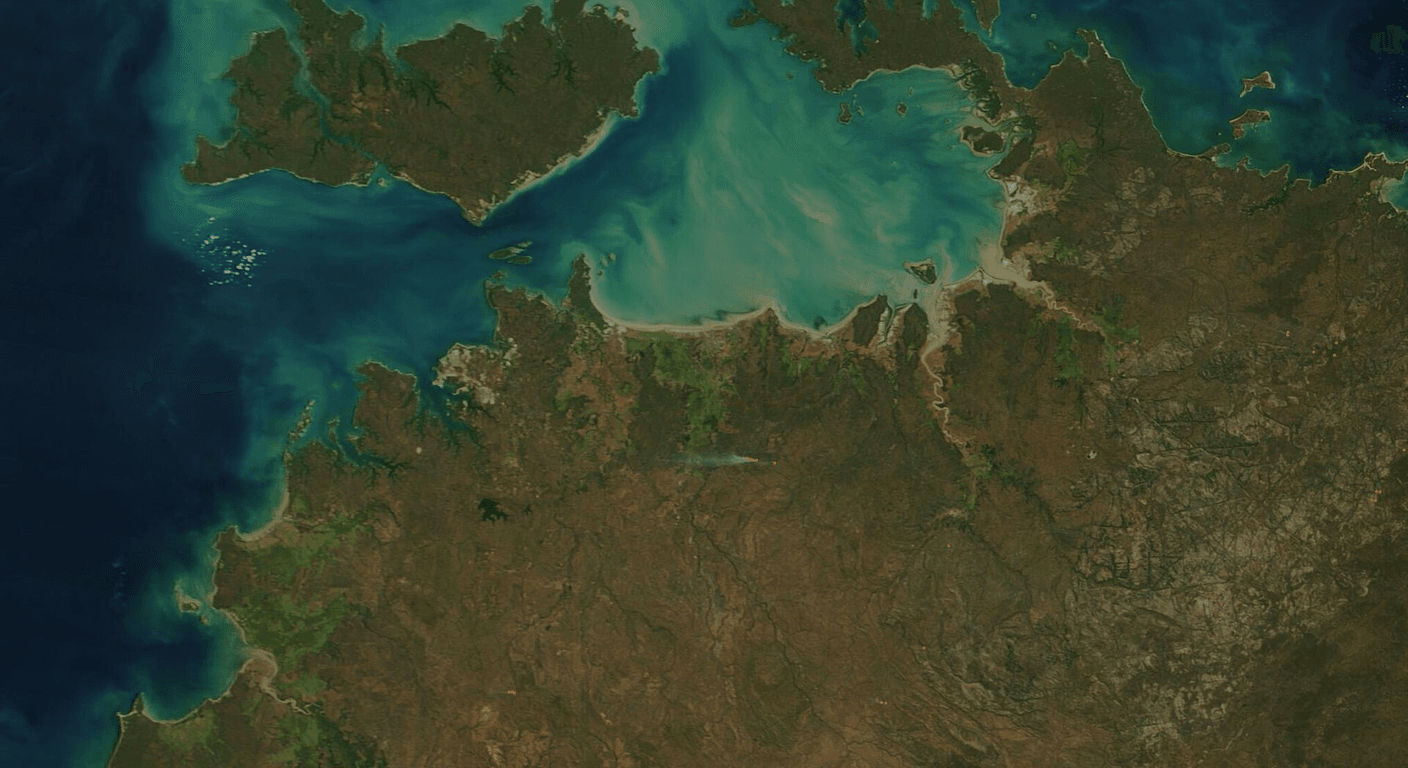
The Tiwi Islands, 80 kilometres north of Darwin across Clarence Strait, are best visited in the dry season (May to October) on a licensed day tour — the only legal way non-Indigenous visitors may enter, permit included. The ten-to-twelve-hour day involves a two-hour ferry crossing each way, visits to working Tiwi art centres, cultural demonstrations and lunch. Mobility is rated Moderate, with uneven ground and extended standing, so bookings should be made three to four months ahead.
Why the Tiwi Islands Are Worth the Early Alarm
There's a particular kind of travel day that stays with you — not because it was easy, but because it was real. The Tiwi Islands tour from Darwin is that kind of day. You cross Clarence Strait on a ferry as the sun climbs, arrive on Bathurst Island to be welcomed by Tiwi guides, spend the morning moving between a working art centre and cultural demonstrations, sit down to a proper lunch, and return to Darwin as the light fades. It's long. It's also genuinely unlike anything else in the country.
The Tiwi people have maintained a distinct culture, language and artistic tradition largely separate from mainland Aboriginal communities. Their art — patterned with ochre, bold geometric forms and figures drawn from ceremony — is immediately recognisable once you know it. Seeing it made, by the people who designed it, in the community where those traditions have lived for generations, is a different experience from admiring the same work behind glass in a gallery. Both have value. This one is harder to come by.
For a couple with a serious interest in art and culture — the kind who've travelled widely and want to understand what they're looking at — a day on the Tiwi Islands offers exactly the kind of depth that a museum can't replicate. Greek Australians in particular often speak of how much culture is carried in objects, in ceremony, in the hands that make things. On the Tiwi Islands, that truth is self-evident.
How the Tour Actually Works — and Why Independent Travel Isn't an Option
This is not a destination where you turn up and wander. The Tiwi Islands are Aboriginal land, and entry by non-Indigenous visitors requires a permit issued through the Tiwi Land Council. In practice, this means booking through a licensed tour operator — one who holds the appropriate permits and has an established relationship with the community. The tour handles the permit on your behalf. You don't organise it separately.
Most tours depart Darwin's waterfront early — around 7am, sometimes earlier — and the ferry crossing takes roughly two hours each way. On Bathurst Island, the day is structured by your guide and Tiwi community hosts: art centre visits, a cultural demonstration or two (which might include pukumani pole carving, weaving, or traditional dance depending on what the community is offering that season), and lunch. The return crossing brings you back to Darwin in the early evening. Factor in fatigue: it's a ten-to-twelve hour day with a fair amount of standing and walking.
Spaces on licensed tours are genuinely limited — not as a marketing device, but because the community controls how many visitors it receives. Booking three to four months ahead is sensible for the dry season, particularly if you're travelling as a couple and want to be sure of a place together. Operators will tell you if they're full; don't assume availability closer to your travel dates.
What to Expect at the Tiwi Art Centres
The art centres on Bathurst Island — including Jilamara Arts and Crafts Association — are working studios, not showrooms dressed up to look like studios. Artists are there because that's where they work, not because a tour has arrived. That distinction matters enormously. You might watch a senior artist applying ochre to bark with a stick chewed to a brush, or a younger woman screen-printing fabric with the same geometric motifs her grandmother used. The guides explain the cultural context, and questions are genuinely welcomed.
Tiwi art is internationally collected and commands serious prices at auction. On the islands, you have the opportunity to purchase works directly — paintings, ceramics, printed fabrics, carvings — at prices that are fair and transparent, and with the knowledge that the money goes to the artists and the community. If you're considering buying, bring more cash than you think you'll need; card facilities in remote communities can be unreliable. Confirm payment options with your operator before you go.
What surprises many visitors is the humour. Tiwi guides tend to be warm, funny and unimpressed by reverence for its own sake. The day doesn't feel like a solemn cultural education — it feels like spending time with people who are proud of where they come from and happy to share it, on their terms. That's the right way around.
Practicalities for Over-50 Travellers — Comfort, Mobility and the Long Day
Mobility rating is Moderate, and that deserves an honest breakdown. The ferry crossing is comfortable enough — seating is provided, and the strait is generally calm in the dry season — but two hours each way is two hours. Anyone prone to seasickness should take precautions the night before. On land, the walking is on uneven ground: grass, dirt paths, occasionally gravel. There are no long distances, but good supportive shoes are more useful than sandals. Shade is available, but the Northern Territory sun in the dry season is still the Northern Territory sun.
Lunch is included in the tour price and is typically served at the community, often a simple but substantial meal. Dietary requirements can usually be accommodated if you notify your operator at the time of booking — do this, rather than mentioning it on the day. The tour carries water, but bringing your own bottle is sensible. A light long-sleeved shirt and a hat are not optional in this climate.
For couples where one partner has mobility limitations — a replaced hip, a bad knee — the tour is generally manageable, but it's worth calling the operator directly to discuss specifics. They run this tour regularly and have a clear sense of what the terrain demands. Don't rely on the website description alone; a five-minute phone call will tell you more.
Getting to Darwin First — The Victorian Traveller's Logistics
From Melbourne, Darwin is roughly four hours by direct flight — Qantas and Jetstar both operate this route, and Virgin connects through other capitals. It's not a gruelling journey by any measure, but Darwin operates on Australian Central Standard Time, which is 1.5 hours behind Melbourne, and the heat is a genuine adjustment after a Victorian winter. Allow at least a day in Darwin before the Tiwi Islands tour to settle in, explore the waterfront, and sleep properly.
Darwin itself rewards a few days. The Museum and Art Gallery of the Northern Territory (MAGNT) has an outstanding collection of Tiwi art that provides excellent context before the island visit — seeing it there first makes the art centres on Bathurst Island even more meaningful. The Mindil Beach Sunset Market runs Thursday and Sunday evenings in the dry season and is exactly as pleasant as everyone says. The city is compact, taxis and rideshares are readily available, and most accommodation is clustered around the CBD and waterfront.
A four-to-five day Darwin itinerary that includes the Tiwi Islands day tour, a day trip to Litchfield National Park, and time to simply be in the city is a satisfying and unhurried combination. The dry season — May to October — is unambiguously the right time to visit. The wet season is spectacular in its own way, but the humidity is serious, and some tours don't operate.
Cost and Booking — What's Included and What to Confirm
Indicative pricing for a licensed Tiwi Islands day tour from Darwin sits around $280–$330 per person at time of writing, inclusive of the ferry, the community permit, guided activities and lunch. These are indicative figures only — confirm current pricing directly with your chosen operator before making any decisions. The cost is reasonable given what's included, and there are no meaningful ways to do this trip cheaper that don't involve cutting corners on the cultural experience itself.
Travel insurance is worth reviewing before any Northern Territory trip, particularly for travellers with pre-existing conditions. Standard policies vary in how they handle remote locations; the Tiwi Islands are not far from Darwin in geographic terms, but medical infrastructure on Bathurst Island is limited. Your insurer should know your itinerary. This is standard advice for any remote Australian travel, not cause for alarm.
A final practical note: photography protocols on the Tiwi Islands are set by the community and communicated on the day by your guide. Follow them exactly. The general principle — ask before photographing people, don't photograph ceremonies without explicit permission — applies here as it does across all Aboriginal communities in Australia. Your guide will be clear about what's appropriate, and the community's preferences always take precedence over your camera.
Is a Tiwi Islands Day Tour Right for You?
If your interest in art runs deeper than admiring it — if you want to understand where it comes from, who makes it, and what it means — then yes, this day is for you. The same applies if you've travelled widely in Australia and are looking for an experience that doesn't feel like a repeat. The Tiwi Islands are genuinely distinct: the culture, the landscape, the art, the people. There's nothing quite like it on the mainland.
It's a long day, and it asks something of you physically. But it's not an adventure tour — it's a cultural one, guided throughout, with proper food and rest built in. Couples who travel well together and don't mind an early start will find it one of the more memorable days they've spent in this country. Solo travellers join small groups and often find the shared experience adds to it.
The one thing to avoid is treating this as a box to tick. Go because you're genuinely curious. The Tiwi community is generous with visitors who come in that spirit — and the art you bring home, if you choose to buy something, will carry that day with it for a long time.
Quick planning guide
| Ideal pace | Slow-paced and fully guided, with rest and meals built in |
|---|---|
| Best months | May to October (dry season) — the only practical window |
| Suggested stay | A full day tour (roughly 10–12 hours), ideally within a 4–5 day Darwin itinerary |
| Mobility level | Moderate — uneven ground, extended standing, a long ferry crossing |
| Cost level | Mid-range, around $280–$330 per person inclusive of ferry, permit, activities and lunch |
| Comfort level | Comfortable but long — seated ferry, shade available, lunch and water provided |
| Best for | Couples and solo travellers with a genuine interest in art and culture |
| Main planning consideration | Book 3–4 months ahead; entry is only possible through a licensed operator holding a Tiwi Land Council permit |
Key takeaways
- A licensed tour is the only legal way non-Indigenous visitors can enter the Tiwi Islands — permits are arranged by the operator.
- The dry season (May to October) is the only practical window for day tours; most operators don't run the trip in the wet.
- Indicative cost is around $280–$330 per person, inclusive of ferry, permit, guided activities and lunch — confirm current pricing before booking.
- Spaces are strictly limited; booking three to four months ahead is strongly advised for the dry season.
- The day runs roughly ten to twelve hours from Darwin; mobility rating is Moderate, with uneven ground and extended standing.
- Tiwi art sold at community art centres is purchased directly from artists — a meaningful alternative to the gallery market.
Recommended partners and links
Indicative prices only — always confirm with the operator before booking.
Frequently asked questions
Can you visit the Tiwi Islands independently without a tour?
No. The Tiwi Islands are Aboriginal land and entry by non-Indigenous visitors requires a permit issued through the Tiwi Land Council. In practice, this means booking with a licensed tour operator who holds the appropriate permits. Independent travel to the islands is not permitted.
How long is the ferry crossing from Darwin to Bathurst Island?
The ferry crossing from Darwin to Bathurst Island takes approximately two hours each way across Clarence Strait. The full day — including the crossing, time on the island, and the return journey — runs roughly ten to twelve hours.
What is the best time of year to do the Tiwi Islands day tour?
The dry season, from May to October, is the best and most practical time to visit. The weather is clear and manageable, and most licensed tour operators run their scheduled departures during this window. Tours are not widely available during the wet season.
How much does a Tiwi Islands day tour cost from Darwin?
Indicative pricing sits around $280–$330 per person at time of writing, typically inclusive of the ferry, community permit, guided activities and lunch. These figures are indicative only — confirm current pricing directly with your chosen operator before booking, as costs can change.
Is the Tiwi Islands tour suitable for travellers with limited mobility?
The tour is rated Moderate. It involves a two-hour ferry crossing each way, walking on uneven ground, and periods of standing during cultural demonstrations. It is manageable for most travellers, but those with specific mobility concerns should call the operator directly before booking to discuss the terrain in detail.