The Darwin Sailing Club at Fannie Bay offers an affordable sunset dinner on a flat, grassy lawn facing the Arafura Sea, best visited during the dry season (May–September), with July the busiest month. Visitors simply sign in, order at the bistro, and settle in an hour or two before sunset. The flat, level lawn suits those with mobility considerations. Darwin is a direct three-to-four hour flight from major Australian cities, with the club a short taxi ride from the CBD.
Why the Darwin Sailing Club Lawn Is Worth Your Evening
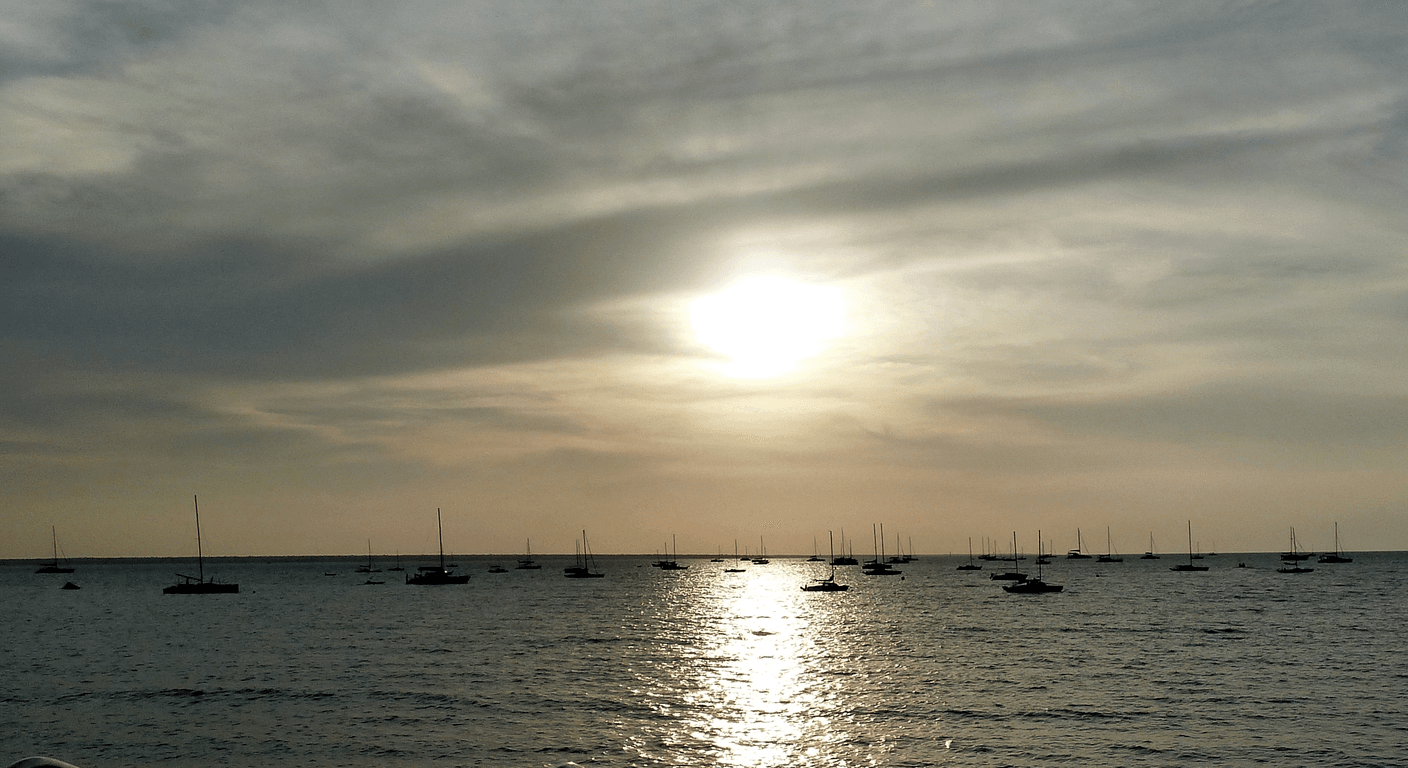
There's a particular kind of travel pleasure that doesn't announce itself. The Darwin Sailing Club at Fannie Bay is exactly that — a working club with actual sailors, a cheerful bistro, and a wide flat lawn that happens to face one of the more spectacular sunsets on the Australian continent. Nobody is performing for the tourists. The pelicans don't care either way.
For travellers over 50, especially those who've grown tired of restaurants that require reservations three weeks in advance and charge accordingly, this is a genuine relief. You sign in at the door as a visitor — a quick, friendly formality — order your meal and drinks at the counter, and carry everything out to the grass yourself. Then you sit, you watch the light change, and you remember why you came to Darwin in the first place.
The experience costs roughly what a pub lunch does in Melbourne or Sydney, but what you're sitting in front of is the Arafura Sea turning copper and rose as the dry-season sun drops away. That's the kind of value that doesn't show up in a price comparison.
What to Expect When You Arrive
The club is a members' club, so the visitor sign-in at the front desk is the one formal step in an otherwise entirely informal evening. It takes about a minute. Staff are used to interstate and international visitors doing exactly this — you're not an inconvenience, you're part of the evening's texture. Confirm the current visitor policy directly with the club before you go, as arrangements can change seasonally.
Once inside, the bistro counter is straightforward. The menu runs to the kind of food that actually makes sense in 30-degree heat — grilled barramundi, schnitzels, salads, burgers, the occasional Territory-inflected special. Meals are indicatively priced around $20–35; drinks are at club prices, which is to say, reasonable. Check the current menu and pricing with the club, as these shift.
Carry your drinks to the lawn and find a table or a patch of grass before 6pm if you want a front-row position. The lawn fills steadily as locals finish work and the sky begins its business. By the time the sun actually touches the horizon, there's a comfortable, unhurried crowd — families, couples, a few solo sailors, the occasional grey nomad who has clearly been here before and looks extremely pleased about it.
Getting There: Practical Transport from Darwin CBD
Fannie Bay sits about four kilometres from Darwin's city centre — close enough that a taxi or rideshare takes under ten minutes and costs a modest fare. The Darwin Bus Service (Territory Transit) also runs routes in the direction of Fannie Bay; check current timetables and stop locations via the NT Government's transit pages before you go, as evening services on some routes are infrequent.
For grey nomads parked at one of Darwin's caravan parks — several of which are within a few kilometres of Fannie Bay — the club is easily drivable, with parking available on site. Confirm current parking arrangements with the club. If you're staying in the CBD and prefer not to drive after a drink or two, a rideshare home is the sensible call, and the cost is trivial.
The approach to the club is flat and the entry is level. The lawn itself is grassed but even, and the paths between the bar, bistro and outdoor area are paved. For travellers using a walking stick or those who prefer not to navigate steps, this is one of Darwin's more genuinely accessible outdoor dining spots. Seating includes tables and chairs — you're not expected to sit on the ground.
When to Go: Reading Darwin's Dry Season
Darwin has two seasons, and they are not subtle. The wet season (roughly October to April) brings monsoonal rain, oppressive humidity, and the occasional cyclone watch. The dry season (May to September) is a different city entirely — warm days, low humidity, cool evenings, and that particular quality of light that makes the Top End look like it was art-directed. This is when the lawn at the Sailing Club makes complete sense.
May and June offer slightly cooler evenings and the freshest post-wet-season greenery. July is Darwin's peak month and the lawn will be busiest — still a pleasure, but arrive early. August and September remain excellent, with September evenings carrying just a whisper of returning warmth. Sunset times shift across the season, so check the day's sunset time and plan to be settled on the lawn at least thirty minutes before it — the light starts doing interesting things well before the sun actually sets.
For travellers flying from Melbourne, Sydney, Brisbane or Adelaide, Darwin is a direct flight of roughly three to four hours on most carriers. No jet lag, no stopovers, no great adjustment required. It's one of Australia's more underrated winter escapes for exactly this reason — you land in warmth, your body clock is untouched, and by the first evening you're already on a lawn watching the sun go down.
Making an Evening of Fannie Bay
Fannie Bay itself rewards a longer look than just the club lawn. The foreshore walking path is flat and well-maintained, and the stretch between the Sailing Club and the East Point Reserve is one of Darwin's more pleasant late-afternoon walks. East Point itself — with its WWII history, the East Point Military Museum, and its own waterfront lawns — makes a natural precursor to dinner. Allow an hour or two, then walk or drive the short distance to the club.
The Museum and Art Gallery of the Northern Territory (MAGNT) is also on Fannie Bay, a short distance from the club. Its collection of Aboriginal and Torres Strait Islander art is among the most significant in the country, and entry to the permanent collection is free. It closes in the early evening, so a visit before sunset followed by dinner on the lawn is a very well-organised Darwin afternoon.
For Indian Australian travellers, or anyone curious about Darwin's remarkable multicultural character, the city's food scene beyond the club is worth exploring during a longer stay. Darwin has a long history of South-East Asian and South Asian culinary influence — the Parap Village Markets on Saturday mornings, for instance, offer a range of food stalls that reflect the city's genuine diversity. The club lawn is the evening; the markets are the morning. Between them, you have Darwin in two very honest acts.
Pacing It Right: Tips for Travellers Over 50
The dry season sun is still strong until around 5pm, so if you're sensitive to heat, arriving closer to 5:30pm rather than the moment the club opens is sensible. A light, long-sleeved layer in your bag is worth carrying — once the sun drops, a breeze comes off the water and the temperature falls quickly. Darwin evenings in the dry season are genuinely pleasant, but the shift from warm to cool can be faster than southerners expect.
Hydration is worth mentioning plainly: Darwin's dry season air is low in humidity but the warmth is constant, and it's easy to underestimate how much you've been perspiring. Drink water before you head out, and pace the cold drinks on the lawn accordingly. The bistro will have water available; ask if it's not already on the table.
If you're travelling as a couple and one of you has mobility considerations, the flat lawn is genuinely forgiving. There's no rough terrain, no uneven coastal path, no steep descent to negotiate. The main variable is where you choose to sit — a table close to the bistro is the most practical option if carrying two plates and drinks across grass feels like a juggling act. Most evenings, a friendly local will offer to help without being asked. That's also just Darwin.
Budgeting Honestly: What an Evening Costs
For a couple, a complete evening at the Darwin Sailing Club — two main courses, a couple of drinks each, and whatever you feel like for dessert — is likely to come in well under $100, and often considerably less depending on your choices. Individual mains are indicatively around $20–35; drinks at club prices are typically lower than Darwin's restaurant strip. These are indicative figures only — confirm current pricing directly with the club before your visit.
That puts it firmly in the category of experiences that cost less than a mid-range restaurant meal but deliver something a mid-range restaurant rarely can: an actual horizon, actual salt air, and the peculiar contentment of sitting on grass in the Northern Territory while the sky does its work. The value isn't in the cheapness. It's in the proportion of what you get to what you pay.
For travellers on a fixed income or those consciously managing travel costs in retirement — and there's nothing apologetic about either — the Darwin Sailing Club lawn is the kind of discovery that makes a Darwin trip feel genuinely well-judged. You spend carefully on the flight and accommodation, and then you find that one of the best evenings on the whole trip cost less than a pizza back home.
Quick planning guide
| Ideal pace | Slow-paced, one relaxed evening |
|---|---|
| Best months | May to September (dry season); July is the busiest |
| Suggested stay | A few hours in the early evening through sunset |
| Mobility level | Easy — flat lawn, level entry, paved paths, tables and chairs provided |
| Cost level | Budget-friendly — indicatively under $30 per person |
| Comfort level | Casual and informal — no dress code, no bookings required |
| Best for | Couples, grey nomads, and travellers over 50 wanting relaxed sunset dining |
| Main planning consideration | Confirm current visitor sign-in policy, menu pricing and transport timetables with the club beforehand |
Key takeaways
- Visitors sign in at the door of the Darwin Sailing Club — no membership required, no booking needed.
- Bistro meals are indicatively priced around $20–35; confirm current pricing with the club before visiting.
- Arrive before 6pm during the dry season to secure a good lawn position for sunset over the Arafura Sea.
- The lawn and entry are flat and level, making this one of Darwin's most accessible outdoor dining experiences.
- May to September is the only sensible window — Darwin's wet season makes outdoor lawn dining impractical.
- The Museum and Art Gallery of the Northern Territory (MAGNT) is a short distance away and makes a natural pre-dinner stop.
Recommended partners and links
Indicative prices only — always confirm with the operator before booking.
Frequently asked questions
Can non-members visit the Darwin Sailing Club for dinner?
Yes. Visitors are welcome to dine at the Darwin Sailing Club by signing in as guests at the front door — a quick formality. Confirm the current visitor policy with the club directly before your visit, as arrangements can vary.
Do you need to book a table at the Darwin Sailing Club?
No bookings are taken for the lawn or general bistro seating. It operates on a first-come, first-served basis. Arriving before 6pm during the dry season gives you the best choice of position for the sunset view.
How much does dinner at the Darwin Sailing Club cost?
Bistro main courses are indicatively priced around $20–35, with drinks at club prices. A couple can expect to spend well under $100 for a full evening, though you should confirm current prices with the club as menus change.
Is the Darwin Sailing Club accessible for travellers with limited mobility?
Yes. The entry is level, the paths between the bar, bistro and outdoor area are paved, and the lawn is flat and even. It's one of Darwin's more accessible outdoor dining venues. Travellers using walking aids should find it manageable; confirm any specific accessibility needs with the club.
What time is sunset at Darwin Sailing Club during the dry season?
Sunset in Darwin during the dry season (May to September) falls roughly between 6pm and 7pm, shifting across the months. Check the specific sunset time for your date and aim to be settled on the lawn at least 30 minutes beforehand, as the light changes well before the sun reaches the horizon.