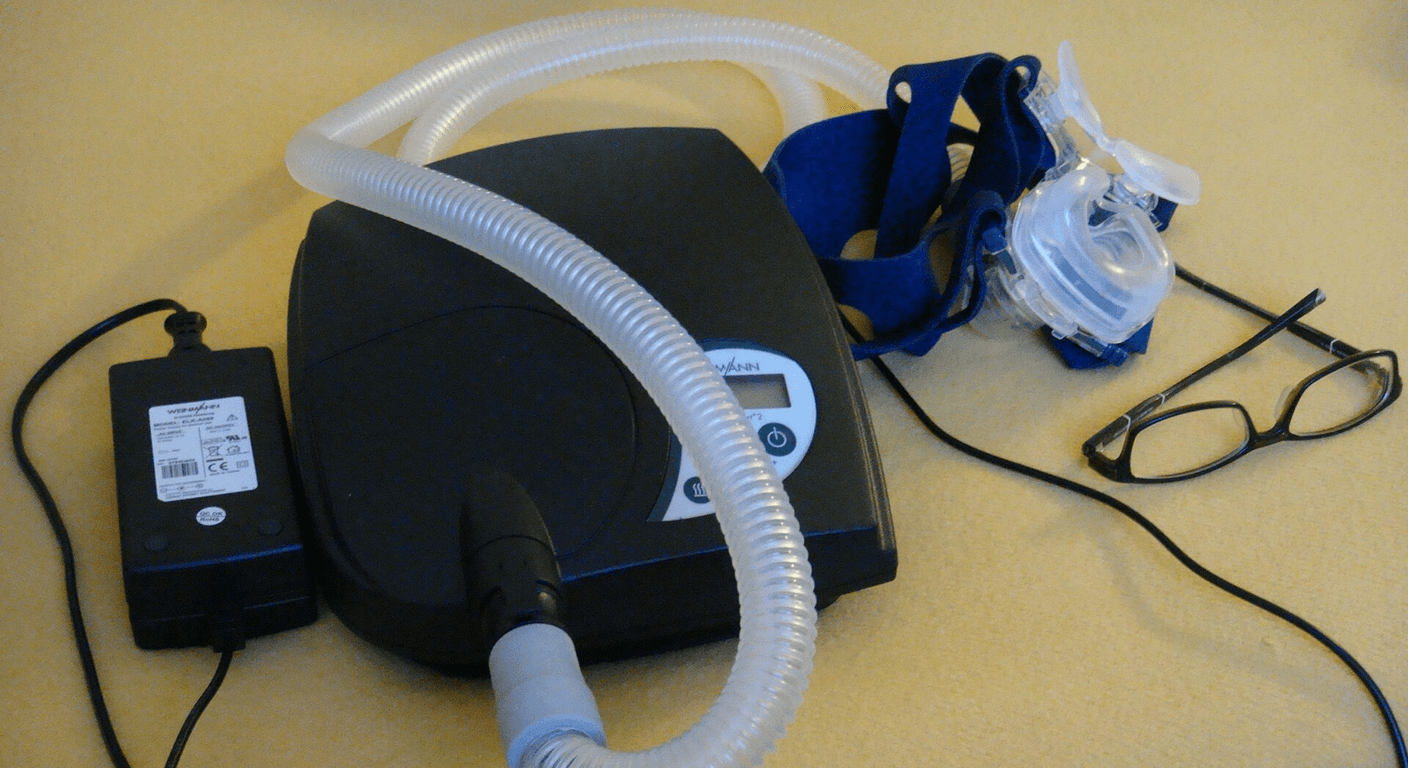
A CPAP machine should always travel in carry-on luggage, never checked baggage, according to this guide for Australian travellers using flights, camping trips, or overseas travel. Most airlines carry it as free medical equipment once notified 48–72 hours before departure, and distilled water is available at Australian supermarkets and pharmacies. Confirm current policy directly with the airline before departure.
Why the CPAP machine should never go in checked luggage
The single most important rule for any CPAP traveller is straightforward: the machine travels in the cabin with you, in carry-on luggage, every time. Checked baggage gets thrown, stacked, and exposed to pressure and temperature variations that can damage sensitive electronics. More practically, if the bag is delayed or lost, you are without the machine for however long the airline takes to sort it out — which is not a comfortable position when you depend on it to sleep safely.
Most security screening desks in Australian airports will ask you to remove the CPAP from its bag and put it through the X-ray separately, similar to a laptop. This is routine. Having the machine in a dedicated soft case rather than buried in a general bag makes this faster and reduces the chance of the humidifier water reservoir causing any confusion at the checkpoint. Empty the water reservoir before you pack it — airports do not consider distilled water an exception to liquid rules at screening.
The carry-on allowance question comes up immediately. The good news is that most major airlines, including Qantas, Virgin Australia, and most international carriers, do not count a CPAP machine as part of your standard carry-on allowance when it is declared as medical equipment. You typically carry it as an additional item. Confirm this with your specific airline at the time of booking — policies are updated, and what applied two years ago may have a slightly different process today.
How to notify your airline and what to ask
Notifying the airline is not optional — it is the step that unlocks the free medical baggage allowance and, if you want to use the machine in-flight, the approval to do so. Contact the airline's special assistance or medical desk as early as possible, ideally at the time of booking or at least 48 to 72 hours before departure. Most airlines have an online form or a dedicated phone line. Qantas routes these requests through their medical assistance process; Virgin Australia has a special assistance contact pathway. International carriers vary, so check directly with each one.
When you call or complete the form, be specific. Tell them you have a CPAP machine for sleep apnoea, that it is a medical device, that you intend to carry it on board, and whether you want to use it during the flight. Ask them to confirm in writing — even an email confirmation is worth keeping on your phone. Ask specifically whether a doctor's letter or a medical certificate is required. Some airlines ask for one, others do not, but having a brief letter from your GP or sleep specialist costs little and removes any ambiguity at check-in.
At check-in and at the gate, mention the CPAP again. Gate staff occasionally need to note it for seating purposes if you plan to use it in-flight, since you will need access to a power outlet. Window seats are generally preferred for in-flight CPAP use — there is less disruption to other passengers and the cord is easier to manage. Not all aircraft have seat power, so confirm the aircraft type on your specific route and ask whether the power outlet is compatible with your machine's adapter.
Using a CPAP in-flight: what is actually involved
Using a CPAP during a flight is permitted by most airlines on longer routes, but it requires advance approval and the right power setup. The machine must be FAA-approved or listed on the airline's approved medical devices list — most current ResMed and Philips Respironics travel machines qualify, but check your specific model. The machine should also be used without the humidifier function active during flight, both because the water reservoir must be empty for security and because cabin air pressure affects humidifier performance anyway.
Power on aircraft is typically a 110V AC outlet under the seat or in the armrest on long-haul international flights. Domestic Australian flights on shorter routes may not have seat power at all. Your CPAP's power supply will show its input voltage range on the label — most modern units accept 100–240V, which covers both Australian and international outlets. Bring the correct cable for the outlet type, and consider a short extension cord or a right-angle plug adapter to make the connection more comfortable at the seat.
If the flight does not have seat power, or you want a backup option, a compatible travel battery is the practical answer. Battery-powered operation is also the key to camping and caravanning, covered in a later section. For a long-haul overnight flight, calculate your typical usage hours and choose a battery with enough capacity to cover it — most travel batteries list the number of nights of use at a given pressure setting, so match that to your prescribed settings.
Distilled water for the humidifier: where to find it at destination
The humidifier on a CPAP machine requires distilled or purified water — not tap water, not mineral water, not filtered water from a jug. Tap water, even in countries with safe drinking water, leaves mineral deposits in the humidifier chamber over time and can introduce contaminants. This is not a minor point; using the wrong water can damage the equipment and affect your health.
Distilled water is widely available in Australia at supermarkets — Coles and Woolworths generally stock it in the home care or baby section, often labelled as distilled or purified water for use in irons, humidifiers, or similar appliances. In regional Victoria and on road trips, it is worth buying a supply before heading into areas where supermarkets are sparse. A one-litre bottle lasts several nights, so carrying two or three bottles in the caravan or car is a sensible habit.
Overseas, the approach varies by country. In most of Asia, Europe, and North America, pharmacies (chemists) and larger supermarkets stock distilled water. In countries where you are unsure, a pharmacy is usually the safest place to ask — the staff often understand the CPAP context immediately. As a short-term alternative, some CPAP users simply travel without the humidifier function active and rely on nasal saline spray to manage dryness. This is worth discussing with your sleep specialist before departing, particularly for longer trips.
Power for camping and caravanning: battery options explained
Camping and caravanning with a CPAP machine has become considerably more practical over the past few years, largely because lithium battery technology has improved and travel-specific CPAP models have become more power-efficient. There are two main approaches: a dedicated CPAP battery pack, or running the machine from a larger 12V deep-cycle battery system already in the caravan or camper trailer.
Dedicated CPAP battery packs — such as those made by ResMed for their AirMini or AirSense models, or third-party options designed for CPAP use — are compact, lightweight, and straightforward. They typically provide one to three nights of use per charge, depending on your pressure settings and whether the humidifier is running. With the humidifier switched off, battery life extends noticeably. These packs can be recharged from a 12V car socket, a solar panel, or a 240V outlet when available.
If you are travelling in a caravan with a house battery system, your CPAP can often run directly from that via a 12V DC cable (check your machine's compatibility) or through a pure sine wave inverter connected to the battery. A modified sine wave inverter is not recommended for CPAP machines — it can cause the machine to run noisily or not at all. Speak to a caravan or electrical supplier about the right inverter for your setup. For free camping or bush camping without solar, carrying a dedicated CPAP battery as a backup ensures you are not draining the house battery overnight and arriving at your next stop with a flat system.
International travel: power adapters and voltage
Most modern CPAP machines are dual voltage — the power supply accepts 100–240V at 50 or 60Hz, which covers virtually every country in the world. Check the label on your machine's power brick to confirm. If it shows that range, you need only a plug adapter for the physical outlet shape, not a voltage converter. Plug adapter shapes vary: Type A and B for the United States, Type C and E/F for most of Europe, Type G for the United Kingdom and many parts of Asia including Hong Kong and Singapore. A universal travel adapter covers most of these.
Carry the manufacturer's power cord and adapter rather than a generic replacement. Third-party cords are not always reliable, and some CPAP machines are sensitive to power quality. A short surge protector strip can be useful in older hotels where the outlet is in an inconvenient position, but check that the hotel room allows power boards — some do not. In countries where power supply can be inconsistent, the CPAP battery pack doubles as a buffer against surges and outages.
If you are travelling to a country where you are genuinely uncertain about power reliability — parts of Southeast Asia, Africa, or remote island destinations — discuss the trip with your CPAP supplier before you leave. They can advise on protective accessories and confirm whether your specific machine model has any known sensitivity to variable voltage. It is also worth registering the machine with the manufacturer or your supplier before travelling, so that if something goes wrong overseas, there is a clear record of the device.
A practical pre-travel checklist for CPAP users
Pulling together the logistics before departure saves considerable stress on the road. At minimum, contact your airline's special assistance desk and confirm the medical baggage policy in writing. Pack the machine in carry-on in a dedicated case. Empty the humidifier reservoir. Carry the power cord, the correct plug adapters for each destination, and a copy of your prescription or a GP letter describing the machine and its medical necessity.
Consider packing a travel-sized CPAP if you own or can hire one — machines like the ResMed AirMini are notably compact and purpose-built for travel, while still connecting to the full ResMed data ecosystem if you use the app. Your regular machine is perfectly fine to travel with, but the smaller footprint of a dedicated travel unit can make a real difference in a smaller hotel room or a caravan with limited bench space.
Finally, register the machine's serial number and keep a photo of it on your phone alongside your travel documents. If the machine is lost, stolen, or damaged abroad, the serial number speeds up insurance claims and replacement processes considerably. Travel insurance that covers medical equipment is worth checking before you depart — confirm with your insurer that CPAP machines are included under medical or personal effects cover, and note any single-item value limits that might apply.
Quick planning guide
| Who it's for | Australian CPAP users travelling by air, camping or caravanning, or heading overseas. |
|---|---|
| How to start | Contact the airline's special assistance or medical desk as early as possible, ideally at booking or at least 48–72 hours before departure, to confirm the medical baggage and in-flight use policy. |
| Typical cost | Not applicable — the article does not state a cost for medical baggage allowance, though CPAP battery packs and adapters are separate purchases. |
| Time required | Notify the airline 48–72 hours before departure; distilled water and adapters can be sourced in the days before travel. |
| Where to get help | Airline special assistance or medical desk, GP or sleep specialist for a letter, CPAP supplier for battery and voltage advice, pharmacies for distilled water overseas. |
| Key documents needed | A doctor's letter or medical certificate, a copy of the prescription, and written confirmation from the airline of the medical baggage policy. |
| Main planning consideration | The machine must travel in carry-on luggage with the humidifier reservoir empty, and power/water needs (voltage, adapters, distilled water, batteries) must be arranged for each destination. |
| Renewal or review | Not applicable — no renewal or review cycle is mentioned, though airline policies should be reconfirmed before each trip as they can change. |
Key takeaways
- Most airlines carry a CPAP machine as free medical baggage if you notify them in advance — always confirm the current policy with your carrier before flying.
- A CPAP machine should travel in carry-on luggage only, never in checked baggage, to protect it from damage and avoid it being separated from you.
- Distilled water for CPAP humidifiers is available at Australian supermarkets and at pharmacies in most international destinations.
- Dedicated CPAP battery packs provide one to three nights of use per charge, making bush camping and free camping practical for CPAP users.
- Most modern CPAP power supplies accept 100–240V, so only a plug adapter — not a voltage converter — is needed for international travel.
- A pure sine wave inverter is required if running a CPAP from a caravan battery system; a modified sine wave inverter can damage the machine.
Recommended partners and links
Indicative prices only — always confirm with the operator before booking.
Frequently asked questions
Do airlines charge for carrying a CPAP machine?
Most major airlines, including Qantas and Virgin Australia, allow a CPAP machine as an additional carry-on item at no extra charge when it is declared as medical equipment before travel. You need to notify the airline's special assistance team in advance — policies vary and change, so confirm the current rules directly with your carrier before each trip.
Can you use a CPAP machine on a plane during the flight?
Yes, most airlines permit in-flight CPAP use on long-haul routes, subject to advance approval. The machine must be on the airline's approved medical devices list, the humidifier should not be in use, and you will need access to a seat power outlet. Not all aircraft or routes have seat power, so confirm the aircraft type with the airline when you book.
What water should you use in a CPAP humidifier when travelling?
Distilled or purified water is required — not tap water, filtered water, or mineral water. In Australia, distilled water is sold at Coles and Woolworths in the home care or baby section. Overseas, pharmacies are the most reliable source. Some travellers switch off the humidifier function entirely for short trips and use nasal saline spray instead.
How do you power a CPAP machine when camping without mains power?
The two main options are a dedicated CPAP battery pack, which typically provides one to three nights of use per charge, or connecting the machine to a caravan's 12V house battery system via a DC cable or a pure sine wave inverter. Modified sine wave inverters should be avoided as they can cause problems with CPAP electronics. Battery packs can be recharged from a car socket or solar panel.
Do you need a voltage converter for a CPAP machine overseas?
Most modern CPAP power supplies are dual voltage (100–240V) and work in any country without a converter. Check the label on your machine's power brick to confirm. If it shows 100–240V, you need only a plug adapter to match the local outlet shape — not a voltage converter. Carry the manufacturer's original cord rather than a generic replacement.