Tumbulgum is a cedar-era riverside village on the NSW Far North Coast, ten minutes from Murwillumbah, best visited April to October when the subtropical climate is mildest. A half-day is enough — the flat, compact village centre and its 1887 tavern deck overlooking the Tweed and Rous rivers are the main drawcards. Mobility is easy, though the heritage tavern has some steps. There's no public transport, so a hire car (or occasional regional tour) is essential to reach it.
What Makes Tumbulgum Worth the Drive
Tumbulgum is not trying to be anything other than what it is. That, in itself, is increasingly rare. The village occupies a low, green peninsula where the Rous River slides into the Tweed, about ten minutes south-west of Murwillumbah along Dulguigan Road. There are no boutique chocolate shops, no lavender farms with a gift-wrapped aesthetic. What there is: a pub from 1887, a general store that has been there nearly as long, a few weatherboard houses under big trees, and a river that doesn't care how busy the Gold Coast is getting.
For a solo traveller from Victoria used to planning around crowds and queues, the arithmetic here is refreshing. The drive from Murwillumbah takes roughly ten minutes on a sealed road through cane fields and river flats. From Tweed Heads or Coolangatta, allow around 25 to 30 minutes. The village centre is compact enough that you can walk the main street, reach the tavern deck, and stroll the riverbank in a single comfortable hour — without a step counter making you feel inadequate.
The Tumbulgum Tavern: What 1887 Looks Like Today
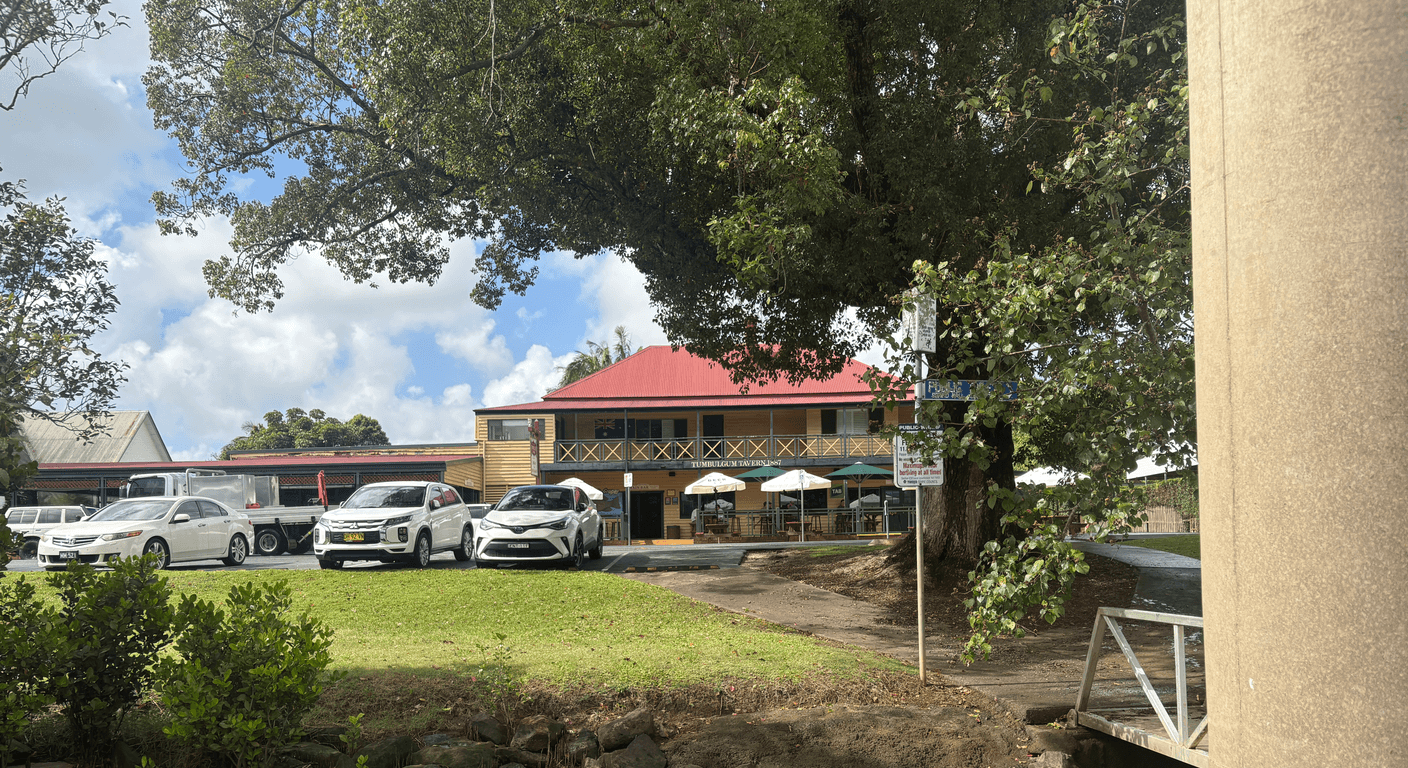
The Tumbulgum Tavern holds the distinction of being the oldest licensed hotel in the Tweed district. That's not a marketing claim dressed up as history — the building dates to 1887, constructed during the cedar-getting era when the Tweed and its tributaries were the highways that moved timber south. The pub's bones are original: timber framing, verandahs that were designed for the climate long before anyone invented air conditioning as a selling point.
Lunch is the reason most visitors make the drive. The tavern serves meals on a timber deck that sits directly above the water — on a mild autumn afternoon, with the Tweed glinting and a cold drink on the table, it's the sort of unremarkable perfection that's hard to plan for. The menu leans toward classic pub fare: expect grilled fish, burgers, parmigianas and the like, with mains indicatively in the $20–$32 range. Always confirm current menu and pricing directly with the tavern before visiting, as offerings and hours vary by season.
Accessibility at the tavern is worth a quick check before you arrive. The heritage building has some steps, and the deck's surface is timber. If mobility is a consideration, phone ahead — the staff are generally helpful about directing guests to the most accessible entry and seating. The village's flat terrain means the walk from a parked car to the pub entrance is straightforward for most.
The Village Beyond the Pub
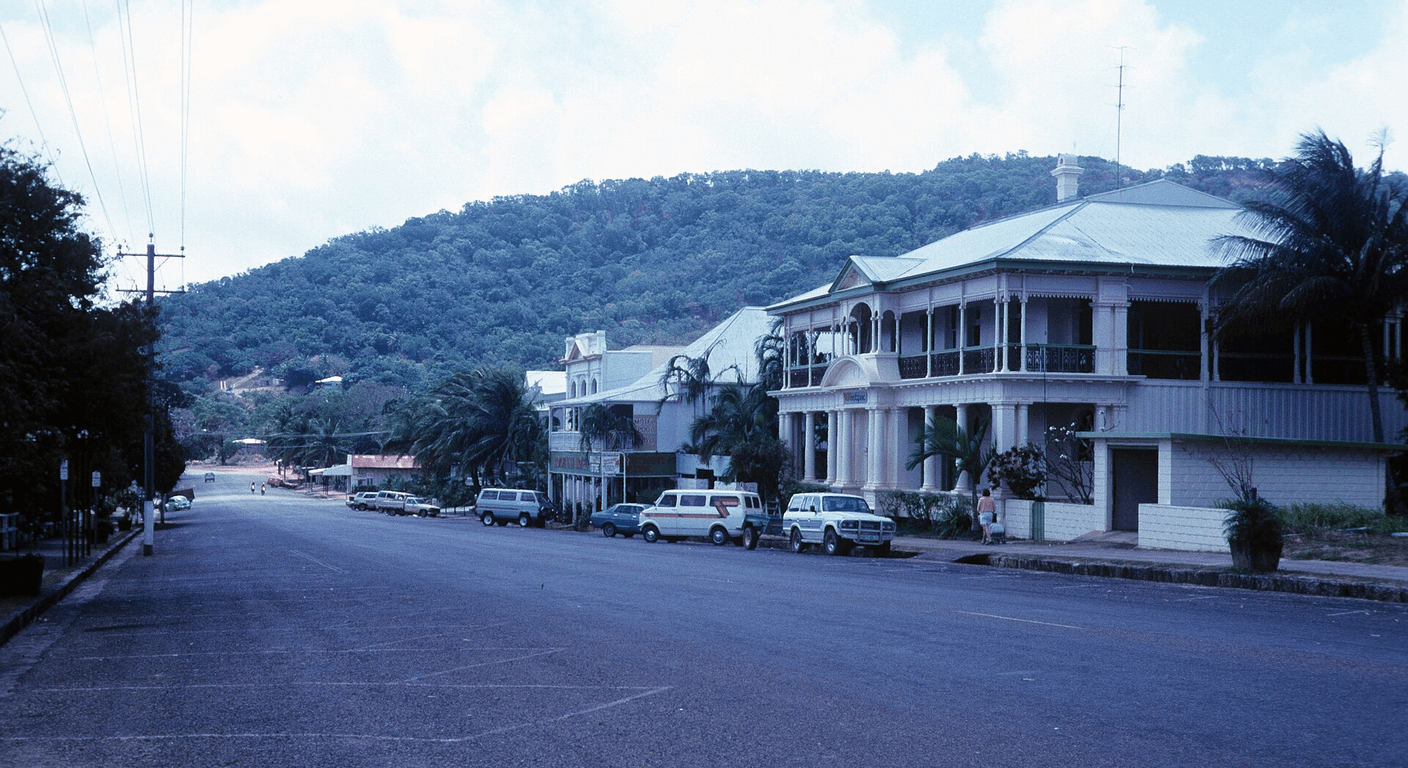
Tumbulgum's heritage streetscape is small enough to take in without a map. A handful of cedar-era buildings survive along the main road, including the old general store — still operating in some form, though hours vary and it's worth managing expectations. The post office building and a few private residences complete the picture. It reads less like a preserved museum town and more like a place that simply didn't get demolished.
The riverbank offers a quiet walk, particularly pleasant in the cooler months. The confluence of the Rous and Tweed is visible from the water's edge, and the birdlife — herons, cormorants, the occasional osprey — is worth pausing for. Bring comfortable flat shoes rather than sandals; the ground near the water can be uneven in places. There are no formal walking tracks here, just the kind of unhurried wandering that a solo traveller on a weekday can have almost entirely to himself.
Getting There: The Honest Picture
Public transport to Tumbulgum is, in practical terms, non-existent. NSW TrainLink operates a coach service to Murwillumbah from Brisbane and the Gold Coast, and there is a rail connection from Sydney (with a coach leg), but from Murwillumbah to Tumbulgum there's no scheduled bus route that makes a day trip workable. A hire car is the straightforward solution — it also opens up the broader Tweed Valley, including the Tweed Regional Gallery, the Tropical Fruit World precinct, and the winding drive to Wollumbin (Mount Warning).
Alternatively, some regional tour operators running Gold Coast hinterland or Tweed Valley day tours include Murwillumbah and occasionally Tumbulgum on their itineraries. Check with operators such as Discover Australia Tours or local Gold Coast tour desks, and confirm inclusions before booking. For a Victorian flying into Coolangatta (Gold Coast Airport), hiring a car at the airport and driving the 30-odd kilometres south to Tumbulgum is the cleanest option. The roads are uncomplicated and the drive itself, through cane fields and river country, is part of the experience.
Pairing Tumbulgum With Murwillumbah
Murwillumbah is the natural base for exploring this part of the Tweed Valley, and it pairs well with Tumbulgum in a single day. Start with a morning visit to the Tweed Regional Gallery and Margaret Olley Art Centre — the gallery's permanent collection and the meticulously reconstructed Olley studio are genuinely absorbing, and the pace suits an unhurried morning. Then drive out to Tumbulgum for lunch on the tavern deck before the afternoon trade winds down.
Murwillumbah itself has a modest but pleasant main street with cafes, a heritage-listed art deco town hall, and good coffee options. Accommodation ranges from motels to a handful of heritage B&Bs. Staying a night or two allows you to explore the valley without the pressure of a long drive back to the Gold Coast each evening — a sensible choice for anyone who finds consecutive long driving days less appealing than they once did.
Practical Matters: Costs, Timing and What to Confirm
The cost of a day in Tumbulgum is modest. Lunch at the tavern, with a drink, comes in at roughly $30–$45 per person in indicative terms — confirm current pricing directly with the tavern. Petrol for the drive from Murwillumbah and back adds very little. There are no entry fees, no ticketed attractions. The general store, if open, is the kind of place where a cold drink or an ice cream is the transaction.
April through October is the most comfortable window for visiting. The Far North Coast summer (November to March) brings heat and humidity that can be significant, and the occasional heavy rain event. The Tweed Valley's subtropical climate means even a mid-winter day here is mild by Victorian standards — pack a light layer for the evening but expect warm afternoons. The tavern's lunch service typically runs midday to around 2:30 pm, but hours can vary on quieter days. Always phone ahead or check the current website before making the drive specifically for lunch.
Who Tumbulgum Is For
Tumbulgum suits travellers who find value in a place that doesn't oversell itself. A solo traveller who enjoys sitting at a pub with a view and a meal, without background music at nightclub volume or a waiter explaining the 'concept', will find it genuinely congenial. The heritage fabric is real, not reconstructed for tourism. The river is right there. The pace is entirely your own.
Grey nomads passing through the Northern Rivers region on a coastal or hinterland loop will find Tumbulgum a worthwhile deviation from the Pacific Highway. It's the sort of stop that doesn't appear on every itinerary — which is precisely what makes it worth including on yours.
Quick planning guide
| Ideal pace | Slow and unhurried |
|---|---|
| Best months | April to October |
| Suggested stay | Half a day, easily paired with Murwillumbah |
| Mobility level | Easy — flat village terrain, some steps at the heritage tavern |
| Cost level | Budget-friendly (lunch roughly $30–$45 per person, no entry fees) |
| Comfort level | Casual, laid-back pub and riverside setting |
| Best for | Solo travellers and grey nomads wanting an uncrowded heritage stop |
| Main planning consideration | No public transport — a hire car is essential |
Key takeaways
- The Tumbulgum Tavern is the oldest licensed hotel in the Tweed district, dating to 1887, and serves lunch on a deck directly above the river.
- The village centre is flat and compact, making it one of the more accessible heritage villages on the NSW Far North Coast.
- No practical public transport reaches Tumbulgum — a hire car or organised regional tour is necessary.
- From Murwillumbah it's roughly a ten-minute drive; from Tweed Heads or Coolangatta, allow around 25 to 30 minutes.
- April to October offers the most comfortable visiting conditions, avoiding the region's humid subtropical summer.
- A half-day is enough for the village, making it an easy pairing with the Tweed Regional Gallery in Murwillumbah.
Recommended partners and links
Indicative prices only — always confirm with the operator before booking.
Frequently asked questions
Where exactly is Tumbulgum and how far is it from Murwillumbah?
Tumbulgum is a small village in NSW's Tweed Valley, located at the confluence of the Rous and Tweed rivers. It's approximately ten minutes by car south-west of Murwillumbah via Dulguigan Road, and around 25 to 30 minutes from Tweed Heads or Coolangatta.
Is the Tumbulgum Tavern accessible for people with limited mobility?
The village centre is flat and the walk from a car park to the tavern entrance is straightforward. The heritage building has some steps and a timber deck, so anyone with specific mobility requirements should phone the tavern ahead of visiting to confirm the most accessible entry and seating options.
What does lunch cost at the Tumbulgum Tavern?
Indicatively, pub lunch mains at the Tumbulgum Tavern have been priced in the roughly $20–$32 range, with a full meal including a drink coming to around $30–$45 per person. These are indicative figures only — confirm current menu and pricing directly with the tavern before visiting.
Can you get to Tumbulgum by public transport?
Not practically. There is no scheduled bus service between Murwillumbah and Tumbulgum that makes a day trip workable. NSW TrainLink serves Murwillumbah by coach from Brisbane and the Gold Coast, but the final leg to Tumbulgum requires a hire car, taxi, or a place on an organised regional tour.
What is the best time of year to visit Tumbulgum?
April to October is the most comfortable period. The Far North Coast's subtropical summer (November to March) brings heat, high humidity and occasional heavy rain. Winter days in the Tweed Valley are mild by southern Australian standards, typically warm and sunny — an appealing prospect for travellers from Victoria or further south.