The WA Maritime Museum at Victoria Quay, Fremantle, suits any season, ideally visited at the 9:30am opening for a quieter pace. Allow two to three hours for its centrepiece, the winged-keel yacht Australia II, 1983 America's Cup winner. The main galleries are lift-accessible and easy for those with mobility aids, though the optional HMAS Ovens submarine tour involves steep ladders and suits only the more mobile. Fremantle is a 30-minute train ride from Perth.
Why the WA Maritime Museum matters to travellers over 50
There are museums that document history, and then there are museums that hold memories you did not know you had stored. The WA Maritime Museum on Victoria Quay in Fremantle is firmly in the second category for many Australians over 50. The building itself — a sweeping, ship-like structure designed by Donaldson and Warn and opened in 2002 — sits right on the working harbour, so the smell of salt water and the sight of container ships moving in the background are part of the experience before you even walk through the door.
For Greek Australians and others who came to this country by sea in the 1950s, 1960s and 1970s, the migration galleries carry a particular charge. The luggage, the documents, the photographs of crowded decks — these are not abstractions. Many visitors in their 60s and 70s will recognise the ships by name, and some will find their own family's passage reflected in the displays. The museum handles these stories with care and without sentimentality, which is exactly the right tone.
Even for those with no direct migration connection, the collection spans pearling, fishing, naval history and the extraordinary story of Australian yacht racing. It is the kind of place where a couple can spend two to three hours without feeling rushed, finding different things to linger over at their own pace.
What is in the collection — from pearling luggers to the winged keel
The centrepiece most visitors head for first is Australia II, the 12-metre yacht that won the 1983 America's Cup in Newport, Rhode Island — ending a 132-year winning streak by the United States and producing one of the most celebrated moments in Australian sporting history. The yacht is displayed in full, and you can get close enough to appreciate the famous winged keel that Ben Lexcen designed and that sparked a rules controversy still debated by sailing enthusiasts today. If you were watching that final race on television, standing beside the actual boat is a quietly affecting experience.
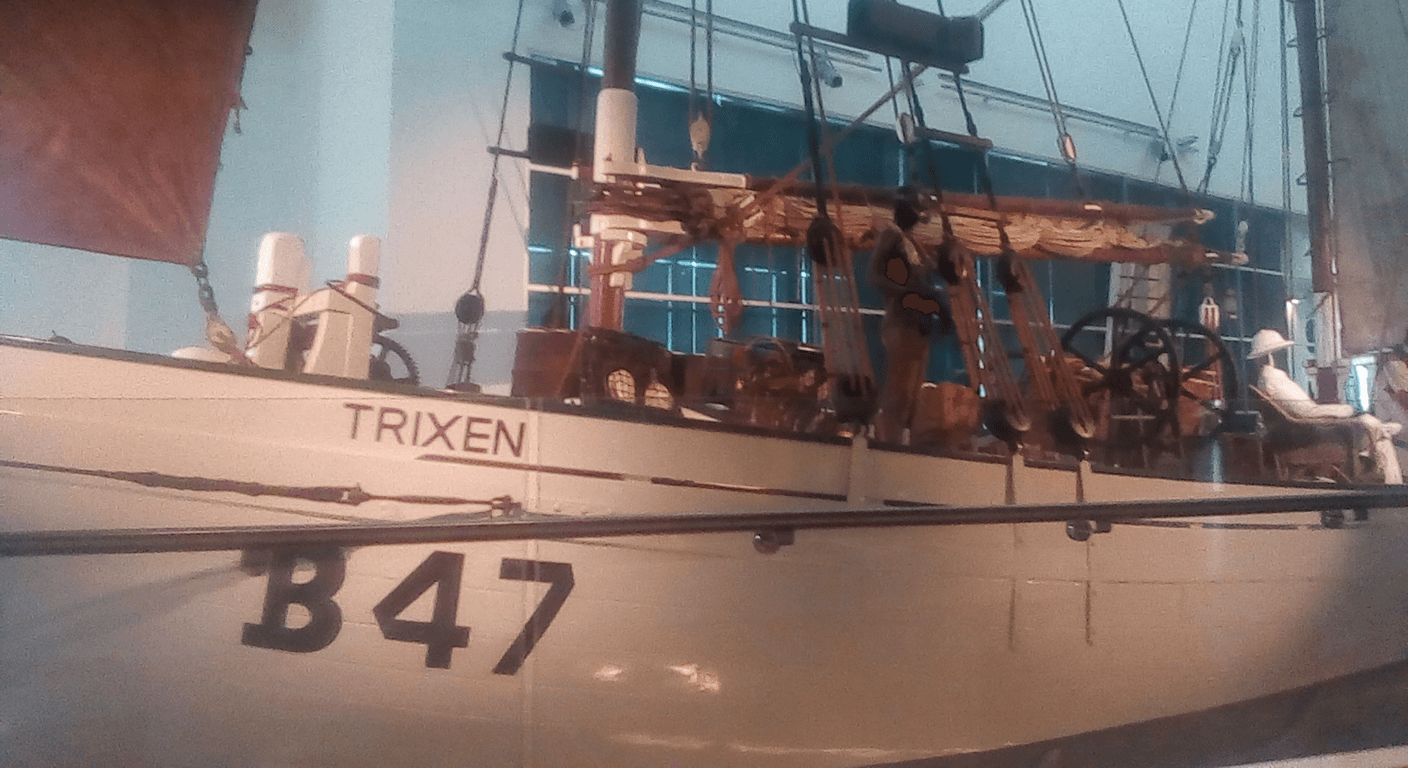
The pearling galleries tell the story of Broome and the northwest coast through the luggers, diving suits and cultural histories of the Japanese, Malay, Aboriginal and European communities who built that industry. It is a story that does not flinch from the hardships and the racial complexities of the era. Elsewhere, the collection covers the Swan River Colony's early maritime connections, World War II naval operations in the Indian Ocean, and the working fishing culture that still defines parts of the WA coast.
There is also a gallery focused on the passenger liners that brought migrants to Fremantle — ships like the Fairsea, the Angelina Lauro and the Achille Lauro. For anyone who arrived on one of these vessels, or whose parents did, the scale models, menus, passenger lists and personal objects on display make the past feel very close.
The HMAS Ovens submarine tour — is it right for you?
Moored alongside the museum is HMAS Ovens, an Oberon-class submarine that served with the Royal Australian Navy from 1969 to 1995 and is now a National Historic Shipwreck. Guided tours run inside the vessel, and for anyone curious about Cold War naval history or simply wanting to understand what submariners actually lived through, it is a remarkable forty-five minutes or so. The guides — many of them former navy personnel — bring the machinery and the cramped quarters to life with the kind of detail that no display board can match.
That said, the submarine tour is genuinely not for everyone, and the museum is honest about this. Getting aboard and moving through the vessel involves steep, narrow ladders between decks, tight passageways, and low overhead clearance. If you have knee or hip concerns, limited upper body strength, or any degree of claustrophobia, it is worth thinking carefully before committing. The tour is not accessible for wheelchairs or for those who cannot manage ladders safely. There is no shame in watching the exterior, reading the interpretive panels on the wharf, and letting a travelling companion do the climb while you take a seat with a view of the harbour.
The submarine tour carries a separate entry fee on top of general museum admission. Confirm current pricing directly with the museum at museum.wa.gov.au, as indicative costs around $15–$20 AUD per person have been cited, but these figures should be verified before your visit. Booking ahead for the submarine is advisable, particularly in school holidays or on weekends.
Accessibility and pacing — what to know before you go
The main museum building is lift-accessible throughout, with level or ramped entry from the Victoria Quay precinct. Toilets are accessible, and the gallery layout allows for a relaxed pace without long standing sections. Seating is available within the galleries. For travellers managing fatigue, arthritis or mobility aids, the building itself presents no significant barriers — it is one of the more straightforward large museums to navigate in a comfortable way.
The contrast with the submarine is sharp, and it is worth reiterating: HMAS Ovens requires physical confidence on ladders and in confined spaces. The museum staff are experienced at helping visitors assess whether the tour suits them, so do not hesitate to ask questions at the front desk before purchasing the submarine ticket.
The Victoria Quay precinct is mostly flat and manageable on foot, though the ground surface between the museum and the nearby Round House or Fishing Boat Harbour involves some uneven cobblestone sections. Sensible footwear matters. If you are combining the museum with a walk along the harbour or into Fremantle's West End, allow for rest stops — the area is pleasant and unhurried, and there are cafes within a short distance of the museum entrance.
Getting to Fremantle from Perth — and from interstate
From central Perth, Fremantle is easily reached by the Transperth train on the Fremantle Line, which runs regularly from Perth Station and takes around 30 minutes. The train deposits you at Fremantle Station, from which Victoria Quay and the museum are roughly a ten-minute flat walk through the town centre. Transperth concession fares apply with a valid concession card — confirm eligibility at transperth.wa.gov.au. For those less confident on the walk, a taxi or rideshare from the station to the museum is a short trip.
Visitors flying in from Melbourne or elsewhere in Victoria will typically arrive at Perth Airport and can reach Fremantle by a combination of the Airport Central station and the Fremantle Line, or by taxi or rideshare direct to the museum. It is worth allowing a full day for Fremantle if this is your first visit — the maritime museum, a slow lunch and a look at the Fremantle Markets or the West End make for a satisfying day without feeling rushed.
Parking is available in the Victoria Quay precinct for those who prefer to drive, though weekend availability can be limited. The museum's official site lists current parking information. For travellers based in Perth for several days, a day trip to Fremantle by train is one of the most straightforward and enjoyable excursions available.
Eating and resting near Victoria Quay
The museum has a café on site, which suits those who want to stay within the precinct and keep the day simple. For a longer lunch, the Fishing Boat Harbour — a short walk south along the waterfront — offers a row of seafood restaurants and fish-and-chip outlets where you can sit outdoors and watch the boats. It is not refined dining, but it is honest, fresh and very much part of the Fremantle experience. Cicerello's and Kailis' are long-established names in the area, though always worth checking current opening times.
The Fremantle town centre, a few minutes' walk inland from the quay, has a range of cafes and bakeries well suited to a mid-morning coffee break before or after the museum. The area around the South Terrace cappuccino strip has been a local institution for decades. It is relaxed, not tourist-frantic, and the pace suits travellers who are not in a hurry.
If the afternoon allows, the Fremantle Prison — a short taxi or walk from the town centre — is another World Heritage-listed site with substantial historical weight for over-50s interested in Australian colonial history. It is a separate visit and a separate entry fee, but it pairs well with a maritime museum day for those with the energy and inclination.
Practical tips for getting the most from your visit
Arrive when the museum opens — typically 9:30am, though confirm current hours at museum.wa.gov.au — to avoid school groups and have the galleries at a quieter pace. The Australia II display and the migration galleries tend to draw the most visitors, so moving through those earlier in the morning gives you more room to take your time. The submarine tours run at set times throughout the day; check the schedule on arrival and book your spot if the tour appeals.
Bring a concession card and ask at the front desk — the museum offers concession pricing for eligible seniors, and the saving is worth claiming. Indicative general admission has been cited at around $10–$15 AUD for concession holders, and the submarine adds to that, but confirm all current prices directly with the museum before your visit as these figures are indicative only.
Photography is generally permitted in the main galleries, so if you have photographs of family members who arrived on the ships featured in the migration display, bringing them along — or having them on your phone — can make for a meaningful personal comparison. The museum's staff are knowledgeable and approachable; if you have a specific family history connection to a vessel or a period, it is worth mentioning it at the information desk.
Quick planning guide
| Ideal pace | Relaxed, self-guided two-to-three-hour museum visit |
|---|---|
| Best months | Comfortable year-round; arrive at the 9:30am opening for a quieter, less crowded visit |
| Suggested stay | Half a day, including time for lunch nearby; longer if pairing with Fremantle Prison or the markets |
| Mobility level | Easy throughout the main lift-accessible galleries; the optional HMAS Ovens submarine tour is physically demanding, with steep ladders and tight spaces unsuitable for those with knee, hip or mobility limitations |
| Cost level | Budget-friendly, with concession pricing available for eligible seniors and a separate optional fee for the submarine tour |
| Comfort level | Comfortable, with lift access, seating in galleries and accessible toilets; the harbourside precinct is mostly flat but has some uneven cobblestones |
| Best for | Migrants and their families, sailing and America's Cup enthusiasts, and travellers over 50 wanting an unhurried cultural day out |
| Main planning consideration | Decide in advance whether the HMAS Ovens submarine tour is suitable, given its ladders and confined spaces, and confirm current admission and submarine prices with the museum before visiting |
Key takeaways
- The WA Maritime Museum on Victoria Quay holds Australia II — the winged-keel yacht that won the 1983 America's Cup — in a display you can view up close.
- The migration ship galleries carry genuine personal resonance for Greek Australians and others who arrived in Australia by sea in the mid-twentieth century.
- The main museum building is lift-accessible throughout; the HMAS Ovens submarine tour requires steep ladders and tight spaces and is not suitable for all visitors.
- Concession entry pricing applies — confirm current costs at museum.wa.gov.au, as indicative figures suggest around $10–$15 AUD for concession holders, with the submarine tour extra.
- Fremantle is 30 minutes from Perth by Transperth train on the Fremantle Line, making it an easy and affordable day trip for interstate visitors based in the city.
- Pairing the museum with lunch at Fishing Boat Harbour and a walk through the Fremantle West End makes for a full, unhurried day well suited to travellers in their 60s and 70s.
Recommended partners and links
Indicative prices only — always confirm with the operator before booking.
Frequently asked questions
Is the WA Maritime Museum suitable for visitors with mobility limitations?
The main museum building is lift-accessible throughout, with level entry and accessible toilets, making it manageable for visitors using walking aids or wheelchairs. The HMAS Ovens submarine tour is not accessible for wheelchairs and requires climbing steep, narrow ladders between decks — visitors with knee, hip or balance concerns should consider skipping the submarine and exploring the main galleries instead.
How much does it cost to enter the WA Maritime Museum, and is there a seniors concession?
Concession pricing applies at the WA Maritime Museum, with indicative costs around $10–$15 AUD for eligible concession holders for general admission, though these figures are indicative only and should be confirmed directly with the museum at museum.wa.gov.au before your visit. The HMAS Ovens submarine tour carries a separate additional charge. Bring your concession card and ask at the front desk.
What is the HMAS Ovens submarine tour, and do I need to book?
HMAS Ovens is a decommissioned Oberon-class Royal Australian Navy submarine moored beside the museum, open for guided tours that take visitors through the vessel's working spaces. The tour involves steep ladders, narrow passageways and low overhead clearance, so it is physically demanding and not suited to everyone. Tours run at set times throughout the day; booking ahead is advisable on weekends and in school holidays, and current schedules and prices should be confirmed at museum.wa.gov.au.
How do I get to the WA Maritime Museum from Perth city?
The easiest route from central Perth is the Transperth Fremantle Line train from Perth Station, which takes around 30 minutes and drops you at Fremantle Station — from there it is roughly a ten-minute flat walk to Victoria Quay and the museum. Transperth concession fares apply with a valid concession card; confirm eligibility at transperth.wa.gov.au. A taxi or rideshare from the station is a short trip for those who prefer not to walk.
Can visitors with a personal connection to migration ships find relevant displays at the WA Maritime Museum?
Yes — the museum has dedicated galleries covering the passenger liners that brought migrants to Fremantle, including scale models, personal objects, photographs and documents relating to ships that carried significant numbers of postwar migrants to Western Australia. Visitors who arrived on these vessels, or whose families did, often find the displays carry strong personal resonance. Museum staff are knowledgeable and approachable if you want to discuss a specific vessel or family connection.