Franklin's Wooden Boat Centre, 45 minutes south of Hobart on the Huon Highway, is best visited September to April and suits a relaxed half-day trip combined with the flat, walkable village. The highlight is watching students and master boatbuilders shape rot-resistant Huon pine into working vessels on a genuine, active workshop floor. Mobility demands are low, but a hire car is essential — there's no practical public transport, and Victorian travellers typically fly into Hobart or take the overnight Spirit of Tasmania ferry from Geelong.
Why Franklin rewards the drive south
The Huon Highway out of Hobart doesn't rush you anywhere. It follows the river valley south through apple country and small timber towns, and by the time Franklin appears — a handful of heritage buildings, a riverside park, boats on the water — you've already begun to slow down. That's the right tempo for this place.
Franklin sits about 45 minutes from Hobart, population modest, ambitions modest, quality of experience anything but. The Wooden Boat Centre is the reason most visitors make the turn, but the village holds its own: a restored palais theatre, a small gallery or two, cafes that don't need to try too hard because the setting does the work. The Huon River is right there, wide and unhurried.
For a solo traveller coming down from Victoria — accustomed to reading a place at his own pace without needing to negotiate — Franklin is close to ideal. There's enough to fill a half day comfortably. Nothing demands your attention. That's rarer than it sounds.
What actually happens at the Wooden Boat Centre
The centre is a working boatbuilding school, not a museum. That distinction matters. The boats you see are in progress — partially planked hulls, ribs in the air, the smell of fresh-cut Huon pine hanging over everything. Students work alongside master boatbuilders, learning a craft that takes years to absorb. Visitors are not watching a demonstration put on for their benefit. They're watching the real thing.
Entry with a guided look through the workshop runs around $15 to $20 — indicative only, and you should confirm current prices and tour times directly with the centre before you go, since workshop activity varies with the school's calendar. Some days the floor is full and loud with hand tools; other days it's quieter. Both have their appeal.
The guided component typically covers the history of the centre, the properties of Huon pine and what makes it so prized for boatbuilding, and the techniques being used on whichever vessel is under construction. Questions are welcome. Boatbuilders, in the author's experience, are rarely reluctant to talk about their work.
Huon pine: what makes it worth watching
Huon pine grows only in Tasmania's southwest wilderness, and it grows slowly — some trees standing today were saplings before European settlement of Australia. The timber is dense, fine-grained and contains a natural oil that resists rot and marine borers. A well-built Huon pine boat, properly maintained, can outlast its builder by several generations. That's not sentiment; it's the reason the timber has been sought after since the earliest colonial boatyards.
Stocks are now tightly controlled. The timber used at the centre comes from salvaged sources — logs recovered from riverbeds, fallen trees, old-growth material that would otherwise be lost. Watching a plank being shaped from this material carries a weight that's hard to explain if you haven't stood on that floor. The wood itself has a faint, distinctive scent — cedar-like, resinous — that you'll notice the moment you walk in.
For anyone with an interest in woodcraft, joinery or maritime history, the centre offers something that no amount of reading quite replicates. The craft is visible, tactile and ongoing. That's the point.
Franklin village: what else is worth your time
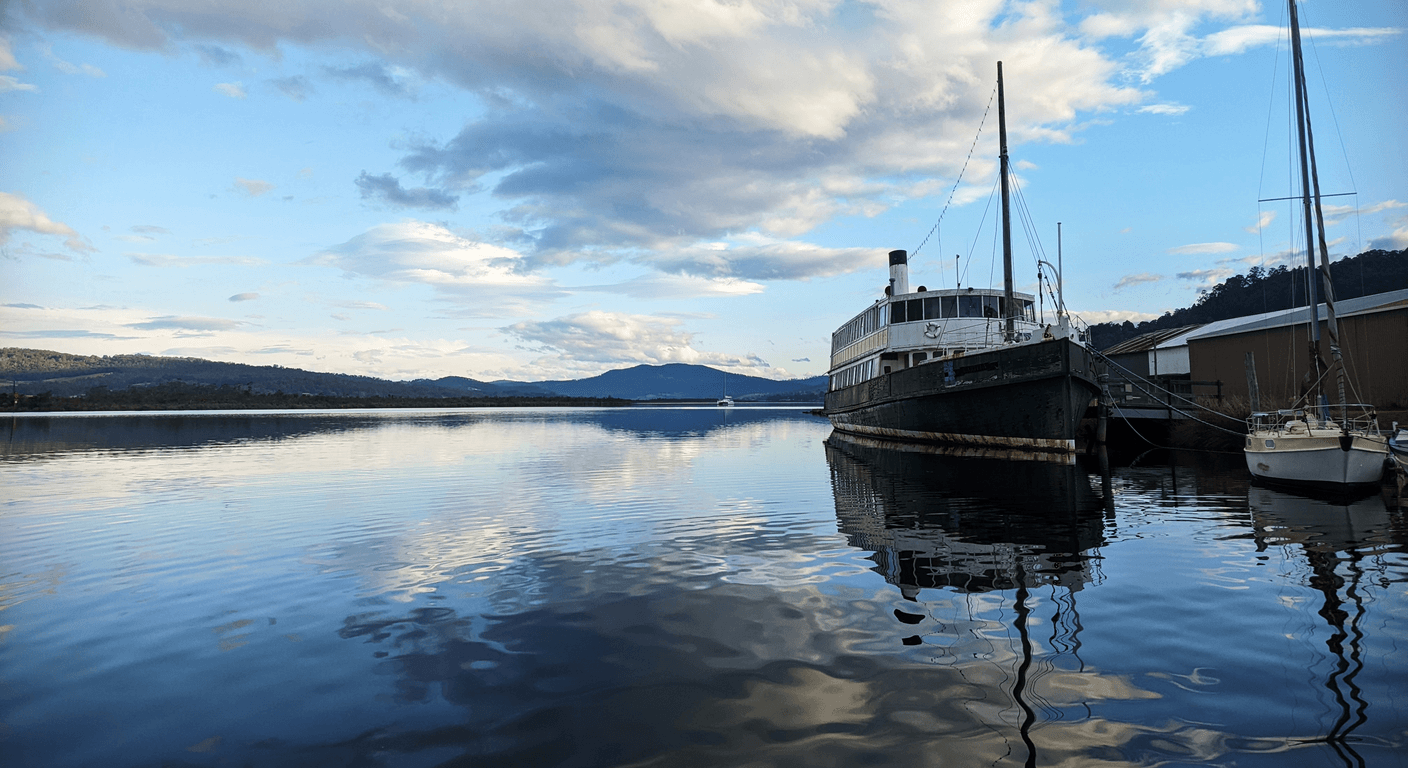
The village is flat and compact — genuinely easy walking, no hills to negotiate, distances short. After the workshop, the sensible move is to follow the riverfront path for a few hundred metres, find a bench, and let the Huon do its thing. The water views along this stretch are the kind that don't photograph well but settle something in you.
Franklin has a small arts community that shows up in the form of galleries and studios scattered through the village. The old palais theatre — a weatherboard building that has survived longer than anyone in its heyday would have predicted — occasionally hosts events and exhibitions; worth a look at what's on when you're planning. The cafes are few but sufficient, with the kind of coffee and lunch options that suit a mid-morning arrival.
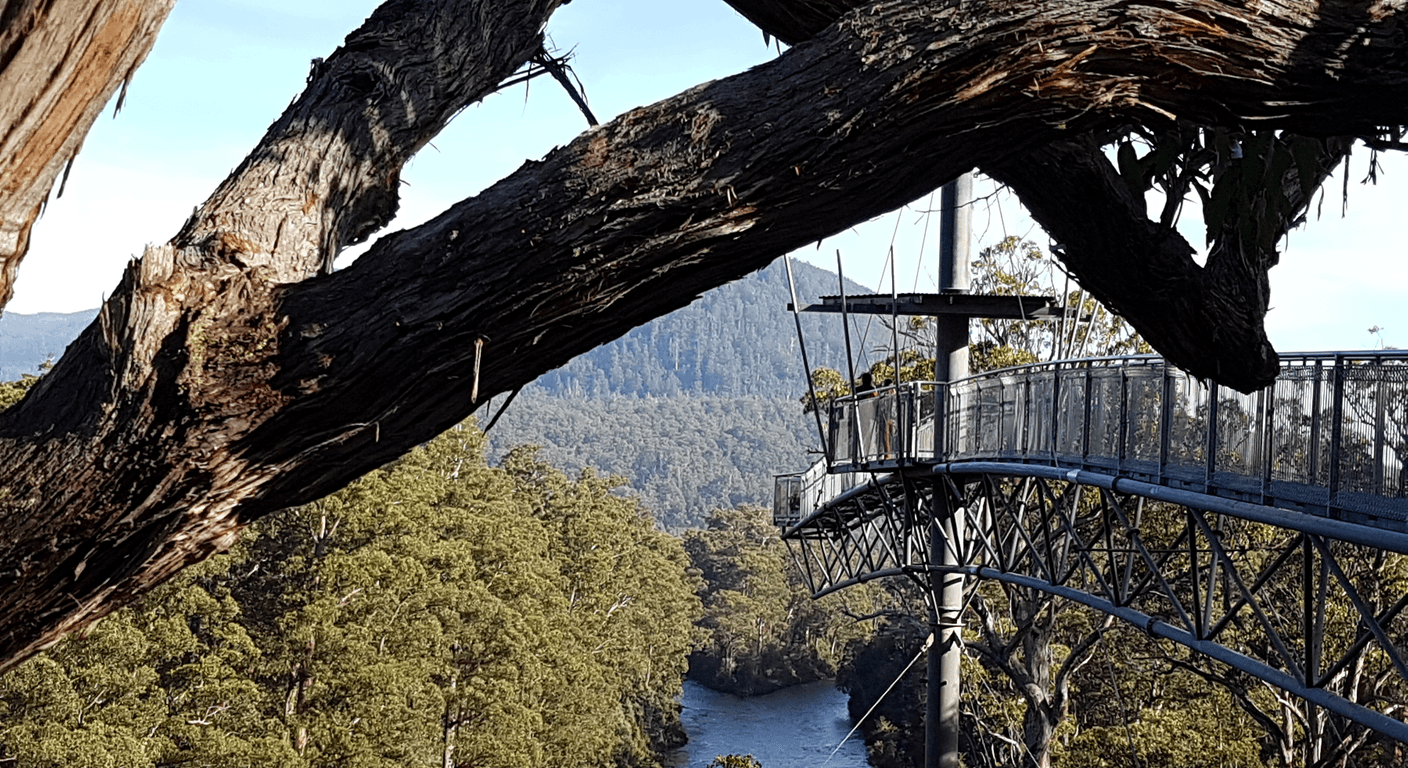
The Huon Highway itself is worth treating as part of the experience rather than just the means of getting there. Both directions from Franklin offer water views across the river, and the valley's orchard country and timber history are readable in the landscape if you know to look for them. Grey nomads who've based themselves in the Huon Valley for a few days will find Franklin fits naturally into a broader circuit that might include Geeveston, the Tahune AirWalk (confirm current operating status before visiting) and the Channel Highway back to Hobart.
Getting there from Hobart — and from Victoria
From Hobart, Franklin is straightforward: take the Southern Outlet to the Huon Highway (A6) and follow it south through Huonville. Allow 45 minutes without stops, more if you pull over in Huonville for supplies or a look at the Huon River. There is no practical public transport option from Hobart to Franklin for day visitors — a hire car or your own vehicle is the realistic choice. Taxis and rideshare from Hobart would be costly for the distance.
For a Victorian travelling down to Tasmania, the two practical entry points are the Spirit of Tasmania ferry from Geelong (overnight crossing, arriving in Devonport — then a 3-plus hour drive south to Hobart) or a direct flight from Melbourne to Hobart Airport, which takes roughly an hour. Flights also operate from Sydney. Hiring a car at Hobart Airport is straightforward and gives you the flexibility the Huon Valley rewards. Budget at least one full day in Hobart before heading south if you've flown — the adjustment is minor but the Huon Valley deserves a clear head.
Travel insurance is worth considering carefully for any Tasmanian trip, particularly for travellers with pre-existing conditions. Confirm policy terms with your insurer before booking.
Practical matters: timing, pacing and what to bring
The Wooden Boat Centre is the kind of attraction that suits a mid-morning arrival — say, 10am — leaving the afternoon free for the village and the drive back. Confirm opening hours and whether guided tours are running on your chosen day before you travel; the centre's website or a direct phone call will give you current information that no travel guide can guarantee.
The workshop floor is covered and sheltered, so weather is less of a factor inside than out. September through April offers the most pleasant conditions for the village walk and the highway drive; winter in the Huon Valley is genuine — cold, sometimes wet — though the centre itself remains a warm, dry space. Wear comfortable shoes; the surfaces are even but a workshop floor has its textures.
Franklin is not a place that requires much in the way of planning beyond confirming the centre's hours. Take cash as well as a card — smaller Tasmanian attractions and cafes don't always have reliable EFTPOS. And allow more time than you think you'll need. The Huon has a way of making schedules feel slightly beside the point.
Is the Wooden Boat Centre worth the trip from Hobart?
For the right traveller, unequivocally yes. Not everyone will find 45 minutes of watching people build boats rewarding — but if you have any interest in craft, timber, maritime history or simply watching skilled people do difficult work with their hands, the centre delivers something genuine that most tourist attractions cannot. It's also, at around $15 to $20 entry, one of the better-value cultural experiences in southern Tasmania.
The combination of the centre and the village makes for a satisfying half day that doesn't ask much physically and delivers more than it promises. For a solo traveller who prefers depth to ticking boxes, Franklin is exactly the kind of place worth seeking out.
Quick planning guide
| Ideal pace | Slow and unhurried |
|---|---|
| Best months | September to April |
| Suggested stay | Half a day |
| Mobility level | Easy — flat, compact village and a level, covered workshop floor |
| Cost level | Budget-friendly (entry roughly $15–20, under $30 overall) |
| Comfort level | Comfortable, sheltered workshop; village walking on even ground |
| Best for | Solo travellers, and anyone interested in craft, timber or maritime history |
| Main planning consideration | Confirm the centre's opening hours and tour schedule beforehand, and arrange a hire car since there's no practical public transport from Hobart |
Key takeaways
- The Wooden Boat Centre at Franklin is a working boatbuilding school, not a museum — visitors watch real vessels being constructed from Huon pine.
- Entry with a workshop guided look runs around $15–20 (indicative); confirm current prices and tour times directly with the centre before visiting.
- Franklin is 45 minutes south of Hobart on the Huon Highway — a hire car is the practical choice, as public transport options for day visitors are limited.
- Huon pine grows only in Tasmania's southwest and is prized for its natural rot resistance; the timber used at the centre comes from salvaged sources.
- The village is flat and walkable, with riverside paths, a restored palais theatre, galleries and cafes all within easy reach of the centre.
- Best visited September to April; confirm the centre's opening hours and workshop schedule before making the drive.
Recommended partners and links
Indicative prices only — always confirm with the operator before booking.
Frequently asked questions
How much does it cost to visit the Wooden Boat Centre at Franklin?
Entry with a guided look at the workshop floor runs around $15 to $20 — these are indicative figures only. Confirm current prices directly with the Wooden Boat Centre before visiting, as costs and inclusions can change.
How do I get from Hobart to Franklin?
Franklin is approximately 45 minutes south of Hobart via the Southern Outlet and Huon Highway (A6). A hire car or your own vehicle is the practical option — there is no convenient public transport service for day visitors making this trip.
Is the Wooden Boat Centre suitable for travellers with limited mobility?
Yes. The workshop viewing area and the Franklin village streetscape are both on level ground, making this an easy outing for travellers who prefer flat terrain and short walking distances. Confirm specific accessibility arrangements with the centre if needed.
What is Huon pine and why is it significant?
Huon pine is a slow-growing conifer found only in Tasmania's southwest. Its timber is dense, fine-grained and contains a natural oil that resists rot and marine borers, making it exceptionally durable for boatbuilding. Stocks are now tightly regulated, and the timber used at the centre comes from salvaged sources.
What else is there to do in Franklin besides the Wooden Boat Centre?
Franklin village offers a restored palais theatre, small galleries, riverside walking paths with Huon River views, and several cafes — all within easy flat walking distance of the centre. The Huon Highway in both directions also offers scenic river valley views.