Young, in the New South Wales Hilltops region, is best visited from mid-November through late December, when cherry orchards open for picking and the National Cherry Festival fills the town in early December. A two-night stay suits most travellers, pairing gentle orchard walks with the Lambing Flat Folk Museum's colonial history. Mobility demands are easy, though orchard ground can be uneven. There is no direct public transport from Melbourne, so driving around four to four and a half hours is the practical way in.
Why Young in cherry season suits travellers over 60
Young sits about 380 kilometres north-east of Melbourne and roughly 380 kilometres south-west of Sydney, in the New South Wales Hilltops region. The town is compact, the pace is unhurried, and from mid-November through to Christmas the surrounding countryside turns a deep red-green as cherries ripen on tens of thousands of trees. For a couple who appreciates good food, open air and a genuine sense of place, the cherry season offers something more grounded than a coastal resort.
The appeal for older travellers is partly practical. You are not bushwalking on steep terrain or navigating a crowded city. Orchard visits involve gentle movement between rows of trees, roadside stalls are plentiful if you prefer not to pick yourself, and the town centre has cafes, a heritage streetscape and the excellent Lambing Flat Folk Museum all within easy reach of each other. The region also has a strong food culture — local stone fruit, olive oil, wines from Hilltops producers — that rewards anyone who travels with an appetite for place.
For Greek Australian travellers in particular, there is something familiar in the scale and rhythm of a fruit-growing community. The orchards are family operations, many passed down over generations, and the hospitality at farm gates tends to be direct and genuine rather than performative. Conversations happen. That quality is harder to find in larger tourism destinations.
What is the National Cherry Festival and when does it run?
The National Cherry Festival has been held in Young for decades and typically takes place over a weekend in early December, timed to coincide with peak cherry harvest. The festival fills the town centre with stalls, live music, a carnival atmosphere and cherry-themed food and produce. It draws large crowds for a regional event, which means accommodation books out well in advance — more on that below.
The program usually includes a Cherry Queen competition with deep local roots, a parade through the main street, cooking demonstrations, and producers selling direct. Some years there are ticketed evening events; others keep the bulk of the festival free and open. Checking the official festival website at cherryfestival.com.au in the months before travel is the most reliable way to confirm the 2026 program and any ticketed components.
For a couple who finds large crowds tiring, it is worth knowing that the festival weekend is the busiest period but not the only good time to visit. The two or three weeks before the festival, from mid-November onward, offer quieter orchard visits, shorter queues at farm gates, and often the same quality of fruit. If the festival itself is the drawcard, arriving on the Friday afternoon before the main Saturday program tends to give you the best of both: the atmosphere without the peak Saturday crowds.
How does orchard picking actually work — and is it manageable at 70-plus?
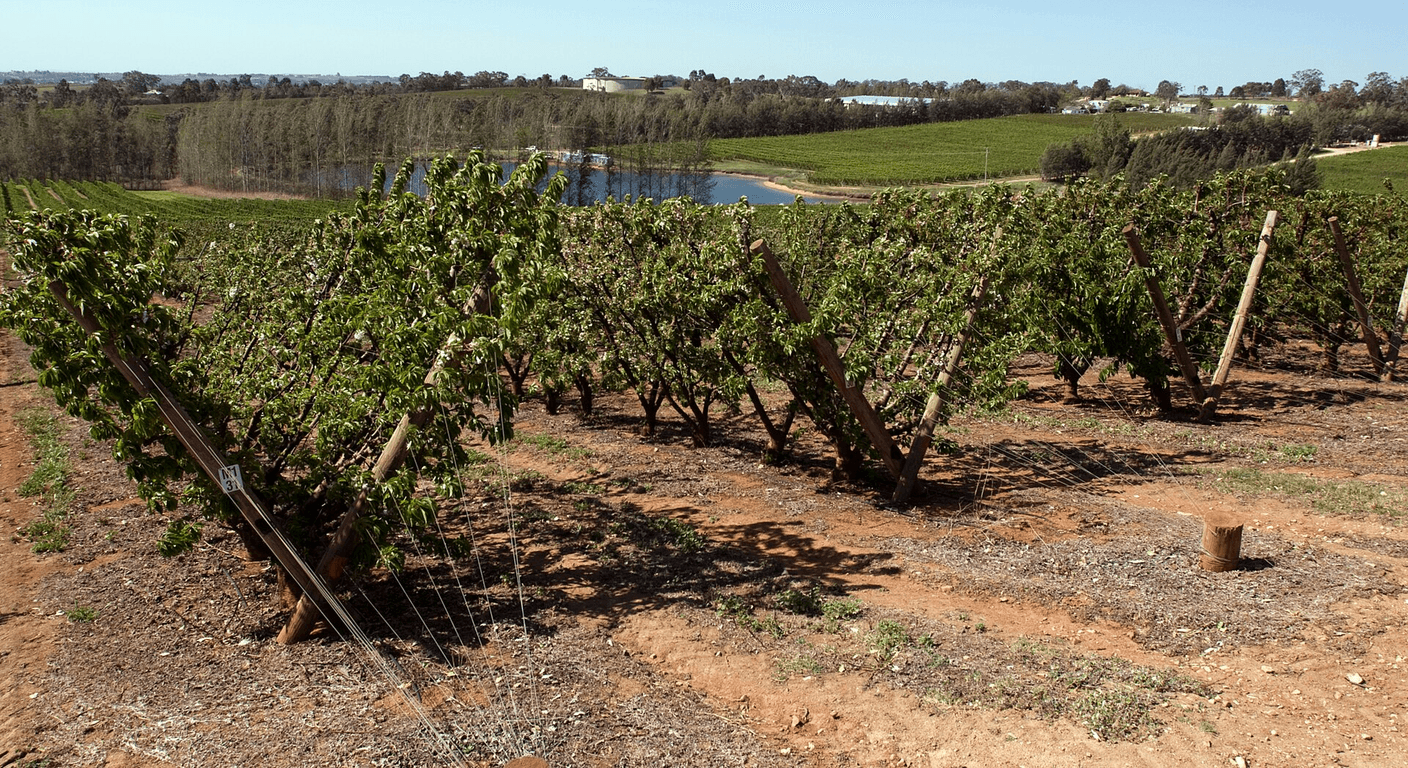
Pick-your-own at Young's orchards is gentle work by most standards, but honest guidance matters here. You walk between rows of cherry trees on ground that is typically uneven — compacted earth, occasional tree roots, slight slopes — and you reach up or across to pick fruit at roughly shoulder height. There is no heavy lifting involved. The physical demand is closer to a slow garden stroll than a hike, but if you have balance concerns, a walking stick or trekking pole is a sensible companion. Supportive, closed-toe shoes are worth wearing; thongs or sandals are not ideal on orchard ground.
Most orchards provide buckets or bags and weigh your fruit at the end. Indicative pricing runs at roughly $8 to $15 per kilogram depending on the variety and the season's supply, though these figures are indicative only and vary between orchards and across seasons — always confirm current pricing directly with the orchard before you visit. The visityoung.com.au website lists participating orchards each season. Popular varieties in the Young region include Lapin, Bing and Van, with Lapin often being the later-ripening variety that extends the season into late December.
A practical tip for couples: decide in advance how much fruit you realistically want to take home. It is easy to pick more than you will eat. Half a kilogram of cherries each is a pleasure; three kilograms becomes a logistical question about how far you are driving and whether you have a cooler bag. Most orchards also sell pre-picked fruit by the punnet or box if one partner prefers not to walk the rows, which makes the experience flexible.
The Lambing Flat Folk Museum: why it deserves more than a quick look
Young sits on the site of the Lambing Flat goldfields, and in 1861 those fields were the scene of one of the most significant and troubling events in Australian colonial history: the Lambing Flat riots, in which Chinese miners were violently expelled from the goldfields by European diggers. The Lambing Flat Folk Museum holds artefacts and documents relating to this period, including the Roll Up banner carried during the riots, which is considered one of the most significant objects in Australian social history.
The museum is housed in the old railway goods shed in Young's centre and is managed by a dedicated local committee. The collection extends beyond the goldfields riots to cover the broader pastoral and agricultural history of the Hilltops region, the development of the cherry industry, and everyday life in the town across the nineteenth and twentieth centuries. It is the kind of regional museum that repays a genuine hour and a half rather than a fifteen-minute walkthrough.
For travellers with a Greek Australian background, the layers of migrant history in Young — including later waves of European and Mediterranean settlement that shaped the region's horticulture — add another dimension to the visit. Entry fees are modest; confirm current pricing at the museum directly or via lambingflatmuseum.com.au. The museum's accessibility varies; it is worth calling ahead if mobility or step access is a concern.
Getting to Young from Victoria: what are the realistic options?
Young is not on the main rail corridor from Melbourne, so most Victorian travellers either drive or use a combination of train and coach. Driving from Melbourne via the Hume Highway and then through Yass or Cootamundra takes around four to four and a half hours depending on your route and rest stops — a manageable distance for a couple comfortable with regional driving, though the final stretch through the Hilltops on country roads deserves care, particularly at dusk when wildlife is active.
NSW TrainLink operates coach and rail services from Sydney and from Canberra that connect to Young; Victorian travellers can reach Canberra by coach from Melbourne or fly into Canberra and connect from there. Transport for NSW at transportnsw.info is the authoritative source for current timetables and fares. There is no direct public transport link from Melbourne to Young, which makes a private vehicle the more practical choice for most couples in this age group who want the flexibility to visit multiple orchards.
If you are driving, plan for a rest stop at Yass or Harden rather than pushing straight through. The roads are generally good but the final 60 kilometres into Young are two-lane rural highway. Fuel up before leaving Cootamundra or Harden if you are coming from the south, as petrol options thin out between towns.
Where to stay and why you need to book early
Young has a modest but adequate range of accommodation: motels, a caravan park with cabins, and a small number of bed-and-breakfast style options in town and on surrounding properties. The town is not set up for large-scale tourism in the way that a coastal destination is, which is part of its appeal — but it also means that the National Cherry Festival weekend sees accommodation genuinely sell out weeks or months in advance.
For couples travelling in December, booking accommodation three to four months before the festival is a reasonable minimum. The visityoung.com.au site lists accommodation options, and standard booking platforms carry most of the motel and cabin options. If Young itself is fully booked, Cowra (around 70 kilometres north) and Cootamundra (around 60 kilometres south) are the nearest towns with additional accommodation and are manageable as a base for day trips into Young during festival week.
Ground-floor motel rooms are generally the most accessible option for travellers who prefer to avoid stairs. When booking, it is worth confirming directly with the property that step-free access to the room and bathroom is available, as listings do not always make this clear. A motel with on-site parking also simplifies orchard-hopping days when you are carrying fruit and cooler bags back to the car.
Making the most of a day or two: a sensible itinerary
A two-night stay gives you the most satisfying experience of Young in cherry season without feeling rushed. On the first afternoon, settle in and walk the main street — Boorowa Street has cafes, a bakery and the kind of unhurried atmosphere that lets you get your bearings. The evening meal options are modest but honest; a couple of the town's restaurants and RSL-style venues serve reliable food. Hilltops wines, particularly from Grove Estate or Chalkers Crossing, are worth seeking out on a local menu.
Dedicate a morning to orchard picking — two to three hours is enough for most couples, including the drive to the orchard and time at the farm gate. Then use the afternoon for the Lambing Flat Folk Museum, which closes mid-afternoon on most days, so timing matters. If the festival is running, the Saturday morning parade and the stalls in the town centre are the centrepiece, and arriving early means better viewing and easier movement through the crowd.
On the return drive south, the route through Harden and then back toward the Hume via Jugiong is pleasant and takes you past the Long Track Pantry at Jugiong, a well-regarded regional food stop that suits a late-morning break. Confirm current trading hours before you go, as regional businesses adjust seasonally.
Quick planning guide
| Ideal pace | Slow-paced and unhurried |
|---|---|
| Best months | Mid-November to late December, with the festival in early December |
| Suggested stay | Two nights |
| Mobility level | Easy — gentle walking on uneven orchard ground, no steep terrain |
| Cost level | Budget-friendly to moderate |
| Comfort level | Modest but adequate, with ground-floor motel rooms the most accessible option |
| Best for | Couples over 60 who enjoy food, history and a relaxed regional pace |
| Main planning consideration | Book accommodation three to four months ahead for festival weekend |
Key takeaways
- Young's cherry season runs from mid-November through late December, with the National Cherry Festival typically held on a weekend in early December.
- Pick-your-own orchard work is gentle but involves uneven ground — closed-toe shoes and a walking stick if needed are practical choices for older travellers.
- Indicative orchard picking prices run around $8 to $15 per kilogram depending on variety and season; always confirm current pricing directly with the orchard before visiting.
- The Lambing Flat Folk Museum holds the Roll Up banner from the 1861 Lambing Flat riots, one of the most significant objects in Australian social history.
- Accommodation in Young during festival weekend books out well in advance — three to four months ahead is a sensible minimum for December travel.
- Driving from Melbourne to Young takes around four to four and a half hours; there is no direct public transport link, making a private vehicle the most practical option for Victorian couples.
Recommended partners and links
Indicative prices only — always confirm with the operator before booking.
Frequently asked questions
When is the best time to visit Young for cherry picking?
The cherry season in Young runs from mid-November through to late December, with peak ripeness typically in early to mid-December. The National Cherry Festival falls on a weekend in early December. Visiting in the two weeks before the festival offers quieter orchard access and good fruit quality without the festival-weekend crowds.
Is cherry picking suitable for older travellers or those with mobility concerns?
Cherry picking in Young's orchards involves walking on uneven ground between tree rows and reaching to pick fruit at roughly shoulder height. It is low-intensity work but not flat or paved. Travellers with balance concerns should bring a walking stick or trekking pole, and closed-toe shoes with grip are strongly recommended. Most orchards also sell pre-picked fruit by the punnet for those who prefer not to walk the rows.
How much does cherry picking cost at Young's orchards?
Indicative pricing for pick-your-own cherries at Young is roughly $8 to $15 per kilogram depending on the variety and the season, but prices vary between orchards and from year to year. These figures are indicative only — confirm current pricing directly with the orchard you plan to visit before you go. The visityoung.com.au website lists participating orchards each season.
What is the Lambing Flat Folk Museum and why is it worth visiting?
The Lambing Flat Folk Museum in Young documents the history of the Lambing Flat goldfields, including the 1861 riots in which Chinese miners were violently expelled by European diggers. Its most significant holding is the Roll Up banner carried during the riots, regarded as a major artefact of Australian social history. The museum also covers the broader agricultural and community history of the Hilltops region. Entry is modest; confirm current fees and opening hours directly with the museum at lambingflatmuseum.com.au.
How do you get to Young from Melbourne?
Most Victorian travellers drive to Young, a journey of around four to four and a half hours via the Hume Highway and then through Yass or Cootamundra. There is no direct public transport link from Melbourne to Young; travellers without a car can reach Canberra by coach or flight and connect via NSW TrainLink services, though this involves multiple legs. Check transportnsw.info for current timetables and fares.