Yungaburra, on Queensland's Atherton Tablelands about an hour from Cairns, is best visited in the dry season (May–October) when the winding Gillies Range road is clearest. It suits a full day trip built around three free highlights: the flat, boardwalk-accessed Curtain Fig Tree, dawn or dusk platypus watching at Peterson Creek, and a self-guided heritage walk past National Trust timber buildings. Mobility is easy throughout, though there's no direct public transport — visitors need a hire car or a Cairns-based tour operator to make the drive up the range.
Why Yungaburra works so well as a day trip from Cairns
Yungaburra sits on the Atherton Tablelands at around 760 metres above sea level, which means even in the height of a Queensland summer the air is noticeably cooler and drier than coastal Cairns. For travellers who find tropical humidity draining, that alone makes the drive worthwhile. The village is compact, walkable, and genuinely unhurried — a quality that suits couples and solo travellers who want to move at their own pace rather than follow a tour group.
The three headline experiences — the Curtain Fig Tree, the platypus platform on Peterson Creek, and the heritage streetscape — are all free and all within easy reach of each other. There is no entry fee, no ticket queue, and no rigid schedule beyond the natural rhythms of dawn and dusk for the platypus. That simplicity is part of the appeal. You can structure the day around a long cafe lunch and still fit everything in.
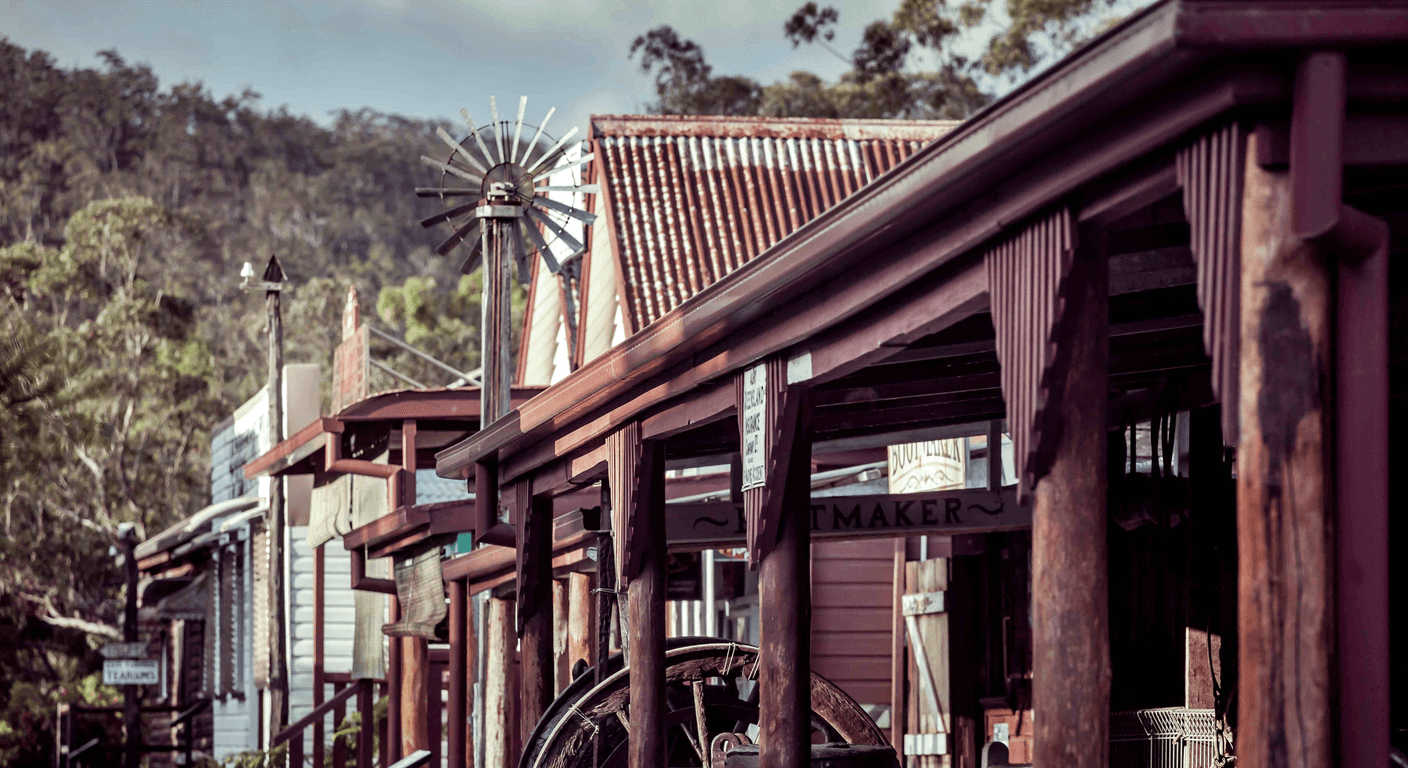
Yungaburra also has a strong sense of place. The main street, Eacham Road, retains much of its early twentieth-century timber architecture, and the community has worked hard to keep it that way. Walking through it feels different from most regional Queensland towns — quieter, more considered, with heritage buildings that are still in active use rather than sitting behind museum glass.
Getting there: the drive up the range from Cairns
The most common route from Cairns takes you south along the Bruce Highway briefly before heading inland on the Gillies Highway (also signed as the Kennedy Highway in sections) up the Gillies Range. The range road is winding with a series of bends and some steep sections, but it is sealed and well-maintained. Allow around 60 to 75 minutes from central Cairns, depending on traffic through the southern suburbs and your pace on the bends. If you or your travel companion finds winding roads uncomfortable, take the bends slowly and pull over at the designated lookout points — the canopy views on the way up are worth a pause.
The alternative is to approach via Kuranda and the Kennedy Highway, which is longer but gentler in gradient. Either way, the drive itself forms part of the experience: rainforest canopy, occasional creek crossings, and the physical sensation of the air changing as you climb. Fuel up in Cairns before you leave — petrol on the Tablelands tends to be priced higher than in the city, as is common in regional Queensland.
There is no direct public transport from Cairns to Yungaburra that suits a day-trip itinerary. Travellers without a hire car should look at small-group tour operators based in Cairns who run Tablelands day trips; Tourism Tropical North Queensland's website is a reasonable starting point for finding licensed operators. If driving, a standard sedan handles the range road without difficulty. Parking in Yungaburra village is free and easy to find near the main street.
The Curtain Fig Tree: what to expect on the boardwalk
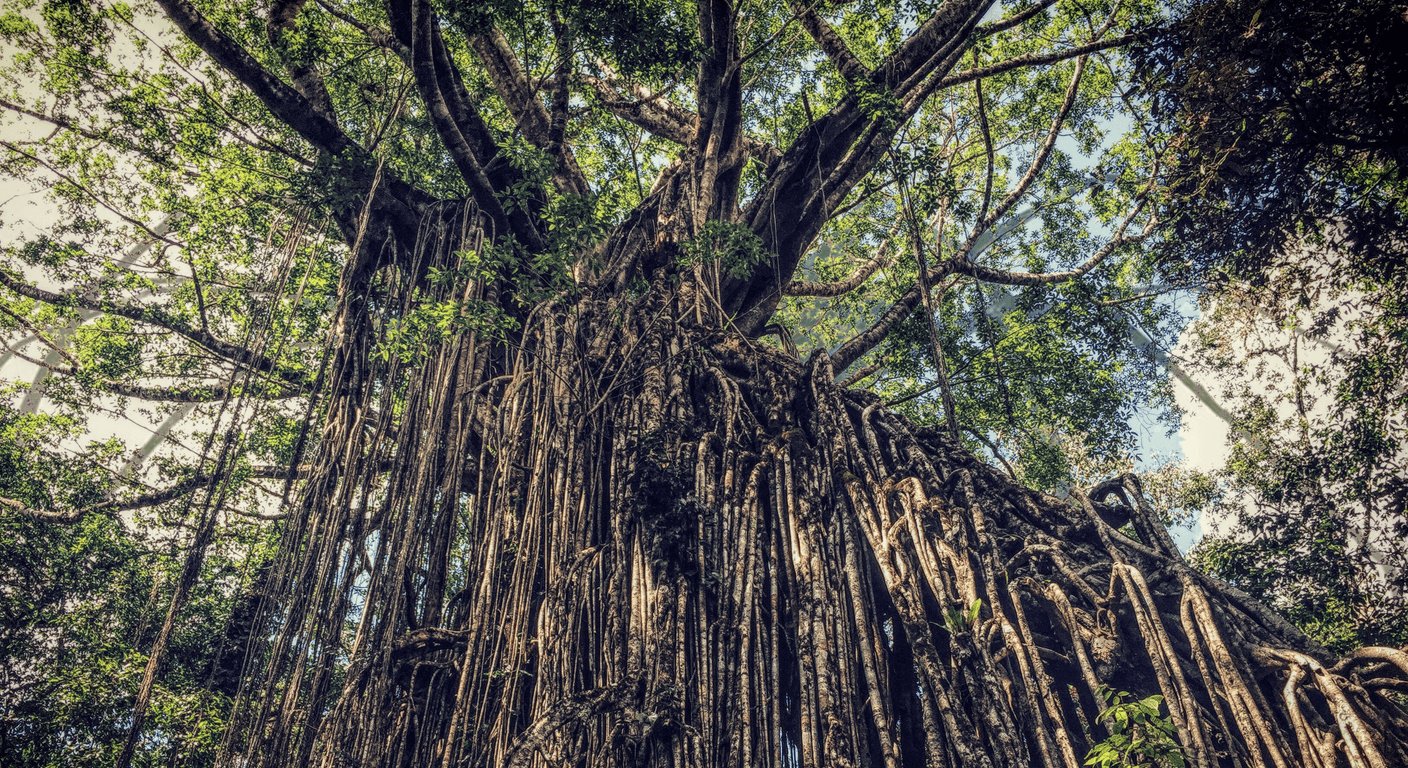
The Curtain Fig Tree is a strangler fig that has grown over centuries into one of the most visually striking trees in Australia. What you see is a living wall of aerial roots — some sources estimate the curtain of roots reaches around 15 metres in height — hanging from the host tree's canopy to the forest floor. It is genuinely ancient and genuinely large, and it rewards a quiet, unhurried look rather than a quick photograph and departure.
The site is managed by Queensland National Parks and is accessed via a short, sealed path from a small car park on Curtain Fig Tree Road, just outside the village centre. The path leads to a timber boardwalk that circles the tree at ground level. The boardwalk is flat and suitable for walkers with limited mobility; a walking stick or light support is adequate for most of the route. There are no steps on the main loop. The surface is even and the circuit is short — most people spend between 15 and 30 minutes here, though there is no reason to rush.
Entry is free. The site has a basic information board explaining the fig's biology and the mechanism by which it eventually envelops its host. There are no facilities on site — no toilets, no cafe — so plan accordingly. The best light for photography is in the morning before the canopy closes the shadows. Confirm current access conditions through the Queensland National Parks website before visiting, as boardwalk maintenance occasionally results in temporary closures.
Platypus on Peterson Creek: how to give yourself the best chance
Peterson Creek runs through the village itself, and a dedicated platypus viewing platform has been established at a point where sightings are reliably reported. Platypus are shy, semi-nocturnal animals, and the honest advice is this: your best chance is early morning (around dawn) or late afternoon moving into dusk. Midday visits are possible, and sightings do occur, but they are less reliable. If your day-trip itinerary allows for an early start from Cairns, arriving at the creek platform by 7am gives you a genuine window.
The platform is accessible from the village on a short, flat path. Wear quiet, dark-coloured clothing if you can — platypus are sensitive to movement and noise on the bank. Stand still, speak softly, and watch the water's surface. What you are looking for is a small, low shape moving smoothly through the water, sometimes diving and surfacing in a rhythm. The wait is part of the experience, and the creek setting — surrounded by fig trees and birdsong — is pleasant regardless of whether a platypus appears.
There is no charge to use the platform. The viewing area is not fenced or gated and is simply part of the village's open space. Local residents and cafe owners are generally happy to advise on recent sighting patterns — it is the kind of place where that conversation happens naturally over a coffee. Do not enter the creek or disturb the banks; the platypus population here is a genuine community asset and is treated as such.
Walking the heritage village: what the streetscape offers
Yungaburra has one of the most intact collections of early twentieth-century timber and corrugated-iron buildings in Queensland, and the National Trust has recognised the precinct accordingly. The main street and surrounding blocks can be explored on a self-guided heritage walk; a brochure for this walk has historically been available from local businesses and the National Trust Queensland website, though you should confirm current availability before visiting.
The buildings include the Lake Eacham Hotel (a classic Queensland pub with wide verandahs), the Yungaburra Heritage Markets site, several former banks and shops, and a number of private residences that retain their original form. None of these are museums — they are living buildings — which gives the streetscape an authenticity that preserved precincts sometimes lack. The pub is a reasonable option for a cold drink or a sit-down lunch; it has been operating in some form since the early settlement of the Tablelands.
The terrain through the village is flat and the footpaths are manageable for most walkers. There are a couple of gentle slopes between the creek area and the main street, but nothing that requires significant effort. Benches and shaded seating are dotted through the area. Plan around 45 minutes to an hour for a relaxed heritage walk, longer if you stop for coffee or browse the shops.
The Yungaburra Village Market: timing your visit
The Yungaburra Village Market is held on the fourth Saturday of each month and draws stallholders selling local produce, plants, crafts, and food. It is a genuine community market rather than a tourist-facing event, which gives it a different character from the larger markets in Kuranda or Cairns. Local farmers bring seasonal Tablelands produce — avocados, macadamias, tropical fruit — and the atmosphere on market mornings is lively but relaxed.
If you are planning a visit specifically around the market, confirm the date on the Yungaburra Market website before finalising travel arrangements. Markets occasionally shift dates around public holidays or local events. Market Saturdays do draw more visitors to the village, so parking can be slightly busier than on a weekday, though the village is still far quieter than a city market.
For travellers who prefer a quieter experience at the platypus platform and the Curtain Fig Tree, a weekday visit avoids any market-day activity. Both options have their merits — the market adds a social dimension to the day that many travellers, particularly those travelling solo, find genuinely enjoyable.
Eating, pacing, and practical matters for the day
Yungaburra has a small but reliable selection of cafes and the Lake Eacham Hotel for lunch. On the Atherton Tablelands broadly, cafes tend to open from around 8am and may close mid-afternoon — this is not a late-lunch culture. Aim to be seated for lunch by 12:30pm to avoid missing kitchen service. Indicative cafe lunch costs are roughly $20-30 per person for a meal and coffee, though you should confirm current prices directly. The Tablelands dairy industry means the coffee and cheese in the region are genuinely good.
A comfortable day-trip structure might look like this: depart Cairns by 6:30am, arrive at Peterson Creek by 7:30am for the platypus window, walk to the Curtain Fig Tree by mid-morning, return to the village for a heritage walk and lunch, and begin the drive back to Cairns by early to mid-afternoon to be well clear of the range road before any late-afternoon weather builds. Tablelands afternoons can produce brief, heavy rain in the wet season (roughly November to April), and the Gillies Range bends are best driven in clear conditions.
Sun protection and a light layer are both worth packing. The Tablelands UV is strong despite the cooler temperature, and the air at altitude can feel cool in the shade, particularly in the dry season (May to October). Comfortable walking shoes with a flat sole are adequate for all three main sites. If you use a walking stick, bring it — the ground around the creek platform can be uneven at the edges.
Quick planning guide
| Ideal pace | Slow and unhurried, self-directed |
|---|---|
| Best months | May to October (dry season, clearer driving conditions) |
| Suggested stay | A full day trip from Cairns |
| Mobility level | Easy — flat boardwalks and footpaths, no steps on main circuits |
| Cost level | Budget-friendly — all three main attractions are free |
| Comfort level | Comfortable — cooler tableland air than coastal Cairns |
| Best for | Couples and solo travellers who prefer flat walks and an unhurried pace |
| Main planning consideration | Time the platypus viewing for dawn or dusk and leave before early afternoon to clear the Gillies Range road ahead of wet-season rain |
Key takeaways
- Yungaburra's three signature experiences — Curtain Fig Tree, platypus at Peterson Creek, and heritage streetscape — are all free and within easy walking distance of each other.
- The platypus viewing platform on Peterson Creek delivers the best results at dawn or dusk; a 7am arrival from Cairns gives you a genuine sighting window.
- The Curtain Fig Tree boardwalk is flat, sealed, and accessible for walkers with limited mobility — no steps on the main circuit.
- The drive from Cairns takes around 60 to 75 minutes via the winding Gillies Range road; a standard hire car handles it without difficulty.
- The Yungaburra Village Market runs on the fourth Saturday of each month — confirm dates at yungaburramarket.com.au before travelling.
- Tableland afternoons can bring heavy rain in the wet season, so plan to leave Yungaburra by early afternoon for a comfortable drive back down the range.
Recommended partners and links
Indicative prices only — always confirm with the operator before booking.
Frequently asked questions
Is the Curtain Fig Tree accessible for travellers with limited mobility?
Yes. The Curtain Fig Tree is reached via a short sealed path from the car park, and the viewing boardwalk around the tree is flat with no steps on the main circuit. It is suitable for walkers using a cane or with limited mobility, though you should confirm current conditions with Queensland National Parks before visiting as maintenance work occasionally affects access.
What is the best time of day to see a platypus at Peterson Creek in Yungaburra?
Platypus are most reliably spotted at dawn and dusk. Arriving at the viewing platform by around 7am gives you the strongest chance of a sighting. Midday visits are possible but less reliable. Stand quietly in dark clothing and watch the water surface patiently — platypus move smoothly and low in the water and may dive and resurface several times.
How far is Yungaburra from Cairns and how do you get there?
Yungaburra is roughly 80 kilometres from central Cairns, a drive of around 60 to 75 minutes via the Gillies Highway up the Atherton Tablelands range. There is no direct public transport suitable for a day trip; a hire car or a small-group tour from Cairns are the practical options. Fuel up in Cairns before departing as regional petrol prices on the Tablelands are typically higher.
When is the Yungaburra Village Market held?
The Yungaburra Village Market is held on the fourth Saturday of each month. Dates occasionally shift around public holidays, so confirm the schedule at yungaburramarket.com.au before planning your visit around it.
Is there a cost to visit the Curtain Fig Tree or the platypus platform?
Both are free. The Curtain Fig Tree is a Queensland National Parks site with no entry fee, and the platypus viewing platform on Peterson Creek is an open public space within the village. The heritage walk through Yungaburra's main street is also self-guided and free.