Palm Cove sits 27 kilometres north of Cairns, best visited between May and October when stinger risk is lowest and the water sits at a pleasant mid-20s Celsius. A half-day trip suffices, though a one-night stay adds an evening meal beneath the paperbark trees. The flat, shaded esplanade and timber jetty make it an easy, low-effort outing, reached in about 30 minutes via Sunbus Route 110 from Cairns for roughly $5–$7 each way.
Getting There: Half an Hour on the Local Bus
From Cairns city, Sunbus Route 110 runs regularly along the Captain Cook Highway to Palm Cove, with the journey taking around 30 minutes depending on stops. The fare is modest — roughly $5–$7 each way, though confirm current pricing directly with Sunbus before you travel. The bus stops close to the esplanade, and from there everything worth seeing is within easy walking distance. No hire car, no parking stress.
For couples travelling together, the bus removes one of those small holiday irritations — who's driving, where do you park — and replaces it with the simple pleasure of watching cane fields and coastal scrub roll past the window. Taxis and rideshare are available from Cairns for those who prefer door-to-door comfort, and several Cairns hotels can arrange transfers. Either way, Palm Cove is accessible without fuss.
The road north from Cairns passes through the suburbs of Machans Beach and Holloways Beach before the highway lifts slightly and the Coral Sea appears to the right. By the time you reach Palm Cove, the pace has already begun to shift. That's not accidental — the village has quietly resisted the kind of development that would make it louder.
The Esplanade and the Paperbarks: What Makes Palm Cove Different
The paperbarks are the thing. They're Melaleuca trees — the same family you'll find across tropical Australia — but the specimens along Williams Esplanade are substantial, their pale, papery trunks wide enough to require two people to embrace them. They form a long, broken canopy between the road and the beach, and on a warm Queensland morning the light through the leaves is genuinely beautiful without needing any further description.
The esplanade itself is flat, sealed, and wide enough for two people to walk side by side without stepping around anyone. Benches are positioned at reasonable intervals. There are no steep kerbs or sudden gradients to negotiate. For travellers who find Cairns' main esplanade a little crowded or Clifton Beach a touch exposed, Palm Cove's shaded corridor feels like it was designed with a different kind of visitor in mind — though that's probably just luck and good old trees.
Midweek outside school holidays, the esplanade is genuinely quiet. A few resort guests, some early-morning walkers, the occasional local with a dog. On weekends and during Queensland school holiday periods it fills considerably, particularly in the dry season. If calm is the priority, a Tuesday or Wednesday in June or July is close to ideal.
The Jetty: A Reason to Walk to the End
Palm Cove's timber jetty extends from the northern end of the esplanade into the shallow water of the Coral Sea. It's not a working commercial jetty — it's a place to stand, look out towards the Coral Sea horizon, and watch what's happening in the water below. On a clear dry-season morning that water is a particular shade of pale green that photographers have been failing to capture accurately for decades.
Fishing from the jetty is a local pastime, and on a weekday morning you'll likely find a couple of people with lines in the water, happy to pass the time of day. There's nothing performative about it. The jetty is also a good vantage point for watching pelicans, which have strong opinions about the fishing and are not shy about expressing them.
The walk from the main dining strip to the jetty and back is around two kilometres at a gentle pace — flat the entire way, with the trees providing shade for most of it. That's comfortably achievable before lunch without anyone feeling pressed. Wear comfortable shoes rather than sandals if you plan to walk the full length of the esplanade, as the timber boards at the jetty can be uneven.
Swimming at Palm Cove: What You Need to Know About Stingers
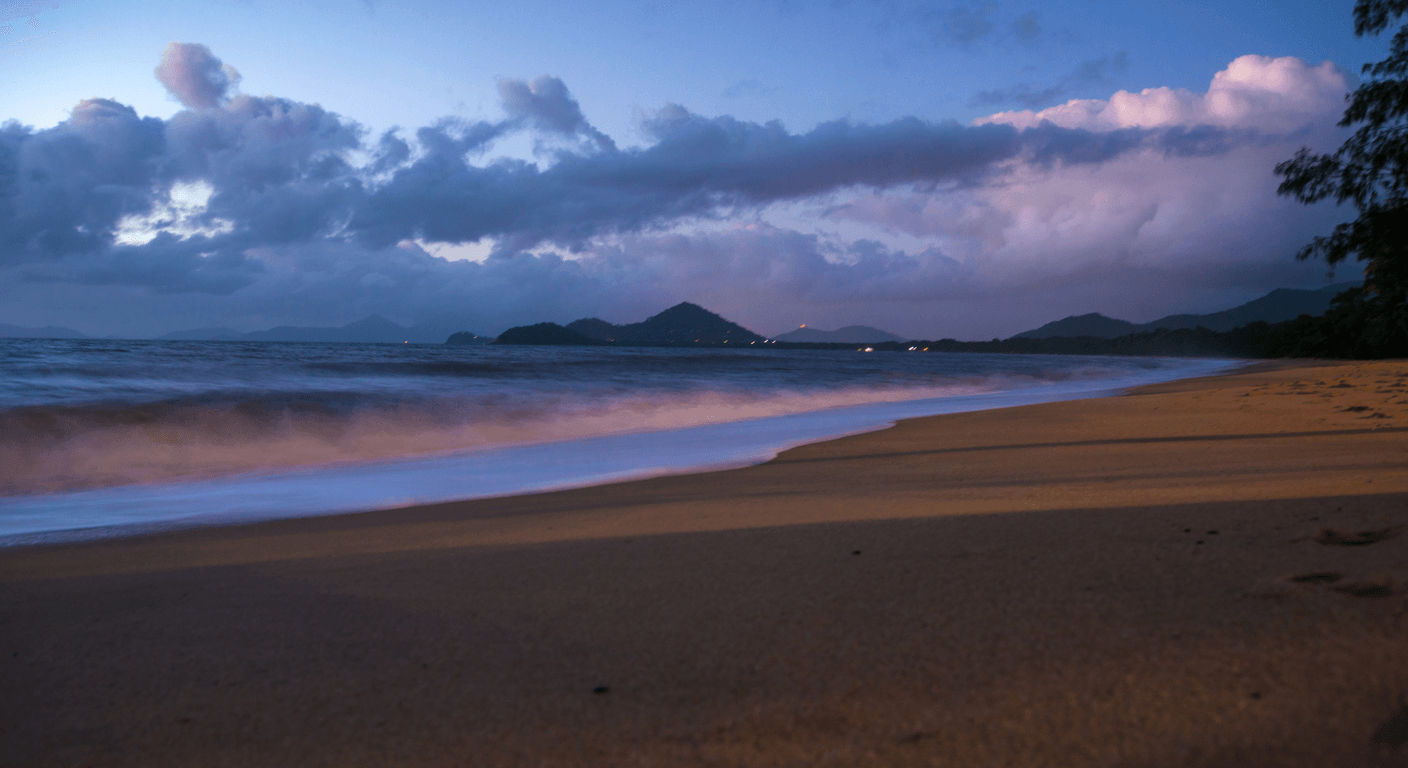
The beach at Palm Cove is patrolled by surf lifesavers during the season — confirm current patrol times and dates with Surf Life Saving Queensland or the posted flags when you arrive. The water is calm by Queensland beach standards, sheltered from the prevailing swell, and the sandy bottom slopes gently.
Between roughly October and May, marine stingers — including Irukandji jellyfish and box jellyfish — are present in North Queensland coastal waters. During this period, swimming is safest inside the stinger net enclosure that is erected seasonally at Palm Cove beach. The enclosure doesn't eliminate all risk, but it significantly reduces it. Always confirm current stinger conditions with lifeguards on the day. Wearing a full-body lycra stinger suit, available for hire locally, adds further protection and is sensible practice rather than excessive caution.
In the dry season from May to October, stinger risk drops considerably, though it never reaches zero in tropical Queensland. This is one practical reason why May to October is the preferred window for most visitors. The water temperature remains warm enough to be genuinely pleasant — mid-20s Celsius — and swimming without a stinger suit feels relaxed and normal. Check the current conditions regardless of the season; conditions vary year to year.
Eating and Drinking Along the Strip
Williams Esplanade has a dining strip that runs the length of the village without ever quite becoming a 'strip' in the Gold Coast sense of the word. The restaurants are spaced out, separated by resorts and gardens, and most have outdoor seating under the trees or facing the beach. The atmosphere at lunch on a weekday is relaxed to the point of being slightly soporific, which is exactly right.
For a casual midday meal, the local bakery options and café-style venues offer toasted sandwiches, pies, and fresh salads for around $15–$25 a head, indicative only — confirm current prices when you arrive. At the more serious end of the strip, restaurants like Vivo Palm Cove and Apres Beach Bar & Grill (confirm current trading status and hours before visiting) offer contemporary Australian menus with a strong emphasis on local seafood. A two-course lunch with a glass of wine runs roughly $60–$80 per person at these establishments, but prices change and menus shift seasonally.
A Greek Australian palate will find the fresh seafood options particularly worthwhile — grilled barramundi, local prawns, coral trout — straightforward cooking that respects good ingredients. The cuisine is broadly modern Australian with obvious tropical influences rather than anything fussy. Coffee is taken seriously at most venues. There's no need to book for lunch on a midweek day, though weekend afternoons in peak season are another matter.
Pacing the Day: A Sensible Itinerary
Arriving by bus around 9 or 9:30 in the morning gives you the esplanade at its quietest, the light at its most flattering, and the jetty largely to yourself. A walk from the bus stop to the jetty and back, with pauses at the paperbarks and a rest on one of the benches, takes around an hour at a comfortable pace. That leaves the morning feeling well spent without anyone feeling hurried.
Lunch from around noon to 1:30 pm suits the rhythm of the strip — kitchens are in full swing, tables are available, and you're not competing with late arrivals. After lunch, a short rest on the beach under the trees — in the shade, with the sea visible — is one of those simple pleasures that a day like this is built for. The afternoon bus back to Cairns runs regularly enough that you can choose your departure without anxiety.
For those considering a one-night stay, Palm Cove has several well-regarded resorts ranging from mid-range to premium. An evening meal on the strip, when the fairy lights come on in the paperbarks and the day-trippers have gone, is a different and slower experience. Prices are higher than Cairns city for accommodation — expect roughly $200–$400 per night at mid-range to premium properties, indicative only.
Practical Considerations for the Over-50 Traveller
Sun protection in tropical Queensland is non-negotiable, even in the dry season and even in the shade of the paperbarks. A high-SPF sunscreen, a wide-brimmed hat, and a light long-sleeved layer for the walk back in the afternoon are sensible rather than optional. The UV index in Cairns regularly reaches extreme levels year-round.
Hydration matters more than it seems — the dry-season heat is manageable but consistent, and it's easy to underestimate fluid intake when the humidity is lower than the wet season. Most cafés will refill a water bottle without complaint. The bus journey is air-conditioned, as are the resort lobbies and most restaurants, so there are regular opportunities to cool down.
Travel insurance that covers pre-existing medical conditions is essential for any Queensland travel, particularly for activities near the water. Ensure your policy is current and that it covers emergency medical treatment, which in remote North Queensland can involve helicopter retrieval. Standard domestic travel insurance often has sub-limits worth checking before you travel.
Quick planning guide
| Ideal pace | Slow-paced, unhurried |
|---|---|
| Best months | May to October (dry season, lower stinger risk) |
| Suggested stay | Half-day trip from Cairns; one night optional for an evening meal |
| Mobility level | Easy — flat, sealed esplanade with benches, no steep gradients |
| Cost level | Budget-friendly for a day trip; premium for overnight resort stays |
| Comfort level | High — shade from paperbarks, air-conditioned bus and venues |
| Best for | Couples and travellers wanting a gentle, low-effort coastal day out |
| Main planning consideration | Confirm current stinger conditions and swim only within the netted enclosure between October and May |
Key takeaways
- Palm Cove is 27 kilometres north of Cairns — roughly 30 minutes by Sunbus Route 110 for around $5–$7 each way, indicative.
- The esplanade is flat, shaded by ancient paperbark trees, and fully accessible for travellers who prefer a gentle pace.
- Swimming is safest inside the stinger net enclosure between October and May — confirm current conditions with lifeguards on the day.
- Midweek visits outside Queensland school holidays give you the village at its quietest and the dining strip at its most relaxed.
- A half-day trip from Cairns is sufficient; a one-night stay adds the pleasure of an evening meal when the day-trippers have left.
- The dry season (May to October) offers lower stinger risk, comfortable temperatures, and the best conditions for the esplanade walk and jetty.
Recommended partners and links
Indicative prices only — always confirm with the operator before booking.
Frequently asked questions
How do you get from Cairns to Palm Cove by public transport?
Sunbus Route 110 runs from Cairns city centre to Palm Cove, with the journey taking around 30 minutes. The fare is roughly $5–$7 each way — confirm current timetables and fares at sunbus.com.au before you travel.
Is it safe to swim at Palm Cove?
Palm Cove beach is patrolled by surf lifesavers during the season. Between October and May, marine stingers including box jellyfish and Irukandji are present in North Queensland waters — swim only inside the stinger net enclosure during this period. From May to October the risk is lower. Always check current conditions with lifeguards on the day, regardless of season.
Is Palm Cove suitable for travellers with limited mobility?
Yes. The Williams Esplanade is flat, sealed, and wide, with benches at regular intervals. The walk from the bus stop to the jetty and back is around two kilometres on level ground. Most restaurants have accessible outdoor seating. It's one of the more mobility-friendly day trip options in the Cairns region.
What is the best time of year to visit Palm Cove?
May to October — the dry season — is the most comfortable and practical time to visit. Temperatures are warm rather than oppressive, humidity is lower, stinger risk is reduced, and the esplanade and beach are at their most pleasant. Midweek visits outside Queensland school holidays are quieter still.
How much does a day trip to Palm Cove cost?
The esplanade, beach, and jetty are free. Bus fares are roughly $5–$7 each way, indicative. A café lunch runs around $15–$25 per person; a sit-down restaurant lunch with wine is roughly $60–$80 per person. All costs are indicative — confirm current prices locally.