The Netherlands is best visited from mid-March to mid-May, when Keukenhof's tulip fields peak through April. Amsterdam suits a slow week-long stay, mixing canal walks, museums and easy rail day trips to Delft, Haarlem and Zaanse Schans. The flight from Australia takes 22–24 hours with one stopover, so a recovery day on arrival is essential. Mobility is moderate — cobblestones, cycling lanes and steep canal-house stairs demand care, despite good museum accessibility.
Getting There: The Long Haul Honestly Assessed
Amsterdam's Schiphol Airport sits around 22 to 24 hours from Melbourne or Sydney, typically with one stopover through Singapore, Kuala Lumpur, Dubai or Doha. There are no non-stop options from Australia. That's a significant journey, and pretending otherwise helps no one. The practical approach is to build a genuine recovery night — ideally two — into the Amsterdam itinerary before doing anything more demanding than a slow canal-side walk and a very good bowl of erwtensoep.
Jet lag travelling westward to Europe tends to be more disruptive than the return journey east. Arriving in Amsterdam in the morning and forcing yourself to stay awake until a local bedtime is the time-tested strategy. A ground-floor or lift-accessible hotel room matters far more on night one than the view. Schiphol has excellent accessibility infrastructure — luggage trolleys are free, the train to Amsterdam Centraal runs every ten minutes and takes roughly fifteen, and the station has lifts throughout.
Travel insurance for this destination deserves careful attention before anything else is booked. Any pre-existing medical conditions need to be declared fully and covered explicitly — European medical costs are significant. The Australian Government's Smartraveller website (smartraveller.gov.au) carries current entry requirements, visa information and safety advisories for the Netherlands. Check it before booking and again closer to departure, as conditions can change.
Amsterdam on Foot and Water: How to Read the City Slowly
Amsterdam's historic canal ring — a UNESCO World Heritage area — is best understood as a series of concentric arcs radiating from Centraal Station. The Museum Quarter, where the Rijksmuseum and Van Gogh Museum face each other across Museumplein, sits on the southern edge of the ring. Most of the city's serious sightseeing is walkable between these points, though the cobblestones on bridge crossings and along narrower canal streets are genuinely uneven. Sensible shoes are not optional.
A canal boat tour reframes the city entirely. Seeing Amsterdam from the water — the tilting facades, the houseboats, the arched bridges stacked one behind another — provides the orientation that no map quite delivers. Several operators run 75-minute open and covered tours departing near Centraal and from the Rijksmuseum waterway entrance. Hop-on hop-off boat passes offer flexibility, though in spring the queues at popular stops can be considerable. Booking a specific departure time online tends to be more reliable. Indicative prices run around AUD $30–$50 per person; confirm with operators directly.
The pedestrian's relationship with Amsterdam's cycling infrastructure deserves frank discussion. Bike lanes are not suggestions — they are high-speed, continuous streams of confident locals who will not slow down. The lanes are often red-painted but not always clearly marked, and they run along both sides of most major streets, sometimes between the footpath and the road. Looking left, right, left again, and then behind before stepping anywhere is not paranoia. It's simply how the city works. Tram tracks present a separate hazard for anyone wearing heeled shoes or using a wheeled bag across them at an angle.
The Rijksmuseum and Van Gogh Museum: Booking Before You Pack
Both museums require timed entry tickets booked in advance, and in April — peak tulip season — slots at the Van Gogh Museum in particular disappear weeks before the date. This is not an exaggeration to prompt urgency; it's a logistical fact that catches many travellers unprepared. The museums' own websites (rijksmuseum.nl and vangoghmuseum.nl) are the correct booking channels. Third-party resellers exist but add cost and occasionally complications.
The Rijksmuseum is enormous — over eighty galleries across two floors — and the honest approach for a single visit is to identify three or four priority works and move deliberately through the building rather than attempting comprehensive coverage. Rembrandt's Night Watch has its own dedicated room and is genuinely worth the visit on its own terms. The museum has a good café with seating, and the inner garden courtyard offers a quieter rest point mid-visit. Accessibility is excellent: lifts, accessible toilets, and an audio guide app that works offline.
The Van Gogh Museum is more compact and, for many visitors, more emotionally absorbing. The chronological hang traces Van Gogh's development from the dark Dutch palette of his early work through to the luminous Mediterranean canvases of Arles and Saint-Rémy. The museum has invested in accessibility improvements in recent years; confirm current lift access and wheelchair availability when booking. Both museums have cloakrooms — leave the large bag there and move freely.
Keukenhof and the Tulip Fields: Timing Is Everything
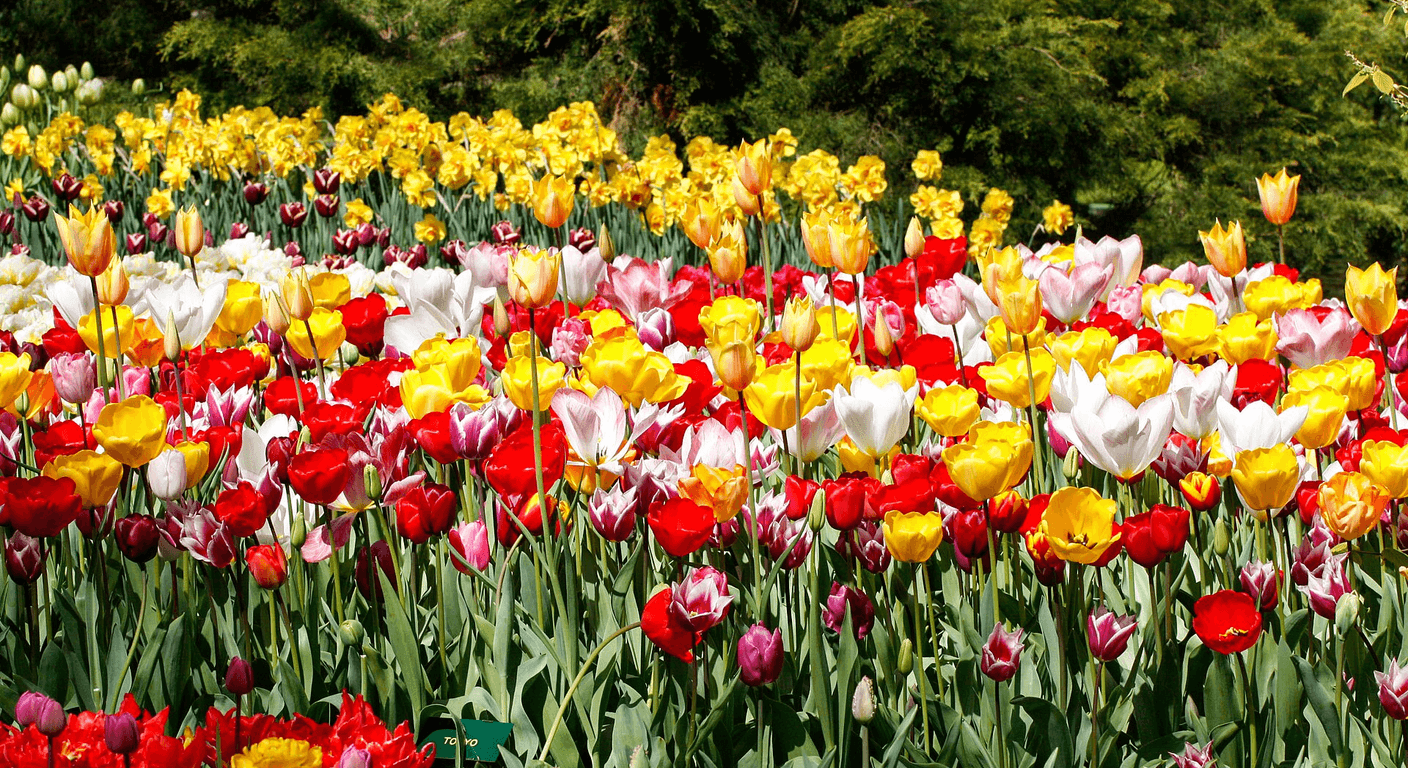
Keukenhof Garden opens for roughly eight weeks each spring, generally from mid-March to mid-May — the exact dates shift slightly year to year depending on the bulb growers' assessment of conditions, so confirm the current season's dates at keukenhof.nl well before booking flights. The garden covers around 32 hectares outside the town of Lisse, planted with around seven million bulbs in a deliberate progression of bloom: early crocuses and daffodils giving way to hyacinths, then tulips in full colour through April.
Getting there from Amsterdam is straightforward and does not require a car. Take the NS intercity train from Amsterdam Centraal to Leiden Centraal, then connect to the dedicated Keukenhof Express bus (Bus 854) that runs directly to the garden entrance during the open season. The whole journey takes around 45 minutes. Tickets for the bus and garden entry can be purchased as a combination through the Keukenhof website. Confirm current timetables with NS (ns.nl) closer to travel, as bus schedules are seasonal.
The tulip fields themselves — the working agricultural strips of red, yellow, pink and white stretching to the horizon — are visible from the train and bus windows en route to Keukenhof, and are frankly as memorable as the garden itself. The area around Lisse, Hillegom and Noordwijk is the heart of the bulb-growing region. A slow bus or a taxi drive through the back roads in the third week of April, when multiple varieties bloom simultaneously, is one of those experiences that genuinely earns the word remarkable.
Day Trips by Train: Zaanse Schans, Delft and Beyond
The Netherlands' rail network is one of Europe's best, and from Amsterdam Centraal almost every worthwhile destination is within an hour. Zaanse Schans — the open-air windmill village north of Amsterdam — takes roughly 20 minutes by train to Zaandijk-Zaanse Schans station, then a short walk. The working windmills, wooden houses and craft demonstrations (cheese, clogs, paint) can feel slightly tourist-managed, but the landscape is authentic and the scale is gentle. It suits a half-day rather than a full one.
Delft, in South Holland, is a different proposition entirely — a functioning small city with a genuinely beautiful medieval centre, two remarkable churches (the Nieuwe Kerk and Oude Kerk), and the Royal Delft factory where the blue-and-white earthenware has been made since 1653. The factory tour includes a museum and demonstration workshop; confirm opening hours and booking at royaldelft.com. From Amsterdam, Delft is around an hour by intercity train with one change at Den Haag or direct on some services — check ns.nl for current routes.
Haarlem deserves a mention for travellers who want a canal city without Amsterdam's tourist density. Twenty minutes from Centraal by train, it has the Frans Hals Museum, a fine market square, and streets that feel lived-in rather than performed. It works well as a half-day addition to a Keukenhof day, given Leiden is in the opposite direction. The Hague (Den Haag), seat of the Dutch government, adds the Mauritshuis museum — home to Vermeer's Girl with a Pearl Earring — to the itinerary for those staying long enough.
Where to Stay: Choosing Accommodation Wisely
Amsterdam's most characterful accommodation is in converted canal houses — tall, narrow buildings with staircases that are, by any reasonable measure, almost vertical. Some have no lift at all. This is not a minor inconvenience for a fourteen-night stay with full luggage; it's a daily physical challenge. When booking, ask specifically about staircase gradient and whether a lift serves the room. Hotels in the Museum Quarter and around Vondelpark tend to be in larger, purpose-built or converted institutional buildings with better accessibility than the canal-ring guesthouses.
For solo female travellers, Amsterdam is generally considered a safe European destination. The city is well-lit, the public transport runs late, and the central areas are busy with tourists and locals well into the evening. That said, the Red Light District — which sits between Centraal Station and Dam Square — is best navigated with awareness at night, particularly on weekends. It's not dangerous, but it's also not especially pleasant to walk through alone after dark. Alternative routes through the Jordaan neighbourhood or along the Singel canal are both shorter on atmosphere and longer on charm.
Indicative mid-range hotel costs in Amsterdam during April run roughly AUD $300–$500 per night for a standard double room; confirm current rates when booking. Apartment rentals through established platforms can offer better value for longer stays and the practical benefit of a kitchen. The city has implemented restrictions on short-term rentals in recent years — confirm any listing is legally compliant before booking.
Eating, Drinking and the Practical Rhythm of Dutch Days
Dutch food culture has changed considerably in the past decade. Amsterdam now has a serious restaurant scene — Indonesian cuisine (a legacy of colonial history) is excellent and often more affordable than European options; rijsttafel, a shared feast of small dishes, is worth seeking out at least once. Albert Cuyp Market in the De Pijp neighbourhood runs Monday to Saturday and is a good ground-level immersion in the city's multicultural food life. The stroopwafel, eaten fresh from a market stall rather than from an airport packet, is a small but genuine pleasure.
Dutch service culture is direct rather than effusive — this is not rudeness, it's simply a cultural register that can read as brusque to Australian sensibilities. Tipping is appreciated but not expected at the level common in the United States; rounding up the bill or leaving five to ten percent is standard. Most restaurants and cafés are card-only now, and contactless payment works reliably throughout the country.
Days in the Netherlands during spring are long — around 14 to 15 hours of daylight by mid-April — which is both a gift and a trap. The temptation to fill every hour is understandable, but a sensible pace means one major museum or excursion per day, lunch somewhere with a canal view, and an afternoon at the pace the city actually rewards: slow. A small notebook, a good coffee, and an hour watching the boats negotiate a narrow canal bridge is not wasted time. It's the point.
Quick planning guide
| Ideal pace | Slow-paced — one major museum or excursion per day |
|---|---|
| Best months | Mid-March to mid-May, with tulips peaking through April |
| Suggested stay | At least a week, plus a dedicated recovery day on arrival |
| Mobility level | Moderate — uneven cobblestones, fast-moving bike lanes, tram tracks and steep canal-house staircases |
| Cost level | Mid-range to premium (hotels roughly AUD $300–$500 per night in April) |
| Comfort level | Good with planning — museums offer lifts and audio guides, but canal-house lodging can be a challenge |
| Best for | Museum lovers, garden and tulip enthusiasts, and travellers who prefer a slow, rail-based pace |
| Main planning consideration | Book Keukenhof, Rijksmuseum and Van Gogh Museum timed tickets weeks ahead, and confirm lift access before booking accommodation |
Key takeaways
- Book Keukenhof, Rijksmuseum and Van Gogh Museum timed tickets weeks before departure — in April, they sell out.
- Steep canal-house staircases are a genuine concern; always confirm lift access when booking Amsterdam accommodation.
- The tulip fields visible from the train between Amsterdam and Lisse in mid-to-late April are as striking as Keukenhof itself.
- Delft, Haarlem and Zaanse Schans are all under an hour by train from Amsterdam Centraal — no car required.
- Bike lanes in Amsterdam move fast and continuously; pedestrians need to treat them with the same caution as a road.
- Allow at least one full recovery day after arriving from Australia before attempting museums or day trips.
Recommended partners and links
Indicative prices only — always confirm with the operator before booking.
Frequently asked questions
When is the best time to visit the Netherlands for tulips?
Mid-March to mid-May is the tulip season, with peak colour typically in the third and fourth weeks of April. Keukenhof Garden opens for approximately eight weeks during this period — exact dates vary by year, so confirm at keukenhof.nl before booking flights.
Do Australian travellers need a visa for the Netherlands?
Australian passport holders can generally enter the Netherlands and the broader Schengen Area for short stays without a visa, but entry requirements can change. Always confirm current requirements at smartraveller.gov.au and the official Dutch government website before booking.
How long is the flight from Australia to Amsterdam?
Flights from Melbourne or Sydney to Amsterdam Schiphol take approximately 22 to 24 hours with one stopover, typically through Singapore, Kuala Lumpur, Dubai or Doha. There are no non-stop services from Australia. Build in at least one recovery night before sightseeing.
Are Amsterdam's museums accessible for travellers with mobility considerations?
Both the Rijksmuseum and Van Gogh Museum have lifts, accessible toilets and audio guide options. Canal-house hotels, by contrast, often have very steep staircases and no lift — always ask specifically about accessibility before booking accommodation.
Is Amsterdam safe for solo female travellers?
Amsterdam is generally considered one of Europe's safer cities for solo female travellers. Central areas and public transport are well-lit and busy into the evening. The Red Light District near Centraal Station is not dangerous but can be uncomfortable to navigate alone at night; the Jordaan and Singel canal routes are easy alternatives.