Barcelona rewards a shoulder-season visit—April–May or September–October—when mild temperatures and thinner crowds suit Gaudí's Sagrada Família and Park Güell. Allow several days, pairing one major sight with a market visit or neighbourhood walk each day. Mobility is moderate: a flat seafront promenade and an accessible Metro offset the Gothic Quarter's uneven cobblestones. There's no direct flight from Australia; the journey takes roughly 22–26 hours via Dubai, Singapore, Doha or Abu Dhabi, often broken with an overnight stopover to arrive rested.
Getting There from Australia: The Long Haul Honestly Described
There is no direct flight from Australia to Barcelona. From Melbourne or Sydney, the most common routes connect through Dubai, Singapore, Doha or Abu Dhabi, with total journey times of roughly 22 to 26 hours including the stopover. Some travellers choose to break the trip in Singapore or Dubai for a night — not weakness, just good sense. Arriving in Barcelona already rested makes the difference between a first afternoon of gentle exploration and one spent horizontal.
Jet lag is real and Barcelona's rhythms — where dinner before 8 pm marks you as unmistakably foreign — can amplify it. Build a genuine recovery night into your itinerary. Book accommodation close to the city centre for the first night, ideally near the Eixample district, where wide flat footpaths and good Metro access make the first disoriented hours easier to manage.
Travel insurance that covers pre-existing medical conditions is non-negotiable. Premiums are higher, but European medical costs without cover are significantly higher still. Check smartraveller.gov.au for current entry requirements, visa rules and any health advisories before booking anything — Spain's requirements for Australian passport holders can change, and the government site is the only source worth trusting.
When to Go: Why Shoulder Season Changes Everything
July and August in Barcelona mean 35-degree heat, queues that test the patience of travellers half your age, and hotel prices at their peak. April, May, September and October offer something more civilised: temperatures in the low-to-mid twenties, manageable crowds at major sites, and a city that feels more like itself. The light in October, in particular, is extraordinary — warm and low and golden in the late afternoon.
Spring brings a particular advantage for anyone interested in Gaudí's work outdoors. Park Güell's mosaic terraces and the organic curves of the Palau Güell are best appreciated when you're not competing with a thousand other people for the same photograph. The Boqueria market, meanwhile, is at its most appealing when you can actually linger at a counter without being jostled.
Winter — November through February — is quiet and mild by northern European standards, but some smaller restaurants and family-run tapas bars do reduce hours. If a quieter city at the cost of slightly grey skies appeals, it is a perfectly reasonable choice. Confirm what's open before you commit to a specific itinerary.
Gaudí Without the Chaos: Booking the Sagrada Família and Park Güell
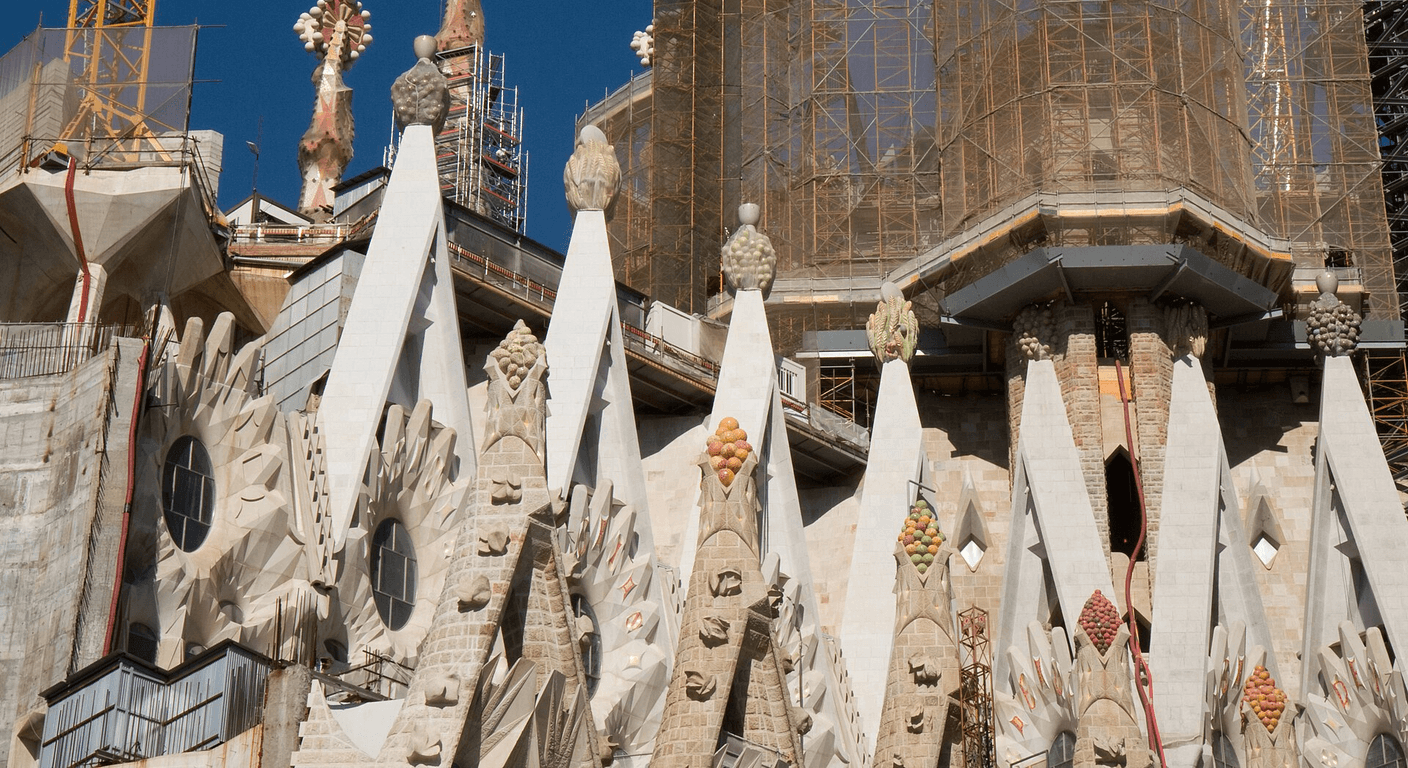
The Sagrada Família is not overhyped. It is one of those rare buildings that confounds expectation regardless of how many photographs you've seen — the interior light alone, filtered through Gaudí's stained glass in colours that shift from cool blues and greens on the eastern side to warm ambers in the afternoon west, is worth the entire trip. Book timed entry tickets directly through the official site at sagradafamilia.org, months ahead if you're travelling in peak periods. Indicative prices run around €26 for basic entry, higher for tower access; confirm current pricing before booking.
Allow at least two hours inside, more if you take the tower lift. The lifts are accessible, though the tower descents involve narrow spiral stairs — worth checking with the booking team if that's a concern. A guided audio tour is included in most ticket tiers and is genuinely informative rather than merely decorative.
Park Güell requires a separate timed ticket for the Monumental Zone — the famous mosaic terrace and Gaudí's architectural centrepieces. Book at parkguell.barcelona. The site is uphill from the Gràcia neighbourhood; a taxi or rideshare to the entrance avoids a steep climb, and the park's paths within the Monumental Zone are manageable on foot. The free areas surrounding the paid zone are worth exploring too, and considerably less crowded.
The Gothic Quarter: Go Early, Go Slowly
The Barri Gòtic is medieval Barcelona at its most atmospheric — narrow laneways, Roman foundations beneath your feet, and the extraordinary Barcelona Cathedral rising without warning from a small square. It is also, by 10 am, extremely crowded. The solution is simple: be there by 8:30 am. The light is softer, the streets are quiet enough to hear your own footsteps on the stone, and the cafés opening for the morning serve coffee that reminds you why you came to southern Europe.
The cobblestones are uneven and require reasonable balance and footwear with grip. This is not a place for wheeled luggage or a morning already depleted by something else. Wear comfortable shoes — not sandals — and take it at your own pace. There is no correct order to the Gothic Quarter; getting pleasantly lost is the point.
The area around Plaça de Sant Felip Neri is quieter than the main tourist corridors and retains a genuine neighbourhood feel. The square itself carries a sombre history — visible bullet marks in the church walls date to the Spanish Civil War — and it is the kind of detail that a good city gives you without ceremony.
La Boqueria and the Art of Grazing
La Boqueria, the famous covered market on La Rambla, is simultaneously one of Barcelona's great pleasures and one of its most tourist-saturated spaces. The trick is timing. Arrive before 9 am, when the market belongs largely to locals and the stallholders are still arranging their displays. The fresh fruit cups — Catalan strawberries in spring, figs in autumn — are worth the visit alone. The seafood counters are extraordinary by any measure.
The small bar counters inside the market serve some of the best informal food in the city: grilled razor clams, jamón cut to order, tortilla still warm from the pan. Prices at the counters are not cheap — this is a tourist market and the economics reflect that — but the quality is honest. Sit where locals sit, order what's on the board rather than what's on a laminated picture menu, and take your time.
La Rambla itself, the wide pedestrian boulevard leading to the sea, is the city's primary pickpocket corridor. Walk it, enjoy it, but carry only what you need: a small crossbody bag worn in front, a single card and some cash. This is not cause for anxiety — it is simply the same common sense you'd apply in any major European city. The precaution takes ten seconds and removes the concern entirely.
The Seafront and the Eixample: Where Barcelona is Easiest to Walk
The Barceloneta promenade — the Passeig Marítim — runs flat along the waterfront for several kilometres and is one of the great recovery walks in European travel. After a morning at the Sagrada Família or the Gothic Quarter, an afternoon here with a coffee and the Mediterranean horizon does what rest days are supposed to do. The path is wide, well-maintained and accessible; there are benches at regular intervals and several good seafood restaurants along the way.
The Eixample district, the grid-planned 19th-century expansion north of the old city, is Barcelona's most comfortable neighbourhood for walking. Wide footpaths, consistent street grid, excellent café culture. The Passeig de Gràcia, its main boulevard, contains three of Gaudí and Modernista architecture's great façades within a single block — the Casa Batlló, Casa Amatller and Casa Lleó Morera — which you can admire from the footpath without a ticket, though interior tours of Casa Batlló are worth booking if architecture is your reason for being here.
The Eixample is also where most of the city's better mid-range and boutique hotels sit, and where dinner at 8:30 pm at a neighbourhood restaurant feels less performative and more genuinely Spanish. Reservations for dinner are advisable but not always essential outside peak season — ask your hotel concierge, who will know which places take walk-ins.
Getting Around: The Metro, Taxis and What Actually Works
Barcelona's Metro is, by the standards of major European cities, genuinely accessible. Most stations on the main tourist lines have lifts, and the system is clear and well-signed in English as well as Catalan and Spanish. A T-Casual card (10-trip card) covers Metro, bus and some tram services and represents better value than individual tickets; purchase at any station. Confirm current fare structures at tmb.cat before travelling.
Taxis are metered, widely available and honest by European standards — the city has cracked down on unofficial operators. Rideshare apps including Uber also operate in Barcelona, which provides a useful alternative when luggage or tired legs make the Metro less appealing. The airport to city centre by taxi runs roughly €35–€45 indicatively; confirm current rates. The Aerobus express coach is cheaper and connects directly to Plaça de Catalunya.
La Rambla and parts of the Gothic Quarter are not Metro-accessible in the conventional sense — you walk them. But the distances between Barcelona's main sights are manageable with good planning. A morning that combines one major Gaudí building with a market visit or a neighbourhood walk is a full day, not a half-day. Resist the instinct to pack in more.
Quick planning guide
| Ideal pace | Slow-paced — one major sight paired with a market or walk per day |
|---|---|
| Best months | April, May, September and October (shoulder season) |
| Suggested stay | Several days, avoiding the temptation to overpack the itinerary |
| Mobility level | Moderate — flat seafront and accessible Metro, but uneven Gothic Quarter cobblestones and an uphill approach to Park Güell |
| Cost level | Moderate to premium, especially at tourist-facing market counters and peak-season hotels |
| Comfort level | Good with planning — a recovery night on arrival and rest breaks along the seafront help manage jet lag and Barcelona's late dinner rhythm |
| Best for | Travellers over 50 interested in Gaudí's architecture, market food culture and walkable neighbourhoods, who prefer to manage crowds on their own terms |
| Main planning consideration | Booking Sagrada Família and Park Güell timed tickets months ahead, and timing the Gothic Quarter and La Boqueria visits for early morning |
Key takeaways
- Book Sagrada Família and Park Güell timed tickets directly from official sites, ideally months ahead of travel.
- April–May and September–October offer the best balance of mild weather, manageable crowds and reasonable accommodation prices.
- Barcelona's Metro has lifts at most major stations and is significantly more accessible than the Paris or London underground networks.
- The Gothic Quarter is best explored before 9 am — cobblestones require solid footwear and a morning that hasn't already been spent elsewhere.
- A crossbody bag worn in front and minimal cash addresses Barcelona's pickpocket risk without requiring anxiety or inconvenience.
- Spanish dinner culture starts at 8 pm or later — building a late-afternoon rest into each day makes this rhythm entirely manageable.
Recommended partners and links
Indicative prices only — always confirm with the operator before booking.
Frequently asked questions
Do Australians need a visa to visit Spain in 2026?
As of early 2026, Australian passport holders can enter Spain and the broader Schengen Area for up to 90 days within a 180-day period without a visa. However, the EU's ETIAS pre-registration system has been under development and may be required by the time you travel. Always confirm current entry requirements at smartraveller.gov.au and the Spanish embassy before booking.
How far in advance should you book Sagrada Família tickets?
For travel in peak months (June–August) or major holidays, booking three to six months ahead is advisable. In shoulder season (April–May, September–October), six to eight weeks may suffice, but availability can disappear quickly. Book directly at sagradafamilia.org to avoid third-party surcharges.
Is Barcelona safe for solo female travellers over 50?
Barcelona is generally safe for solo female travellers. The city is well-lit, lively and populated well into the night. The primary concern is opportunistic pickpocketing on La Rambla and the Metro — a secure crossbody bag, awareness in crowded spaces and minimal valuables address this effectively. The city's medical infrastructure is excellent, and English is widely spoken in tourist areas.
What is the best neighbourhood to stay in for over-50 travellers?
The Eixample district offers the most comfortable base: flat, walkable streets, excellent café and restaurant access, and strong Metro connections to all major sights. Hotels here range from mid-range to boutique luxury. Avoid staying directly on La Rambla — the noise and foot traffic make it a poor base despite the central location.
How should Australian travellers handle travel insurance for a Spain trip?
Purchase travel insurance that explicitly covers pre-existing medical conditions before paying any deposits — this is the critical window for cancellation cover. European medical costs without insurance are substantial. Compare policies carefully for medical evacuation cover, and check that your policy covers the full duration of your trip including any stopover nights.