Bay of Fires, accessed via Binalong Bay near St Helens in north-east Tasmania, is best visited November to April for long days and warm light. The defining highlight is the contrast of lichen-orange granite boulders against white silica sand and blue water. Access is flat and easy, suiting most mobility levels, though strong currents rule out swimming. There's no public transport, so a hire car is essential, making it a comfortable day trip from Launceston (90 minutes) or a relaxed two-day excursion from Hobart (2.5 hours).
What Makes the Bay of Fires Worth the Drive
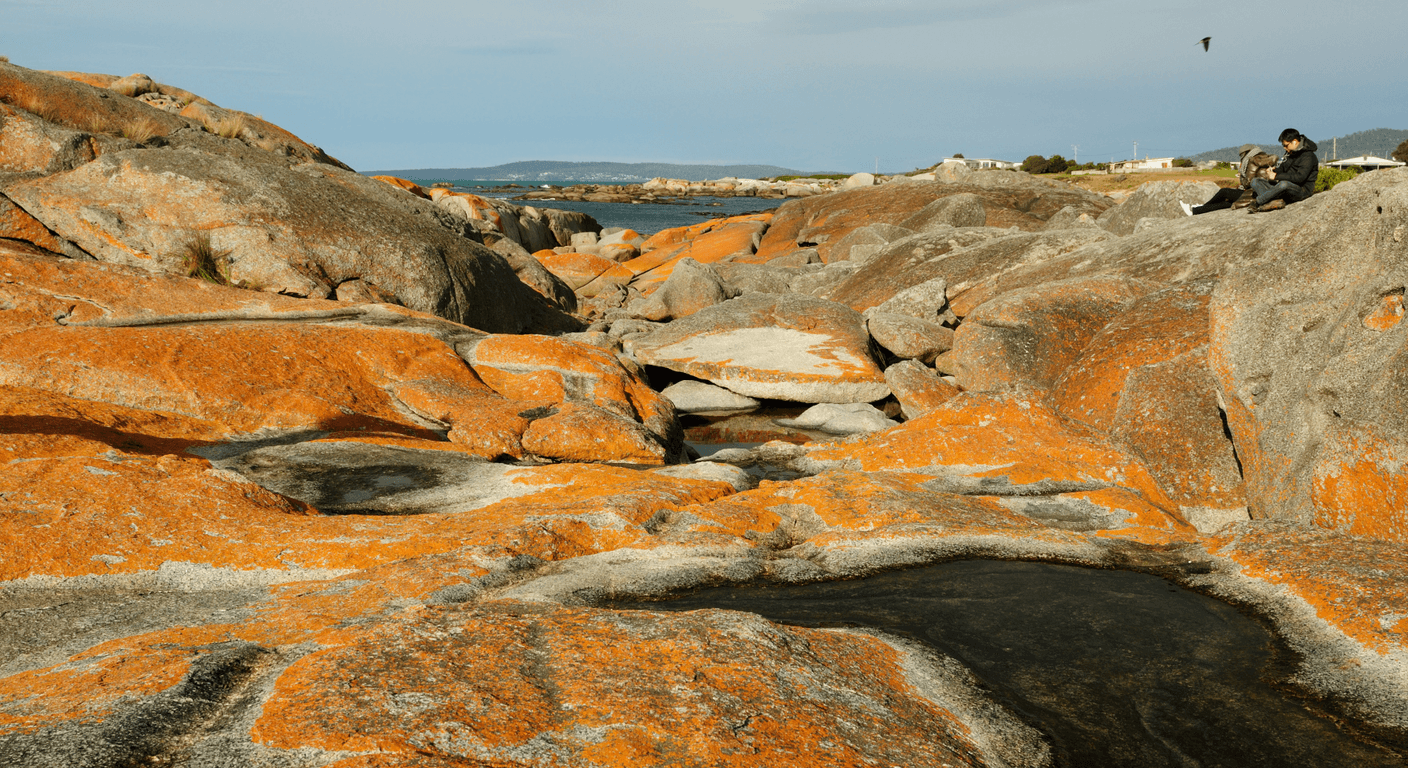
The name conjures something dramatic, and the coastline delivers — though not through fire. When explorer Tobias Furneaux sailed past in 1773, he named the bay for the Aboriginal fires he saw burning along the shore. What draws people today is something quieter: the contrast of bone-white sand, clear cold water and granite boulders coloured a deep, almost rust-orange by the lichen Caloplaca that coats them. It's the kind of colour combination that stops you mid-step.
The Bay of Fires stretches roughly 29 kilometres along Tasmania's north-east coast, from Binalong Bay in the south to the Eddystone Point lighthouse in the north. For a day trip, Binalong Bay is the practical entry point — a small coastal settlement with a boat ramp, a scattering of holiday houses and direct beach access. You can park, walk to the water's edge and be standing among those boulders within minutes of arriving.
There's no entry fee, no ticket booth and no crowds in the way you'd find at a more developed attraction. On a weekday out of school holidays, you may have long stretches of beach largely to yourself. For a solo traveller who prefers to set his own rhythm, that's the point.
Getting There from the Mainland — the Practical Reality
For a Victorian traveller, the most satisfying way to reach the Bay of Fires is with your own car on the Spirit of Tasmania. The overnight sailing from Geelong to Devonport takes roughly nine to ten hours; you arrive in the morning, drive south-east through Scottsdale or Campbell Town, and you're at Binalong Bay before lunch. Confirm current sailing schedules and fares at spiritoftasmania.com.au — prices shift significantly by season.
If you prefer to fly, Hobart and Launceston both have regular services from Melbourne. Hobart is roughly 2.5 hours from St Helens by road via the Tasman Highway; Launceston is closer, around 90 minutes via Scottsdale. A hire car is essential — there's no practical public transport to Binalong Bay. Confirm hire car availability and one-way drop-off options before booking flights.
A word on timing: the drive from either city is genuinely pleasant, through farmland and forest, but factor in fuel stops and a proper lunch break in St Helens. Arriving at Binalong Bay with four or five hours to spare before the return drive is far more satisfying than rushing. If you're based in Launceston, this is comfortably a day trip. From Hobart, consider staying overnight in St Helens and making it a relaxed two-day excursion.
What to Do at Binalong Bay — Walks, Lookouts and Photography
The beach access at Binalong Bay is flat, and the short walk from the car park to the waterline is on firm sand and low rock shelves. For anyone with reasonable mobility and sturdy footwear, it's straightforward. The boulders themselves vary — some are low and easy to step around, others require a bit of scrambling if you want to get among them. There's no obligation to scramble; the views from sea level are reward enough.
The light here is genuinely exceptional in the early morning and late afternoon. The orange of the lichen intensifies in warm, raking light, and the water takes on a depth of colour that flat midday sun can't match. If photography is part of the appeal — and for many visitors it becomes the whole point — arriving around 9am or lingering until 4pm is worth building into the plan.
Further north along the coast, the road through Gardens and Swimcart Beach offers additional stopping points with similar scenery. These are unsealed in sections, so check current road conditions with the St Helens Visitor Information Centre before heading out. The Eddystone Point lighthouse at the northern tip of the bay is a longer drive but rewards those who want to see the full sweep of the coastline.
A Sensible Word About the Water
The Bay of Fires looks inviting enough to swim in, and in summer the water temperature is reasonable by Tasmanian standards — roughly 17 to 20 degrees Celsius. But the currents along this coast are strong and unpredictable, and there are no lifeguard patrols at Binalong Bay or anywhere along this stretch. Tasmania's Parks and Wildlife Service is clear on this: the bay is not a patrolled swimming location.
For a solo traveller, that settles it. The beach is for walking, sitting and photographing. Wade in at the very edge if you want the sensation of the water, but the open bay is best left to younger, local swimmers who know its moods. The experience of being there doesn't require getting wet — the visual impact of the place is entirely sufficient.
This isn't a limitation; it's just honest planning. Some of the finest coastal experiences anywhere are ones where you stand at the edge of something powerful and simply look at it.
St Helens — Lunch, Fuel and a Moment to Sit Down
St Helens is Tasmania's largest east-coast town, and it has everything a day tripper needs: fuel stations, a pharmacy, a supermarket and a reasonable spread of cafes and restaurants along the main street. Georges Bay, on which the town sits, is calm and sheltered — a pleasant contrast to the exposed coast you've just visited. It's a good place to stop for lunch on the way back.
The St Helens History Room on Cecilia Street is a compact local museum worth a look if you have an hour — it covers the region's fishing and tin-mining past with more personality than you might expect from a small-town collection. Admission is modest; confirm current hours and pricing with the visitor information centre.
If you're feeling the drive by mid-afternoon, St Helens has solid accommodation options including motels and self-contained units that suit a solo traveller well. Staying overnight and driving back to Launceston or Hobart the following morning, with a stop at the Bay of Fires again for the morning light, is a very good use of two days.
Pacing the Day — a Suggested Shape
From Launceston, a sensible departure is around 7.30am. The drive via Scottsdale takes you through the Ringarooma Valley — green, quiet and easy on the eyes. Arrive at Binalong Bay by 9am for the best light, spend two to three hours walking, photographing and sitting among the boulders. Drive back through St Helens for a relaxed lunch, then return to Launceston by mid-afternoon. That's a full day with no rushing.
From Hobart, the same logic applies but with more road time each way. Leaving by 7am gets you to Binalong Bay by 9.30am. A slightly earlier departure, or a night in St Helens, is worth considering. The Tasman Highway from Hobart is well-maintained and passes through some of Tasmania's most characteristic midland and east-coast landscape.
Pack a day bag with water, snacks, a light layer for the coastal wind and a hat. The east coast can be warm in summer but the sea breeze is real. Good walking shoes with grip matter more than anything else — the sand is soft in places and the rock ledges can be uneven.
Seasonal Considerations and the Best Time to Go
November through April is the prime window. Days are long, temperatures in St Helens range from around 18 to 26 degrees Celsius, and the light has the quality that east-facing coastlines in the southern hemisphere do well in summer. January and February are peak holiday season; if you prefer fewer families and more solitude, November, December or March are excellent choices.
Winter visits (June to August) are possible and have their own austere appeal — the lichen colours are just as vivid and the coast is dramatically empty. But days are short, temperatures drop to single digits, and the wind off the Tasman can be cutting. If winter is your window, dress for it and keep the day compact.
Rainfall on the east coast is lower than in much of Tasmania, which has a wetter west. The Bay of Fires area receives around 600 to 700mm annually — modest by Tasmanian standards. That said, east-coast weather can shift quickly, so checking the Bureau of Meteorology forecast at bom.gov.au the evening before is simply sensible.
Quick planning guide
| Ideal pace | Relaxed and self-directed, with two to three hours at the beach |
|---|---|
| Best months | November to April, with January–February the busiest |
| Suggested stay | A single day from Launceston; two days with an overnight in St Helens from Hobart |
| Mobility level | Easy - flat sand and firm rock shelves, with optional light scrambling among boulders |
| Cost level | Budget-friendly - free entry, with costs limited to fuel, hire car, food and any overnight stay |
| Comfort level | Casual, outdoors and weather-dependent, with real coastal wind even in summer |
| Best for | Solo travellers, photographers and walkers who prefer uncrowded, self-paced coastal scenery |
| Main planning consideration | No public transport to Binalong Bay, so a hire car and realistic drive-time planning are essential |
Key takeaways
- The Bay of Fires is free to visit — no entry fees, no booking required.
- Binalong Bay is the practical access point, with flat beach walks suitable for most mobility levels.
- Strong currents and no lifeguard patrols make this a walk-and-photograph destination, not a swimming spot.
- Launceston is the closest mainland hub — roughly 90 minutes by road; Hobart is around 2.5 hours.
- Early morning and late afternoon light intensifies the orange lichen colour on the granite boulders.
- St Helens has fuel, a pharmacy and cafes — a reliable base for a lunch stop or overnight stay.
Recommended partners and links
Indicative prices only — always confirm with the operator before booking.
Frequently asked questions
Is the Bay of Fires suitable for older travellers with limited mobility?
Yes, with some caveats. The beach access at Binalong Bay is flat and the walk from the car park to the waterline is short and manageable on firm sand. The granite boulders vary — some are easy to step around at ground level, others require scrambling if you want to climb them, which is optional. Sturdy, closed-toe shoes with grip are recommended. The experience does not require any strenuous activity.
Is there an entry fee to visit the Bay of Fires?
No. Access to the Bay of Fires coastline, including Binalong Bay, is free. There is no national park entry fee required for this section of the coast.
Can you swim at Binalong Bay?
Swimming is not recommended. The Bay of Fires has strong, unpredictable currents and there are no lifeguard patrols along this stretch of coast. Tasmania's Parks and Wildlife Service does not classify it as a patrolled swimming location. Most visitors treat it as a walking and photography destination.
How do you get to the Bay of Fires from Launceston or Hobart?
A hire car or your own vehicle is essential — there is no practical public transport to Binalong Bay. From Launceston, the drive via Scottsdale takes roughly 90 minutes. From Hobart via the Tasman Highway, allow around 2.5 hours. Confirm current road conditions on any unsealed sections with the St Helens Visitor Information Centre before travelling.
What is the best time of year to visit the Bay of Fires?
November to April offers the best combination of long days, mild to warm temperatures and good light. March is particularly good for avoiding school holiday crowds while retaining summer conditions. Winter visits are possible but days are short and coastal winds can be cold.