The Tahune AirWalk, about 90 minutes from Hobart via the Huon Highway, is best visited October to April for milder weather and longer daylight. Allow at least an hour for the elevated steel walkway, which culminates in a cantilever suspended above the Huon and Picton rivers' confluence. The main circuit is step-free, though the approach path from the car park has slopes, making it a Moderate mobility experience overall. Self-drive is easiest, though Tassielink day tours also run from Hobart.
What exactly is the Tahune AirWalk?
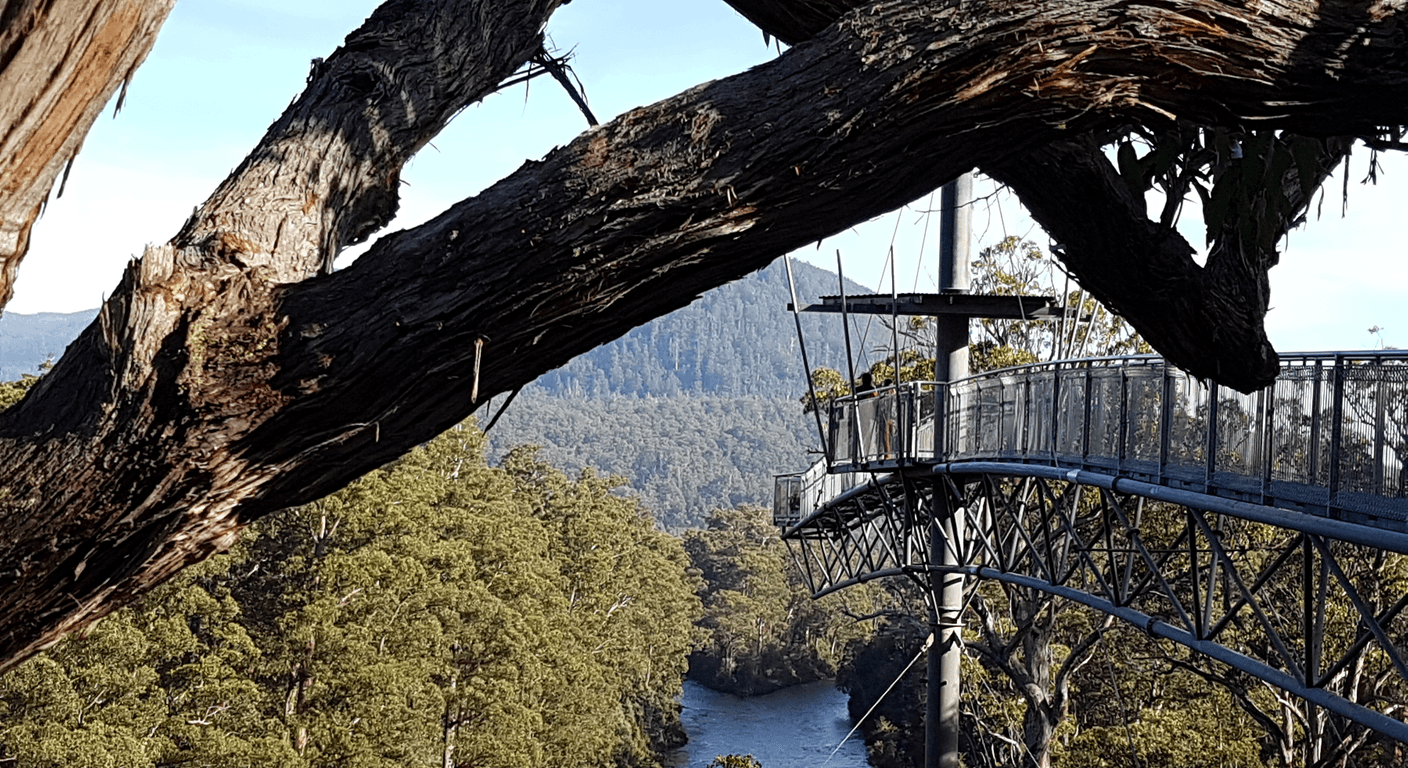
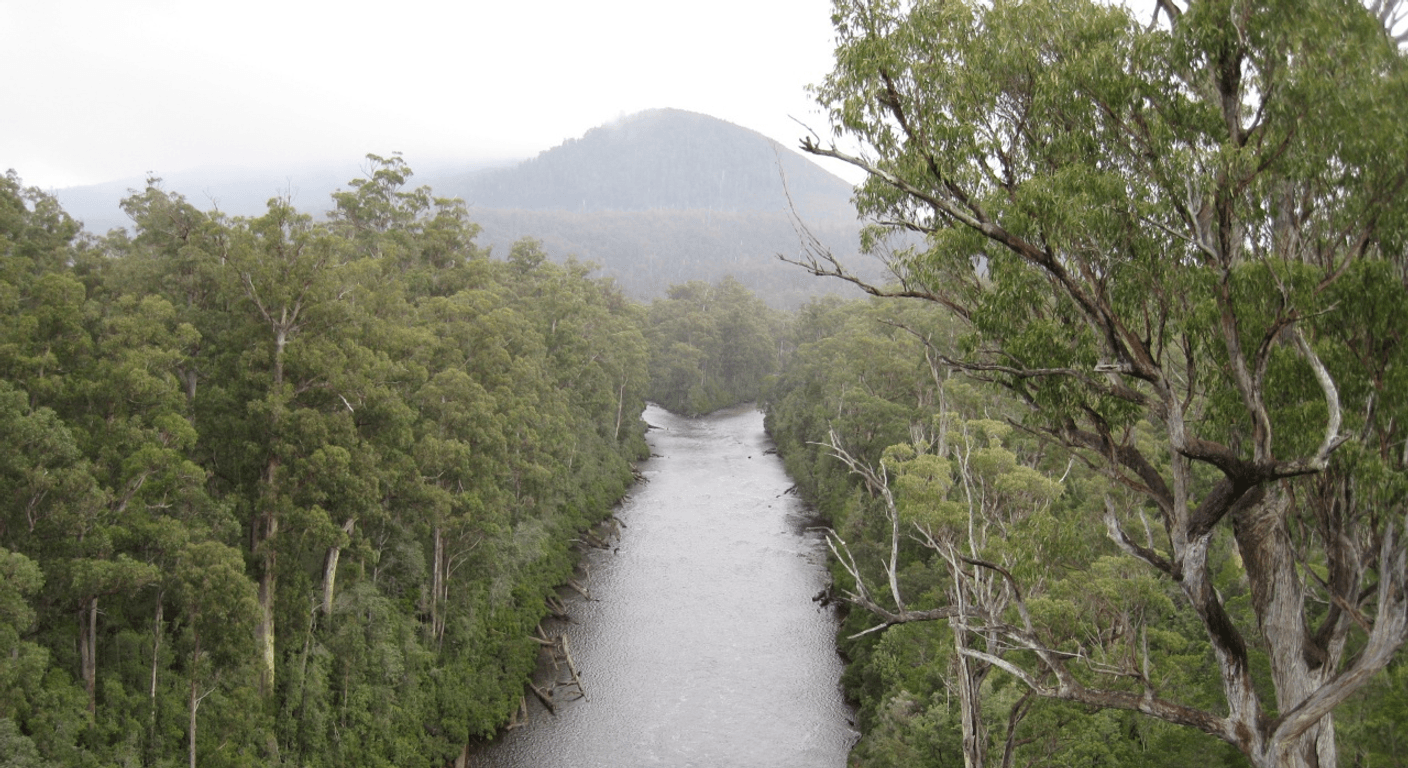
The Tahune AirWalk is a series of elevated steel walkways built through the forest canopy beside the Huon River, roughly 90 kilometres south-west of Hobart near the small town of Geeveston. The walk culminates in a cantilever — a section of the walkway that extends out, unsupported, above the point where the Huon and Picton rivers meet. You're standing in mid-air above two rivers, surrounded by forest. It's the kind of moment that arrives quietly and stays with you.
The structure was damaged in the catastrophic Tasmanian bushfires of 2019 and subsequently rebuilt. That history is worth knowing before you go, not as a caveat but as context. The forest you walk through is regrowth — younger, lighter, with a particular kind of energy that old-growth forests don't have. Watching how quickly the bush has come back is, for many visitors, the most affecting part of the experience.
The walkway itself is constructed from steel and is step-free along the main circuit. This is genuinely useful information for anyone who travels with a walking pole or manages a knee that objects to stairs. The approach path from the car park to the walkway entrance does include some sloped sections, so it's honest to call the overall experience Moderate rather than Easy — but it's well within reach for most active over-50 travellers.
Getting there from Hobart: what the drive actually looks like
The AirWalk is around 90 minutes from Hobart by car — roughly 85 kilometres via the Huon Highway through Huonville and on through Geeveston. The road is sealed and well-maintained for the majority of the route, with the final stretch into the Tahune Forest Reserve also sealed. It's not a difficult drive, and the scenery through the Huon Valley — orchards, river flats, the kind of pastoral calm that feels genuinely old — makes the journey part of the day.
Driving is by far the most flexible option, particularly for a solo traveller who wants to stop at the farm gate stalls around Huonville or linger in Geeveston on the way back. Car hire from Hobart is straightforward; confirm rates with operators like Europcar or Hertz at the airport or city centre. If you'd prefer not to drive, Tassielink Transit and several Hobart-based tour operators run day trips to the Huon Valley that include the AirWalk — check current schedules at tassielink.com.au, as frequency can be seasonal.
One practical note: petrol stations thin out south of Huonville, so fill up there if your tank is less than half full. And if you're planning to arrive at opening time on a weekday, traffic from Hobart is minimal. Weekends in high season attract more visitors, though 'crowded' remains a relative term this far south.
The walk itself: what to expect, step by step
After parking and paying your entry fee at the visitor centre — around $30–35 for adults, with concessions available; confirm the current rate at tahune.com.au before you go — you follow a path down through the forest to the walkway entrance. This initial descent is where the slopes are. It's not steep, but it's sustained enough to notice on the return. Take your time. There's no queue pushing you.
The main walkway winds through the canopy at varying heights, with solid steel mesh underfoot and sturdy railings on both sides. The structure feels substantial, which matters. Some people are surprised by the gentle sway — it's engineered movement, not a fault — but if you're uneasy with heights, it's worth knowing the cantilever section is the highest and most exposed point. You can go as far as you feel comfortable and turn back; there's no pressure to reach the end.
The cantilever itself is the punctuation mark of the whole experience. Standing at its tip, with the Huon and Picton rivers converging below and forest stretching in every direction, you get a sense of southern Tasmania's scale that's hard to find any other way. Allow at least an hour for the full walk at a relaxed pace, more if you're stopping to watch birds or simply sit with the view.
The story behind the rebuild: why the post-fire forest matters
The January 2019 fires that swept through parts of the Tahune Forest Reserve were among the most significant to affect the Huon Valley in living memory. The AirWalk structure was damaged, the surrounding forest was burned, and the site closed for an extended period. The rebuild involved not just structural repair but a reconsideration of how the site sits within its recovering landscape.
What you see now is a forest in the early stages of returning to itself. Blackwood, eucalypt and native understorey plants are regenerating at different rates, creating a patchwork of textures and colours that a mature forest doesn't offer. Birdlife has returned — grey currawongs, yellow-tailed black cockatoos, and the occasional swift parrot have all been recorded in the area. For a traveller with any interest in the natural world, this is genuinely interesting rather than a consolation prize.
There's a quiet dignity to walking through a recovering landscape and understanding what you're seeing. The interpretive signage along the trail explains the fire ecology and regeneration process without being didactic. It's the kind of place that rewards a curious mind — which, for many travellers in their 50s, 60s and beyond, is exactly the point.
On-site facilities and how to make a full day of it
The Tahune visitor centre has a cafe serving coffee, light meals and snacks — useful to know if you're arriving early and need something warm before the walk, or if you want to sit quietly afterwards. Toilet facilities are available on site. The car park is sealed and flat. None of this is glamorous, but it's all practical, and for a solo traveller making her own plans, knowing these things in advance removes small uncertainties.
The AirWalk is the centrepiece, but the broader Tahune Forest Reserve has shorter ground-level trails along the riverbank that are worth exploring if your legs are willing. The Huon River itself is beautiful at this point — wide, dark, and very still in the mornings. Some visitors simply sit beside it for a while before driving back.
Geeveston, about 20 minutes back up the road, is worth a stop. The town has a good forestry and heritage centre, a handful of cafes, and the kind of unhurried atmosphere that southern Tasmanian towns do well. Combining the AirWalk with lunch in Geeveston and a slow drive back through the Huon Valley makes for a genuinely satisfying full day from Hobart — not rushed, not over-scheduled.
Practical planning: seasons, solo safety and what to bring
October through April is the most reliable window for visiting the Tahune AirWalk. Daylight is generous, the weather is generally milder, and the forest has a particular quality of light in autumn that's worth timing a visit around. That said, southern Tasmania's weather is its own authority — pack a light waterproof layer regardless of the forecast. The walkway stays open in light rain, but a wet steel mesh underfoot warrants sensible footwear: closed shoes with grip, not thongs.
For solo travellers, the site is very safe. Mobile reception can be patchy in the forest, so it's worth downloading offline maps of the area (Google Maps or Maps.me work well) and letting someone know your rough itinerary. The staff at the visitor centre are helpful and present during opening hours. The AirWalk is not an isolated backcountry experience — it's a managed visitor site with infrastructure — but it's also not the middle of a city, and basic preparation is simply sensible.
Check opening days carefully before you go. The site has had operational changes since the rebuild, and there have been periods of reduced opening hours or specific day closures. The official Tahune Adventures website at tahune.com.au is the most reliable source. Arriving to find it closed would be a considerable disappointment after a 90-minute drive, and it's entirely avoidable.
Is this the right day trip for you?
The Tahune AirWalk suits travellers who are comfortable with a moderate level of walking, have some interest in the natural world, and don't need constant stimulation or company to enjoy an experience. It's a contemplative place. The forest is quiet, the river is slower than you expect, and the cantilever — when you reach it — asks you to simply stand there and take it in.
For a solo traveller, there's something particularly well-suited about an experience that rewards your own pace and your own attention. You're not waiting for a group. You're not explaining yourself to anyone. You stop when something interests you, you move on when you're ready, and at the end you have the drive back through one of Australia's most beautiful farming valleys to think it all over.
It's not an extreme adventure. It's not a bucket-list spectacle. It's a very good day in a recovering forest above two rivers at the bottom of the country — and that, done properly, is more than enough.
Quick planning guide
| Ideal pace | Slow and contemplative — no need to rush the walkway or the cantilever |
|---|---|
| Best months | October through April for milder weather and longer daylight |
| Suggested stay | Half to full day, combined with Geeveston and the Huon Valley drive |
| Mobility level | Moderate — step-free walkway, but sloped approach path from the car park |
| Cost level | Budget-friendly, around $30–35 entry with concessions available |
| Comfort level | Practical — on-site cafe, toilets and a sealed, flat car park |
| Best for | Solo travellers who enjoy nature, quiet reflection and self-paced exploring |
| Main planning consideration | Check opening days and hours at tahune.com.au before setting out, as operational hours have varied since the rebuild |
Key takeaways
- The Tahune AirWalk is around 90 minutes from Hobart by car via the Huon Highway — a scenic drive through orchard country worth taking slowly.
- The steel walkway is step-free once you reach it, though the approach path from the car park includes slopes; the overall mobility rating is Moderate.
- Entry is around $30–35 for adults with concessions available — confirm current pricing at tahune.com.au before visiting.
- The site was rebuilt after the 2019 bushfires and the regrowth forest you walk through now is an experience in its own right.
- Check opening days before you go — seasonal or operational variations apply, and the official Tahune Adventures website is the most reliable source.
- October to April offers the most reliable weather and longest daylight for a Tahune AirWalk visit from Hobart.
Recommended partners and links
Indicative prices only — always confirm with the operator before booking.
Frequently asked questions
Is the Tahune AirWalk suitable for travellers with limited mobility?
The main steel walkway is step-free and has solid railings on both sides, making it accessible for most travellers who can manage a moderate walk. The approach path from the car park to the walkway entrance involves some sloped sections, so it's rated Moderate overall rather than Easy. Travellers with significant mobility limitations should contact Tahune Adventures directly before visiting to discuss the site's current accessibility provisions.
How do I get to the Tahune AirWalk without a car?
Tassielink Transit and several Hobart-based tour operators run day trips to the Huon Valley that include the Tahune AirWalk. Check current schedules and departure points at tassielink.com.au, as frequency varies by season. Driving remains the most flexible option, and car hire is readily available in Hobart.
What are the opening hours and days for the Tahune AirWalk?
Opening hours and days can vary seasonally and operationally, particularly since the rebuild following the 2019 bushfires. Always confirm current hours at the official Tahune Adventures website (tahune.com.au) before making the drive from Hobart.
What is the best time of year to visit the Tahune AirWalk?
October to April is generally the most reliable period, offering longer daylight hours and milder temperatures in southern Tasmania. That said, the region's weather can change quickly, so packing a light waterproof layer is advisable regardless of the season.
Is the Tahune AirWalk fully recovered after the 2019 bushfires?
The walkway structure has been rebuilt and the site is open to visitors. The surrounding forest is in active regeneration — younger growth than before the fires, with returning birdlife and native understorey. Many visitors find this recovery landscape adds meaning to the experience rather than detracting from it. Check tahune.com.au for the latest site information.