Fifty kilometres south of Darwin on the Stuart Highway, Territory Wildlife Park and Berry Springs Nature Park combine for an easy, rewarding day trip, best done in the dry season (April–September, with June–July the sweet spot). Allow three to four hours at the wildlife park, using its free shuttle to skip serious walking in the heat, then cool off in Berry Springs' croc-free thermal pools. No public bus runs to either site, so hire a car in Darwin or join an organised tour.
Why This Day Trip Works So Well for Over-50 Travellers
Darwin is a city that can feel slightly ungovernable in the heat. The waterways are beautiful and largely off-limits for swimming. The Top End's reputation for crocodiles is not exaggerated — it's simply the reality of living alongside one of Australia's apex predators. So the question of where to actually cool down, safely, while also spending time among wildlife that doesn't require binoculars and patience, is one worth answering properly.
The answer, 50 kilometres south on the Stuart Highway, is a pairing that's been quietly delighting visitors for decades without needing much fanfare. Territory Wildlife Park handles the morning — a serious, well-designed reserve that takes native fauna seriously. Berry Springs Nature Park handles the afternoon — thermal pools, paperbark shade, and a level of swimming-pool calm that Darwin's harbour simply cannot offer. Together, they fill a day without ever feeling rushed.
For a couple in their seventies arriving from somewhere like Melbourne or Thessaloniki, the combination is close to ideal. The distances are manageable, the infrastructure is thoughtful, and the pace is entirely your own.
Getting There: What to Know Before You Leave Darwin
There is no direct public bus service to either Territory Wildlife Park or Berry Springs Nature Park. The honest advice is to hire a car in Darwin — a straightforward drive south on the Stuart Highway — or to join one of the organised day tours that depart from the city. Tourism Top End (tourismtopend.com.au) is a reliable starting point for checking current tour operators and availability.
The drive itself is around 50 minutes and largely flat, passing through the rural fringe south of Darwin. Those travelling by hire car should fill up in Darwin before leaving; fuel stops along this stretch are limited. Parking at both sites is free and plentiful. If mobility is a consideration, note that drop-off points at Territory Wildlife Park are close to the main entrance.
Leave Darwin no later than 8am. The wildlife park opens at 8:30am, and getting there early — before the heat builds and before tour groups arrive — makes a significant difference to the experience. By mid-morning in the dry season, temperatures can reach the low thirties. By April, they're already climbing. The paperbark pools at Berry Springs become considerably more appealing after a morning on your feet.
Territory Wildlife Park: More Than a Zoo
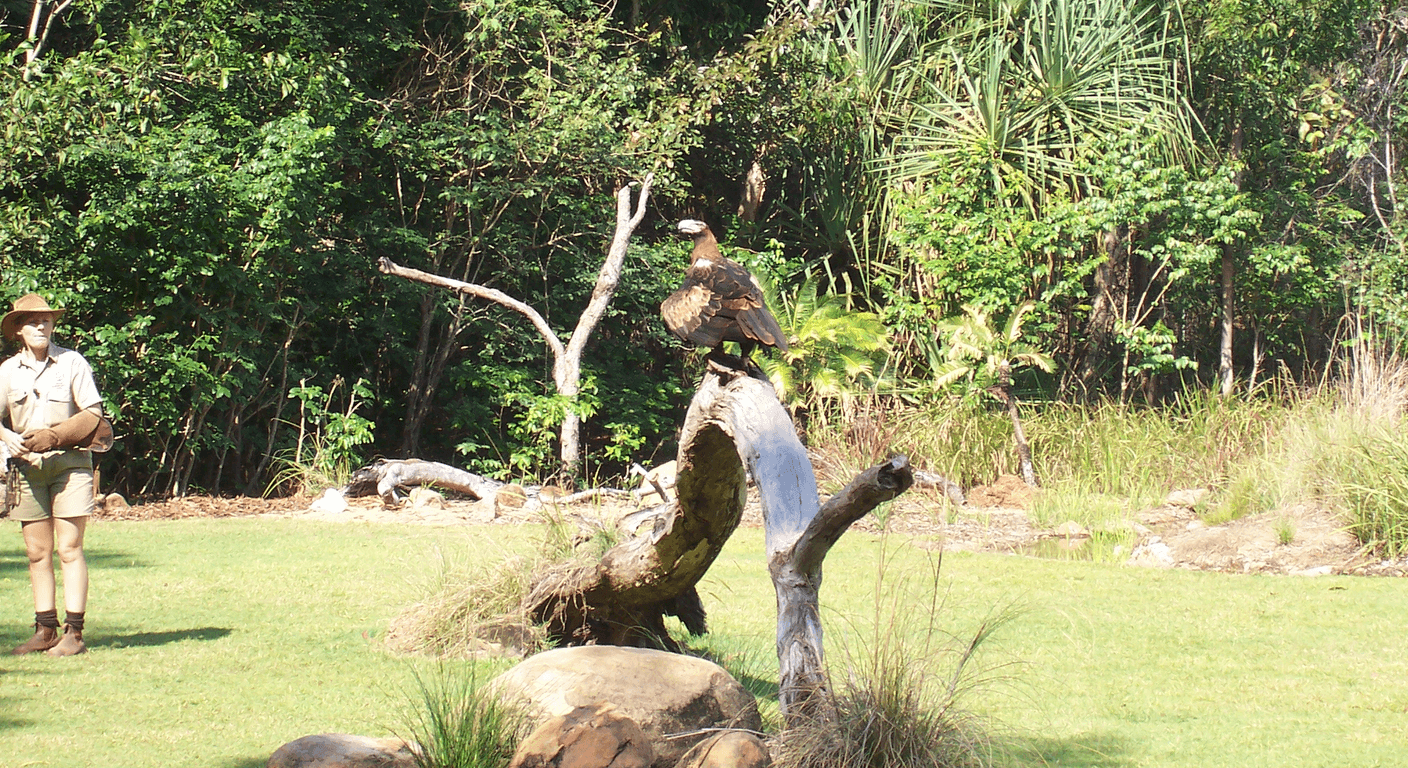
Territory Wildlife Park covers 400 hectares of natural bushland, which sounds enormous — and would be, if you were expected to walk all of it. You're not. A free internal shuttle loops the site on a regular schedule, stopping at key habitats and attractions, which makes the park genuinely accessible even for those who'd rather not cover serious distances on foot in the Top End heat. Pick up the shuttle timetable at the entrance gate.
The walk-through aviary is the centrepiece for many visitors. It's a substantial structure — not a small enclosure — and the birds move freely around you. Finches, kingfishers, brolgas and a rotating cast of waterbirds go about their business at close range. The experience requires slow movement and a degree of stillness, which suits the pace of a relaxed morning rather than a rushed itinerary. Wear enclosed shoes; the paths are natural surfaces.
The aquarium tunnel is a different kind of encounter entirely. Freshwater species from Top End rivers — barramundi, sawfish, archer fish — pass overhead and alongside you in an immersive passage that takes around 15 quiet minutes to walk properly. It's one of those spaces that stops conversation without trying to. Entry to the park runs around $30–35 per adult; confirm current pricing at territorywildlifepark.com.au before visiting, as fees are reviewed periodically.
What Else Is Worth Your Time in the Park
Beyond the aviary and aquarium, the park's reptile house gives close access to freshwater crocodiles, monitors and various snake species in a controlled environment — which is, for many people, the ideal distance from a saltwater crocodile. The nocturnal house, which cycles lighting to show animals in their active hours, is worth the slight detour even mid-morning.
The wetlands boardwalk offers a gentler walk through paperbark and pandanus country, with good birdwatching at most times of year in the dry season. Binoculars are worth packing. A kiosk near the main entrance sells basic food and drinks; the options are functional rather than memorable, so bringing a packed lunch or substantial snacks is a sensible call for a full-day visit.
Allow at least three hours for the park if you're using the shuttle and taking your time. Four hours is comfortable. The shuttle removes the pressure of having to cover everything on foot, which is precisely the point — use it freely.
Berry Springs Nature Park: The Afternoon Swim
Next door to the wildlife park — a two-minute drive, or a short walk along the connecting path — Berry Springs Nature Park centres on a series of thermal pools fed by a spring-fed creek. The water temperature sits around 26–28 degrees year-round, which sounds warm until you've been walking around in 33-degree dry-season air. At that point, it feels precisely right.
The pools are shaded by paperbarks and pandanus, which keeps the immediate area cooler than open ground. Entry steps are cut into the bank of the main swimming area, making entry and exit manageable rather than athletic. The water is clear, the bottom is sandy and the depth in the main pool is gentle — roughly chest height at the deepest point in normal conditions. It is not a lap pool; it is a place to sit, cool down, and watch dragonflies.
Swimming is safe here in the dry season. The park is managed by the Northern Territory government, which monitors water safety and closes the pools during the wet season (roughly November to March) when flooding renders them unsafe. Crocodile signage is not present here in the way it is at Darwin's waterways — that's rather the point. Confirm seasonal access at the NT Parks website before visiting.
Practical Comfort: Pacing the Day Sensibly
Hydration is not optional in the Top End, even in the dry season. Carry at least 1.5 litres of water per person from Darwin — more if either of you runs warm. Sunscreen, a hat with a brim, and a light long-sleeved shirt for the walk between shuttle stops are the practical non-negotiables. The wildlife park provides some shade but not continuous cover.
For those managing joint discomfort or reduced stamina, the shuttle at Territory Wildlife Park is genuinely useful — use it without hesitation. The Berry Springs pools involve a short walk from the car park (roughly 200 metres on a flat path) and the step entry to the pools, which is manageable for most people. A towel and a change of clothes in the car makes the drive back to Darwin considerably more comfortable.
Lunch works well either at the park kiosk before leaving Territory Wildlife Park, or as a picnic at the Berry Springs day-use area, which has shaded tables. There are no restaurants at either site. The drive back to Darwin in the late afternoon takes around 50 minutes and is straightforward.
When to Go, and What to Expect in Each Season
The dry season — April through September — is the only season most visitors should seriously consider for this day trip. Humidity is low by Top End standards, rain is rare, and the heat, while real, is manageable with an early start and shade. June and July are the sweet spot: cooler mornings, excellent birdwatching as migratory species pass through, and the pools at Berry Springs at their most inviting.
The wet season (November to March) brings extraordinary storms, dramatic skies and a lushness that transforms the landscape. It also brings road flooding, pool closures at Berry Springs, and heat-humidity combinations that make outdoor walking genuinely uncomfortable for most people. Some Grey Nomads time their Top End visit to catch the build-up in October or the tail of the wet in April — both can work, but both require flexibility.
August and September remain excellent months, though Darwin fills with visitors and accommodation prices reflect that. Booking accommodation in Darwin a month or more ahead during the dry season is straightforward common sense.
Quick planning guide
| Ideal pace | Slow-paced, early start followed by relaxed afternoon swim |
|---|---|
| Best months | April to September (dry season); June–July for cooler mornings and best birdwatching |
| Suggested stay | One full day, leaving Darwin by 8am |
| Mobility level | Easy — free internal shuttle at the wildlife park and step entry at the pools suit reduced stamina |
| Cost level | Budget-friendly — entry around $30–35 per adult, free parking, no other fees noted |
| Comfort level | Comfortable with sensible precautions — hydration, hat, sunscreen and shade breaks essential |
| Best for | Darwin-based visitors and Grey Nomads travelling the Stuart Highway |
| Main planning consideration | No public transport to either site and pools close during the wet season (roughly November–March) |
Key takeaways
- Territory Wildlife Park's free internal shuttle makes the 400-hectare site accessible without requiring serious walking in Top End heat.
- Berry Springs Nature Park offers one of the only safe, croc-free freshwater swimming spots in the greater Darwin region.
- Entry to Territory Wildlife Park runs around $30–35 per adult — confirm current pricing before visiting.
- There is no public bus to either site; hire a car in Darwin or join an organised tour from Tourism Top End operators.
- Leave Darwin by 8am: the wildlife park opens at 8:30am and early arrival beats both the heat and the tour groups.
- Berry Springs pools close during the wet season (roughly November to March) — confirm access at the NT Parks website before planning your visit.
Recommended partners and links
Indicative prices only — always confirm with the operator before booking.
Frequently asked questions
Is Territory Wildlife Park suitable for travellers with limited mobility?
Yes, with some planning. A free internal shuttle loops the site on a regular schedule, reducing the need to walk the full 400-hectare reserve. The main paths are sealed or firm natural surfaces. Those using walking aids should manage the key attractions comfortably. Confirm current accessibility facilities directly with the park at territorywildlifepark.com.au.
Is it safe to swim at Berry Springs?
Yes, in the dry season (April to October). Berry Springs Nature Park is one of the few safe freshwater swimming areas near Darwin. The NT government manages and monitors the pools. They are closed during the wet season due to flooding risk. Saltwater crocodiles are not present at this site — it is specifically managed as a safe swimming area. Confirm seasonal access at the NT Parks website before visiting.
How do you get from Darwin to Territory Wildlife Park and Berry Springs?
Drive south on the Stuart Highway for around 50 kilometres — approximately 50 minutes from Darwin's CBD. There is no public bus service to either site. Hire cars are available in Darwin, or visitors can join organised day tours departing from the city. Tourism Top End (tourismtopend.com.au) lists current tour operators.
How much does Territory Wildlife Park cost?
Entry runs around $30–35 per adult, though prices are reviewed periodically. Always confirm current admission fees at territorywildlifepark.com.au before visiting. Berry Springs Nature Park currently has no entry fee, but confirm this before your visit at the NT Parks website.
What is the best time of year to visit Territory Wildlife Park and Berry Springs?
April to September, the dry season, is the best period. June and July offer the most comfortable temperatures and excellent birdwatching. Avoid the wet season (November to March) when heat and humidity are extreme and Berry Springs pools are closed due to flooding.