Alaska cruises suit Australians over 50 best from late May through mid-September, with July the sweet spot for calmer seas and reliable glacier access. Plan for 7–14 nights at sea, plus at least one recovery night in Vancouver or Seattle before boarding. The defining draw is Glacier Bay or Tracy Arm. Mobility rating: Moderate — tender ports, uneven docks and walking distances on large ships require honest self-assessment. Flights from Melbourne or Sydney to Vancouver run roughly 16–18 hours with one stopover.
The hard parts first: getting there from Australia
The flight is the first commitment, and it's a serious one. Melbourne or Sydney to Vancouver typically runs 16–18 hours with one stopover — usually in Los Angeles, Auckland or a Southeast Asian hub depending on the carrier. From Perth the routing can be slightly different but is no shorter. Brisbane travellers often connect through Los Angeles or Dallas. Expect to land stiff, sleep-deprived and disorientated regardless of cabin class. One night in Vancouver or Seattle before embarkation is not a luxury. It's the difference between boarding refreshed and boarding wrecked.
The eTA (Electronic Travel Authorisation) is mandatory for Australians entering Canada, including Vancouver. It's a simple online process and costs a small fee — confirm current requirements at canada.ca before booking anything. If the cruise departs Seattle instead, you'll need a valid US visa or ESTA, which Australians can apply for online. Neither is difficult, but both need to be sorted well ahead of travel. Smartraveller.gov.au is the right starting point for current advisories on both countries.
Jet lag at these latitudes runs roughly 15–18 hours ahead of Eastern Australian time. The body clock rebellion is real. A recovery night in Vancouver before the cruise, and another at the end before flying home, costs money — budget roughly AUD $250–$450 per night for a decent central hotel in Vancouver, depending on season and availability, and confirm current rates directly. It's not optional if you want to actually enjoy the first days at sea.
Three ways to do Alaska: mainstream, premium and small-ship expedition
The mainstream ships — think Princess Cruises, Holland America, Royal Caribbean, Norwegian — carry anywhere from 2,000 to 4,000-plus passengers. The advantage is price. An interior cabin on a 7-night Inside Passage sailing can start around AUD $2,500–$3,500 per person before flights, though that figure can move significantly depending on demand, booking timing and the specific ship. The disadvantage is scale. Walking from your cabin to the dining room on one of these vessels can cover 400–600 metres each way. For travellers with any hip, knee or fatigue concerns, that adds up across a week. Embarkation-day queues at Vancouver's Canada Place or Seattle's Smith Cove can stretch to 90 minutes or more in peak July.
Premium lines — Holland America sits at the top of the mainstream category but edges toward this space; Oceania Cruises and Celebrity Cruises sit more squarely in it — offer smaller ships (typically 700–2,000 passengers), quieter public spaces, better included dining, and generally more attentive service. Expect indicative pricing from around AUD $5,000–$9,000 per person for a 10–12 night sailing in a standard veranda cabin, before flights. The glacier-viewing experience is meaningfully better: fewer people competing for the rail, and the smaller hull can sometimes position closer.
True small-ship expedition operators — Silversea Expedition, UnCruise Adventures, Lindblad Expeditions/National Geographic — run vessels of 50–200 passengers into places the big ships can't go. Narrow fjords, remote bays, Zodiac landings on beaches where the only footprints are yours and the bear's. These sailings are all-inclusive or close to it, led by naturalists and historians, and built around active engagement with the environment. The price reflects all of that: indicatively AUD $10,000–$20,000+ per person for 7–14 nights, before international flights. Not for everyone, but for the right traveller — one who wants to be on the water, not just near it — the gap narrows when you account for what's included.
Glacier viewing and cabin choice: what actually makes a difference
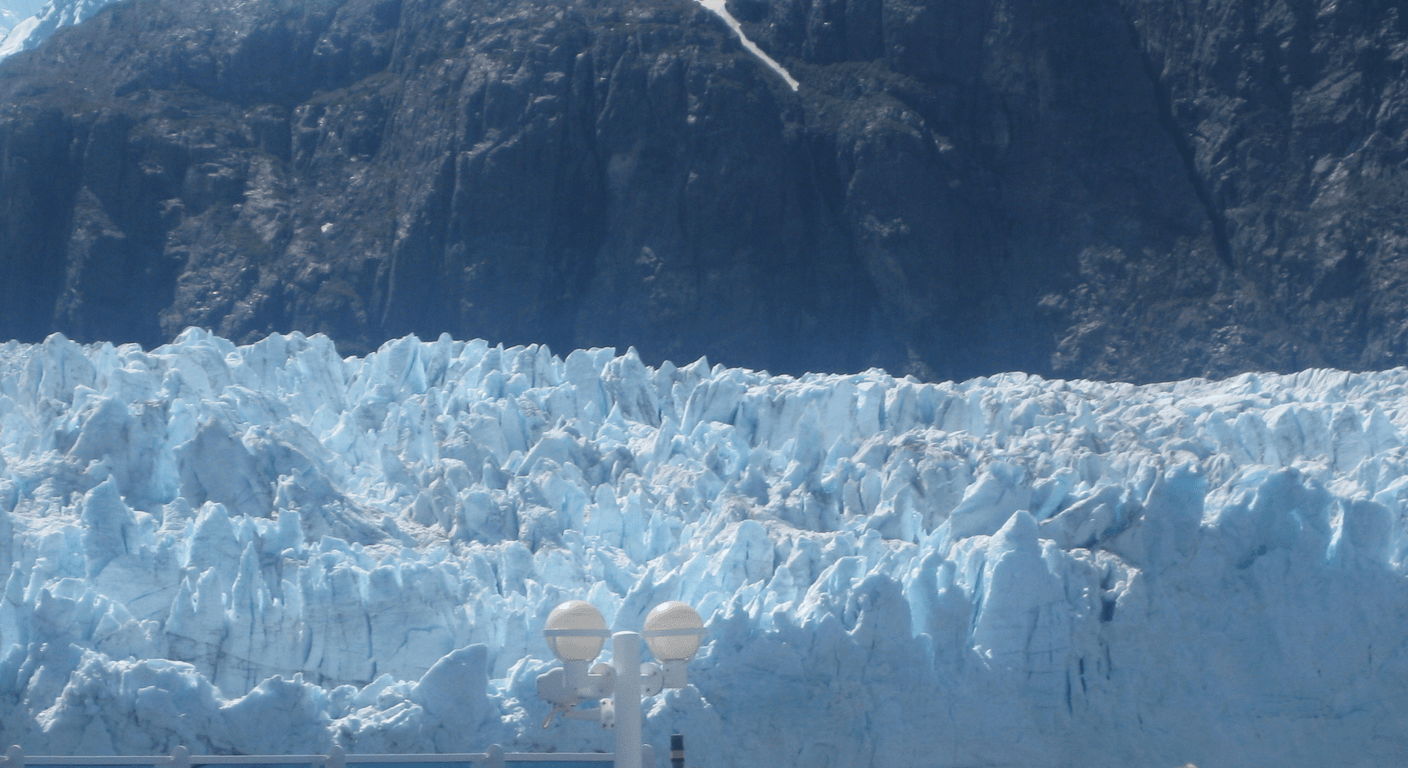
Glacier Bay National Park is the marquee event on most Alaska itineraries, and the approach matters. On a mainstream ship, the vessel turns slowly in front of the glacier face and passengers rotate on the outside decks. A balcony cabin helps, but the viewing decks are free to all and can get crowded. If you're booking a balcony specifically for glacier viewing, ask the line whether the itinerary includes a slow approach or a static anchor position — the experience varies. On some ships, the forward observation lounge gives the best unobstructed views of all, and it's included regardless of cabin grade.
Tracy Arm Fjord, south of Juneau, is an alternative glacier approach on some itineraries — narrower, arguably more dramatic, and accessible to smaller ships that can't enter Glacier Bay. Worth checking which your itinerary includes, or whether it includes both. Hubbard Glacier, further north near Yakutat, appears on longer sailings and is one of the few advancing glaciers in Alaska — the sound of calving ice at close range is something that stays with you.
Cabin choice beyond the glacier question: a mid-ship cabin on a lower deck reduces motion in any swell. Alaska's Inside Passage is largely protected water, but the open-ocean stretches — particularly the Gulf of Alaska on repositioning itineraries — can be lively. If you're prone to seasickness, keep this in mind. Higher decks have the views; lower mid-ship has the stability. It's a genuine trade-off, and only you know which matters more.
Shore excursions and mobility: the honest assessment
Juneau, Ketchikan, Skagway and Sitka are the standard port calls, and each presents its own mobility reality. Juneau's Mendenhall Glacier visitor area involves a bus transfer and flat walking on paved paths — accessible for most travellers. The glacier face itself requires a moderate walk. Skagway is a frontier town built on a grid of flat streets, easy to walk independently, though the White Pass railway excursion (highly recommended) involves boarding a heritage train — steps up, no lift. Ketchikan's Creek Street is a short flat boardwalk; the town itself is compact. Sitka is the most charming of the four, with St Michael's Cathedral and the Sitka National Historical Park, and it's largely flat.
The hard part is tender ports. When a ship anchors offshore and passengers transfer to shore via small tender boats, there are steps involved — boarding the tender from a moving platform, stepping across a gap, then reversing on return. In calm conditions it's manageable for most; in any chop it requires confidence and reasonable balance. If you have significant mobility limitations, ask the cruise line directly which ports on your itinerary are tender calls versus docked. This is not a minor detail. Silversea and Lindblad expeditions use Zodiacs for landings, which is a more athletic proposition — the operators are frank about this and will advise accordingly.
On very large ships, the distance from cabin to gangway can itself be a significant walk. Factor this into every shore excursion decision, because you're doing that walk twice — out and back — while carrying a daypack, possibly in rain gear. Alaska in July averages around 13–18°C in most ports, but rain is a constant companion. Layering and a proper waterproof jacket are not optional. The ship's shop will sell you one at significant markup if you forget.
The cruise-tour option: land plus sea
Several lines — Princess and Holland America most prominently — offer combination packages that pair the Inside Passage cruise with a land component through Denali National Park and the Yukon, typically travelling by motorcoach and the Alaska Railroad. These run 10–16 days total and represent the most thorough way to see the state. Denali in clear weather, with the full Alaska Range visible, is one of those experiences that resists easy description. The land portion typically includes Fairbanks and a stay in a wilderness lodge near the park.
The practical reality of cruise-tours is that they involve more logistics, more packing and unpacking, and more early starts than a straight cruise. They're also excellent value in terms of what's covered — many packages include the rail journey, motorcoach, and wilderness lodge accommodation in the land price. Indicative cruise-tour pricing runs from around AUD $7,000–$14,000 per person before flights, depending on the line, cabin grade and land package tier. Confirm current packages and pricing directly with the line, as inclusions vary significantly.
For a solo traveller, the cruise-tour format can feel busier and more socially demanding than a standard cruise, but the structured group nature of the land component also makes it easier to meet fellow travellers. The group dynamic is set by the itinerary, not by your own social initiative — which suits some people very well.
Solo traveller's perspective vs a couple's perspective
Solo traveller's perspective: The single supplement is the defining financial reality. On mainstream lines, solo travellers typically pay 150–200% of the per-person double-occupancy fare — meaning you pay roughly the full cabin cost alone. That adds AUD $1,500–$4,000 or more to the cruise cost depending on ship category and cabin grade. Holland America, Princess and Norwegian all offer some solo cabin options (Norwegian is particularly known for its Studio cabins on some ships, designed specifically for solo travellers with a dedicated social lounge). Always ask the line directly: is there a solo cabin allocation on this specific ship and sailing? Is there a share-match programme? These questions are worth a direct call or email to the line, not just a quick look at the website.
Expedition operators like UnCruise Adventures sometimes offer solo traveller programmes or specific sailings with reduced supplements — worth investigating directly. Silversea charges a full-suite solo supplement that can be steep, though the all-inclusive pricing means the headline gap narrows when you account for what's bundled in. The honest calculation: add up the full solo cost including the supplement, flights, pre-cruise nights, travel insurance and excursions, and compare it against each option on a like-for-like basis. The supplement sting is real, but it shouldn't be the only factor.
Couple's perspective: The value calculation is straightforwardly better. A shared balcony cabin on a premium line for two people, split evenly, is genuinely reasonable for what's included. The cruise-tour option in particular rewards couples — the shared experience of Denali, the glacier calving, the wildlife sightings — these are experiences that benefit from having someone beside you. Cabin choice matters more for couples: a veranda cabin large enough for two chairs, not just one, is worth the upgrade ask. The Inside Passage sailings are also well-suited to couples who want structured days without constant joint decision-making — the ship sets the agenda.
What does the full trip actually cost in Australian dollars?
Here's the honest all-in estimate for a 10-night Alaska cruise from Vancouver, including return flights from Melbourne, one pre-cruise night in Vancouver, and a standard excursion budget. These are indicative bands only — confirm everything with the relevant operator and check the AUD/USD exchange rate at time of booking, as it significantly affects the final figure.
Mainstream (interior cabin, self-managed flights, shared transfers): roughly AUD $7,000–$11,000 per person. Premium line (veranda cabin, economy flights, one pre-cruise hotel night): roughly AUD $11,000–$16,000 per person. Small-ship expedition (all-inclusive vessel, economy flights, pre-cruise night): roughly AUD $16,000–$25,000+ per person. These figures include the cruise fare, return flights from Melbourne (economy, with one stopover), pre-cruise accommodation, and a modest excursion budget. They do not include travel insurance — which for a 69-year-old Australian travelling to sub-Arctic North America with any pre-existing conditions needs to be specifically arranged and will add meaningfully to the total. Start with comparetravelinsurance.com.au and read the PDS carefully, particularly the medical evacuation provisions.
One cost most Australians don't anticipate: the gratuity or service charge. On American-flagged cruise lines, this is typically added automatically at around USD $15–$25 per person per day. On premium and expedition lines it's sometimes included. Ask before you book. Also: the card surcharge situation in Alaska ports is what it is — many small operators and shops add 2–3% for card payments. Cash in small USD denominations is worth carrying ashore.
Quick planning guide
| Ideal pace | One recovery night post-flight in Vancouver or Seattle before embarkation; allow a post-cruise night too |
|---|---|
| Best months | Late May to mid-September; July for peak glacier access and warmest days |
| Suggested stay | 7-night minimum at sea; 10–14 nights if adding a cruise-tour land component |
| Mobility level | Moderate — large ships have long internal walking distances; tender ports and dock ramps require sure footing |
| Cost level | AUD $5,000–$22,000+ per person all-in depending on ship category, cabin grade and flights |
| Comfort level | High on mainstream and premium lines; boutique-expedition comfort on smaller ships |
| Best for | History-curious travellers, wildlife watchers, those who want dramatic scenery without back-country hiking |
| Main planning consideration | Return flights from Australia, single-supplement exposure, and travel insurance covering pre-existing conditions at sub-Arctic latitudes |
Key takeaways
- The full cost of an Alaska cruise from Australia — flights, pre-cruise hotel, excursions and insurance included — runs from roughly AUD $7,000 to $25,000+ per person depending on ship category.
- Solo travellers typically face a single supplement of 50–100% of the per-person fare on mainstream ships; ask every line directly about solo cabin availability and share-match programmes before booking.
- July is the best month for glacier access and warmest conditions; late May and early September offer fewer passengers and sometimes lower fares, but with more weather variability.
- Tender port transfers at some Alaska stops require reasonable balance and confidence — ask the cruise line which ports on your specific itinerary are tender calls before committing.
- A cruise-tour combining the Inside Passage with Denali and the Alaska Railroad adds 3–6 days and meaningful cost, but it's the most complete way to experience the state.
- One recovery night in Vancouver or Seattle before embarkation is essential after an 16–18 hour flight from eastern Australia — budget AUD $250–$450 per night and book it as part of the trip, not an afterthought.
Recommended partners and links
Indicative prices only — always confirm with the operator before booking.
Frequently asked questions
Which Alaska cruise line is best for Australian seniors over 50?
There's no single best line — it depends on budget, mobility and what you want from the experience. Holland America has a long Alaska reputation and attracts a mature demographic; Princess is strong on cruise-tour packages; Oceania suits those wanting a quieter, more refined ship; UnCruise Adventures and Silversea Expedition suit active travellers who want naturalist-led small-ship access to remote areas. Confirm current Alaska deployments, ships and itineraries directly with each line.
How much does an Alaska cruise cost from Australia in AUD?
All-in, including return flights from Melbourne or Sydney, a pre-cruise hotel night in Vancouver, cruise fare and a basic excursion budget, expect roughly AUD $7,000–$11,000 per person on a mainstream line, $11,000–$16,000 on a premium line, and $16,000–$25,000+ on a small-ship expedition. These are indicative bands only — confirm current fares with the cruise line and factor in the AUD/USD exchange rate at time of booking.
Do Alaska cruises charge a single supplement, and how much is it?
Yes, most Alaska cruise lines charge a single supplement, typically 50–100% of the per-person double-occupancy fare, meaning a solo traveller often pays close to the full cabin cost alone. Norwegian Cruise Line has dedicated solo studio cabins on some ships. Holland America and Princess sometimes offer reduced supplements on selected sailings. Always ask the line directly about solo cabin availability and share-match programmes for your specific sailing.
What is the best time of year for an Alaska cruise for Australians?
The Alaska cruise season runs late April to mid-September. July is the peak month — warmest temperatures (typically 13–18°C in ports), most reliable glacier access, and longest daylight. Late May and early September are quieter, with some lower fares, but weather is less predictable. Australians should also factor in that July–August coincides with Australian winter, making it an easy departure window.
Do Australian seniors need a visa to cruise from Vancouver or Seattle?
Australians transiting through or departing from Vancouver need a Canadian eTA (Electronic Travel Authorisation), which is applied for online before travel — confirm current requirements at canada.ca. For Seattle departures, Australians need a valid ESTA (Electronic System for Travel Authorisation) for the United States, applied for online at the official US government site. Neither is difficult, but both must be obtained before you fly. Check smartraveller.gov.au for current travel advisories.
- Smartraveller — Canada travel advice
- Smartraveller — United States travel advice
- Government of Canada — eTA for Australians
- US Customs and Border Protection — ESTA
- Glacier Bay National Park — National Park Service
- Holland America Line — Alaska cruises
- Princess Cruises — Alaska cruises
- Silversea Cruises — Alaska expedition
- UnCruise Adventures — Alaska
- Compare Travel Insurance Australia