This guide profiles eight destinations well suited to solo travellers over 50 for their safety, walkability and easy pacing. Tasmania offers the simplest first solo trip, while remote regions like the Red Centre are best done on a small-group tour. Stays typically run ten days to two weeks, mobility demands are generally moderate with some uneven terrain, and access ranges from hire car and rail to short domestic or international flights.
Why solo travel over 50 is different — and genuinely better in some ways
Travelling alone at 60 or 68 is not the same as backpacking at 24. You are not trying to stretch a shoestring budget across a hostel dorm, and you are not trying to keep up with a group that wants to be out until midnight. What you have instead is the freedom to move at your own pace, eat when you are hungry, linger in a gallery or a garden, and choose your own company. That is a considerable advantage, and it is worth naming clearly before getting into the destinations.
The practical concerns are real, though. Safety matters more when there is nobody sharing the room to notice if something goes wrong. Cost is a genuine issue because single supplements on tours and in hotels can add 20 to 40 percent to the base price — always ask before you book whether a single supplement applies and whether the operator has a room-share matching service. Mobility and pacing matter too, and this guide is honest about which destinations demand more physically and which are genuinely easy on the body.
One more thing worth saying: the over-50 solo travel market is large and well-served. Small-group tour operators — Intrepid, Peregrine, Insight Vacations, APT and others — actively cater to this demographic. Many solo travellers in this age group find that a small-group tour for the destination itself, combined with a few independent days either side, gives the best of both worlds: structure when you want it, freedom when you do not.
Tasmania: the easiest first solo trip for Australians over 50
Tasmania is consistently the destination that over-50 solo travellers from the mainland return from raving about, and the reasons are straightforward. It is still Australia — same currency, same language, same healthcare system, same phone network — but it feels genuinely foreign in the best possible sense. The landscapes are dramatic, the food and wine scene is outstanding, and the pace is slower than anywhere on the mainland. Hobart in particular is a compact, walkable city where a woman travelling alone feels entirely comfortable day and night.
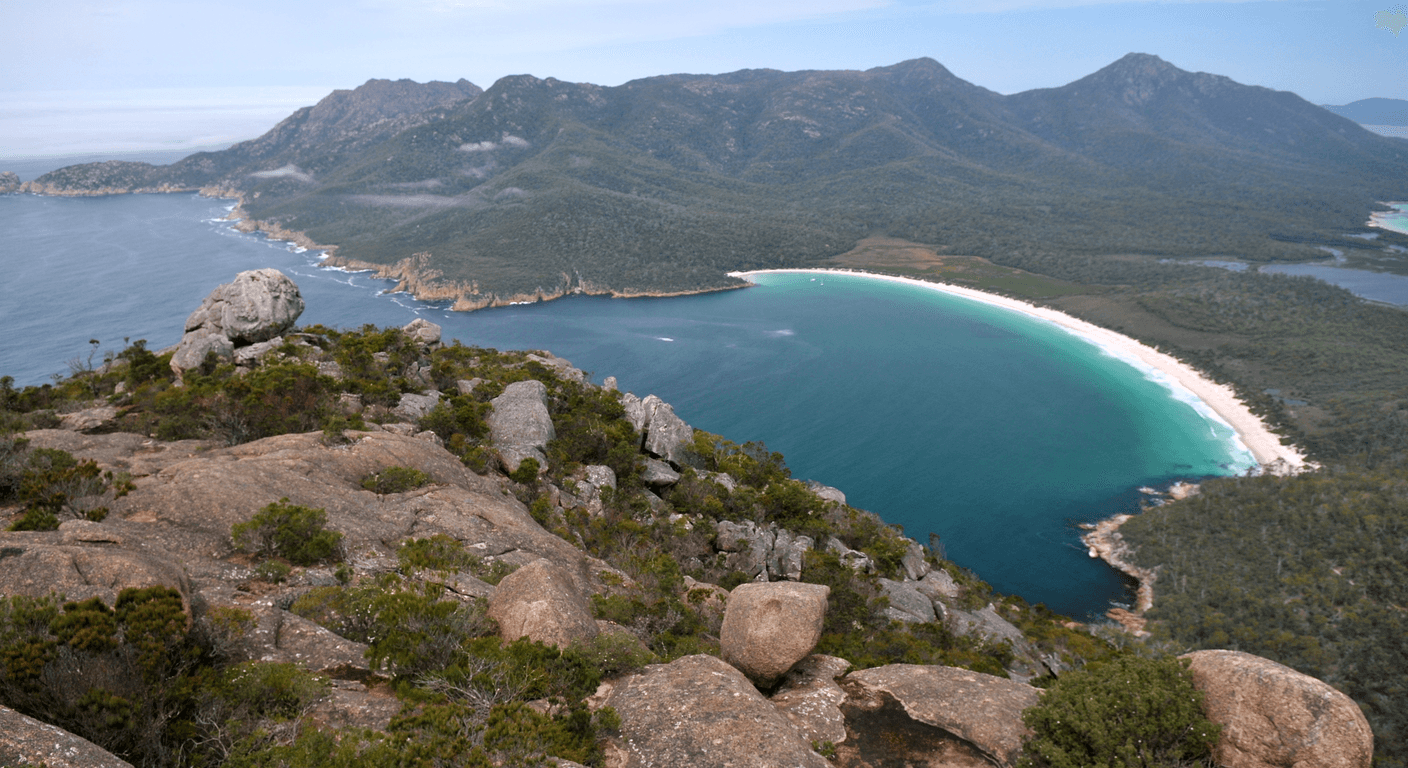
The standard circuit — Hobart, the Huon Valley, Port Arthur, Freycinet, Launceston and the Tamar Valley — can be done independently by hire car in ten to twelve days, or by joining one of several small-group touring options that handle the driving and accommodation. For anyone not comfortable driving on unfamiliar roads alone, the group-tour option is worth the extra cost. MONA (Museum of Old and New Art) alone justifies a few days in Hobart; the free MONA ROMA ferry from Hobart's waterfront is half the experience.
Best season is October through April, when the days are long and the weather is mild. Indicative costs for an independent ten-day trip — flights from Melbourne, a hire car, mid-range accommodation and food — run roughly AUD $3,500 to $5,000 depending on your choices; confirm current fares and rates before planning. A small-group tour covering similar ground runs indicatively from around AUD $3,000 to $4,500 all-inclusive excluding flights. Tasmania is largely accessible by car, though some of the most spectacular walking tracks involve uneven terrain; MONA and the major historic sites are accessible for most mobility levels.
The Red Centre: why a tour is genuinely the right call here
Uluru and the Red Centre are among the most powerful places in Australia, and for a solo traveller over 50 this is one destination where joining a small-group tour is not just convenient — it is the sensible choice. The distances between sites are enormous, the heat in summer is dangerous, and self-driving on remote outback roads alone carries real risk. A guided tour removes all of that and adds genuine depth through knowledgeable guides who can speak to the cultural and geological significance of what you are seeing.
The classic three to five day Red Centre tour covers Uluru-Kata Tjuta National Park, the Valley of the Winds walk at Kata Tjuta (which has a gentler loop option for those who want it), Kings Canyon, and often a scenic flight over the landscape. Several operators run these with groups of twelve to twenty people, and the mix of solo travellers in this age group is reliably high — you are unlikely to be the only one. Operators like Intrepid, AAT Kings and APT all run Red Centre programs; check parksaustralia.gov.au/uluru for national park context (Uluru-Kata Tjuta is jointly managed by Aṉangu Traditional Owners and Parks Australia, a Commonwealth agency — not a state parks service) and australia.com for operator comparisons.
Best season is April through September, when daytime temperatures are manageable (still warm, but not the extreme heat of summer). Indicative cost for a four-day small-group tour from Alice Springs, including accommodation and most meals, runs roughly AUD $1,800 to $2,800 depending on the operator and accommodation level; flights from Melbourne to Alice Springs are additional. Always confirm single-supplement costs when comparing operators.
Coastal NSW and Adelaide: two very different Australian solo experiences
Coastal New South Wales — the stretch from Sydney north to Byron Bay, or south to the Sapphire Coast — suits the solo traveller who wants to move slowly, stay somewhere beautiful, and not feel as though they need a plan. The towns along the NSW coast are well-served by accommodation, the beaches are accessible, and the train and coach network (NSW TrainLink connects many coastal towns) means a hire car is not always necessary. A fortnight moving between Merimbula, Narooma, Batemans Bay and Kiama, for instance, is the kind of trip that costs relatively little and delivers a great deal of quiet pleasure.
Adelaide is a different proposition — a proper city break that rewards solo travellers who love food, wine, culture and walkability. The Adelaide Central Market, the Art Gallery of South Australia, the South Australian Museum, and the Botanic Garden are all within easy walking distance of the city centre. The Glenelg tram runs straight from the CBD to the beach. Day trips to the Barossa Valley, McLaren Vale or the Adelaide Hills are easy to arrange independently or through a day-tour operator. Adelaide consistently ranks as one of Australia's most liveable cities, and for a solo traveller it has the feel of somewhere that does not rush you.
Indicative costs for a week in coastal NSW — accommodation, food, local transport — run roughly AUD $1,500 to $2,500 depending on your standard. A week in Adelaide at a mid-range hotel with day trips included runs indicatively from around AUD $2,000 to $3,000; always confirm current accommodation and tour pricing. Both destinations are well within reach of Melbourne by train (the Overland to Adelaide or the XPT to Sydney via NSW TrainLink) or a short flight.
New Zealand and Japan: the two overseas destinations that suit solo older travellers best
New Zealand is the overseas destination most recommended by Australian solo travellers over 50, and it earns that reputation. English is spoken everywhere, the healthcare system is familiar, the landscapes are varied and beautiful, and the tourism infrastructure is excellent. The South Island — Queenstown, Wanaka, Te Anau, Milford Sound and the West Coast — is the classic circuit, and it can be done independently by hire car or by joining one of several small-group touring options. Solo travellers who are comfortable driving will find New Zealand straightforward; those who are not will find plenty of guided options. Best season is October through April.
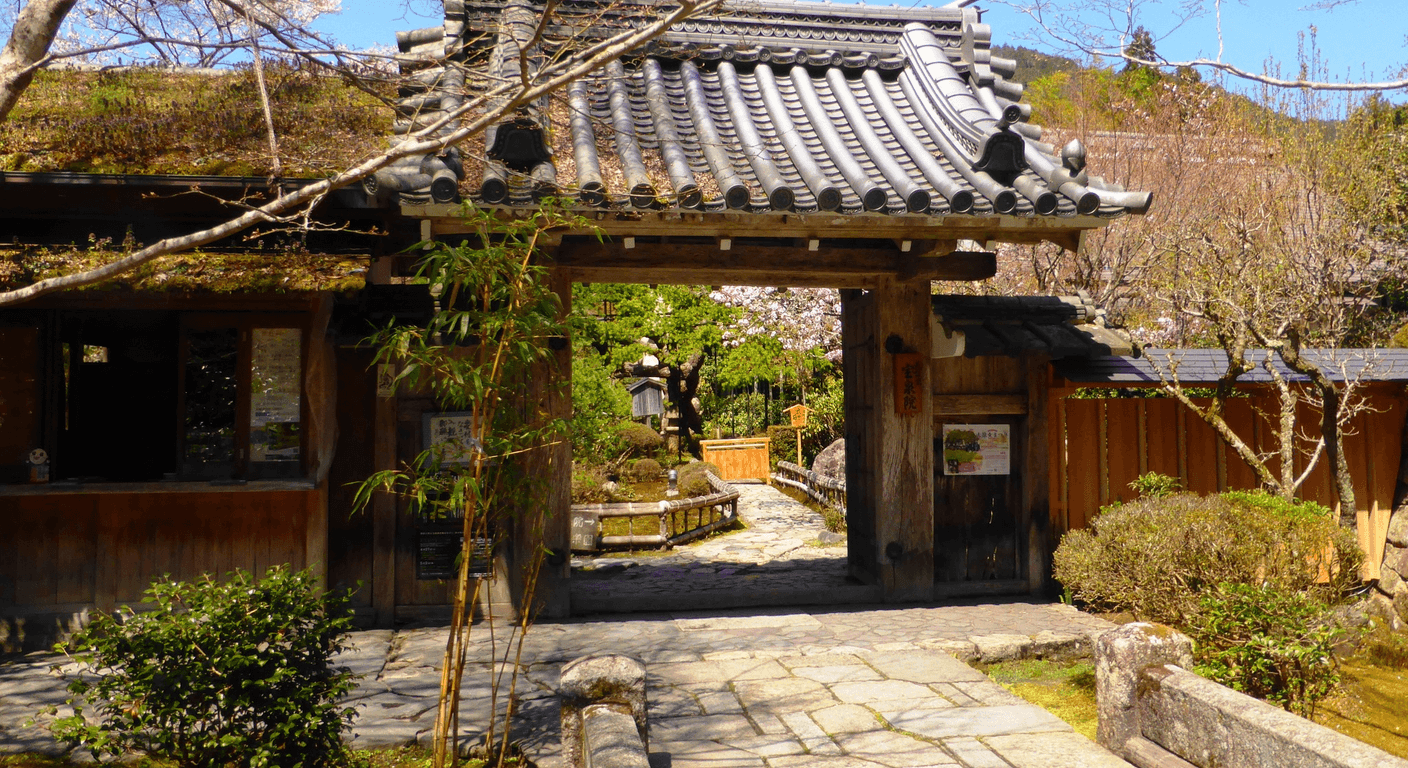
Japan is more surprising on this list, but it belongs here. Japan is one of the safest countries in the world, the public transport system — particularly the Shinkansen bullet train network — is extraordinarily easy to navigate, and the culture of respect for older travellers is genuine and palpable. Tokyo, Kyoto, Nara, Hiroshima and Osaka form a classic two-week circuit that is entirely manageable independently, especially if you purchase a Japan Rail Pass before leaving Australia. The language barrier is real but manageable: signage in major cities and train stations is in English, and translation apps handle most everyday situations. The food, the temples, the gardens and the sheer orderliness of daily life make Japan a destination that many over-50 solo travellers describe as transformative.
Indicative costs for two weeks in New Zealand — flights from Melbourne, hire car, mid-range accommodation and food — run roughly AUD $6,000 to $9,000 depending on choices; confirm current airfares and rental rates. A comparable two weeks in Japan, using the Japan Rail Pass and staying in a mix of business hotels and ryokan (traditional inns), runs indicatively from around AUD $7,000 to $11,000 all up including flights; confirm current pricing. Both countries are accessible for most mobility levels in their main tourism circuits, though some of Japan's historic sites involve stairs and uneven stone paths.
Vietnam and Italy: the destinations with the most heart for solo travellers over 50
Vietnam is increasingly popular with Australian solo travellers over 50, and for good reason. The country is warm, the food is extraordinary, the cost of living is low, and the people are genuinely welcoming. The classic north-to-south route — Hanoi, Ha Long Bay, Hoi An, Ho Chi Minh City — can be done on a small-group tour or, for confident travellers, largely independently using a combination of domestic flights, the Reunification Express train and local transport. For a first trip to Southeast Asia, a small-group tour is recommended; the traffic in Vietnamese cities is chaotic by Australian standards, and having a guide to handle logistics takes significant stress out of the experience.
Italy is, for many Australian women of Italian heritage, a destination that carries personal as well as touristic significance. It is also one of the most solo-travel-friendly countries in Europe for older Australians. The language is not essential — English is widely spoken in tourism contexts — but any Italian helps, and for travellers with Italian family background, even a few words opens doors in ways that are hard to describe. The rail network connects Rome, Florence, Venice, Naples and the smaller hill towns efficiently. The food, the art, the piazzas designed for sitting and watching — Italy rewards the traveller who is willing to slow down, and solo travel is the natural pace for that.
Indicative costs for two weeks in Vietnam on a small-group tour, including accommodation and most meals but not flights, run roughly AUD $3,500 to $5,500; flights from Melbourne to Hanoi add indicatively around AUD $1,200 to $2,000 depending on the season and airline. Two weeks in Italy travelling independently by rail, staying in mid-range hotels and eating well, runs indicatively from around AUD $7,000 to $12,000 including flights; confirm all current pricing before planning. Both countries are best visited in shoulder seasons: Vietnam's central coast is ideal from February to May, Italy from April to June and September to October.
Practical matters: single supplements, safety and keeping someone informed
The single supplement is the most consistent financial frustration for solo travellers, and it pays to be strategic about it. Some small-group tour operators — Intrepid is one, G Adventures is another — offer single-traveller room-share matching, where you are paired with another solo traveller of the same gender to share a twin room, eliminating the supplement. This works well for many people. If you prefer your own room, budget for the supplement from the start and treat it as the cost of genuine privacy and independence rather than a penalty.
Safety as a solo female traveller over 50 is a legitimate concern and worth addressing honestly. The destinations in this guide — Tasmania, the Red Centre on tour, coastal NSW, Adelaide, New Zealand, Japan, Vietnam on tour, and Italy — are all considered low to moderate risk for Australian travellers by the Australian Government's Smartraveller service. Smartraveller (smartraveller.gov.au) should be your first stop for any overseas destination; register your travel plans there before you leave. Travel insurance is non-negotiable for any overseas trip, and for travellers over 60 it is worth reading the fine print on pre-existing condition coverage carefully.
One of the most important practical habits for any solo traveller is keeping someone at home informed of your itinerary and checking in regularly. This does not require elaborate systems — a WhatsApp message at the start and end of each day is enough. For longer remote trips like the Red Centre, consider a personal locator beacon (PLB), which can be hired or purchased in Australia. The Australian government subsidises PLB registration; check the Australian Maritime Safety Authority (amsa.gov.au) for details. These are small habits that allow you to travel with genuine confidence rather than background anxiety.
Quick planning guide
| Ideal pace | Slow-paced and self-directed, with optional small-group tours for remote or logistically complex areas |
|---|---|
| Best months | Varies by destination — generally shoulder seasons (e.g. October–April for Tasmania and New Zealand, April–September for the Red Centre) |
| Suggested stay | Ten days to two weeks per destination |
| Mobility level | Moderate — most sites and circuits are accessible, though some walking tracks and historic sites involve uneven terrain or stairs |
| Cost level | Mid-range to premium, depending on destination and whether independent or guided |
| Comfort level | High — familiar infrastructure in Australian and New Zealand options, well-supported guided options elsewhere |
| Best for | Solo travellers over 50 who value safety, walkability and flexible pacing, with or without group company |
| Main planning consideration | Weighing independent travel against small-group tours, and budgeting for single-supplement costs |
Key takeaways
- Tasmania is the most consistently recommended first solo trip for over-50 Australians — same country, same currency, genuinely different feel.
- The Red Centre is best experienced on a small-group tour; self-driving remote outback roads alone is not the right call for most solo travellers over 50.
- Japan is one of the safest countries in the world for solo older travellers, with an English-signposted transit system that is straightforward to navigate independently.
- The single supplement can add 20 to 40 percent to tour costs; ask every operator upfront whether room-share matching is available to avoid it.
- Vietnam and Italy are best approached on a small-group tour for a first visit, then revisited independently once you know the rhythm of each country.
- Register all overseas travel plans with Smartraveller (smartraveller.gov.au) and take out comprehensive travel insurance that covers pre-existing conditions before every international trip.
Recommended partners and links
Indicative prices only — always confirm with the operator before booking.
Frequently asked questions
What is the safest overseas destination for a solo female traveller over 60 from Australia?
Japan and New Zealand are consistently rated among the safest overseas destinations for solo female travellers over 60 from Australia. Japan has extremely low rates of violent crime, an efficient and easy-to-navigate public transport system, and a cultural emphasis on respect for older travellers. New Zealand shares Australia's language, a similar healthcare framework, and familiar tourism infrastructure. Both countries are rated low-risk by the Australian Government's Smartraveller service, though travellers should always check current advisories at smartraveller.gov.au before departing.
What is the best first solo overseas trip for an Australian over 50 who has not travelled alone before?
New Zealand is the most practical first solo overseas trip for an Australian over 50. English is the primary language, the driving is on the same side of the road, the healthcare system is familiar, and the tourism infrastructure is excellent. For those who want more structure, a small-group tour of the South Island with an operator like Intrepid or Peregrine provides company and logistics support without requiring you to make every decision alone. If staying closer to home, Tasmania is an equally strong first choice — it is still Australia, but it feels like a genuine adventure.
Do solo travellers over 50 need to join a group tour, or is independent travel realistic?
Independent travel is entirely realistic for most destinations in this guide. Tasmania, coastal NSW, Adelaide, New Zealand, Japan and Italy are all manageable independently for a fit and organised traveller over 50. A group tour is genuinely recommended for the Red Centre (due to remote road conditions and distances) and for a first trip to Vietnam (due to traffic and logistics complexity). For every other destination, the choice between independent and group travel comes down to personal preference, confidence and budget rather than necessity.
How do solo travellers avoid paying single supplements on tours?
The most effective strategy is to book with operators that offer a room-share matching service, where solo travellers are paired with another solo traveller of the same gender to share a twin room at no extra cost. Intrepid Travel and G Adventures both offer this on many of their tours. Alternatively, some operators cap their single supplements or waive them on specific departures — it is always worth asking directly before booking. Booking early also sometimes secures a single room at the standard rate before supplements apply.
What is the best time of year to travel to Italy as a solo Australian traveller?
April to early June and September to October are the best months for solo Australian travellers visiting Italy. The weather is warm but not the oppressive heat of July and August, the crowds at major sites like the Colosseum, the Uffizi and the Amalfi Coast are more manageable, and accommodation prices are lower than peak summer. July and August are the busiest and hottest months; December to February can be cold in northern Italy but is quieter and can offer good value in cities like Rome and Florence.
- Smartraveller – Australian Government Travel Advice
- Tourism Australia – Holiday Planning
- Tourism Tasmania – Official Visitor Guide
- Parks Australia – Uluru-Kata Tjuta National Park
- Visit Victoria – Travel Inspiration
- Japan National Tourism Organization – Australia
- Tourism New Zealand – Official Site
- ENIT – Italian National Tourist Board Australia
- Australian Maritime Safety Authority – PLB Registration