Bonorong Wildlife Sanctuary sits at Brighton, about 30 minutes north of Hobart by car, and is best visited in the morning before tour coaches arrive, allowing two to two-and-a-half unhurried hours before an afternoon pairing with nearby Richmond for a full day out. The defining highlight is the included keeper talk on Tasmanian devils and free hand-feeding of resident kangaroos. Gravel paths and gentle slopes make it a moderate walk best done in sturdy closed-toe shoes, with a hire car from Hobart the simplest way in.
What is Bonorong Wildlife Sanctuary and why does it matter?
Bonorong Wildlife Sanctuary sits at Brighton, roughly 30 minutes north of Hobart's CBD, and it is not a theme park. It operates as a genuine working rescue centre — animals arrive injured, orphaned or displaced, are treated in the on-site hospital, and are rehabilitated with the aim of release wherever possible. The entry fee you pay goes directly toward that work, which gives the visit a different quality to a purely commercial wildlife park. You are not watching performing animals; you are seeing creatures at various stages of recovery, cared for by a team that clearly takes the work seriously.
For travellers who have spent decades watching Australia's native wildlife disappear from roadsides and backyards, Bonorong offers something quietly reassuring. The sanctuary also runs a 24-hour wildlife rescue hotline across Tasmania, and staff are often fielding calls and coordinating rescues while you are there. That sense of real, ongoing purpose gives the place its character. A group of women travelling together will likely find plenty to talk about long after they have left.
How do you get to Bonorong from Hobart?
The easiest option for a group is to hire a car in Hobart — the drive north on the Midland Highway to Brighton is straightforward and takes around 25 to 30 minutes in normal traffic. Parking at the sanctuary is free and the drop-off point is close to the entrance, which matters if anyone in your group has mobility considerations. A hire car also allows you to stop at Richmond on the way back, making the logistics of a combined day trip simple.
If your group prefers not to drive, Tassielink Transit operates coach services along the Midland Highway corridor and can get you to Brighton; confirm current timetables and stops directly with Tassielink at tassielink.com.au, as rural service schedules do change. Organised day tours departing Hobart also include Bonorong as a stop — check Discover Tasmania at discovertasmania.com.au for current operators. Taxis and rideshare services from Hobart are another option, though for a group the return fare may make a hire car the more practical and comfortable choice.
What will you actually see and do at Bonorong?
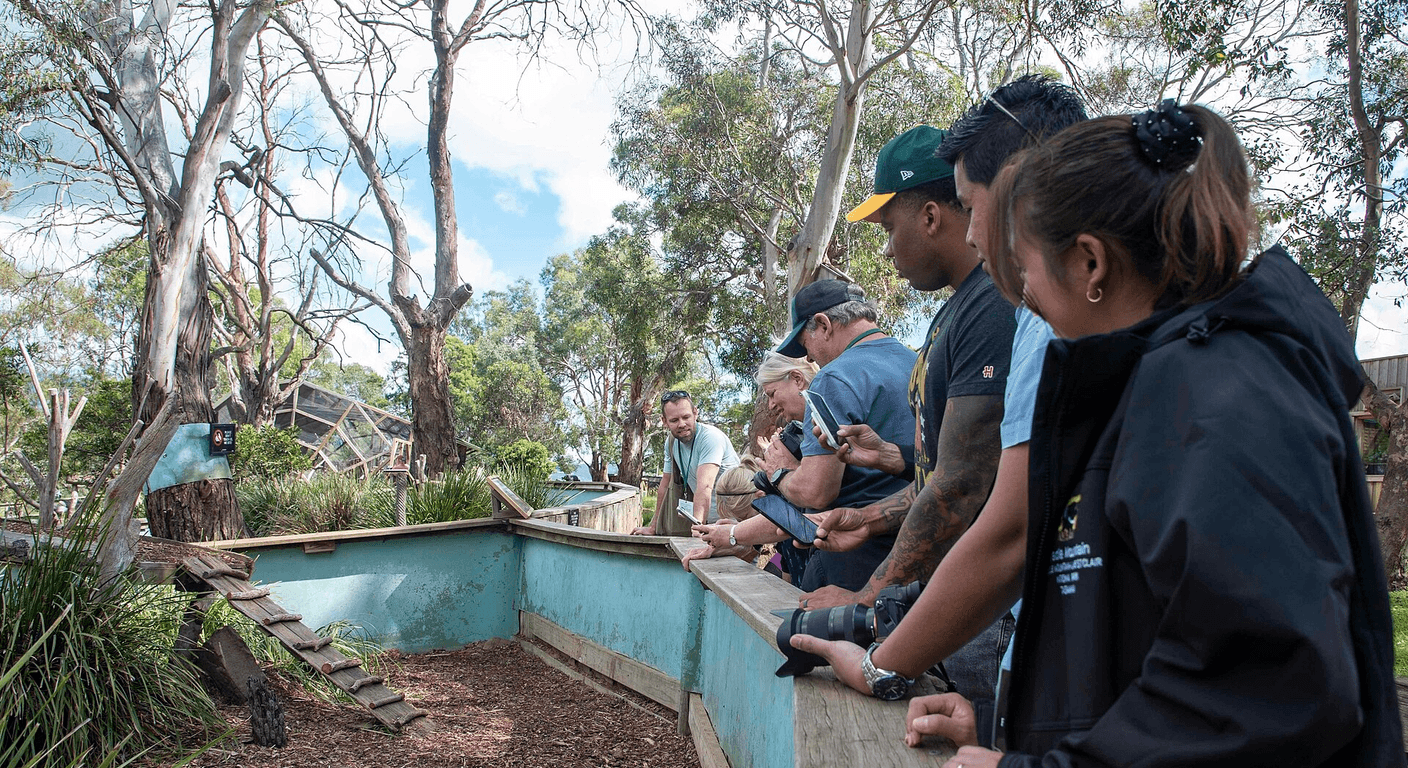
The keeper talks are the centrepiece of the visit and are included in your entry. Tasmanian devil presentations bring you closer to these animals than almost anywhere else in the world — you will see them fed, hear the keeper explain their biology and conservation status, and understand just how precarious their situation remains due to devil facial tumour disease. The talks are informative without being lecture-heavy, and the keepers are genuinely knowledgeable and happy to answer questions.
Wombats and echidnas are typically part of the keeper interaction program as well. These are not animals you can simply approach on your own — the structured sessions mean you see them behaving naturally while a keeper explains their needs and habits. The free-roaming kangaroos are a different experience entirely: you can hand-feed them throughout your visit using food available at the entrance, and they approach calmly and gently. It is the kind of unhurried encounter that feels genuinely generous rather than staged.
Bonorong also offers a nocturnal experience as a separate ticketed event, which is worth investigating if your group is staying overnight in Hobart rather than visiting as a day trip. The standard daytime visit runs for around two hours for most people, though you could easily stretch it to two and a half if you linger at the kangaroos or attend all the keeper talks. Check the official website at bonorong.com.au for the current daily talk schedule before you arrive.
What do you need to know about access and pacing?
The paths at Bonorong are gravel-surfaced, and the site does have some slopes. It is not a flat, paved circuit, and anyone who finds uneven ground tiring or has balance concerns should take their time and consider bringing a walking pole. The slopes are not severe, but they are real. Sensible, closed-toe footwear is essential — sandals or thongs are not appropriate here, both for comfort on the gravel and because you may be walking through areas where animals move freely.
Pacing matters. If you have a friend in the group who tires easily or prefers to sit and observe rather than walk the full circuit, there are shaded areas and seating points throughout the sanctuary. The gift shop and cafe area near the entrance provide a natural rest stop. Staff are approachable and accustomed to visitors with varying mobility levels — do not hesitate to ask them for guidance on which sections of the path are steepest or where to find seating near a particular enclosure.
Mornings are noticeably quieter than the mid-to-late afternoon window when organised tour coaches tend to arrive. Arriving when the sanctuary opens gives your group space to move at your own pace, ask questions of the keepers without competing with large crowds, and spend longer with the animals. For a group of women who prefer a relaxed, conversational pace over a rushed tick-the-boxes visit, the morning session is the better choice.
How does Bonorong combine with a visit to Richmond?
Richmond is a well-preserved colonial village about 25 minutes from Hobart and roughly 20 minutes from Bonorong, making the two an easy pairing for a full day. The Richmond Bridge, built by convict labour in the 1820s, is the oldest road bridge still in use in Australia and sits in a genuinely attractive setting above the Coal River. The village has a good selection of cafes, bakeries and small galleries, and the streets are flat and walkable — a relief after the gravel paths of Bonorong.
A practical itinerary for a group: arrive at Bonorong when it opens, spend the morning there, then drive to Richmond for a late lunch and a wander. You will be back in Hobart by mid-afternoon, which leaves time for Salamanca Place or a rest before dinner. If anyone in the group has an interest in colonial history, Richmond Gaol is worth the modest entry fee — it is one of the most intact convict gaols in Australia and is managed by a local trust. Confirm current opening hours and entry costs directly when you plan your visit.
What should you budget for the day?
Bonorong entry is indicatively around $30 to $35 per adult at the time of writing — confirm current pricing at bonorong.com.au before you go, as admission fees are reviewed periodically and concession rates may apply. If your group opts for the nocturnal experience, that is a separate ticketed event at a higher price point; again, check the official site for current figures. Kangaroo feeding pouches are available at the entrance for a small additional cost.
For the day overall, factor in hire car costs if you are driving (split across the group this is generally reasonable), lunch in Richmond (cafes there are typically mid-range, with a main meal indicatively in the $20 to $30 range — confirm when you arrive), and any additional entry fees for Richmond Gaol or other village attractions. A comfortable day for two people travelling together might run to roughly $150 to $200 all up including transport, entry and lunch, though this is indicative only and individual choices will vary significantly. Always confirm current prices directly with each venue.
What makes this day trip well-suited to over-50 travellers?
Bonorong works particularly well for this age group because it rewards curiosity and patience over speed. There is no rush to cover a sprawling attraction or tick off a long list of activities. The keeper talks give structure to the visit without being prescriptive, and the free time with the kangaroos is as long as you want it to be. For travellers who have spent years hearing about the decline of Tasmanian devils and wondering if they would ever see one, there is something genuinely moving about standing a metre away from one at a feeding session.
The combination with Richmond adds a cultural and historical dimension that many travellers in this age group appreciate — colonial architecture, good coffee, a browse through local galleries, and a bridge that has been standing since before Federation. Neither place demands physical effort beyond what most reasonably mobile people can manage comfortably, and both reward the kind of unhurried observation that comes naturally to experienced travellers. Tasmania is a short flight from Melbourne, and this pairing makes for one of the most satisfying single days the island offers.
Quick planning guide
| Ideal pace | Slow and unhurried, built around keeper talks and free kangaroo feeding |
|---|---|
| Best months | No single best season noted; mornings are the quietest time to visit |
| Suggested stay | 2 to 2.5 hours at the sanctuary, extending to a full day when paired with Richmond |
| Mobility level | Moderate – gravel paths with some slopes, manageable with closed-toe shoes and a steady pace |
| Cost level | Mid-range – entry around $30–35 per adult, roughly $150–200 all up for two people including transport and lunch |
| Comfort level | Comfortable, with shaded seating and a cafe area for rest stops |
| Best for | Travellers who enjoy genuine wildlife encounters at a relaxed, conversational pace |
| Main planning consideration | Arrive at opening to avoid afternoon tour coaches, and confirm current entry prices and talk schedules directly with the sanctuary |
Key takeaways
- Bonorong Wildlife Sanctuary at Brighton is about 30 minutes north of Hobart and operates as a genuine working rescue centre, not a commercial wildlife park.
- Entry fees (indicatively around $30–$35 per adult — confirm current prices) fund the on-site animal hospital and 24-hour Tasmanian wildlife rescue hotline.
- Keeper talks on Tasmanian devils, wombats and echidnas are included in standard entry and are the highlight of the visit.
- Paths are gravel with some slopes — closed-toe shoes and a steady pace are essential; the site is manageable for most reasonably mobile travellers.
- Morning visits are quieter and less crowded than mid-afternoon, when tour coaches typically arrive.
- Bonorong pairs naturally with a late lunch and wander in the historic village of Richmond for a full and varied day out of Hobart.
Recommended partners and links
Indicative prices only — always confirm with the operator before booking.
Frequently asked questions
Is Bonorong Wildlife Sanctuary suitable for older travellers with limited mobility?
Bonorong is manageable for most reasonably mobile older travellers, but the paths are gravel-surfaced with some slopes rather than flat paved walkways. Anyone who finds uneven ground challenging should take it slowly, wear closed-toe shoes with good grip, and consider bringing a walking pole. Seating is available throughout the sanctuary, and staff are accustomed to assisting visitors with varying needs.
How long should you allow for a visit to Bonorong?
Most visitors spend around two to two and a half hours at Bonorong, which is enough time to attend the keeper talks, hand-feed the kangaroos and walk the main circuit at a relaxed pace. If you want to attend multiple keeper sessions or spend longer with particular animals, allow up to three hours.
Do you need to book Bonorong in advance?
General daytime entry to Bonorong does not always require advance booking, but it is worth checking the official website at bonorong.com.au before you visit, particularly during Tasmanian school holidays or peak summer periods when visitor numbers are higher. The nocturnal experience program does require advance booking.
Can you get to Bonorong without a car?
Yes. Tassielink Transit operates coach services along the Midland Highway corridor that can get you to Brighton; confirm current timetables and stops directly at tassielink.com.au. Organised day tours from Hobart that include Bonorong are also available — check discovertasmania.com.au for current operators. For a group, a hire car is often the most flexible and cost-effective option.
What is the best time of day to visit Bonorong?
Morning visits are generally quieter and more relaxed than the mid-to-late afternoon period when organised tour coaches tend to arrive. Arriving at or shortly after opening gives you more space to move at your own pace, easier access to the keepers for questions, and a calmer atmosphere overall.