Ross and Oatlands, an hour apart on Tasmania's Midlands Highway, suit a comfortable day trip year-round, though the Midlands can be cold and windy even in summer. Allow around 90 minutes in each town. The highlight is Ross Bridge's convict-carved sandstone arches and Oatlands' intact Georgian streetscape with the working Callington Mill. Mobility is easy on flat main streets, though the mill's internal ladder climb is unsuitable for limited mobility. Driving from Hobart offers the most flexible access; coach travel requires careful timetable checking.
Why the Midlands Highway deserves a proper stop, not just a drive-through
Most travellers between Hobart and Launceston treat the Midlands Highway as a transit route, something to get through in under two hours. That is a reasonable choice if time is short, but it means missing a corridor of landscape and history that is, by Australian standards, extraordinary. The highway follows the route of the old convict-built road, and the towns it passes through have not been heavily redeveloped. What stands in Ross and Oatlands today is largely what was built in the 1820s, 1830s, and 1840s.
For a traveller based in Victoria who has seen the goldfields towns of Castlemaine or Maldon, the Midlands will feel familiar in spirit but different in material and scale. The sandstone here is a particular warm ochre, quarried locally, and it weathers beautifully. The streets are quiet. The pace suits someone who wants to walk slowly, read the interpretive panels, sit with a coffee, and think. That is not a criticism — it is precisely the point.
Combining Ross and Oatlands in a single day is manageable if you are driving, with roughly 45 minutes of road between them. If you are travelling by coach, the logistics require more planning, as not all services stop at both towns on the same run. Check Tassielink and Redline timetables carefully before you commit to a coach-only itinerary, and consider whether hiring a car in Hobart gives you more freedom for the day.
Ross: the bridge, the village, and the bakery that earns its reputation
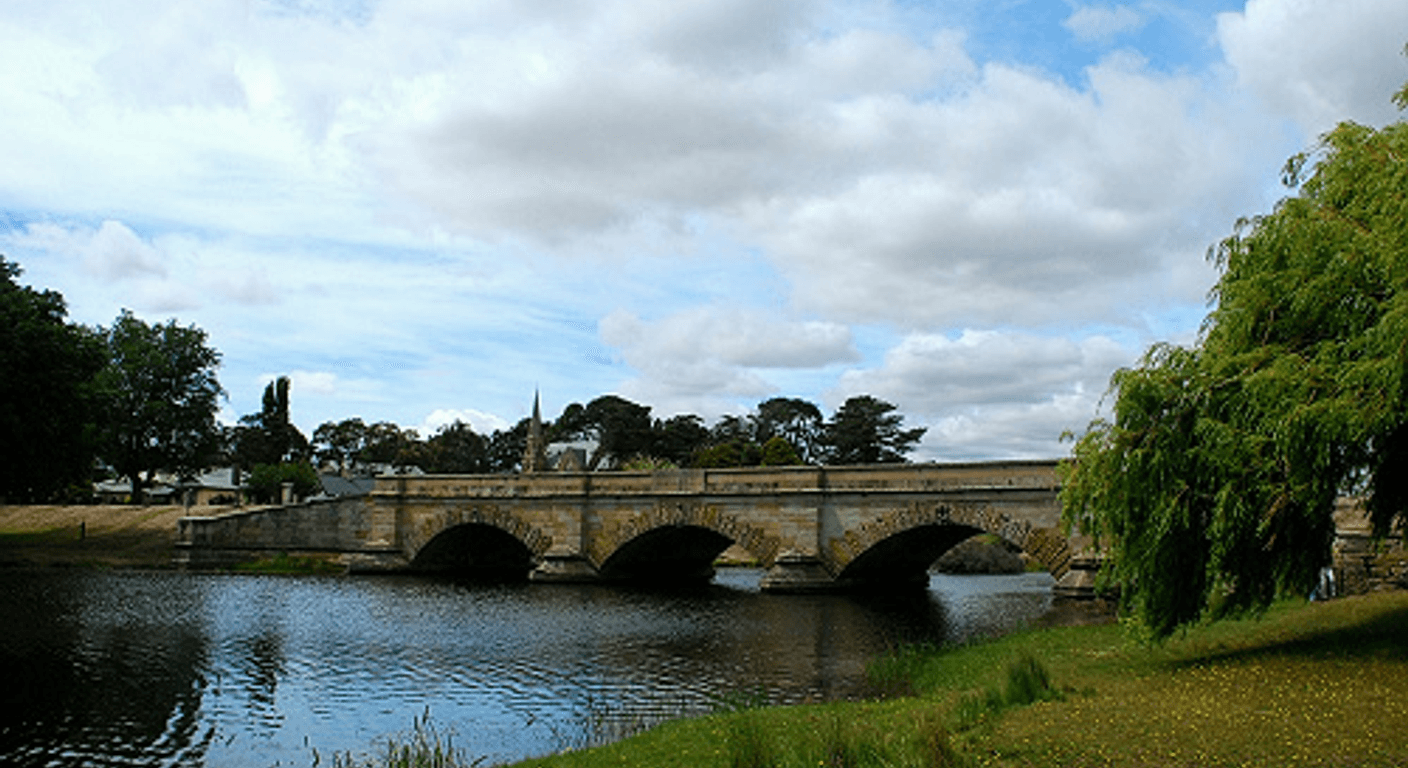
Ross sits about 120 kilometres north of Hobart, and its centrepiece is the Ross Bridge, completed in 1836 and widely regarded as one of the finest examples of convict stonemasonary in Australia. The carvings on the bridge's sandstone arches were executed by a convict named Daniel Herbert, who is said to have been granted a pardon in recognition of the work. Whether or not every detail of that story is precisely accurate, the carvings themselves are undeniable — faces, Celtic knotwork, animals, and symbols cut with a precision that is still sharp nearly two centuries later.
The bridge is free to visit and sits at the bottom of a gentle slope from the main street. The path to it is paved and reasonably flat, though the riverbank itself is uneven grass. For anyone with limited mobility, viewing the bridge from the road-level approach is perfectly satisfying — you can see the arch detail clearly without descending to the water's edge. The town's main street, Church Street, is a short, flat walk with a handful of heritage buildings, a small woollen mill shop, and the Ross Village Bakery.
The bakery is not hype. It has been operating for decades and its vanilla slice has a specific local following. It is a good place to have breakfast or morning tea before continuing north to Oatlands. Arrive before 10am on weekends if you prefer a quieter experience. Confirm current opening hours directly with the bakery, as hours can vary seasonally.
Female factory history in Ross: what the village does not always advertise
Ross had a Female Factory — a place where women convicts were housed, put to work, and punished. The Ross Female Factory site is less prominently marked than the bridge, and the interpretation is more modest than at the larger Cascades Female Factory in Hobart, but it is part of the town's story and worth seeking out. The Female Factory Historic Site is managed by Parks and Wildlife Service Tasmania; check the Parks Victoria website or the Discover Tasmania site for current access information and any guided tour availability.
For a traveller with Italian Australian heritage, the female factory history has a particular texture. Many of the women transported to Van Diemen's Land came from Ireland and England, convicted of what were often petty crimes shaped by poverty. Their lives in the factories were controlled, difficult, and largely unrecorded in the way that male convict stories were. The interpretive work being done at these sites in recent years is more honest than it once was, and it rewards a slow read.
If this history matters to you, consider pairing the Ross stop with a visit to the Cascades Female Factory in Hobart either before or after your Midlands day. The Cascades site, managed by the Port Arthur Historic Site Management Authority, offers guided tours and is one of the most significant female convict sites in Australia. Confirm tour times and current entry fees directly with the operator at portarthur.org.au.
Oatlands: the most intact Georgian streetscape in Australia
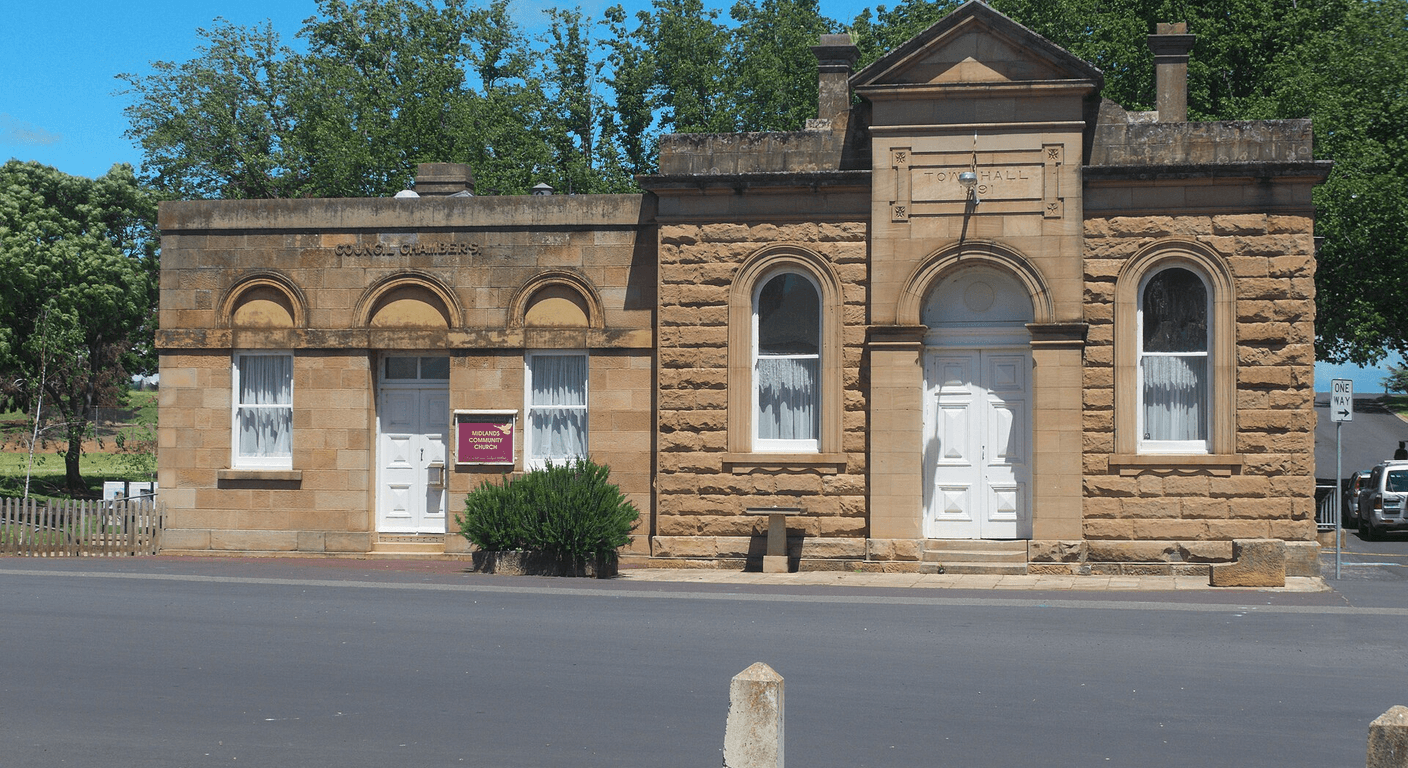
Oatlands is described, with reasonable accuracy, as having the most intact Georgian streetscape in Australia. More than 150 colonial-era buildings remain in and around the town, and the main street — High Street — is long, flat, and walkable. There is no single dramatic set piece here the way Ross has its bridge. Instead, the pleasure is cumulative: sandstone building after sandstone building, each with its own small history, strung along a quiet lakeside town that has not been heavily commercialised.
Lake Dulverton sits at the edge of town and has a flat walking path around part of its shore. It is a pleasant addition to the main street walk, particularly in the late morning light. The lake attracts waterbirds and the path is well-maintained, though some sections have uneven surfaces. Take your time and wear comfortable, supportive shoes — the same advice applies to the main street, where some footpaths have heritage-era paving that can be uneven.
Oatlands is roughly 85 kilometres north of Hobart and about 90 kilometres south of Launceston, making it a natural midpoint. For a solo traveller doing this as a day trip from Hobart, the logical sequence is Oatlands first (leaving Hobart by 8.30am), then Ross for lunch and the afternoon, before returning to Hobart. That gives you the longer drive in the morning when you are fresh, and Ross's bakery as a lunch option.
Callington Mill: what to expect inside and outside
The Callington Mill is Oatlands' most prominent landmark — a working windmill built in 1837 that has been restored to full operation. It is, as far as is known, the only fully restored and operating windmill in the Southern Hemisphere. The mill is privately operated and offers guided tours; entry fees are indicative around $10–$15 per adult at time of writing, but confirm current pricing and tour times directly with the mill at callingtonmill.com.au before you visit, as hours are not always consistent.
The mill itself involves a climb via internal ladders and is not suitable for anyone with limited mobility or vertigo. However, the ground-floor display and the exterior are worth visiting regardless. The surrounding precinct includes a heritage cottage and grounds that give a clear sense of the mill's original purpose in the colonial grain economy. There is a small shop selling stone-ground flour and local products.
One practical note: Oatlands does not have a large range of cafes, and those that exist have variable hours. It is worth carrying water and a snack, or having a proper meal at one of the town's options before they close in the early afternoon. Check current business listings via Discover Tasmania's website before you go, as small-town hospitality businesses do change.
Practical matters: getting there, getting around, and pacing the day
Driving is the most flexible way to do this day trip, whether in a hire car from Hobart or as part of a self-drive itinerary between Hobart and Launceston. The Midlands Highway (A1) is a well-maintained two-lane highway with good signage. Parking in both Ross and Oatlands is free and easy — neither town has parking stress. Allow around 90 minutes each in Ross and Oatlands if you want to walk at a comfortable pace and sit down for a meal or coffee.
Coach travel is possible but requires careful timetable checking. Both Tassielink and Redline run services along the Midlands Highway, but stops at Ross and Oatlands are not always on every service, and return options on the same day can be limited. If you are relying on coaches, contact the operators directly to confirm which services stop at each town and what the return timing looks like. Do not assume the website timetable is fully up to date — phone confirmation is worth the effort.
For a solo traveller aged in the late 60s, this is a low-physical-demand day. Both towns are flat. The walking distances are short. The main variables are weather — the Midlands can be cold and windy even in summer — and the fact that some sites have limited shelter. Dress in layers, carry a compact umbrella, and wear shoes with grip. If you are prone to fatigue in the afternoon, the sequence of Oatlands in the morning and Ross after lunch works well, as Ross's main attractions are compact and easy to cover in two hours.
Honest accessibility notes for travellers with mobility considerations
Both towns are genuinely flat in their main walking areas, which makes them more accessible than many heritage destinations. The Ross Bridge approach from the road is paved; the riverbank below is not. High Street in Oatlands is long but level, and the Lake Dulverton path is mostly flat with some uneven sections. Neither town has hills to speak of.
The Callington Mill interior is not wheelchair accessible or suitable for those with limited mobility — the internal tour involves ladders. The ground floor and exterior are accessible. The Ross Female Factory site access depends on current conditions; check with Parks and Wildlife Service Tasmania for up-to-date accessibility information before visiting.
Public toilets exist in both towns — Ross has facilities near the bridge and in the main street area, and Oatlands has public amenities near the lake and town centre. Both are worth locating early in your visit. If you use a walking stick or prefer to carry a small folding seat for rest breaks, both towns have enough bench seating along the main streets to make the day comfortable.
Quick planning guide
| Ideal pace | Slow-paced walking with time to read interpretive panels and stop for coffee |
|---|---|
| Best months | Comfortable most of the year, though the Midlands can be cold and windy even in summer |
| Suggested stay | Full day trip from Hobart, around 90 minutes in each town |
| Mobility level | Easy on flat main streets; Callington Mill's internal climb is unsuitable for limited mobility |
| Cost level | Budget-friendly — free bridge access and parking, modest mill entry around $10–$15 |
| Comfort level | Comfortable, with bakery, bench seating and public toilets in both towns |
| Best for | Solo and mature travellers wanting heritage depth without demanding terrain |
| Main planning consideration | Drive for flexibility, or confirm Tassielink/Redline coach timetables directly, and check seasonal opening hours for cafes and attractions |
Key takeaways
- Ross Bridge, completed in 1836, features convict-carved sandstone arches that remain among the most detailed examples of colonial craftsmanship in Australia.
- Oatlands' High Street is documented as the most intact Georgian streetscape in Australia, with more than 150 colonial-era buildings still standing.
- The Callington Mill in Oatlands, built in 1837, is believed to be the only fully restored and operating windmill in the Southern Hemisphere.
- Both Ross and Oatlands have flat, walkable main streets that suit travellers who want heritage depth without demanding terrain.
- Female factory history is present in both towns and at the Cascades site in Hobart — the interpretation has become more honest and detailed in recent years.
- Driving is the most practical way to combine both towns in a single day; coach travel requires careful timetable confirmation directly with Tassielink or Redline.
Recommended partners and links
Indicative prices only — always confirm with the operator before booking.
Frequently asked questions
How far apart are Ross and Oatlands, and can you visit both in one day?
Ross and Oatlands are roughly 45 kilometres apart on the Midlands Highway, about a 40-minute drive. Visiting both in a single day is comfortable if you are driving, with 90 minutes to two hours in each town giving you enough time to walk the main streets, see the key sites, and have a meal. Allow a full day rather than treating it as a quick stop.
Is Ross Bridge free to visit?
Yes, Ross Bridge is free to visit. It sits at the base of a short slope from the main street and can be viewed from the road approach or from the riverbank. There is no entry fee or ticketing. The surrounding village and its main street are also free to explore.
What are the opening hours and entry cost for Callington Mill in Oatlands?
Callington Mill operates guided tours and charges an entry fee, indicatively around $10–$15 per adult, but hours are not always consistent and prices do change. Confirm current opening times and entry costs directly with the mill at callingtonmill.com.au before your visit — phoning ahead is advisable, particularly if you are travelling mid-week or in the off-season.
Can you get to Ross and Oatlands by public transport from Hobart?
Tassielink and Redline Coaches both run services along the Midlands Highway between Hobart and Launceston, and some services do stop at Ross and Oatlands. However, not every service stops at both towns, and return options on the same day can be limited. Contact Tassielink at tassielink.com.au and Redline at redlinecoaches.com.au directly to confirm which services stop where and what the return timing looks like before you book.
Is the female factory history in Ross easy to find and interpret?
The Ross Female Factory site exists but is less prominently interpreted than the Cascades Female Factory in Hobart. Signage and access can be modest. For a more detailed experience of female convict history, the Cascades Female Factory in South Hobart — managed by the Port Arthur Historic Site Management Authority — offers guided tours and is the most comprehensively interpreted female factory site in Tasmania. Confirm tour availability and current entry fees at portarthur.org.au.