Bruges is a compact medieval city in Belgium best visited April–May or September–October, when weather is mild and crowds thinner. Two to three nights suit its walkable historic core, with a canal boat ride the defining way to see it. Mobility is moderate — cobblestones are constant, so sturdy footwear matters. Access requires a long-haul flight to Brussels (22–26 hours with a stopover) followed by a 55-minute train to Bruges.
Why Bruges Works So Well for Over-50 Travellers
There's a particular pleasure in arriving somewhere compact. Bruges has a historic centre small enough that you can walk from the central market square, the Markt, to the quieter Béguinage district in under twenty minutes — and that's without hurrying. For a solo traveller from Victoria who has likely navigated larger, more demanding cities on previous European trips, Bruges offers something rarer: a place where the pace is built into the architecture.
The city's appeal is not novelty — it's density of quality. Medieval guild houses, 14th-century churches, canal reflections at dusk, and a chocolate culture that is entirely serious, not tourist-kitsch. You can spend a morning in the Groeninge Museum looking at Flemish Primitive paintings and an afternoon doing precisely nothing beside a canal. Both are valid uses of the day.
What makes Bruges genuinely suitable for travellers over 50 is that it doesn't require you to tick boxes at speed. The city's compact loop means you can return to the same café twice, take a different lane home and still feel like you've covered new ground. That's a rare quality in a popular European destination.
Getting There: The Long Haul from Australia and the Train from Brussels
From Melbourne, expect a flight time of roughly 22–26 hours to Brussels Airport (BRU) depending on the routing and stopover. Emirates via Dubai, Singapore Airlines via Singapore, and Qatar Airways via Doha are the most travelled options for Australians. There are no direct flights from Australia to Belgium — a single stopover is standard, though some routings involve two. Confirm current schedules with your airline or travel agent, as these change seasonally.
Jet lag is real and worth planning around. Brussels is seven to eight hours behind Eastern Australian time depending on daylight saving, which means the adjustment is meaningful. Building in a recovery night in Brussels before continuing to Bruges is not excessive caution — it's how you actually enjoy the first few days. Brussels itself warrants at least a day: the Grand Place alone, a Baroque market square on a genuinely grand scale, justifies the stopover.
The train from Brussels-Midi (Bruxelles-Midi/Brussel-Zuid) to Bruges runs frequently and takes around 55 minutes on a direct service. Belgian Rail's network is reliable, the carriages are comfortable, and the station at Bruges is a short walk or taxi ride from the historic centre. Indicative fares are roughly AUD 25–40 one way — confirm current pricing at belgiantrain.be before travel. For solo travellers, this is a far more enjoyable arrival than any rental car or bus.
The Belfry, the Canals, and What's Actually Worth Your Time
The Belfort — the medieval belfry tower that anchors the Markt — is Bruges's most recognisable landmark and appears on approximately every postcard sold within a three-kilometre radius. It's 366 steps to the top, the staircase is narrow and uneven, and the views, while genuinely fine, are not materially different from what you'll see from the canal level with a good eye. For travellers with any knee or hip considerations, skipping the climb is a sensible call, not a concession. The tower is worth admiring from below; it doesn't require conquest.
The canal boat rides, on the other hand, are a genuine highlight — not because they're romantic in a brochure sense, but because they reframe the city entirely. A 30-minute guided boat trip glides under low stone bridges, past the backs of guild houses and through stretches of the city that are simply inaccessible on foot. Several jetties operate from the Dijver canal area, with departures running regularly through the day during the warmer months. Prices are around EUR 12–15 per person, indicative — confirm at the jetty or via visitbruges.be. Note that boarding involves stepping down into a low boat; operators have improved accessibility at some jetties, but it's worth asking ahead if mobility is a concern.
Beyond the water, the Groeninge Museum on the Dijver is a world-class collection of Flemish and Belgian painting, compact enough to cover without fatigue. The Béguinage — a walled enclosure of whitewashed houses originally built for a community of religious women — is one of the quietest corners of the city, a UNESCO World Heritage site that most visitors walk past without entering. Do enter. The contrast with the Markt's visitor traffic is almost comedic.
Cobblestones: An Honest Assessment
This deserves plain language. Bruges is cobblestoned to a degree that goes well beyond charming. The historic lanes are largely paved with uneven stone setts — not the smooth, rounded variety, but the kind that catch a toe or a wheel without warning. For most ambulant travellers, this is manageable with sensible footwear and a moderate pace. For anyone using a wheeled walking frame or a standard suitcase with small wheels, significant sections of the historic core will be genuinely difficult.
A walking stick with a rubber tip is worth packing if you use one occasionally at home — in Bruges, you'll use it every day. Flat-soled shoes with good ankle support are preferable to anything with a heel. The canal towpaths and some of the larger paved squares, including the Markt and the Burg, are smoother and offer relief. The city has made some accessibility improvements in recent years, but it remains fundamentally a medieval street grid, and that's unlikely to change.
Taxis and cycle rickshaws (known locally as bike taxis) operate in the centre and offer a practical alternative for stretches that are too long or too uneven on foot. Horse-drawn carriage tours also depart from the Markt — a slightly theatrical option that nonetheless covers a lot of ground without requiring you to walk it. Confirm current operators and pricing through visitbruges.be.
Chocolate, Beer and Eating Well Without Overpaying
Belgian chocolate in Bruges is not a tourist gimmick — it's a serious craft industry with serious practitioners. The distinction worth making is between the mass-market shops on the main tourist lanes and the smaller artisan chocolatiers. The Chocolate Line on Simon Stevinplein has an international reputation for unusual flavour combinations. The Dumon family chocolatiers have been making pralines for decades and the quality shows. Neither is inexpensive — a small box of good pralines will cost around EUR 15–25 — but this is one area where the Bruges premium is justified.
Beer culture in Belgium is equally serious. Bruges has its own brewery — De Halve Maan, the Half Moon Brewery — operating in the city centre since 1856, with tours available and a rooftop terrace that offers a different city view without the Belfry's 366 steps. The Bruges Zot ales are brewed here. A tour costs around EUR 14–16, indicative — confirm at halvemaan.be. For a solo traveller, a bar stool at a traditional brown café (bruin café) with a half-litre of local ale and a bowl of stoofvlees — Flemish beef stew — is one of the more satisfying ways to spend an evening.
Restaurants in the historic centre carry a tourist premium, and some of the most prominent ones on the Markt trade on location rather than kitchen quality. A short walk to the Sint-Anna or Sint-Gillis neighbourhoods finds more local clientele and more honest pricing. Indicative lunch costs in a mid-range café run around EUR 18–28 for a main course; dinner at a proper restaurant will be EUR 35–60 per person before drinks. Confirm current prices locally.
Practical Planning: Entry, Insurance and Money
Belgium is a Schengen Area member, and Australian passport holders have historically entered without a visa for short stays. However, the European Union's ETIAS (European Travel Information and Authorisation System) is being phased in — this is a pre-travel authorisation, not a visa, but it requires an online application before departure. The rollout timeline has shifted several times. Check the current status at smartraveller.gov.au/destinations/europe/belgium before booking anything. This is not a formality to leave until the week before travel.
Travel insurance for over-50 travellers — particularly those with pre-existing conditions — requires specific attention. Standard policies often exclude pre-existing conditions unless declared and covered, and medical costs in Belgium, while high-quality, are expensive for uninsured visitors. Compare policies from Australian providers that explicitly cover your conditions, and carry both a digital and printed copy of your policy documentation. The Australian Embassy in Brussels is listed on smartraveller.gov.au for consular assistance if needed.
Currency is the Euro. ATMs are widely available in Bruges, and credit cards are accepted at most hotels, restaurants and shops — though some smaller chocolatiers and market stalls prefer cash. Notify your bank before travel to avoid cards being blocked for overseas transactions. The current AUD–EUR exchange rate fluctuates; check with your bank or a currency comparison service close to travel.
How to Structure Two or Three Days Without Overdoing It
Two nights in Bruges with a full day either side gives enough time without the fatigue of trying to absorb everything. A sensible first morning is a canal boat ride — it orients the city and requires no walking. The afternoon can be spent at the Groeninge Museum, followed by a slow walk back through the Béguinage and along the Minnewater lake, which is flat, quiet and as pleasant a late-afternoon hour as Bruges offers. Dinner in the Sint-Anna neighbourhood rounds out the day without requiring a plan.
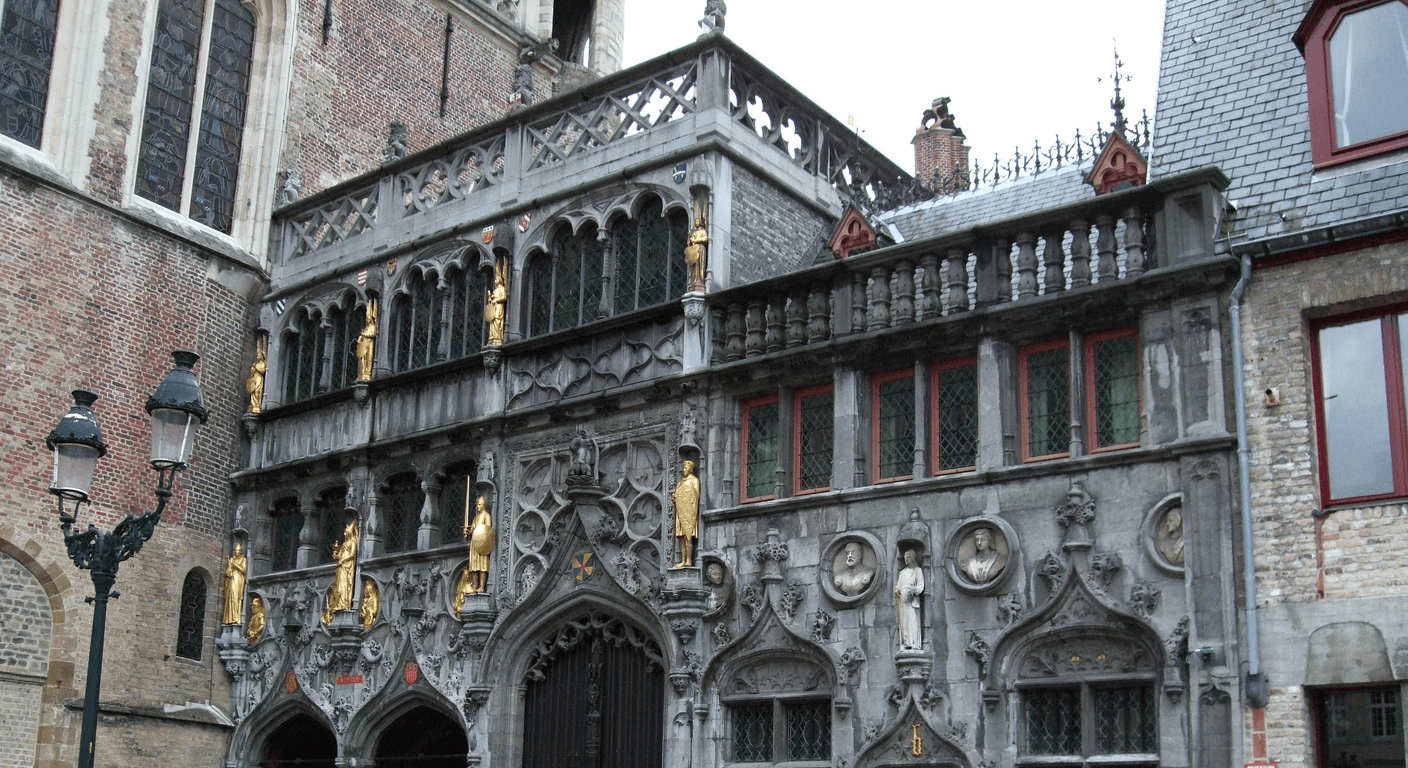
The second day can go in any direction: the Basilica of the Holy Blood on the Burg square (free entry to the lower chapel, a small fee for the upper), the De Halve Maan brewery tour, or simply repeating the streets you liked from the day before at a different time of light. Morning Bruges and evening Bruges are genuinely different cities. The market stalls on the Markt operate on certain days — check current schedules at visitbruges.be.
For those with three nights, a day trip to Ghent by train (around 25 minutes from Bruges station) adds a larger, slightly grittier Flemish city that balances Bruges's prettiness with more working-city texture. The Ghent Altarpiece — the Van Eyck masterpiece in St Bavo's Cathedral — is one of the great paintings in Europe and is now displayed in a purpose-built viewing room after its restoration. Confirm opening hours and booking requirements at sintbaafskathedraal.be before travel.
Quick planning guide
| Ideal pace | Slow-paced, built for lingering rather than sightseeing at speed |
|---|---|
| Best months | April–May and September–October for mild weather and fewer crowds |
| Suggested stay | Two to three nights, with an optional Ghent day trip |
| Mobility level | Moderate — extensive cobblestones require sturdy, flat footwear and care |
| Cost level | Mid-range, with a premium on chocolate and centre-of-town dining |
| Comfort level | Comfortable pace and quality dining, but effort needed underfoot |
| Best for | Solo or over-50 travellers who prefer a slow, unhurried travel style |
| Main planning consideration | Long-haul flight and jet lag from Australia, plus uneven cobblestone streets throughout the historic core |
Key takeaways
- A direct train from Brussels to Bruges takes around 55 minutes and is the most comfortable arrival option for travellers staying in or near the historic centre.
- The canal boat ride is the single best way to understand Bruges's layout and is accessible at several central jetties — ask operators about boarding assistance if needed.
- Cobblestones cover most of the historic lanes; flat, supportive footwear and a rubber-tipped walking stick make a significant practical difference.
- April–May and September–October offer mild weather and fewer visitors — July and August are the peak season and significantly more crowded.
- Australian travellers should confirm EU ETIAS authorisation requirements at smartraveller.gov.au well before booking, as the rollout timeline has changed previously.
- The Belfry's 366 steep steps are not the only way to appreciate Bruges — the city's ground-level canal paths, museums and café culture reward a slower approach.
Recommended partners and links
Indicative prices only — always confirm with the operator before booking.
Frequently asked questions
How long is the train from Brussels to Bruges?
Direct trains from Brussels-Midi to Bruges run frequently and take approximately 55 minutes. Belgian Rail operates the service; check current timetables and fares at belgiantrain.be before travel.
Is Bruges accessible for travellers with limited mobility?
Bruges is rated Moderate for mobility. The historic centre is largely cobblestoned, which can be difficult for wheeled walking frames or luggage with small wheels. Canal towpaths and larger squares offer smoother surfaces, and canal boat operators have improved boarding access at some jetties. A walking stick with a rubber tip is strongly advisable. Taxis and bike taxis provide alternatives to walking difficult stretches.
Do Australians need a visa to visit Belgium?
Australian passport holders have historically entered Belgium and the Schengen Area without a visa for short stays. However, the EU's ETIAS travel authorisation system is being introduced for visa-exempt travellers. Check the current status and any requirements at smartraveller.gov.au/destinations/europe/belgium before booking travel.
What is the best time of year for Australians to visit Bruges?
April to May and September to October are the most comfortable months — mild temperatures, manageable visitor numbers and good daylight hours. July and August are peak season with significantly more tourists. December brings Christmas markets but also cold, wet weather and large crowds on weekends.
Is a day trip from Brussels enough time to see Bruges?
A day trip is feasible and many people do it, but two nights in Bruges gives a considerably better experience. The city changes character in the early morning and evening when day-trippers have left, and an overnight stay allows a more relaxed pace — which is, frankly, the point of going to Bruges.