Riga suits visitors year-round, with mornings ideal for walking its Art Nouveau streets and Old Town lanes. Three to four days suit the city alone, longer combined with Tallinn and Vilnius. Its highlight is the world's densest concentration of Art Nouveau architecture. Mobility is moderate — smooth Art Nouveau pavements contrast with uneven Old Town cobblestones — and reaching Riga requires a long-haul flight via a Gulf or European hub, with no direct flights from Australia.
Why Riga, and why now?
There's a particular pleasure in arriving somewhere that exceeds what you'd imagined — and Riga, for most Australians, exceeds considerably. The Latvian capital of around 600,000 people sits on the Gulf of Riga at the mouth of the Daugava River, and its old centre became a UNESCO World Heritage Site in 1997. Yet it remains far less visited than its architectural significance deserves. That's changing slowly, which is reason enough to go before it changes further.
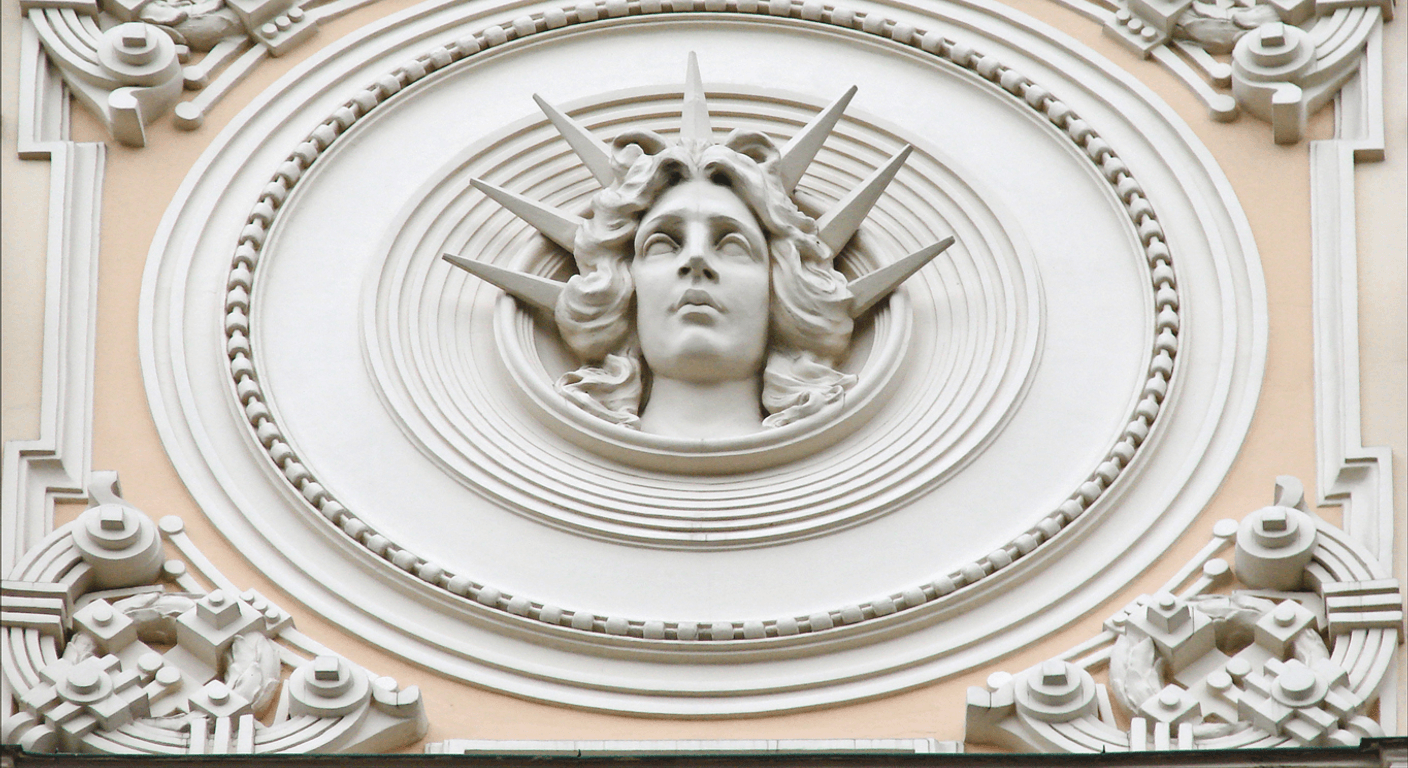
The Art Nouveau quarter — particularly Alberta iela and Elizabetes iela — is the reason most informed travellers make the detour. Roughly a third of all buildings in central Riga were constructed between 1896 and 1913, when the city was one of the Russian Empire's wealthiest ports. Architects competed to outdo each other with elaborately ornamented facades: sphinxes, screaming masks, writhing foliage, and allegorical figures stacked four storeys high. Walking those streets on a quiet morning, with the light coming in low from the east, is an experience that genuinely doesn't require a superlative.
For a traveller who appreciates beauty in detail — in a carved balustrade, a tiled hallway, the particular green of a copper dome — Riga is the right city. It rewards slow looking.
Getting there from Australia: the honest routing picture
There are no direct flights from Australia to Riga. The realistic routing is through a Gulf hub (Dubai, Abu Dhabi, Doha) or a major European hub (Frankfurt, Amsterdam, Helsinki, Vienna), with a connecting flight of 2–4 hours onward to Riga International Airport. Total door-to-door travel time from Melbourne or Sydney is typically 24–28 hours, depending on the layover. From Perth, a westbound routing through a Gulf hub can feel slightly more direct.
Indicative return economy fares from Melbourne or Sydney start somewhere around $1,800–$2,800 AUD in the low-to-mid season, though prices shift considerably depending on the carrier, routing, and how far in advance you book. Those are indicative figures only — confirm current pricing with your preferred airline or travel agent. Business class fares are substantially higher; many travellers find a lie-flat seat on the long haul segment worth the cost at this stage of life.
Riga Airport (RIX) is well-connected within Europe, so it's also very practical to combine Riga with Tallinn (Estonia) or Vilnius (Lithuania) — the three Baltic capitals are linked by bus (Lux Express or FlixBus) and make a natural 10–14 day circuit. Confirm current schedules at the respective operators' sites before booking.
Arriving well: jet lag and the recovery night
Riga is GMT+2 (GMT+3 in summer daylight saving), which puts it 6–8 hours behind Eastern Australia depending on the season. That's a manageable time difference by long-haul standards, but 26 hours of travel followed by an afternoon arrival still calls for a sensible first day. Book accommodation in or very close to the Old Town so there's no transfer fatigue on top of flight fatigue.
The approach that works well for many experienced long-haul travellers: arrive, check in, take a gentle 45-minute walk to orient yourself, eat something real, and sleep at local time. Resist the urge to 'use' the first afternoon productively. Riga's Old Town is compact enough that a morning wander on day two will cover more ground in better spirits than an exhausted afternoon scramble on day one.
Travel insurance is non-negotiable for a trip of this length, particularly for travellers with pre-existing medical conditions. Australian insurers vary considerably in what they cover and under what terms — compare policies carefully and declare all conditions honestly. The Australian Government's Smartraveller site (smartraveller.gov.au) also carries current health and safety advice for Latvia and is the authoritative source on entry requirements, which can change.
The Art Nouveau district: how to explore it well
The main Art Nouveau streets — Alberta iela, Elizabetes iela, Strēlnieku iela — are in the Quiet Centre (Klusais centrs), a neighbourhood just north of the Old Town walls. The streets are wide, the pavements smooth, and the area is genuinely quiet by the standards of any European capital. This is not a neighbourhood where you're dodging tour groups. A self-guided walk of two to three hours covers the highlights comfortably; the Riga Tourism portal (liveriga.com) publishes a free downloadable Art Nouveau walking route that is clear and well-researched.
The Riga Art Nouveau Museum at Alberta iela 12 is the essential indoor stop. The apartment has been restored to its original 1903 condition, complete with period furniture, ceramics, and metalwork. Entry is indicatively around €8–10 (confirm current pricing directly with the museum at jugendstils.riga.lv). The building itself — designed by Konstantīns Pēkšēns — is one of the finest on the street, and the interior context it provides makes the exterior walk considerably richer.
A word on footwear: Alberta iela is smooth, but once you cross back into the medieval Old Town, the cobblestones become irregular and uneven underfoot. Comfortable, supportive shoes with a non-slip sole are not optional. Cobblestones that look charming in photographs are genuinely tiring after an hour, and some of the older streets have gaps between stones that require attention. Mornings are the best time to walk — fewer people, better light for photography, and cooler temperatures in summer.
The Old Town and beyond: what else is worth your time
Riga's medieval Old Town (Vecrīga) is a UNESCO-listed warren of lanes, guild halls, and church spires that compresses a thousand years of Baltic history into about one square kilometre. The Three Brothers — a sequence of three houses from the 15th, 17th, and 18th centuries standing side by side on Mazā Pils iela — is one of the most photographed sites in the city, and rightly so. The Dome Cathedral (Rīgas Doms), dating to 1211, houses one of Europe's largest organs and runs regular recitals; check the current schedule at the cathedral's official site. Concerts here are worth the modest ticket price.
The Museum of the Occupation of Latvia, recently renovated and relocated to a building on Rātslaukums (Town Hall Square), documents the Soviet and Nazi occupations of the 20th century with considerable candour. It's sobering and important, and free to enter — though a donation is appropriate. Allow 90 minutes. For those with an interest in applied arts, the Latvian National Museum of Art on Krišjāņa Valdemāra iela holds a strong collection of 19th and 20th century Baltic work that rarely appears in international surveys.
The Latvian capital also has a readable café culture that suits a solo traveller. Neighbourhood spots in the Quiet Centre and along Tērbatas iela tend to attract locals rather than tourists, and prices reflect that. A good coffee and a pastry for around €4–6 is a reasonable expectation — though costs, as always, should be confirmed on the ground.
Riga Central Market: the covered pavilions worth a morning
Just south of the Old Town, across the ring road, sit five enormous zeppelin hangars repurposed in the 1920s as market pavilions. Riga Central Market (Rīgas Centrāltirgus) is one of the largest markets in Europe by floor space and one of the most architecturally interesting market buildings anywhere. Each pavilion is devoted to a different category — meat, fish, dairy, vegetables, dry goods — and the scale of it takes a moment to absorb.
The pavilions are flat-floored, undercover, and largely accessible without steps, which makes them genuinely comfortable to explore in poor weather. In summer the outdoor stalls spill onto the surrounding grounds; in cooler months the indoor atmosphere is warm and practical. Latvian cheeses, smoked fish, rye bread, and honey are all excellent purchases. The market opens early and the fish pavilion is at its best before 10am.
The surrounding neighbourhood — Maskavas forštate — is one of the city's most historically layered, with a significant Jewish history and a current wave of creative businesses moving into older buildings. It's worth a wander beyond the market itself, though the streets here are less polished than the Old Town and the footpaths vary in condition.
Practical matters: money, language, safety, and pacing
Latvia uses the euro. ATMs are widely available in central Riga and most accept international cards; notify your bank before departure. Card payments are accepted almost everywhere in the tourist areas, though a small amount of cash is useful at the market and in some smaller cafés. Indicative mid-range restaurant meals run roughly €15–25 per person for a main and a drink — good value by western European standards, though Riga is no longer the bargain it was a decade ago. Confirm current costs on the ground.
Latvian is the official language, but English is spoken confidently in hotels, restaurants, and tourist sites throughout central Riga. Older residents may speak Russian as a first language. Safety for solo female travellers is generally good in the central areas; the same reasonable urban awareness that applies anywhere applies here. The Old Town at night is well-lit and populated in summer. Check the current Smartraveller advisory at smartraveller.gov.au/destinations/europe/latvia for any updated guidance before departure.
On pacing: Riga is a city that rewards not rushing. The Art Nouveau district alone merits two separate walks — one to orient, one to look properly. Build in at least one long lunch, one concert or cultural event, and one morning with no fixed plan. That's not indulgence; that's how you actually see a place.
Quick planning guide
| Ideal pace | Slow-paced and unhurried, built around long walks and one unplanned morning |
|---|---|
| Best months | Comfortable year-round; mornings are the best time of day for sightseeing |
| Suggested stay | 3-4 days for Riga alone; 10-14 days if combined with Tallinn and Vilnius |
| Mobility level | Moderate — smooth Art Nouveau pavements versus uneven Old Town cobblestones; sturdy non-slip shoes recommended |
| Cost level | Moderate on the ground (mid-range meals €15-25), though long-haul airfares add significant cost |
| Comfort level | Comfortable — English widely spoken, well-lit central areas, and a flat, undercover market for wet days |
| Best for | Architecture lovers, slow travellers, and solo travellers seeking somewhere genuinely different from the usual European circuit |
| Main planning consideration | No direct flights from Australia — expect 24-28 hours of travel via a Gulf or European hub, plus a recovery night on arrival |
Key takeaways
- Riga holds the world's highest concentration of Art Nouveau architecture, centred on Alberta iela and Elizabetes iela in the Quiet Centre.
- Australians should allow 24–28 hours of total travel time via a Gulf or European hub, and plan a recovery night on arrival before serious sightseeing.
- The Old Town cobblestones require sturdy, non-slip footwear — the Art Nouveau district's pavements are considerably smoother.
- Riga Central Market's five zeppelin-hangar pavilions are flat, undercover, and one of the most architecturally distinctive market spaces in Europe.
- Latvia uses the euro; mid-range dining is good value by western European standards, though prices should be confirmed on the ground.
- Check current visa and entry requirements at smartraveller.gov.au before booking — rules can change and the site is the authoritative Australian government source.
Recommended partners and links
Indicative prices only — always confirm with the operator before booking.
Frequently asked questions
Do Australians need a visa to visit Latvia?
Latvia is a member of the European Union and the Schengen Area. Australian passport holders have generally been able to visit Schengen countries without a visa for short stays, but entry requirements can change. Always confirm current rules at smartraveller.gov.au/destinations/europe/latvia before booking flights or accommodation.
How long should you spend in Riga?
Five to seven nights is a comfortable stay that allows time for the Art Nouveau district, the Old Town, Riga Central Market, and at least one or two museums without feeling rushed. Travellers combining Riga with Tallinn or Vilnius typically allocate three to four nights per city across a two-week Baltic itinerary.
Is Riga suitable for travellers with mobility considerations?
Riga is rated Moderate for mobility. The Art Nouveau district and most museum interiors are accessible on smooth pavements or flat floors. The medieval Old Town has uneven cobblestones that require care and appropriate footwear. Riga Central Market's pavilions are flat and undercover. Travellers using mobility aids should check specific venue accessibility in advance via liveriga.com.
What is the best time of year to visit Riga?
May to September is the recommended window. June and July offer up to 18 hours of daylight, warm temperatures, and open terraces. May and September are quieter and still very pleasant. Winter (November to March) is cold, dark, and can be icy underfoot — challenging for older travellers and not recommended unless you're specifically interested in the Christmas market season.
Is Riga safe for solo female travellers?
Central Riga, including the Old Town and Art Nouveau district, is generally considered safe for solo female travellers applying standard urban awareness. The area is well-lit and populated in the tourist season. Check the current Australian Government travel advisory at smartraveller.gov.au for the most up-to-date safety assessment before departure.