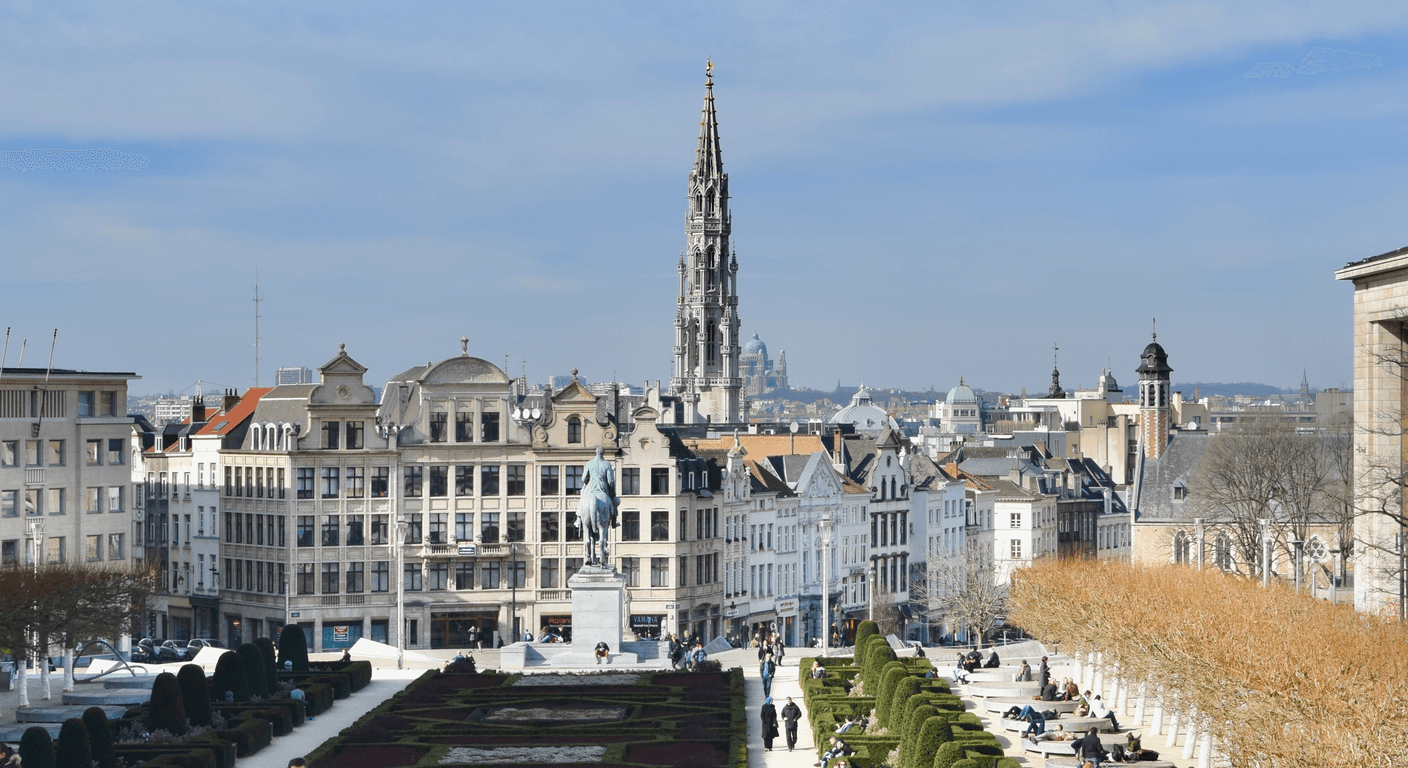
Brussels suits Australian travellers over 50 best in April–June or September–October, as a single week-long base for day trips to Bruges, Ghent and Antwerp, each under an hour by train. The flat, Baroque Grand Place is the defining highlight, best seen early morning. Mobility is moderate — flat squares but uneven cobblestones and a hilly Upper Town. There are no direct flights from Australia; expect a 22–24 hour journey via a Gulf or European hub, landing 25 minutes from the centre.
Why Brussels Works as a Base for Australian Travellers Over 50
There's a particular pleasure in arriving somewhere and not having to move again for a week. Brussels offers exactly that. From a single centrally located hotel — ideally within walking distance of the Grand Place or the Place du Grand Sablon — you can reach three of Belgium's most beautiful cities by train without once wrestling a suitcase onto a platform carousel. Bruges is 55 minutes away. Ghent is 32. Antwerp is 35. These are not ambitious excursions; they're relaxed mornings out.
For solo travellers, the arithmetic of a fixed base is also financial. One hotel room, negotiated for a week, is almost always better value than a series of one-night stays across multiple cities. Brussels has a strong range of four-star hotels with lifts, 24-hour reception and in-room facilities that matter when you're managing a long-haul recovery — think quiet air conditioning, a bath as well as a shower, and a breakfast worth staying in for. The area around the Avenue Louise or the Saint-Gilles neighbourhood offers a calmer, more residential atmosphere than the tourist-heavy Lower Town, with good restaurant options and easy tram access to the centre.
It's also worth saying plainly: Brussels is a city that rewards a certain kind of traveller — one who is happy to sit with a coffee, watch the architecture, and let the place come to them. It doesn't perform for visitors the way Paris does. That's not a flaw.
Getting There from Australia: What the Journey Actually Looks Like
From Melbourne or Sydney, Brussels is roughly 22 to 24 hours of travel time including one stopover, typically at a Gulf hub such as Dubai, Doha or Abu Dhabi, or a European hub like Singapore to Amsterdam or Frankfurt. There are no direct flights from Australia to Brussels. Most travellers connect at their hub city and fly into Brussels Airport (Zaventem), which is about 25 minutes from the city centre by direct train — a civilised arrival by any measure.
The long-haul reality deserves honest attention. A 14-plus hour first leg is tiring, and arriving in Brussels and heading straight to a full day of sightseeing is a recipe for a miserable first impression. Build in a recovery night — or preferably two. Book a hotel with late checkout on your departure day if you can. Compression socks, regular movement in the cabin and staying hydrated are standard advice for good reason. Travellers managing pre-existing health conditions should discuss the flight with their GP before departure and ensure their travel insurance covers those conditions; confirm policy terms carefully, as exclusions vary significantly between providers.
The time difference between eastern Australia and Belgium is roughly seven to eight hours behind in European summer (CEST) and eight to nine hours behind in winter (CET). That means jet lag tends to push you toward early waking rather than sleeping in — which, as it turns out, is a fine time to have the Grand Place almost entirely to yourself.
The Grand Place: What to Expect When You Arrive
The Grand Place is one of those rare spaces that actually exceeds its reputation. The square is enclosed on all sides by guildhalls built in the late seventeenth century — each one a different expression of Flemish Baroque confidence, gilded and gabled and slightly competitive with its neighbours. The Town Hall, which survived the French bombardment of 1695 that flattened much of the city, anchors the south-western corner. Victor Hugo, who spent time in Brussels in exile, reportedly said it was the most beautiful square in the world. He was not the only one to think so.
The square itself is flat and largely accessible — a significant relief after the cobblestoned lanes that thread away from it in every direction. Early mornings are genuinely worth setting an alarm for: the tour groups haven't arrived, the light is low and golden, and the cafés around the perimeter are just opening. A coffee at one of the terrace tables, watching the guildhalls catch the morning sun, is one of those travel moments that doesn't require any further justification.
The surrounding Lower Town has its pleasures and its frustrations. The Galeries Royales Saint-Hubert — a nineteenth-century glass-roofed arcade of considerable elegance — is a short walk away and flat underfoot. The streets immediately around the Grand Place can be uneven in places; comfortable, well-soled shoes are not optional here. A walking stick or trekking pole is entirely sensible and will not raise an eyebrow.
Art Nouveau Brussels: A Walking Neighbourhood for the Curious
Belgium produced some of the most important art nouveau architecture in Europe, and Brussels is where most of it stands. Victor Horta, the movement's defining figure, built his own house in the Saint-Gilles neighbourhood — now the Horta Museum — and the building is a lesson in what happens when a designer is given complete control of every surface, from the staircase ironwork to the door handles. Entry is ticketed and timed; book ahead via the museum's official website (hortamuseum.be) to avoid disappointment.
The broader Saint-Gilles and Ixelles neighbourhoods repay a slow morning of walking, with art nouveau facades on ordinary residential streets that most visitors never find. The Ixelles Ponds area, a pair of long ornamental lakes lined with cafés and brasseries, offers a natural rest point. For travellers of Italian-Australian background, there's a particular resonance in the way Brussels absorbs its immigrant communities — the city has a long Italian presence, and certain neighbourhoods near the Ixelles Commune still carry that flavour in their trattorias and delicatessens.
The MIMA (Millennium Iconoclast Museum of Art) on the canal in Molenbeek and the Art Nouveau and Art Deco collections at the Musées Royaux des Beaux-Arts de Belgique (fine-arts-museum.be) are both worth considering for a slower afternoon. The Beaux-Arts complex includes a Magritte Museum — René Magritte being Belgian, a fact his more famous admirers occasionally forget.
Day Trips by Rail: Bruges, Ghent and Antwerp Without the Fuss
The Belgian rail network is one of the quiet pleasures of basing yourself in Brussels. Trains from Brussels-Central or Brussels-Midi (also called Brussels-South, the Eurostar terminal) run frequently throughout the day to all three cities, and the stations at each destination are close to their historic centres. Belgian Rail's website (belgiantrain.be) allows you to check timetables and book in advance, though many travellers simply buy on the day at the station — ticket machines have English-language options and staff assistance is available.
Bruges is the most visited of the three and for good reason: the canal network, the medieval Markt square, the Church of Our Lady with its Michelangelo Madonna — it's a genuinely beautiful city. It's also busy, particularly in summer. An early train from Brussels, arriving before 9am, means you're walking the canal paths before the day-tour coaches arrive. Ghent is less visited and arguably more liveable: the Graslei waterfront, the Gravensteen castle and a university-town energy that keeps it from feeling like a museum piece. Antwerp rewards travellers interested in diamonds, fashion or the extraordinary Rubens House (rubenshuis.be).
On any of these day trips, comfortable shoes and a willingness to pace yourself matter more than any itinerary. Each city has plenty of café terraces and canal-side benches. There's no rule that says a day trip must cover everything. Picking one neighbourhood and knowing it well is a perfectly sound approach — and often more memorable than ticking off a list.
Food, Waffles and What to Actually Eat in Brussels
Belgian food has two registers: the everyday and the exceptional, and both are worth your time. The waffle question is real and the answer is that there are two distinct types — the Brussels waffle (rectangular, light, crisp, eaten plain or with fruit) and the Liège waffle (denser, sweeter, with pearl sugar baked in, eaten warm from a street stall). The Liège version, bought from a street vendor rather than a tourist café, is the one worth seeking out. Indicative cost: around AUD 3–5, confirm locally.
Moules-frites — mussels and chips — is the dish Brussels does best, and a proper brasserie version in a white wine and cream broth, served with a cold Belgian blonde ale, is one of the more satisfying lunches available in Europe. The Place du Grand Sablon area has a cluster of chocolate shops — Pierre Marcolini and Wittamer among the most respected — that are relevant to anyone who takes chocolate seriously, which in Belgium is considered a reasonable position to hold.
For travellers who prefer a quieter dining experience away from tourist pricing, the communes of Ixelles and Saint-Gilles have neighbourhood brasseries and Italian-influenced restaurants where a two-course lunch with a glass of wine runs to roughly AUD 35–55 per person — indicative only, confirm locally. Brussels has a notably good Italian restaurant scene, a legacy of its long-established Italian community, which may feel quietly like home.
Practical Matters: Entry, Insurance and Getting Around
Belgium is part of the Schengen Area. Australian passport holders have historically been able to enter visa-free for stays of up to 90 days within a 180-day period, but the EU's ETIAS pre-travel authorisation system — a paid, online pre-registration — is expected to be required for Australians once it launches. The launch date has been delayed multiple times; check the current status on smartraveller.gov.au and the official ETIAS website (travel-europe.europa.eu/etias) well before booking. Do not rely on secondhand advice on this point.
Travel insurance with adequate medical cover, including pre-existing conditions, is essential for a trip of this length. Australian Medicare does not extend overseas. Read your policy document carefully — not just the summary — before purchasing, and declare all relevant health conditions honestly. The Australian government's Smartraveller service (smartraveller.gov.au) also provides registration for overseas travel, which is worth doing for any trip of more than a week.
Getting around Brussels itself is straightforward. The metro, tram and bus network is run by STIB/MIVB (stib.be) and covers the city comprehensively. A 24-hour or 48-hour transport pass is good value and available at metro stations. The city is hilly in parts — the Upper Town around the Royal Palace sits considerably above the Lower Town — but the Magritte Museum lift, the Zinneke Passage and various escalators and elevators manage the gradient in the most-visited areas. Taxis and rideshare apps are readily available for moments when walking isn't appealing.
Quick planning guide
| Ideal pace | Slow-paced, single-base with easy day trips |
|---|---|
| Best months | April to June and September to October |
| Suggested stay | About a week, using Brussels as a fixed base |
| Mobility level | Moderate — flat central square but uneven cobblestones and a hilly Upper Town, offset by lifts and escalators |
| Cost level | Mid-range to premium (four-star hotels; meals roughly AUD 35–55 per person) |
| Comfort level | High — four-star hotels with lifts, 24-hour reception and in-room comforts |
| Best for | Australian travellers over 50 wanting one comfortable base with easy rail access to nearby cities |
| Main planning consideration | Long-haul recovery time and confirming ETIAS entry requirements before booking |
Key takeaways
- Brussels suits travellers over 50 as a single base for Belgium, with Bruges, Ghent and Antwerp each reachable by train in under an hour without repacking.
- The Grand Place is flat and accessible, and its Baroque guildhalls are best appreciated in the early morning before tour groups arrive.
- Flights from Melbourne or Sydney to Brussels take roughly 22–24 hours with one stopover; build in at least one recovery night on arrival.
- Australia's ETIAS pre-travel authorisation requirement for Schengen entry should be confirmed on smartraveller.gov.au before booking — the system's launch date has changed previously.
- Travel insurance covering pre-existing conditions is essential; Australian Medicare provides no cover overseas.
- April to June and September to October offer the most comfortable temperatures and manageable crowds for older travellers exploring Brussels and surrounds.
Recommended partners and links
Indicative prices only — always confirm with the operator before booking.
Frequently asked questions
Do Australians need a visa to visit Brussels and Belgium?
Australian passport holders can currently enter Belgium and the broader Schengen Area without a visa for stays of up to 90 days in any 180-day period. However, the EU's ETIAS pre-travel authorisation system — a paid online registration — is expected to become mandatory for Australians. Its launch date has been delayed; confirm the current requirement on smartraveller.gov.au and the official ETIAS site (travel-europe.europa.eu/etias) before booking.
How long is the flight from Australia to Brussels?
There are no direct flights from Australia to Brussels. From Melbourne or Sydney, the journey takes roughly 22–24 hours including one stopover, typically at a Gulf hub (Dubai, Doha or Abu Dhabi) or a European hub. Most travellers fly into Brussels Airport (Zaventem), which has a direct train to the city centre taking around 25 minutes.
Is Brussels accessible for travellers with mobility considerations?
Brussels has a moderate mobility rating for older travellers. The Grand Place itself is flat and manageable, but many surrounding streets in the old town have uneven cobblestones. The metro and tram network has lifts at major stations, and the Belgian rail network offers assistance services for travellers who need them — book these in advance via belgiantrain.be. Sturdy footwear is strongly recommended throughout the city.
What is the best time of year to visit Brussels from Australia?
April to June and September to October are the most comfortable months for Australian travellers over 50. Temperatures are mild (roughly 12–20°C), crowds are lighter than in peak summer, and daylight hours are generous. July and August can be warm and busy. December brings Christmas markets to the Grand Place, which are atmospheric but crowded; January and February are cold and quiet.
Can you do day trips to Bruges, Ghent and Antwerp from Brussels without repacking?
Yes. All three cities are accessible by direct train from Brussels-Central or Brussels-Midi in under an hour — Ghent in around 32 minutes, Antwerp in around 35, and Bruges in around 55. Belgian Rail (belgiantrain.be) runs frequent services throughout the day. Staying in Brussels as a fixed base and travelling light on day trips is a practical and cost-effective approach for travellers who prefer not to move hotels repeatedly.
- Visit Brussels — Official Tourism Website
- Belgian Rail (SNCB) — Train Timetables and Bookings
- Smartraveller — Belgium Travel Advice (Australian Government)
- ETIAS — European Travel Information and Authorisation System
- Horta Museum, Brussels
- Musées Royaux des Beaux-Arts de Belgique
- STIB/MIVB — Brussels Public Transport
- Rubenshuis, Antwerp