Budapest's Jewish Quarter suits a visit from late April to June or September to October, when temperatures are mild and crowds thinner. Allow half a day to a full day, built around the Dohány Street Synagogue — Europe's largest — its museum and the Emanuel Tree memorial garden. Streets are flat and easy underfoot, making the precinct accessible for most mobility levels, though the synagogue has some entry steps. There are no direct flights from Australia; travellers should expect 21–26 hours via Dubai, Doha or Singapore, with a recovery night on arrival strongly advised.
Why the Jewish Quarter Rewards a Slower Approach
The VII District doesn't announce itself. You turn a corner off the Grand Boulevard and suddenly you're standing in front of a synagogue so large it looks like it belongs on a different scale to everything around it. That contrast — the monumental and the intimate — is exactly what makes this precinct worth more than a single rushed morning.
For travellers who've spent decades reading about twentieth-century European history, being here has a particular weight. The Quarter was the site of a wartime ghetto, and the streets between Dohány and Kazinczy still hold the memory of that period in their architecture, their memorial plaques, and the quiet of the Emanuel Tree garden. None of this is difficult to navigate physically — the streets are largely flat — but give yourself time to absorb it rather than tick it off.
A good rhythm for this part of Budapest is history in the morning, a long lunch, and then a slow afternoon wander as the light changes over the old tenement facades. By early evening, the courtyards that house the famous ruin bars are just waking up — and that transitional hour, before the amplifiers come on, is genuinely lovely.
The Dohány Street Synagogue: What to Know Before You Go
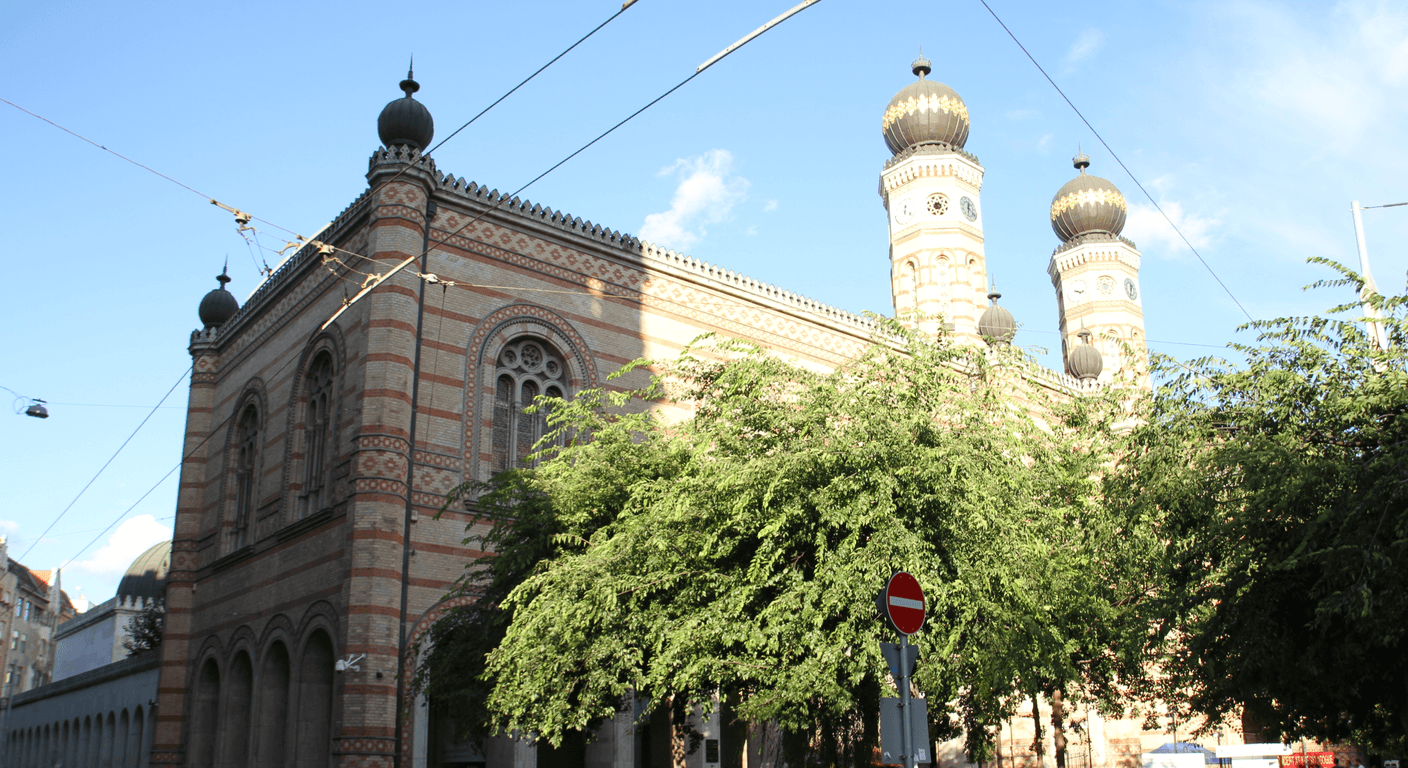
The Dohány Street Synagogue on Dohány utca is the largest synagogue in Europe and the second largest in the world. That's not hyperbole — the building seats around 3,000 people and its twin onion-domed towers have defined this streetscape since 1859. Inside, the Moorish Revival interior is extraordinarily detailed: gilded columns, a vast rose window, and an organ that Franz Liszt and Camille Saint-Saëns both played. The scale of it tends to quiet people down.
Entry includes access to the adjoining Hungarian Jewish Museum and Archives, which tells the history of Hungarian Jewry with care and without sensationalism. The rear of the complex opens into the Emanuel Tree memorial garden — a weeping willow sculpture whose leaves bear the names of Holocaust victims. It's a place to sit with for a few minutes rather than photograph and move on.
Guided tours in English are available and are genuinely worthwhile; a knowledgeable guide turns what could feel like a museum visit into a conversation with history. Hours and tour availability vary by season and on Jewish holidays, so check the official website at dohany-zsinagoga.hu before you go. Dress modestly — covered shoulders and knees are expected — and head coverings are available at the entrance for those who need one. Confirm current entry prices directly with the site; indicative costs have been around AUD 25–35 for standard adult entry, but this changes.
Walking the Quarter: Streets Worth Slowing Down For
Kazinczy Street is the Quarter's social spine, lined with kosher restaurants, a beautifully restored Orthodox synagogue, and the kind of café tables that invite you to sit longer than planned. The Orthodox Synagogue on Kazinczy utca is smaller and quieter than Dohány — less visited, more contemplative. Worth a look if it's open during your visit; hours are irregular so checking ahead pays off.
Király Street and the surrounding laneways have a slightly rougher architectural texture — Austro-Hungarian apartment buildings with peeling grandeur, interior courtyards glimpsed through iron gates. This is the aesthetic that gave rise to the ruin bar concept: taking derelict spaces and filling them with mismatched furniture, local art, and cold beer. The most famous of these, Szimpla Kert on Kazinczy utca, began as a cultural experiment and became a Budapest institution.
The streets are mostly flat and easy underfoot, though some of the cobblestone sections near older courtyards can be uneven. Comfortable walking shoes with good grip are the right call. The Quarter is compact enough to cover on foot — from Dohány Street to the far end of Király Street is a comfortable fifteen-minute walk — which makes it very manageable if you prefer to take your time and rest when needed.
The Ruin Bar Question: When to Go and What to Expect
Ruin bars are one of Budapest's genuinely original contributions to urban culture, and Szimpla Kert is the one that started it all. The concept is straightforward: take a semi-derelict building, leave most of the decay intact, add eclectic furniture, local artists, and a bar. The result is a space that feels unlike anywhere else — layered, a little chaotic, and entirely its own thing.
The honest advice for travellers who prefer conversation over noise: go early. From around 5pm to 8pm, Szimpla and its neighbours are relaxed, relatively quiet, and easy to navigate. You can find a courtyard table, order a glass of local wine or a Dreher beer, and watch the space fill up slowly around you. After 9pm, the music volume climbs, the crowd skews significantly younger, and the atmosphere becomes something quite different. Neither version is wrong — they're just different experiences, and the early-evening one suits a different kind of evening.
Szimpla also runs a Sunday farmers' market on weekend mornings that's worth knowing about — local produce, artisan goods, and a more neighbourhood feel than the nighttime crowd. Check their current schedule at szimpla.hu before visiting.
Getting to Budapest from Australia: The Long-Haul Reality
There are no direct flights from Australian cities to Budapest. The realistic routing from Melbourne, Sydney, or Brisbane involves one or two stopovers — most commonly via Dubai (Emirates), Doha (Qatar Airways), or Singapore (Singapore Airlines connecting to a European carrier). Total travel time door-to-door is typically in the range of 21 to 26 hours depending on your stopover city and connection time. That's a long journey, and it's worth planning for it honestly rather than hoping the jet lag won't bite.
A recovery night on arrival in Budapest before attempting the Dohány Synagogue is not excessive caution — it's the difference between experiencing the place and simply being present in it. Many travellers find that booking an extra night at the start of the trip, doing very little on day one, and starting the cultural itinerary on day two makes the whole trip better. Budapest's café culture makes doing very little feel quite civilised.
Check smartraveller.gov.au for current Australian Government travel advice for Hungary before booking. As of 2025, Australian citizens could enter Hungary without a visa for short stays, but requirements can change. Travel insurance that covers pre-existing medical conditions is essential for this age group and this distance — read the policy carefully before purchasing, and declare everything.
Eating and Drinking Well in the Quarter
Hungarian-Jewish cuisine has its own distinct character — think goose liver prepared with care, slow-braised meats, and pastries that owe something to both Viennese and Middle Eastern traditions. Carmel Restaurant on Kazinczy Street is a well-regarded option for kosher dining in a relaxed setting. For non-kosher Hungarian food, the Quarter is surrounded by good options at every price point.
Lunch tends to be the main meal in Budapest, and the set lunch menus (napi menü) at local restaurants offer excellent value — a two-course meal with a drink for what works out to roughly AUD 15–25 per person at mid-range places, though confirm current pricing as costs shift. Dinner is lighter and later by local custom, which suits travellers who prefer an earlier evening.
For coffee, Budapest takes it seriously. The old café culture of the Austro-Hungarian era has been revived with genuine commitment — a long black and a rétes (strudel) at a proper kávéház is one of the small pleasures the city does particularly well. Gerbeaud on Vörösmarty Square is the grand historic option; the smaller neighbourhood cafés in the Quarter itself are less theatrical and equally good.
Practical Matters: Accessibility, Currency and Timing
Hungary uses the Hungarian Forint (HUF), not the Euro — a detail that catches some travellers off guard. ATMs are widely available in central Budapest, and credit cards are accepted at most hotels, restaurants and major attractions. Currency exchange rates fluctuate; use a bank ATM or a reputable exchange bureau rather than airport kiosks for better rates. Confirm current rates before travel.
The Jewish Quarter is accessible for most mobility levels. The streets around Dohány Street and Kazinczy are flat and paved. The synagogue interior involves some steps at entry, and the museum spaces are on multiple levels — lifts are available in some sections, but it's worth confirming current accessibility arrangements directly with the venue if this is a consideration. Taxis and rideshare services (Bolt is widely used in Budapest) are reliable for getting across the city without walking further than you want to.
Late April through June and September through October are the sweet spots: mild temperatures, manageable visitor numbers, and the city at its most pleasant. July and August are hot — often above 35°C — and the Quarter fills with tour groups. December brings Christmas markets and a different kind of charm, but cold weather requires preparation. Whenever you go, the Quarter's history doesn't change with the season. The light does, though — and the long golden evenings of June, when the synagogue's domes catch the last of the sun, are worth timing for if you can.
Quick planning guide
| Ideal pace | Slow-paced — history in the morning, long lunch, unhurried afternoon wander |
|---|---|
| Best months | Late April to June and September to October, for mild weather and manageable crowds |
| Suggested stay | Half a day to a full day in the Quarter, plus a recovery night in Budapest on arrival |
| Mobility level | Easy — mostly flat, paved streets, though the synagogue has some steps and multi-level museum spaces |
| Cost level | Mid-range (synagogue entry roughly AUD 25–35; set lunches around AUD 15–25) |
| Comfort level | Comfortable, with strong café culture and short, manageable walking distances |
| Best for | History-minded travellers who prefer depth and quiet over a rushed itinerary |
| Main planning consideration | The long-haul journey from Australia (21–26 hours via a stopover) warrants a recovery night before sightseeing |
Key takeaways
- The Dohány Street Synagogue is the largest in Europe — allow at least two hours including the museum and memorial garden.
- Ruin bars like Szimpla Kert are best experienced early evening (5–8pm) for a quieter, more conversational atmosphere before the music volume rises.
- The Jewish Quarter's streets are largely flat and walkable, making it one of Budapest's most accessible precincts for travellers of all mobility levels.
- From Australian cities, expect 21–26 hours of total travel time to Budapest via one or two stopovers; a recovery night on arrival is a smart investment.
- Hungary uses the Forint, not the Euro — check exchange rates before travel and use bank ATMs for better rates.
- Always check smartraveller.gov.au for current entry requirements and travel insurance conditions before booking any international trip.
Recommended partners and links
Indicative prices only — always confirm with the operator before booking.
Frequently asked questions
Do I need a visa to visit Hungary as an Australian citizen?
As of 2025, Australian citizens could enter Hungary without a visa for short tourist stays. However, visa and entry requirements can change, and the European Union's ETIAS travel authorisation system was expected to be introduced for Australian travellers. Always confirm current requirements at smartraveller.gov.au and the official Hungarian embassy website before booking your trip.
Is the Dohány Street Synagogue open every day?
The Dohány Street Synagogue is generally open to visitors on most days, but hours vary significantly by season and it may close on Jewish holidays and Saturdays (the Sabbath). Guided tours in English are available but should be booked in advance. Confirm current opening hours and tour availability directly at dohany-zsinagoga.hu before your visit.
Are Budapest's Jewish Quarter streets suitable for travellers with limited mobility?
Most streets in the Jewish Quarter are flat and paved, making it one of Budapest's more accessible areas for walking. Some older cobblestone sections near courtyards can be uneven, so supportive footwear is recommended. The Dohány Street Synagogue has some steps at entry; contact the venue directly to confirm current accessibility arrangements if this is a concern.
What is the best time of day to visit a ruin bar in Budapest?
For a calmer, more manageable experience, visit ruin bars such as Szimpla Kert between approximately 5pm and 8pm. During this window, the spaces are quieter, easier to navigate, and more suited to conversation. After around 9pm, music volume increases significantly and the atmosphere becomes considerably livelier and louder.
What currency does Hungary use, and can I pay by credit card?
Hungary uses the Hungarian Forint (HUF), not the Euro. Credit cards are widely accepted at hotels, restaurants and major attractions in central Budapest. For cash, bank ATMs offer more reliable exchange rates than airport currency kiosks. Confirm current exchange rates before your trip as they fluctuate.