Self-catering from supermarkets and local markets is identified as the single most effective way to cut food costs while travelling overseas, a strategy that works year-round and suits trips of any length, including a typical 21-night European holiday. Mobility is moderate: supermarkets are fully step-free, while markets can involve cobblestones or uneven surfaces. Access relies on standard independent travel, with early-bird dining, breakfast-inclusive hotels and loyalty-programme lounges adding further savings along the way.
Why food costs are worth thinking about before you leave
Food is one of the few travel expenses that compounds daily. Flights and accommodation are booked once; meals happen three times a day for every day of a trip. On a 21-night European holiday, the difference between eating thoughtfully and eating carelessly can run to several hundred Australian dollars — sometimes more, depending on where the dollar is sitting that week.
For travellers over 50 — particularly those travelling solo — there's also a subtler calculation at play. Eating alone at a full-service restaurant every night isn't always what you want, socially or financially. Varying the rhythm: a proper sit-down dinner every second or third evening, a market lunch in between, breakfast sorted at the hotel — turns food into a genuine part of the travel experience rather than a daily overhead.
None of what follows involves gimmicks, embarrassment or queuing for someone else's leftovers. These are the habits of experienced, independent travellers who've simply worked out where their money goes furthest.
Choosing accommodation that works harder for your food budget
Breakfast included is one of the most underrated line items when comparing accommodation. A hotel charging roughly AUD 30–50 more per night but including a substantial cooked or continental breakfast is often cheaper in total than a cheaper room where you're paying AUD 20–35 per person for breakfast separately — and those figures are indicative only, so confirm current rates before booking. In cities like Paris, Rome, Tokyo or London, a decent hotel breakfast can easily run to the equivalent of AUD 30–45 per person at current exchange rates.
Kitchenette or apartment-style accommodation changes the equation further. A self-contained apartment — through platforms like Airbnb or local booking sites — typically costs more per night than a standard hotel room, but that gap narrows fast once you factor in two or three self-catered meals. Apartments also offer a refrigerator for storing market finds, leftovers and snacks: small things that add up. For a solo traveller, the ability to cook a simple dinner and have breakfast at home on a relaxed morning is also a comfort, not just a saving.
When comparing options on booking platforms, use the filters specifically: 'breakfast included', 'kitchen facilities' or 'kitchenette'. Read the fine print — 'kitchen access' can mean anything from a full stovetop to a kettle and a bar fridge. Apartment listings should specify what cookware is provided. If it's unclear, ask before confirming.
Supermarkets and local markets: the honest art of self-catering
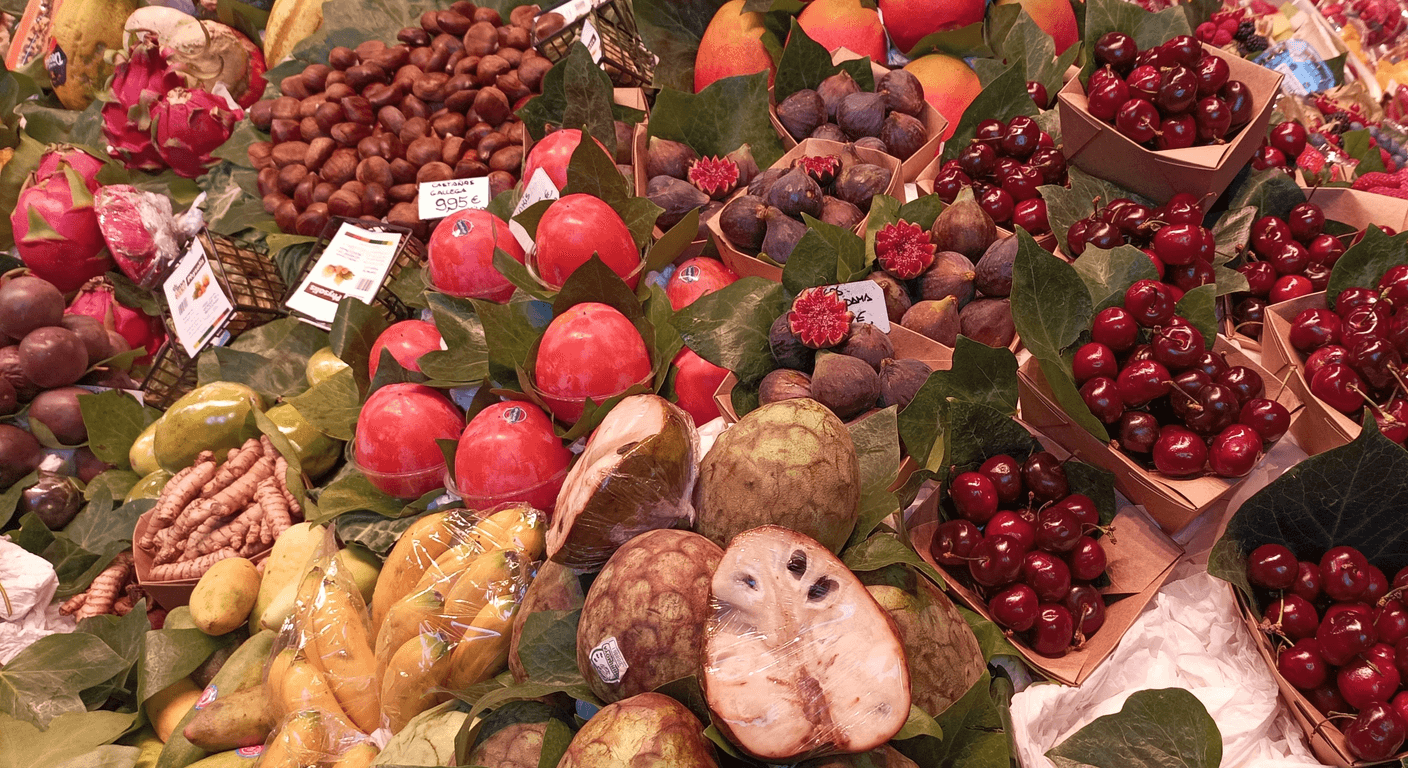
The single most effective food-cost strategy for independent travellers is buying lunch from a supermarket or local market rather than a café or restaurant. In most European and Asian cities, a supermarket will stock fresh bread, cheese, charcuterie, fruit, yoghurt, prepared salads and local specialities at a fraction of sit-down prices. A generous lunch assembled this way might cost the equivalent of AUD 8–15 per person — indicative, and it varies widely by destination and season.
Local markets are a slower, more pleasurable version of the same idea. Covered municipal markets in cities like Barcelona's La Boqueria, Rome's Campo de' Fiori, Bangkok's Or Tor Kor, or Melbourne's own Queen Vic (useful training, if nothing else) are often open by mid-morning and full of ready-to-eat produce, local cheeses, olives, pastries and street food at local prices. The key is arriving with a small bag, a clear idea of what you want, and no hurry. This is where the pacing advice matters: build a market visit into a morning itinerary rather than fitting it around restaurant bookings.
Accessibility varies. Large covered markets in Europe often have smooth stone or tiled floors with some uneven sections; outdoor markets can involve cobblestones, temporary stalls with no seating, and crowd pressure. Arrive early — before 10am — for the calmest conditions and best produce. Most major supermarket chains in Europe, Japan, Southeast Asia and the UK are fully step-free with wide aisles. If you're travelling with a walking aid or have balance concerns, supermarkets are generally the more predictable option. Seating inside markets can be limited; look for a nearby square or park bench to sit and eat.
Hotel loyalty programmes and lounge access: what's genuinely worth it
If you travel regularly and tend to stay with the same hotel group, a loyalty programme is worth understanding properly. Most major chains — Marriott Bonvoy, Hilton Honors, IHG One Rewards, Accor Live Limitless — offer tiered membership, and mid-to-upper tiers often include lounge access with complimentary food. That can mean a continental breakfast, afternoon snacks, evening canapés and drinks. For a solo traveller, an evening lounge session with a glass of wine and something to eat is a perfectly comfortable alternative to dining alone in a restaurant.
The honest caveat: lounge access typically kicks in at mid-tier status (Silver, Gold or equivalent), which usually requires a meaningful number of nights or stays per year. If you travel three or four times annually and stay consistently with one group, it's worth pursuing. If you travel once every couple of years and mix brands freely, the maths don't add up — don't stay somewhere less suitable just to chase points.
Some hotel programmes also offer welcome amenity credits, free minibar items or dining discounts at the property restaurant. These are worth reading about in your confirmation email before arrival, because they're easy to miss and rarely advertised at check-in. A quick email to the hotel a few days before arrival — noting your loyalty membership and asking what's included — is a reasonable thing to do.
Early-bird and set-menu dining: better value, better timing
Many restaurants in Europe and North America offer early-bird menus or set-price lunches that deliver the same kitchen, same quality and sometimes the same dishes as the evening à la carte — at a considerably lower price. A French bistro that charges the equivalent of AUD 80–120 for dinner might offer a two-course lunch menu for AUD 25–40. These figures are indicative only and vary by country, city and establishment, but the pattern is consistent. Confirm current pricing when you arrive.
For travellers over 50 — particularly solo women — early dining also has a practical safety logic. Eating at 6pm or 6:30pm means finishing while it's still light, navigating back to your accommodation in familiar conditions, and avoiding the noise and energy of late-night restaurant crowds. This isn't a concession; it's simply good planning. In Southern Europe and Southeast Asia, where locals dine late, early diners are often welcomed warmly precisely because they free up tables for the main rush.
Happy hour — specifically in hotel bars, wine bars and brasseries rather than nightclubs — can serve a similar function. A glass of local wine and a small plate of olives or bar snacks at 5pm is a civilised way to wind down after an afternoon of sightseeing, and the cost is typically a fraction of a full restaurant sitting. In cities where you're eating a self-catered lunch, this can serve as a light early dinner. Know your own appetite and plan accordingly.
Tap water, refillable bottles and staying hydrated without the markup
Bottled water is a quiet but persistent travel expense. In destinations where tap water is safe to drink — the UK, most of Western and Northern Europe, Japan, Australia, New Zealand, the United States and Canada — a quality refillable bottle pays for itself within a few days. A 1-litre insulated bottle keeps water cold for hours, and most cafés and restaurants in tap-safe countries will refill it if asked. In Italy, look for the free public drinking fountains (nasoni in Rome, fontanelle across the country) — they're everywhere and the water is excellent.
In destinations where tap water is not reliably safe for travellers — much of Southeast Asia, India, parts of Central and South America, parts of Africa and the Middle East — the calculus changes. Bottled water becomes a necessary cost. Some travellers use a filter bottle (brands like LifeStraw or GRAYL are well-regarded), which can reduce dependence on single-use plastic and lower costs over a longer trip. These are worth researching before departure.
The safest approach is to check current tap-water advice for each specific destination via Smartraveller (smartraveller.gov.au) or the destination's tourism authority before you travel. Water safety can vary even within a country — capital cities may have treated water that smaller towns don't. Never rely on anecdotal advice from other travellers; confirm from an authoritative source.
Clearing up the myths: what doesn't work and why
A category of 'travel food hacks' circulates on social media that is worth addressing plainly: leftover buffet food from hotel lobbies, asking airline staff for extra meals, waiting at hotel breakfast services for unclaimed food, or approaching embassy and consulate staff for assistance with food costs. These are not reliable strategies. They are, at best, unrepeatable flukes; at worst, they're undignified or inappropriate.
Australian embassies and consulates provide consular assistance in genuine emergencies — lost passports, medical crises, arrest, natural disasters. They are not a resource for managing a travel food budget, and approaching staff with that expectation would be both incorrect and embarrassing. The Department of Foreign Affairs and Trade is clear on what consular services cover; food budgeting is not among them. If you see this suggested online, treat it as fiction.
Similarly, content that suggests befriending hotel staff for free meals, timing your hotel lobby visits to coincide with corporate function leftovers, or using food-sharing apps in ways not intended for tourists should be viewed with scepticism. These approaches are unreliable, depend on the goodwill of strangers in a professional context, and aren't how experienced independent travellers actually operate. The strategies in this guide work because they're based on how the tourism and hospitality industry is actually structured — not on exploiting edge cases.
Indicative daily food budgets: what to expect in broad terms
These figures are indicative only, expressed in approximate AUD equivalents, and will vary significantly by destination, exchange rates, season and individual choices. Confirm current costs before and during your trip. A thrifty approach — supermarket breakfast, market or supermarket lunch, one simple sit-down dinner — might run to roughly AUD 40–65 per person per day in many European cities, or AUD 25–45 in parts of Southeast Asia. A mid-range approach — hotel breakfast included, café lunch, restaurant dinner with a glass of wine — might run to roughly AUD 80–130 per person per day in Europe, or AUD 50–80 in Southeast Asia.
A splurge day — hotel breakfast, long restaurant lunch with wine, dinner at a quality restaurant — could easily reach AUD 180–280 or more per person in a major European or North American city. None of these figures are guarantees; they're a rough orientation. The most useful habit is tracking your actual daily food spend from day two or three of a trip and adjusting from there.
For solo travellers, single supplements apply to accommodation but not to food — eating solo at a restaurant costs exactly the same per head as eating in a couple, which is one area where solo travel is genuinely equal. The practical advantage is flexibility: a solo traveller can eat a light lunch standing at a market stall, have an early dinner at a quiet corner table, and adjust the day's food rhythm entirely around their own energy levels.
Pacing, cooking classes and making food part of the itinerary
One of the more pleasurable shifts in travel thinking for over-50 travellers is treating food sourcing as an activity rather than an interruption. A morning spent at a local market — not rushing, comparing vendors, trying a sample, buying ingredients for a picnic — is a genuine cultural experience. In many destinations, half-day cooking classes built around a morning market visit are available at a range of price points, and they combine education, a social experience and at least one substantial meal. In Italian cities, for instance, a market-to-table cooking class can be found for roughly AUD 90–160 per person; confirm current pricing with operators.
Building this kind of rhythm into an itinerary — a market morning here, a cooking class there, a long supermarket browse in a foreign city — also naturally moderates pace, which matters. Long days of sightseeing followed by late restaurant dinners are exhausting at any age, but particularly so with jet lag in the first few days of a long-haul trip. Arriving in a European destination after a 24-hour journey from Australia and immediately eating on local time is a reasonable goal; it doesn't have to mean expensive restaurant meals on night one.
A recovery night after arrival — a simple self-catered dinner from a nearby supermarket, an early sleep — is not a waste of travel time. It's the foundation for enjoying everything that follows. Experienced solo travellers, particularly those who've done the Rome or Paris or Tokyo run more than once, tend to know this instinctively. The food budget strategies in this guide work best when the itinerary is relaxed enough to use them.
Quick planning guide
| Ideal pace | Slow and flexible, mixing self-catered meals with occasional restaurant dining |
|---|---|
| Best months | No single best season noted — savings depend on strategy and exchange rates rather than timing |
| Suggested stay | Works for any trip length, from short breaks to a 21-night European holiday |
| Mobility level | Moderate — supermarkets are step-free, but some markets have cobbled or uneven surfaces |
| Cost level | Budget-friendly to mid-range, with optional splurge days |
| Comfort level | Comfortable and practical, aimed at dignity and ease rather than hardship |
| Best for | Australians over 50, including solo travellers, wanting to eat well without overspending |
| Main planning consideration | Confirming current prices and tap-water safety for each specific destination before travel |
Key takeaways
- Accommodation with breakfast included often costs less in total than a cheaper room plus a daily café breakfast — compare the full-day cost, not just the nightly rate.
- A supermarket or market lunch is the single most effective daily food-cost reduction strategy for independent travellers overseas.
- Early-bird and set-menu lunches at quality restaurants deliver the same kitchen at a fraction of the dinner price — and get you home while it's still light.
- Hotel loyalty lounge access can cover breakfast and evening snacks at mid-to-upper tier membership — worth pursuing if you travel regularly with one group.
- Tap water is safe and free in much of Western Europe, Japan, the UK and North America — a refillable bottle pays for itself within days.
- Embassies and consulates assist Australians in genuine emergencies only; they are not a food resource, and treating them as one is both incorrect and inappropriate.
Recommended partners and links
Indicative prices only — always confirm with the operator before booking.
Frequently asked questions
Is it actually cheaper to stay in an apartment with a kitchen than a hotel overseas?
Often yes, when you factor in the cost of meals. An apartment may cost more per night than a basic hotel room, but self-catering even two meals a day can more than cover that difference. The calculation depends on your destination, travel style and how often you'd otherwise eat in restaurants. Compare total daily cost — accommodation plus food — not just the nightly rate.
Where is tap water safe to drink overseas, and should I use a filter bottle?
Tap water is generally safe to drink in the UK, most of Western and Northern Europe, Japan, the United States, Canada, Australia and New Zealand. In much of Southeast Asia, India, parts of Latin America, Africa and the Middle East, it is not reliably safe for travellers. Check current advice for your specific destination via Smartraveller (smartraveller.gov.au) before travel. Filter bottles can reduce reliance on single-use plastic in borderline destinations but are not a substitute for current, authoritative safety advice.
Can Australian embassies or consulates help with food costs when travelling?
No. Australian embassies and consulates provide consular assistance in genuine emergencies — lost or stolen passports, serious illness, arrest, natural disasters or death abroad. Managing a travel food budget is not a consular service. Approaching embassy or consulate staff with requests for food assistance would be inappropriate and is not something the Department of Foreign Affairs and Trade provides. This claim circulates online as a 'hack' and is simply incorrect.
Are markets and supermarkets accessible for travellers with mobility considerations?
Major supermarket chains in Europe, Japan, the UK and Southeast Asia are generally step-free with wide aisles and accessible facilities. Outdoor markets vary considerably — cobblestone surfaces, temporary structures and crowd density can make them challenging. Covered municipal markets are often more accessible. Arriving early (before 10am) reduces crowds. If you use a walking aid or have balance concerns, supermarkets are the more predictable option; scout a market on foot first before committing to a full shop.
What's a realistic daily food budget for an Australian travelling in Europe?
As a rough, indicative guide only: a thrifty approach (supermarket or market self-catering for most meals, one simple dinner out) might run to around AUD 40–65 per person per day in many European cities. A mid-range approach (breakfast included at hotel, café lunch, restaurant dinner with wine) might run to roughly AUD 80–130 per person per day. A splurge day with two restaurant meals and wine could reach AUD 180–280 or more. These are estimates only — exchange rates, destination, season and personal choices all affect the actual figure. Track your spend from day two and adjust.
- Smartraveller — Australian Government travel advice including health and safety by destination
- Department of Foreign Affairs and Trade — What consular services cover
- jordentually on YouTube — Practical solo travel food budgeting (video reference)
- Marriott Bonvoy loyalty programme
- Booking.com — accommodation search with breakfast and kitchen filters
- Airbnb Australia — apartment and self-catering accommodation