Singapore's UNESCO-listed hawker centres deliver some of Asia's cheapest, most authentic dining, with dishes like Hainanese chicken rice, laksa and ice cream sandwiches from around AUD $1.50–$7. A half-day outing across two centres, ideally before 10am or after 5pm to avoid the heat, suits over-50 travellers best. Mobility is moderate — floors can be uneven and stools low, though Chinatown Complex has lifts. Singapore is a direct 7.5–8 hour flight from Melbourne or Sydney, with MRT and Grab making access easy.
Why Singapore's Hawker Centres Work So Well for Over-50 Travellers
There's a reason Singapore's hawker culture made the UNESCO list. These centres — open-sided or air-conditioned food halls, usually run by the Housing and Development Board — bring together dozens of individual stall operators under one roof, each specialising in one or two dishes they've often spent decades perfecting. The result is extraordinary variety at a single table, with no obligation to order a full meal and no waiter hovering. For a solo traveller, that freedom is particularly pleasant.
For Australians used to paying $22 for a bowl of laksa, the prices alone feel mildly surreal. A plate of Hainanese chicken rice runs roughly AUD $4–$7, a bowl of prawn noodle soup around AUD $4–$6, and a freshly made ice cream sandwich from a street cart — that joyful Singapore institution — costs around AUD $1.50–$2. All prices are indicative and subject to change; confirm when you arrive.
The practical advantages suit a relaxed travel style. Seating is communal but abundant. You collect your food and find a table, which means no long waits at a single restaurant. You can try one dish, rest, then queue for something else twenty minutes later. Nobody minds. That rhythm — graze, sit, watch the world, graze again — is exactly the right pace for Singapore's heat.
Getting There: MRT, Grab and Walking from CBD Hotels
Singapore's MRT is clean, cool, frequent and well-signed in English. From most CBD hotels near Orchard Road, Marina Bay or Tanjong Pagar, the city's main hawker destinations are between two and five stops away. The stored-value EZ-Link card (purchased at any MRT station, around AUD $12 including initial credit) covers MRT, buses and some ferries. It's worth getting one on arrival — it's far simpler than buying individual tickets each time.
Grab, Singapore's dominant ride-hailing app, is the sensible alternative when it's very hot, you're carrying bags, or a centre isn't close to an MRT exit. Set up the app before you leave Australia; it links to an international credit card and gives you a fare estimate before you confirm. Indicative fares from the CBD to most hawker centres range from roughly AUD $8 to $18 depending on time of day and traffic — confirm in the app. Taxis are also metered, widely available and air-conditioned; a Grab or taxi is particularly useful for returning after a long morning on your feet.
Walking from CBD hotels is feasible for centres like Lau Pa Sat (roughly 10–15 minutes from Marina Bay hotels) and Chinatown Complex (a short walk from Chinatown MRT, Exit A). For Maxwell Food Centre, the walk from Tanjong Pagar MRT (East-West Line, Exit G) is around five minutes on flat footpath. Old Airport Road Food Centre in Geylang requires a Grab or the MRT to Aljunied station and then a short walk — it's not the easiest to reach, which is precisely why it still feels like somewhere locals actually go.
The Four Centres Worth Knowing — and What Makes Each One Different
Maxwell Food Centre (1 Kadadir Road, Tanjong Pagar) is probably the most visited by tourists and for fair reason: it's central, manageable in size, and home to Tian Tian Hainanese Chicken Rice, one of the most discussed chicken rice stalls in the city. The centre is open-sided with fans rather than air-conditioning, so it's best visited in the early morning or after 5pm when the heat eases. Arrive before 11.30am to avoid the lunch rush and queue lengths that can test anyone's patience in humidity. Maxwell suits a first-time hawker visit well — it's not overwhelming.
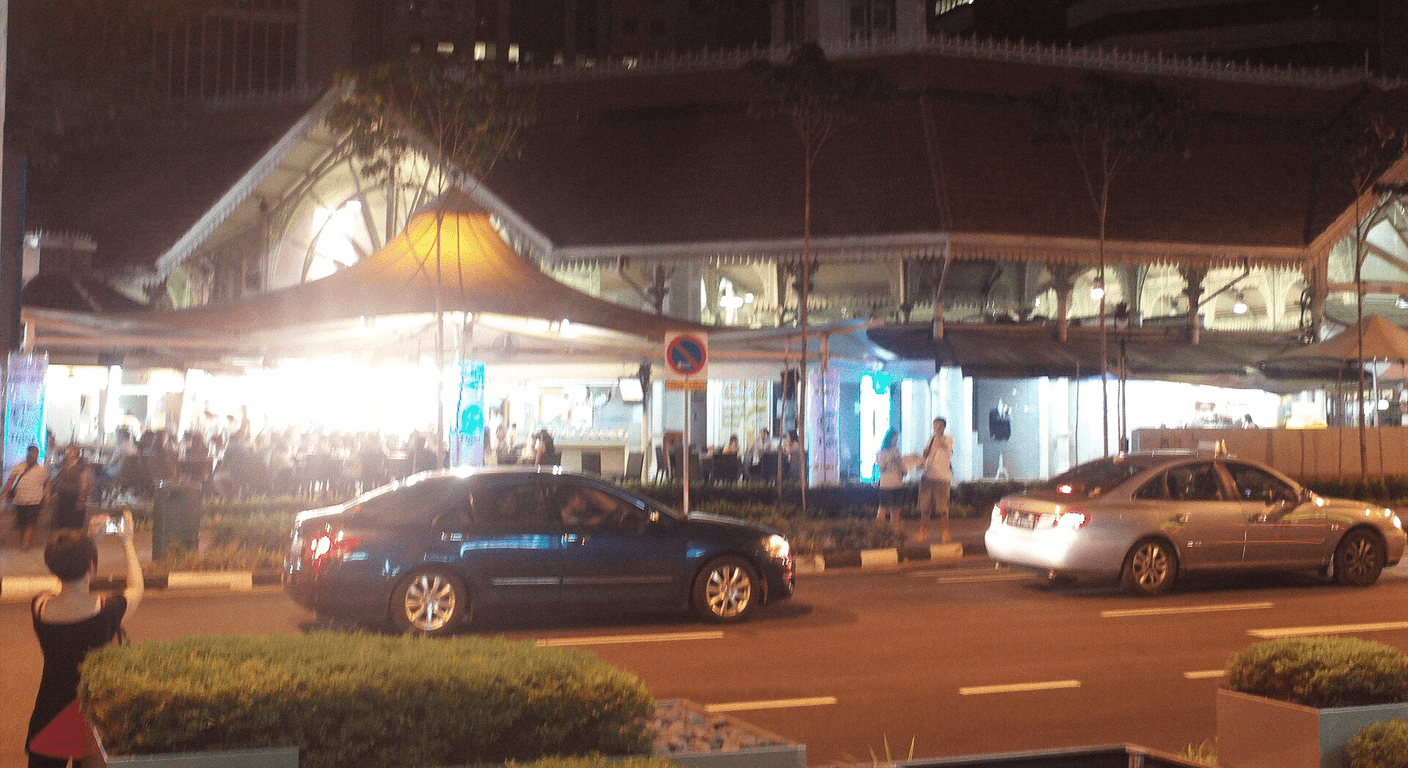
Lau Pa Sat (18 Raffles Quay, CBD) is a Victorian cast-iron market building from 1894 that functions as a hawker centre during the day and transforms into a satay-street spectacle after dark, when vendors set up along Boon Tat Street. The building itself is architecturally striking and partially air-conditioned. Its CBD location means it attracts office workers at lunch — arrive early or mid-afternoon to find seating easily. The satay here in the evenings is a simple, sociable pleasure for a solo traveller: you sit at a long table, order a mixed skewer plate and a cold drink, and the evening takes care of itself.
Chinatown Complex Food Centre (335 Smith Street) is the largest hawker centre in Singapore, with well over 200 stalls across two levels. It can feel chaotic at peak times, but the upper floor is generally quieter and has better air movement. This is where you'll find the famous $2 Michelin Bib Gourmand stall, Hong Kong Soya Sauce Chicken Rice and Noodle — though queues can stretch to an hour. For a gentler experience, wander and choose something with a shorter queue; the quality across this centre is consistently high. Lifts are available, which matters if stairs are uncomfortable.
Old Airport Road Food Centre (51 Old Airport Road, Geylang) is the one that rewards a slightly longer journey. It's a neighbourhood centre with minimal tourist traffic, excellent char kway teow, and a sprawling, unhurried atmosphere that suits a slow Tuesday morning. The centre is open-sided and large, with ceiling fans and good through-ventilation. Take a Grab there and back; the Geylang neighbourhood surrounding it is entirely safe during the day, though it has a reputation for being lively after dark that it wears without apology.
The Ice Cream Sandwich — and Other Classic Dishes to Try
The ice cream sandwich is not a hawker centre dish — it's a street cart institution found near Orchard Road, outside Lucky Plaza, along Bugis Street and occasionally near Maxwell. An uncle (the affectionate Singaporean term for an older male vendor) slices a block of ice cream — flavours include durian, sweet corn, red bean and vanilla — and slides it between two slices of soft white bread, or wraps it in a wafer. It costs around AUD $1.50–$2 and is one of those experiences that requires no further justification. If you encounter a cart, stop.
Beyond the ice cream sandwich, the dishes that reward a first visit are Hainanese chicken rice (poached or roasted chicken on fragrant rice, with ginger sauce and chilli), char kway teow (wok-fried flat rice noodles with egg, cockles and lap cheong sausage — smoky, rich and not remotely diet food), laksa (coconut-curry noodle soup, best at a dedicated laksa stall), and roti prata with curry dipping sauce, which makes an excellent early breakfast at any centre that opens before 9am.
For something cold and sweet mid-morning, cendol — shaved ice with coconut milk, palm sugar syrup and green pandan jelly — is the dessert that cuts through the heat most effectively. It's found at most larger centres and costs around AUD $2–$4. Kopi, Singapore's traditional coffee made with robusta beans and sweetened condensed milk, is the local caffeine ritual; a cup at a hawker centre runs roughly AUD $1.50–$2.50. It's strong, sweet and nothing like the flat whites back home — which is entirely the point.
Pacing a Half-Day Hawker Outing Without Overdoing It
Singapore's heat and humidity are real considerations, not something to power through. The equatorial climate means temperatures hover around 30–33°C year-round, with humidity often above 80 percent. For travellers who find heat draining — and many people over 50 do, particularly after a long flight — the answer is to structure a hawker outing around the cooler parts of the day and to build in deliberate rest stops.
A sensible half-day format: start at an air-conditioned or well-ventilated centre between 8am and 10am (before the lunch crowds and before the heat peaks), eat a light breakfast dish or two, then move to a second location by Grab or MRT by 11am. Eat something more substantial, find a seat with a fan overhead, and take your time. Be back at your hotel or in an air-conditioned café by 1pm. That's enough. Two centres, three or four dishes across the morning, and you'll have had a genuinely satisfying experience without arriving back at the hotel wrung out.
Suggested three-to-four stall sampling sequence for a gentle morning: Begin at Maxwell Food Centre around 8.30am for kopi and roti prata (several stalls open early). Move by foot or Grab to Lau Pa Sat by 10am for a second dish — their mixed rice (economy rice) counters let you point at what you want without needing to speak Mandarin or Hokkien. Then, if energy allows, walk or Grab to the Orchard Road area mid-morning and find an ice cream sandwich cart near Lucky Plaza or Orchard MRT before heading back. That's a complete outing, not a marathon.
Accessibility, Comfort and the Honest Practicalities
Older hawker centres were built for function, not accessibility. Floors are often tiled and slightly uneven, tables and stools are fixed and low, and aisles at peak times can be narrow and crowded. Maxwell Food Centre and Lau Pa Sat have mostly flat floors and reasonable aisle width. Chinatown Complex has lifts between its two levels. Old Airport Road is a single-level centre with wide aisles — probably the most physically comfortable of the four for anyone with balance concerns or who uses a walking aid.
Toilets are generally available at or near each centre, though cleanliness varies. Carry a small packet of tissues — some toilets charge a nominal fee or may not have paper. Hand sanitiser is a sensible addition to your bag. On hygiene more broadly: Singapore's National Environment Agency (NEA) grades food stalls from A to D, with ratings displayed on a placard at each stall. Stick to A and B-rated stalls if you prefer extra reassurance, though the overall standard across Singapore's licensed hawker centres is high by regional comparison.
Payment is the quirk most Australians don't anticipate. Many individual stalls — particularly at older centres — remain cash-only. Singapore dollars are the currency; while some stalls now accept PayNow (Singapore's QR payment system) or NETS card, you cannot rely on this. Withdraw Singapore dollars at Changi Airport on arrival (the rates are reasonable) or at an ATM with your travel card. Carrying SGD $30–$50 in small notes for a morning's eating is sensible. Keep a card for Grab rides.
Getting the Most from Singapore as an Over-50 Solo Traveller
Singapore is among the safest, most navigable cities in Asia for a solo traveller. English is an official language and is used widely in signage, menus and everyday conversation. The MRT is straightforward to use. Hotels in the CBD, Tanjong Pagar and Chinatown precincts put you within easy reach of most hawker centres, and Singapore's taxi and Grab infrastructure means you're never stranded. For a first solo trip into Southeast Asia, it's a genuinely forgiving starting point.
The flight from Melbourne or Sydney to Singapore is roughly 7.5 to 8 hours, with Qantas, Singapore Airlines and Scoot operating direct services. That's manageable without a stopover, though arriving a day before any planned food touring is sensible — jet lag is modest (Singapore is two to three hours behind eastern Australia depending on daylight saving), but a recovery night means you arrive at Maxwell Food Centre curious and rested rather than disoriented. Travel insurance with coverage for pre-existing conditions is non-negotiable; confirm your policy before booking.
The hawker centres themselves are, in a quiet way, one of the better arguments for independent travel at this stage of life. There's no tour group pace to keep up with, no set menu, no performance of enthusiasm required. You sit down with a bowl of laksa and a kopi, watch three generations of Singaporeans eat together at the same table, and realise that food, done this simply and this well, is its own kind of cultural education. The ice cream sandwich on the way back to the hotel is optional, but the right call.
Quick planning guide
| Ideal pace | Slow-paced — graze, rest, then graze again |
|---|---|
| Best months | Comfortable year-round, though best tackled early morning or after 5pm to avoid peak heat |
| Suggested stay | Half a day, covering two centres |
| Mobility level | Moderate — uneven tiled floors and fixed low stools at older centres, though Chinatown Complex has lifts and Old Airport Road is single-level |
| Cost level | Budget-friendly (roughly AUD $4–$12 per dish) |
| Comfort level | Best paced around cooler parts of the day given Singapore's heat and humidity |
| Best for | Solo or independent over-50 travellers wanting an easy, low-pressure introduction to local food culture |
| Main planning consideration | Most stalls are cash-only, so carry Singapore dollars in small notes from arrival |
Key takeaways
- Singapore's hawker centres are UNESCO-listed and offer some of the best-value, most culturally rich dining in Asia — indicative AUD $4–$12 per dish.
- A half-day outing across two centres, starting before 10am, is the right pace for over-50 travellers in Singapore's heat and humidity.
- Maxwell Food Centre suits first-timers; Chinatown Complex has lifts; Old Airport Road is the most relaxed and locals-oriented of the four main centres.
- Most hawker stalls remain cash-only — carry Singapore dollars in small notes from the moment you land at Changi.
- Singapore's NEA hygiene ratings (A to D) are displayed at each stall; A and B-rated stalls offer clear reassurance for cautious eaters.
- The traditional ice cream sandwich — around AUD $1.50–$2 from a street cart — is a small, unhurried pleasure that earns its reputation.
Recommended partners and links
Indicative prices only — always confirm with the operator before booking.
Frequently asked questions
What is the best hawker centre in Singapore for first-time visitors?
Maxwell Food Centre near Tanjong Pagar MRT is widely considered the most accessible starting point for first-time visitors. It's compact, centrally located, has mostly flat flooring, and is home to several well-regarded stalls including Tian Tian Hainanese Chicken Rice. Visit before 11.30am to avoid the midday crowd and heat.
How much does hawker food cost in Singapore in Australian dollars?
Indicative costs at Singapore's hawker centres range from roughly AUD $4–$7 for a main dish such as chicken rice or char kway teow, AUD $1.50–$2.50 for a kopi (traditional coffee), and AUD $2–$4 for a dessert like cendol. The street-cart ice cream sandwich costs around AUD $1.50–$2. All prices are approximate and subject to change — confirm on arrival.
Are Singapore's hawker centres accessible for travellers with mobility concerns?
Accessibility varies. Chinatown Complex Food Centre has lifts between its two floors. Old Airport Road Food Centre is a single-level centre with wide aisles, making it the most physically comfortable option. Maxwell Food Centre and Lau Pa Sat have mostly flat floors. Older centres can have uneven tiling, narrow aisles at peak times, and fixed low stools — a walking stick or light folding cane is a sensible precaution.
Can you pay by card at Singapore hawker centres?
Many individual hawker stalls remain cash-only, particularly at older centres. Some stalls now accept Singapore's PayNow QR system or NETS card, but this is not universal and cannot be relied upon. The safest approach is to carry Singapore dollars in small notes. Withdraw cash at Changi Airport on arrival or at a major ATM using your Australian travel card.
What time should you visit a Singapore hawker centre to avoid crowds and heat?
Early morning — between 8am and 10am — and late afternoon from around 5pm onwards are the most comfortable times to visit. Midday is the hottest and most crowded period. For air-conditioned centres like Lau Pa Sat's indoor section, midday is more manageable, but seating becomes competitive during the CBD lunch rush. Open-air centres such as Maxwell are best avoided between noon and 3pm.