Burnie's Little Penguin Observation Centre, on Tasmania's north-west coast, offers free, volunteer-guided little penguin viewing from a flat boardwalk each evening roughly October to March. One to two nights is enough to see the penguins, walk the foreshore and visit the regional museum. Mobility is easy, with no steps between car park and platform, though visitors stand for 30-45 minutes. Access is via the Spirit of Tasmania ferry to Devonport or a Rex flight to Wynyard, then a short drive.
What is the Burnie Little Penguin Observation Centre?
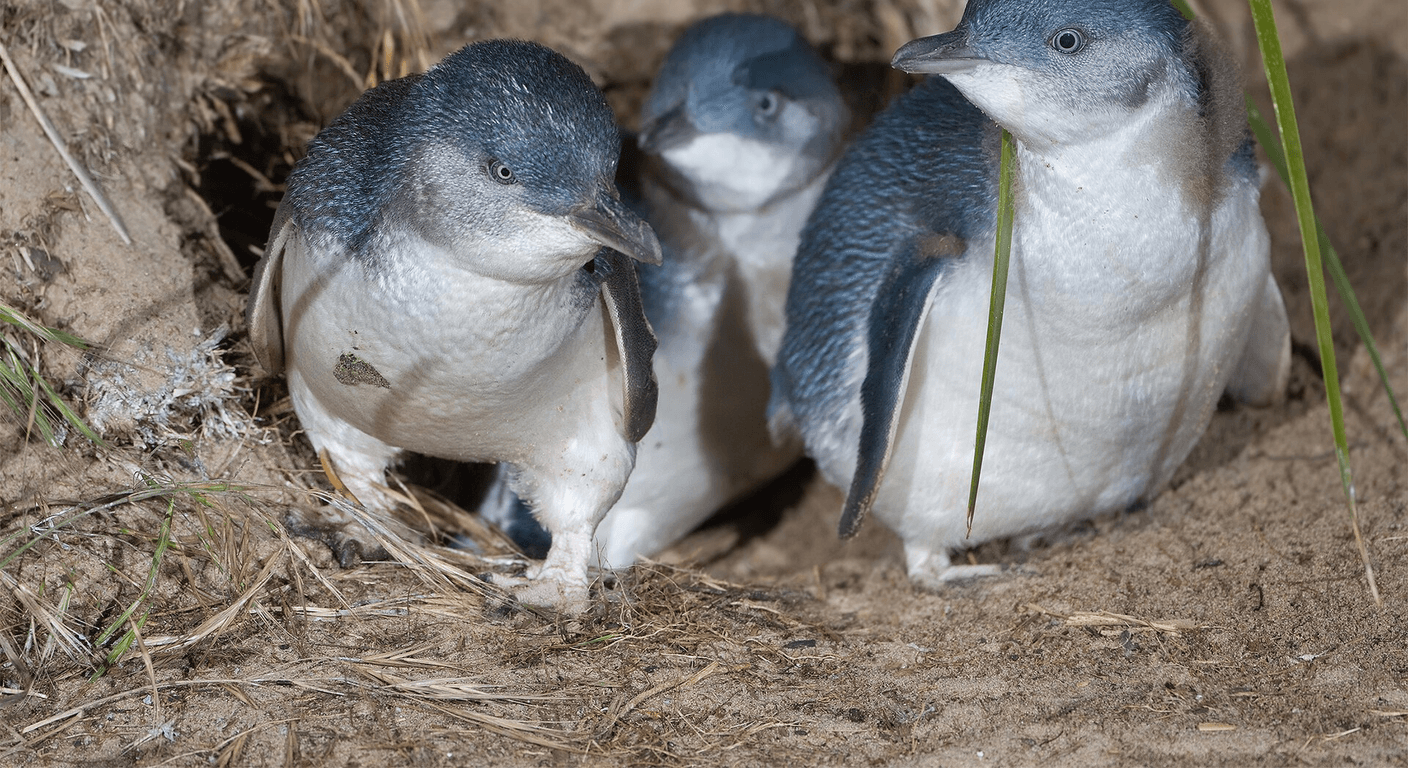
The Burnie Little Penguin Observation Centre sits on the town's foreshore, a short walk from the main street and close to the beach car park. It is a flat, purpose-built boardwalk and viewing platform where little penguins — the world's smallest penguin species — come ashore each evening during the breeding season to return to their burrows after a day at sea. Entry is free, and the experience is guided by local volunteers who know the colony well and can answer questions in a relaxed, unhurried way.
What makes this site genuinely appealing for travellers in their 60s and 70s is the combination of accessibility and authenticity. There are no steep steps, no long walks through uneven terrain, and no ticket queues. You arrive, find a spot on the boardwalk, and wait as dusk settles over the Bass Strait. Volunteers keep noise and torch light to a minimum — red-filtered lights only — and the penguins treat the whole affair with the kind of indifference that suggests they have been doing this long before the boardwalk arrived.
The centre operates on a community-volunteer model run in partnership with Burnie City Council. This means the experience has a local, grassroots character rather than a commercial one. Volunteers are genuine enthusiasts, and their knowledge of individual birds and colony behaviour tends to be specific and interesting. For a solo traveller, there is something quietly comfortable about standing in the dark with a small group of strangers, all watching the same small creatures shuffle up the beach.
When does the penguin season run, and what time should you arrive?
The little penguin season at Burnie runs roughly from October through to March, aligned with the birds' breeding cycle. Outside those months, penguin activity on the beach is unreliable and the organised viewing programme typically does not operate. Exact opening dates, session times, and any closures due to weather or colony welfare are set locally and can shift from year to year, so confirming the current schedule with the Burnie Visitor Information Centre before you travel is genuinely important — not just a formality.
Penguins come ashore after dark, so arrival time depends on the sunset. In the height of summer, that means waiting until well after 8 pm; in October and March the light fades earlier. The general advice is to arrive around 30 minutes before sunset, find your position on the boardwalk, and settle in. Rushing to the site at the last minute, or arriving after dark, means missing the volunteer briefing and potentially disturbing the birds. A light jacket is wise even in summer — the foreshore can be cool once the sun drops, and you may be standing still for 30 to 45 minutes.
Numbers are not usually overwhelming at Burnie compared to more famous penguin sites, which is part of its appeal. That said, peak summer weekends do attract more visitors, and a quieter weeknight in late October or early March can offer a more contemplative experience. If your travel schedule allows flexibility, aim for a mid-week evening in shoulder season.
How accessible is the site for older and mobility-conscious travellers?
The boardwalk at Burnie is genuinely flat, which matters. There is no meaningful gradient between the car park, the path along the foreshore, and the viewing platform itself. For travellers managing arthritic knees, a recent hip replacement, or simply preferring not to navigate uneven ground in the dark, this site is one of the more honestly accessible wildlife experiences you will find anywhere in Australia. That said, the surface is wooden decking and can be slippery if wet, so sensible closed-toe shoes with grip are worth wearing.
Parking is close to the viewing area, and the walk from the beach car park to the boardwalk is short — roughly five minutes at a comfortable pace. There are no steep kerbs on the main approach route, though it is worth checking current site conditions with the visitor centre if you have specific mobility requirements, as maintenance and any temporary changes to the path are not always reflected in online information.
If you use a walking stick or prefer a seat, arriving a little early means you can position yourself comfortably before the crowd settles in. Volunteers are approachable and can suggest the best spots for those who need to stand close to the railing. The experience does require standing in one place for some time — there is no formal seating on the viewing platform — so factor that into your planning if you tire easily.
What is Burnie actually like as a destination?
Burnie is a working port city, and it does not pretend otherwise. The harbour carries industrial infrastructure — shipping containers, a paper mill, working wharves — and the town centre is functional rather than picturesque. For a traveller expecting the manicured charm of somewhere like Strahan or Richmond, Burnie will feel different. For a traveller who values honesty in a place and finds working towns more interesting than polished ones, it has a quiet character worth exploring.
The Burnie Regional Museum, run by Museums Australia, is a good way to spend a few hours before the evening viewing. It focuses on the social and industrial history of the north-west coast, and the scale is manageable — not overwhelming. The foreshore boardwalk connects the penguin site to the town centre and is pleasant to walk in daylight, with views across the water and a handful of cafes and bakeries nearby. Coffee quality in the central block is solid; there are independent roasters and a few good lunch spots that reflect the regional character of the place.
The drive along the Bass Highway from Devonport to Burnie (around 50 kilometres) passes through flat agricultural land with the sea occasionally visible to the north. It is not dramatic scenery, but it is easy driving, and the road is well-maintained. If you are building a broader north-west Tasmania itinerary, Burnie sits naturally alongside Wynyard, Stanley (with its famous Nut), and the hinterland towns of Smithton and Circular Head — all within an hour or two.
How do you get to Burnie from Victoria?
The most practical route from Victoria is the Spirit of Tasmania ferry from Geelong (Station Pier, Port Melbourne, or the dedicated Geelong terminal — confirm the current departure point on the Spirit of Tasmania website, as terminal arrangements have evolved). The overnight crossing to Devonport takes around nine to ten hours, and Devonport is roughly 50 kilometres from Burnie along the Bass Highway — an easy drive of under an hour. Bringing your own car gives you the flexibility to drive at your own pace, stop where you like, and carry everything you need without relying on connections.
There is no direct public transport from Devonport to Burnie that suits an evening penguin visit — buses run during the day but not reliably at dusk or later. For a solo traveller who prefers not to drive, hiring a car at Devonport is the practical solution; all major rental companies operate from the Devonport terminal area. Alternatively, if you are already based in Burnie for a night or two, the penguin site is walkable from the town centre, which removes any transport concern entirely.
Rex Airlines operates flights from Melbourne to Burnie (Wynyard Airport), which is around 20 kilometres east of the town. For travellers who prefer not to do the ferry crossing, this is a genuine option. Indicative fares vary considerably by season and lead time — check directly with Rex at rex.com.au for current schedules and pricing. A hire car from Wynyard Airport gives you full flexibility once you arrive.
Practical tips for a solo evening at the penguin site
Going solo to the penguin viewing is comfortable and common. The volunteer presence means you are never entirely alone, and the format — a small group standing on a boardwalk in the dark — is naturally sociable without being forced. Conversations tend to start easily when you are all watching the same thing. If you are the kind of traveller who finds solo evenings in unfamiliar places a little uncertain, this is the sort of experience that takes care of itself.
A few practical notes worth keeping in mind: bring a red-filtered torch or cover your phone torch with red cellophane, as white light disturbs the penguins and volunteers will ask you to put it away. Dress in layers — the foreshore is exposed and the temperature drops quickly after sunset. Keep your voice low once the penguins begin arriving. Photography without flash is permitted at most sessions, but confirm with volunteers on the night, as colony welfare considerations can occasionally mean restrictions apply.
If you are staying overnight in Burnie, the town has a range of accommodation from motels along the highway to a small number of more characterful guesthouses closer to the foreshore. Booking ahead in January and February is sensible, as the town fills with regional visitors during peak summer. A night or two is plenty to see the penguins, walk the foreshore, and visit the museum without feeling rushed.
How does Burnie compare to other penguin experiences in Australia?
The most famous penguin experience in Australia is Phillip Island's Penguin Parade in Victoria, which is a large-scale, ticketed production with tiered grandstands, floodlighting, and visitor numbers in the thousands on peak nights. It is well-run and the colony is genuinely large, but the experience is managed and commercial. Burnie is the opposite: small, quiet, free, and volunteer-led. The colony is much smaller, and you will see fewer penguins, but the proximity and the informality make it feel more like a genuine wildlife encounter.
Elsewhere in Tasmania, little penguin colonies exist at various foreshore locations including around Bicheno on the east coast, where a guided night tour operates on a paid basis. Each site has its own character, and none should be treated as a substitute for another — they are different experiences in different landscapes. Burnie's particular appeal is the combination of accessibility, cost, and the fact that it sits within a real working town rather than a purpose-built tourism precinct.
For a traveller who has already done Phillip Island and wants something quieter and more personal, Burnie delivers that contrast honestly. The penguins are the same species; the experience is genuinely different. It also pairs well with a broader Tasmania trip that takes in the north-west coast, an area that many interstate visitors bypass in favour of Hobart, the Huon Valley, or Freycinet — which means you are likely to encounter fewer crowds throughout.
Quick planning guide
| Ideal pace | Slow-paced, unhurried evening |
|---|---|
| Best months | October to March, with quieter mid-week evenings in shoulder season |
| Suggested stay | One to two nights in Burnie |
| Mobility level | Easy — flat boardwalk, no steps, parking close to the viewing platform |
| Cost level | Free |
| Comfort level | Casual; standing for 30-45 minutes outdoors, cool once the sun drops |
| Best for | Solo travellers who prefer authentic, low-key wildlife encounters over polished tourist infrastructure |
| Main planning consideration | Confirm exact season dates and session times with the Burnie Visitor Information Centre before travelling |
Key takeaways
- Entry to the Burnie Little Penguin Observation Centre is free, with viewing guided by trained local volunteers.
- The season runs roughly October to March — confirm exact dates and session times with the Burnie Visitor Information Centre before you travel.
- The boardwalk is flat and close to parking, making it one of the more genuinely accessible wildlife experiences in Tasmania for older travellers.
- Burnie is a working port city, not a polished tourist town — set expectations accordingly and you will find it honest and interesting.
- The Spirit of Tasmania ferry from Geelong to Devonport is the most practical route from Victoria, with Burnie around 50 kilometres west of the terminal.
- Burnie's penguin experience is quieter and more personal than Phillip Island's Penguin Parade — a deliberate contrast for travellers who prefer small-scale wildlife encounters.
Recommended partners and links
Indicative prices only — always confirm with the operator before booking.
Frequently asked questions
Is the Burnie Little Penguin Observation Centre really free?
Yes, entry to the Burnie Little Penguin Observation Centre is free. The experience is run on a community-volunteer model in partnership with Burnie City Council, and no ticket or booking is required. Confirm current arrangements with the Burnie Visitor Information Centre before your visit, as conditions can change.
What time do the penguins come ashore at Burnie?
Little penguins come ashore after dark, so the timing shifts with the season. In summer (December to February), that is typically after 8 pm; in October and March it is earlier as sunset arrives sooner. Arrive around 30 minutes before sunset to receive the volunteer briefing and settle on the boardwalk. Confirm current session times locally before you go.
Is the site suitable for travellers with limited mobility?
The boardwalk at Burnie is flat and close to the beach car park, making it one of the more accessible penguin viewing sites in Australia. The decking can be slippery when wet, so shoes with grip are recommended. There is no formal seating on the viewing platform, so travellers who tire from standing should factor that in. Contact the Burnie Visitor Information Centre if you have specific mobility requirements.
How do I get from Devonport to Burnie if I arrive on the Spirit of Tasmania?
Devonport is roughly 50 kilometres east of Burnie along the Bass Highway — around 45 minutes by car. There is no reliable public transport option that suits an evening penguin visit, so hiring a car at the Devonport terminal is the practical choice for most travellers. Alternatively, fly into Wynyard Airport (roughly 20 kilometres from Burnie) with Rex Airlines from Melbourne.
Can you visit the penguin site as a day trip from Devonport or Launceston?
Yes. Burnie is around 50 kilometres from Devonport and roughly 140 kilometres from Launceston, making a day trip feasible from either. The penguin viewing is an evening activity, so a day trip would involve driving to Burnie, spending time at the foreshore, museum, or nearby towns such as Wynyard or Stanley, then attending the dusk viewing before returning. Driving after dark on unfamiliar roads is worth factoring into your planning.