Rarotonga suits older Australians best during the dry season (May–October), when humidity drops and evenings turn pleasant. A week-long stay is enough to enjoy its 32-kilometre ring road, calm beach-accessible lagoon, and the Saturday morning Punanga Nui Market. Mobility demands are easy — flat roads, gentle bus travel, and no tipping culture. Aitutaki's lagoon is reached by a short 45-minute internal flight, making it the trip's one worthwhile splurge.
Why Rarotonga suits over-50 Australians
There is a particular kind of relief that comes with arriving somewhere genuinely small. Rarotonga's entire coastline is roughly 32 kilometres around. You can orient yourself in an afternoon. The airport is close to most accommodation, the lagoon is visible from the road, and the island's single ring road means you are never more than a few minutes from wherever you need to be. For travellers who have done the big European circuits or navigated the logistics of Southeast Asia, this simplicity is not a compromise — it is the point.
The Cook Islands are a self-governing nation in free association with New Zealand, which means the currency is the New Zealand dollar (NZD), English is widely spoken, and the general standard of food safety and infrastructure aligns with what most Australians expect. There is no tipping culture here, which removes a small but persistent source of social anxiety that many travellers carry from other destinations. You pay what you are charged, and that is that.
For a couple travelling together — one perhaps more keen on water, the other on wandering markets and sitting with a coffee — Rarotonga offers enough variety without demanding constant activity. The island's pace is genuinely unhurried. No one is rushing you anywhere. That is not a tourism-brochure claim; it is simply how the place operates.
Getting around: the ring road and the two-bus system
Rarotonga has one main road that circles the island, and two bus services run along it — one clockwise, one anticlockwise. They are inexpensive, run regularly during daylight hours, and stop on request. A single fare is indicatively around NZD 4–5; confirm current fares with the local operator or your accommodation on arrival. For most destinations on the island, you simply wait by the road and flag the bus down. There are no complicated ticketing systems or apps required.
The bus is genuinely useful rather than merely charming. It connects the main township of Avarua, the market, most resort areas, and the southern accommodation strip. It does not run late into the evening, which reflects the island's general rhythm rather than any deficiency. If you need to travel after dark — which is rarely necessary — taxis are available and the distances involved mean fares are modest.
Taxis and rental cars are also options, and some couples find a car useful for a day or two if they want to explore the inland roads or reach the Cross-Island Track trailhead without timing themselves to a bus. Car hire is available in Avarua. However, for a week-long stay focused on lagoon swimming, the market, and gentle day activities, the bus is entirely sufficient and has the added advantage of introducing you to other travellers and locals in a natural way.
The lagoon: swimming without needing a boat
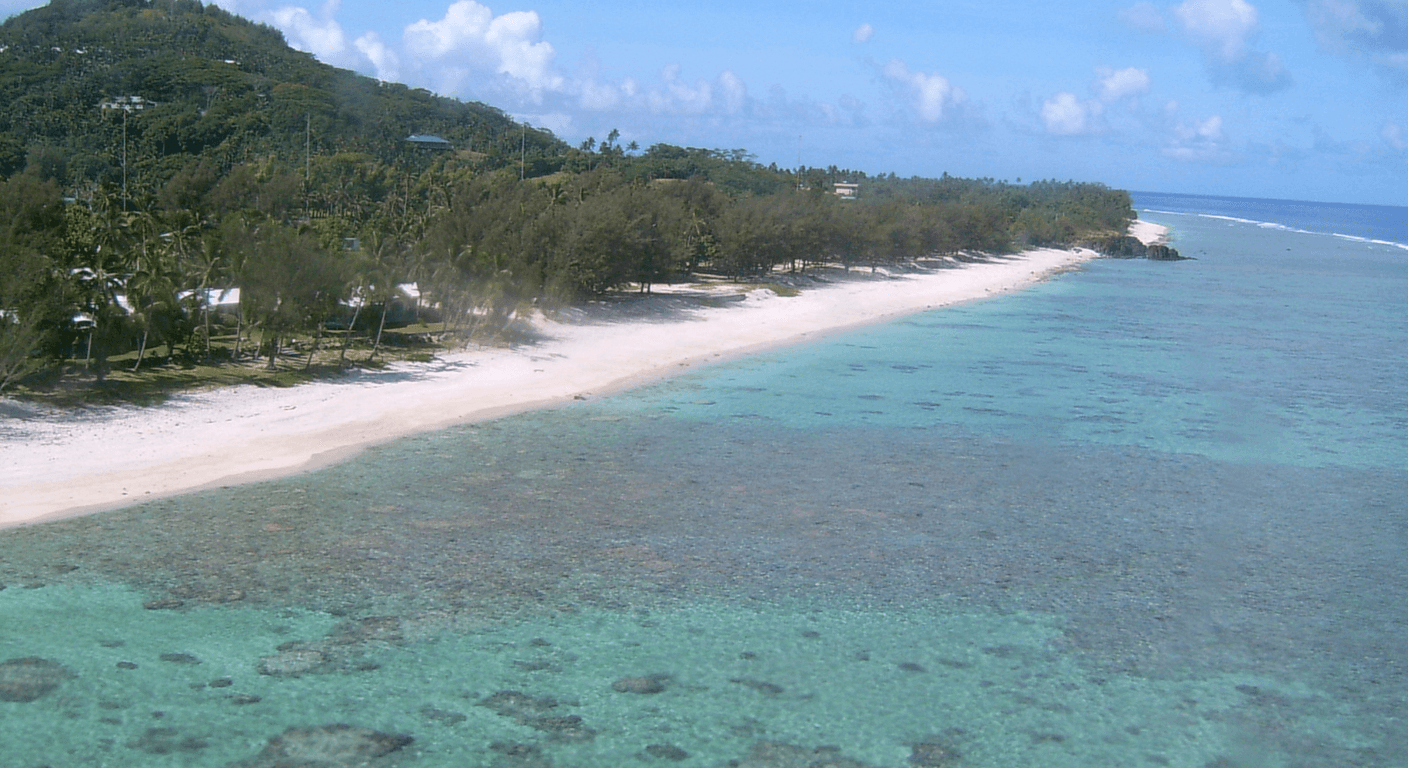
Rarotonga's lagoon is one of the island's most practical assets for older travellers. Unlike some Pacific destinations where the best snorkelling or swimming requires a boat transfer, large sections of the lagoon here are accessible directly from the beach. The water is shallow, calm, and warm — typically around 26–28°C in the wet season and still comfortable in the dry months. The sandy-bottomed entry points on the western and southern sides of the island are gentle enough for travellers who want to be in the water without negotiating coral or strong currents.
Muri Beach on the south-east coast is perhaps the most popular lagoon access point, with calm water, small islets visible from shore, and a cluster of casual restaurants and cafes nearby. It is worth noting that some sections of the lagoon have shallow coral patches at low tide, so reef shoes are a sensible addition to your packing list. Your accommodation can advise on the best entry points and current conditions.
For couples where one partner is a confident swimmer and the other prefers to wade or sit in the shallows, the lagoon accommodates both without compromise. There is no pressure to join a group snorkel tour, though these are available if you want a guided experience. Simply being in that water, at your own pace, on your own schedule, is one of the underrated pleasures of the Cook Islands.
Punanga Nui Market: the best Saturday morning on the island
Punanga Nui Market in Avarua runs every Saturday morning and is the social and culinary centrepiece of the week for both locals and visitors. It opens early — around 7am — and winds down by midday, so it rewards early risers, which most travellers over 60 tend to be anyway. The market is an open-air waterfront affair with fresh produce, cooked food stalls, craft and jewellery vendors, and live music that starts up as the morning progresses.
The food here is honest and filling. You will find fresh coconut, rōti wraps, ika mata (the local raw fish salad marinated in coconut cream and citrus), grilled meats, and tropical fruit. Prices are low by Australian standards. Budget indicatively around NZD 15–25 for a substantial breakfast or brunch across a couple of stalls, though you should confirm current pricing on the day. This is not a curated tourist experience — it is where families do their weekly shopping, and that ordinariness is part of what makes it worth attending.
The market is largely flat and accessible for most mobility levels, though the ground surface is a mix of concrete and packed earth, and it can become crowded by mid-morning. If one of you has difficulty with uneven surfaces or crowds, arriving closer to opening time makes the experience considerably more comfortable. The waterfront setting and the quality of people-watching make it one of those travel mornings you remember clearly long after the trip.
Aitutaki: the lagoon worth the splurge
Aitutaki is a separate island roughly 220 kilometres north of Rarotonga, accessible by a short flight of around 45 minutes. Its lagoon is widely regarded as among the finest in the Pacific — a vast, shallow expanse of water in gradations of blue and green, dotted with low-lying motus (islets). For many couples visiting the Cook Islands, a day trip to Aitutaki is the one genuine splurge of the itinerary, and most find it justified.
The typical format is a morning flight from Rarotonga, a lagoon cruise by small boat visiting several motus, snorkelling stops, a freshly prepared lunch on a beach islet, and a return flight in the afternoon. The whole day is well-paced and not physically demanding — you are mostly on a boat or sitting on a beach. Indicative costs for the combined flight and lagoon cruise package run roughly AUD 400–600 per person, though prices vary by operator and season; always confirm current pricing directly with operators or through your accommodation. It is worth booking this ahead of your trip rather than leaving it to chance, as flight seats and cruise spots are limited.
Accessibility on the lagoon cruise itself is worth discussing with the operator before booking if either of you has difficulty boarding small vessels or managing uneven surfaces on the motus. Most operators are accommodating and accustomed to travellers of varying mobility, but a direct conversation beforehand avoids any surprises on the day.
Seasons, weather, and honest expectations
The Cook Islands has two distinct seasons, and being clear about them matters for trip planning. The dry season runs roughly from May to October, bringing lower humidity, cooler evenings, and reduced rainfall. This is the period most older Australian travellers find most comfortable and when the island is busiest. Temperatures are still warm — typically 22–26°C — but the air feels fresher and evenings are pleasant without air conditioning.
The wet season runs from November through April. Temperatures climb, humidity increases noticeably, and the island can receive heavy rain, occasionally including tropical cyclones. The Cook Islands sits in a cyclone zone, and while a direct hit is not a common occurrence, it is a real consideration. Travel insurance that covers weather disruption is not optional during these months — it is simply sensible. That said, the wet season has its own appeal: lower accommodation rates, fewer visitors, and the lush green that comes with regular rain.
Whatever the season, Rarotonga is not a destination for late nights or structured evening entertainment. Restaurants close early by Australian city standards — often by 9pm — and there is no meaningful nightlife to speak of. For most travellers in this age group, that is a feature rather than a limitation. The evenings are for a meal, a walk along the waterfront, and an early night. The days are full enough.
E-biking the coastal road: gentle, flat, and surprisingly satisfying
The ring road that circles Rarotonga is largely flat along its coastal stretch, which makes it well-suited to e-bike touring. Several operators on the island hire e-bikes by the day, and the assisted pedalling means that hills — there are a few — are manageable without significant exertion. For couples who enjoy some physical activity but want to set their own pace and stop wherever catches their eye, a half-day or full-day e-bike circuit is one of the more enjoyable ways to see the island.
The coastal road passes through small villages, past churches (the Cook Islands has a strong Christian tradition and the white-painted churches are a visual constant), roadside fruit stalls, and a series of lagoon access points where you can lock the bike and swim. The traffic is light enough that cycling feels safe and unhurried. Most of the road surface is sealed and in reasonable condition, though there are sections that require some attention.
E-bike hire is indicatively around NZD 50–80 per day per bike; confirm current rates with local operators listed through Cook Islands Tourism or recommended by your accommodation. It is worth asking about the condition of the specific bikes before hiring — quality varies between operators. Helmets should be provided. If either of you has not ridden a bike recently, a short test ride before committing to a full circuit is a practical precaution.
Quick planning guide
| Ideal pace | Slow and unhurried, early nights and relaxed mornings |
|---|---|
| Best months | May to October (dry season, lower humidity and cooler evenings) |
| Suggested stay | About a week, based on the article's focus on lagoon swimming and day activities |
| Mobility level | Easy — flat ring road, beach-accessible lagoon, and gentle market terrain |
| Cost level | Budget-friendly day-to-day, with Aitutaki as the main splurge (around AUD 400–600 per person) |
| Comfort level | High comfort — familiar food safety standards, English widely spoken, no tipping culture |
| Best for | Couples wanting a relaxed, low-stimulation Pacific holiday with easy lagoon access |
| Main planning consideration | Book the Aitutaki flight and cruise ahead of time, and arrange weather-disruption travel insurance if visiting in the wet season |
Key takeaways
- Rarotonga's 32-kilometre ring road and two-direction bus service make the island genuinely easy to navigate without a hire car.
- The Cook Islands uses the New Zealand dollar and has no tipping culture, removing two common sources of travel friction.
- Rarotonga's lagoon is accessible directly from the beach at multiple points, with no boat required for calm-water swimming.
- Punanga Nui Market on Saturday mornings is the most authentic and affordable food experience on the island.
- An Aitutaki lagoon day trip — flight plus cruise — is the standout splurge, with indicative costs around AUD 400–600 per person; always confirm current pricing.
- The dry season (May to October) offers the most comfortable conditions for older travellers, with lower humidity and cooler evenings.
Recommended partners and links
Indicative prices only — always confirm with the operator before booking.
Frequently asked questions
Do Australians need a visa to visit the Cook Islands?
Australian passport holders do not need a visa to enter the Cook Islands for stays of up to 31 days, with extensions possible. You will need a valid passport, a return or onward ticket, and confirmed accommodation. Always check the current entry requirements with the Cook Islands Immigration or the Australian Department of Foreign Affairs and Trade before travelling, as conditions can change.
Is the Cook Islands suitable for travellers with limited mobility?
Rarotonga is relatively accessible for travellers with moderate mobility. The ring road bus, flat coastal paths, and lagoon beaches with gentle entry points all work in favour of older or less mobile travellers. The Punanga Nui Market is mostly flat. The Aitutaki lagoon cruise involves boarding a small boat, which may require some agility; discuss your specific needs with the operator before booking. Purpose-built disability infrastructure is limited compared to Australian standards, so honest advance planning is important.
What currency is used in the Cook Islands and is tipping expected?
The Cook Islands uses the New Zealand dollar (NZD). The Cook Islands also issues its own coins, which are legal tender locally but not accepted in New Zealand. Tipping is not part of the local culture and is generally not expected in restaurants, taxis, or for services. Paying the stated price is the norm.
How far in advance should an Aitutaki day trip be booked?
Booking the Aitutaki day trip before you leave Australia is strongly advisable, particularly if you are travelling in the dry season (May to October) when demand is highest. Flight seats and lagoon cruise spots are limited, and last-minute availability is not guaranteed. Contact operators directly or ask your accommodation to assist with the booking once you have confirmed travel dates.
What is the best time of year for older Australians to visit the Cook Islands?
The dry season, running roughly from May to October, is the most comfortable period for most older travellers. Humidity is lower, evenings are cooler, and the risk of cyclones is minimal. July and August are the peak months and can see higher accommodation rates and more visitors. May, June, and September offer a reasonable balance of good conditions and slightly lower demand.