June is the best time to visit Copenhagen and Stockholm, when daylight stretches past 10pm and temperatures sit between 18 and 24°C. A two-week visit suits both cities well, connected by a three-and-a-half-hour train over the Øresund Bridge, with the Vasa Museum, Nyhavn and Copenhagen's flat, walkable centre among the highlights. Mobility is easy overall, though Stockholm's Gamla Stan has uneven cobblestones. Getting there from Australia means one stopover and roughly 21–24 hours of flying, with no domestic flights required between the capitals.
Why June's Long Days Work Particularly Well for Jet-Lagged Australians
Australia's June is mid-winter. Leaving Melbourne or Sydney at the coldest, dreariest point of the year and arriving into Scandinavian midsummer — where daylight stretches past 10 pm — is a genuine psychological lift. The seasonal reversal that trips up European travellers visiting Australia works beautifully in reverse here. Your body clock is already confused after a 21-to-24-hour journey with a stopover in Dubai, Doha or Singapore; bright evening light actually helps reset it faster than arriving into northern-hemisphere gloom.
Plan a genuine recovery night in Copenhagen before committing to anything. Book a central hotel — the Vesterbro or Indre By neighbourhoods are well-placed and manageable on foot — and spend that first evening simply walking along the waterfront. The light at 9 pm looks like late afternoon. It's disorienting in the best possible way, and it means early jet-lag wakings at 4 am are met with actual daylight rather than darkness. Most travellers find they're functional within 36 hours.
June temperatures in Copenhagen and Stockholm typically sit between 18 and 24 °C — warm enough for shirtsleeves by midday, cool enough for a light jacket in the evenings. It's a climate that suits walking at a deliberate pace rather than rushing between air-conditioned interiors. Pack a compact umbrella; summer showers are brief but real.
Copenhagen: Flat, Calm, and Built for Slow Exploration
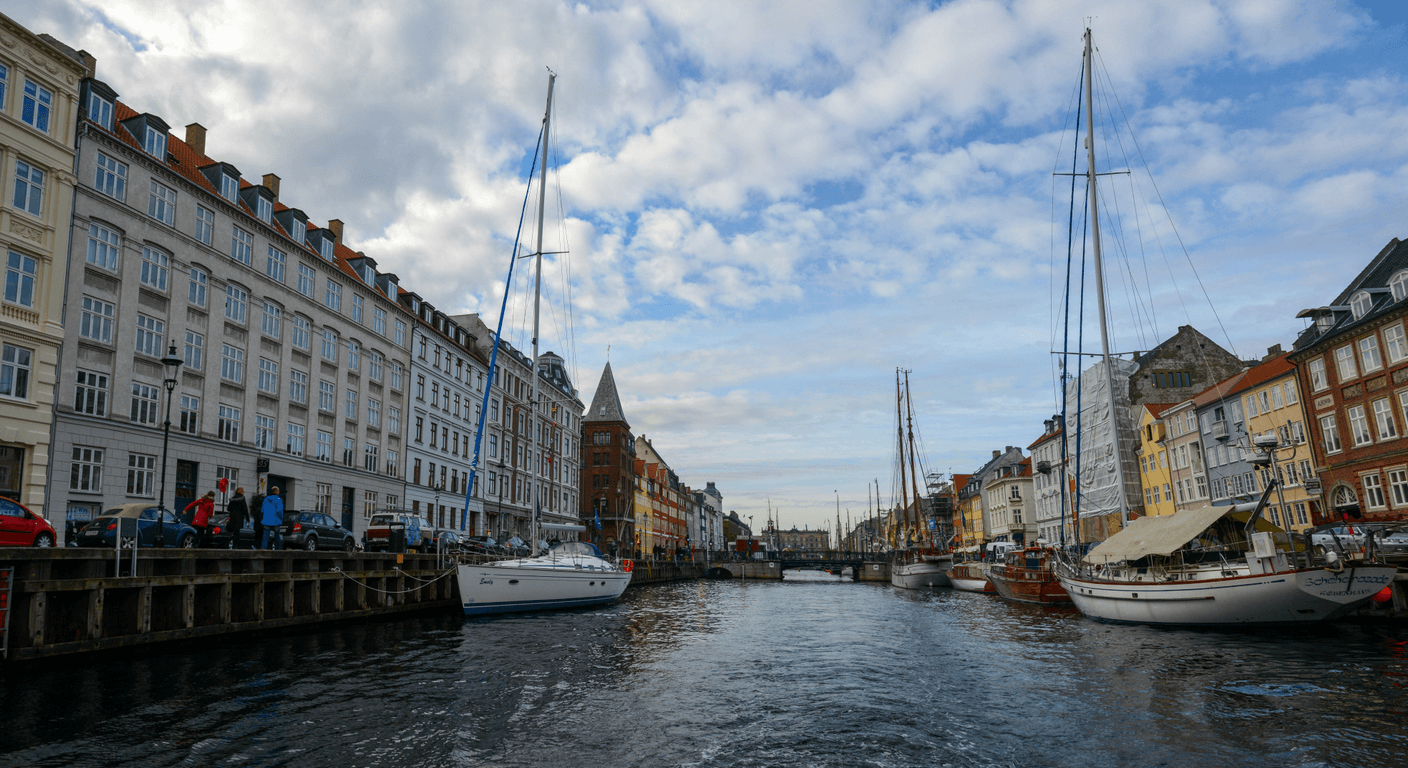
Copenhagen is one of the few European capitals where the flat topography is a genuine advantage for older travellers rather than a marketing afterthought. The city centre — from Nyhavn's coloured merchant houses to the Latin Quarter and Strøget pedestrian street — is largely level and very walkable. Nyhavn itself, the 17th-century canal lined with those much-photographed facades, is best appreciated on a canal boat rather than from the crowded quayside. The one-hour harbour tour departs regularly and requires nothing more strenuous than boarding from a low dock.
Tivoli Gardens sits almost directly opposite Central Station and deserves at least half a day. It's not a theme park in any garish sense — it's a 180-year-old pleasure garden with concert pavilions, reasonable restaurants, illuminated at night in a way that's genuinely lovely. The rides are there if you want them, easily ignored if you don't. Wednesday and weekend evenings sometimes feature free outdoor performances; check the Tivoli website for the current programme before you go.
The cycling culture is famous and real, but you don't need to participate to appreciate it. Dedicated bike lanes run everywhere, clearly separated from pedestrian paths — once you understand the lane markings, navigating as a pedestrian is straightforward. For those who do want to cycle, rental is widely available and the flat terrain makes it genuinely accessible. The Copenhagen Card (confirm current inclusions and pricing at visitcopenhagen.com) covers public transport and many museum entries, and is worth calculating against your planned activities.
What's Worth Your Time in Copenhagen — and What to Skip
The National Museum of Denmark (Nationalmuseet) on Ny Vestergade is free to enter for permanent collections and provides a grounded, unhurried morning — good Norse and Viking exhibits, excellent English labelling, and a café worth stopping at. The SMK (Statens Museum for Kunst, the national gallery) is similarly accessible and free for permanent displays. Both are a short walk from the city centre and neither requires advance booking for general admission, though confirming on their official sites before visiting is sensible.
The Little Mermaid statue, honestly, is smaller than most people expect and surrounded by other tourists taking the same photograph. It's a fifteen-minute walk from the city centre along a pleasant waterfront path — perfectly fine to include, but don't arrange your whole morning around it. The Kastellet fortress nearby, a well-preserved 17th-century star-shaped citadel with walking paths around its ramparts, is more interesting and almost always quieter.
For dinner, Torvehallerne — Copenhagen's covered market near Nørreport station — offers a range of quality food stalls where you can eat well without committing to a full restaurant sitting. Nordic food costs are real: a sit-down dinner with wine will set you back indicatively around AUD 120–180 per person at a mid-range restaurant. Budget accordingly and confirm current prices; the exchange rate moves.
The Train to Stockholm: Three and a Half Hours of Countryside
The Copenhagen–Stockholm rail journey via the Øresund Bridge is one of the more satisfying transitions in European travel. You board at Copenhagen Central Station, cross the iconic bridge over the strait — the view back toward Denmark is worth being in a window seat for — and arrive at Stockholm Central roughly three and a half hours later. SJ (Swedish Railways) operates the service; book through sj.se and choose a seat with a table if you want to spread out. First class is worth considering for the extra space and quieter environment.
Booking ahead matters, particularly in June and July when the trains fill with Scandinavian families on summer holidays. That said, don't let 'book ahead' become anxiety — services run multiple times daily and last-minute seats do appear. Confirm baggage policy on the SJ site; standard roll-on luggage is accommodated without issue. The train is accessible, with step-free boarding at main stations.
Arriving into Stockholm Central puts you within walking distance of Norrmalm and a short metro ride from most central hotels. The Stockholm metro — Tunnelbana — is efficient and the stations are genuinely interesting architecturally; the Blue Line in particular features rock-face carvings and murals that make the journey itself worth noting. A rechargeable SL Access card covers all public transport within the city and is the practical way to get around.
Stockholm: Gamla Stan, the Archipelago, and the Art of Not Rushing
Stockholm's old town, Gamla Stan, sits on its own island and is compact enough to walk thoroughly in a morning. The cobblestone streets are the one genuine accessibility consideration — uneven in places, and worth wearing supportive footwear for. The Royal Palace (Kungliga Slottet) is here, with the daily changing of the guard at midday a low-effort spectacle that requires nothing more than showing up. The Nobel Prize Museum on Stortorget is small, well-curated and provides good air-conditioned respite on a warm afternoon.
The Stockholm Archipelago — around 30,000 islands stretching east into the Baltic — is accessible by regular Waxholmsbolaget ferry services from the city's Strömkajen and Strandvägen quays. A day trip to Vaxholm, the closest significant island, takes about an hour each way and delivers the kind of quiet, wooden-house-and-water scenery that makes the long flight feel justified. Ferries are comfortable, the crossings are calm in summer, and the onboard café does a reasonable coffee. Confirm the current timetable at waxholmsbolaget.se before planning your day.
For museums, the Vasa Museum (Vasamuseet) on Djurgården island is the standout. The 17th-century warship that sank on its maiden voyage in 1628 and was raised intact in 1961 is displayed in a purpose-built museum that is among the most impressive in Europe — not a claim made lightly. The building is accessible, the exhibits well-signed in English, and the sheer scale of the preserved ship is genuinely arresting. Djurgården itself is reached by ferry from Slussen or by tram, and the island also contains the Skansen open-air museum if a full day out there appeals.
The Near-Cashless Reality: How It Works in Practice
Denmark and Sweden are among the most cashless societies on earth. In Copenhagen and Stockholm, most cafés, restaurants, shops, transport services, museums and even some markets operate on card or mobile payment only. Carrying a Visa or Mastercard — ideally one with no foreign transaction fees — covers almost every situation. Notify your bank before departure and, if you use a PIN for chip-and-pin transactions, confirm your four-digit PIN is active. Some older Australian cards default to signature; check this in advance.
A Wise or similar multi-currency card is worth considering for better exchange rates on day-to-day spending. ATMs do exist and will dispense Danish krone or Swedish krona if needed, but the instances where cash is genuinely required are rare — a few farmers' markets, the occasional small ferry operator. Don't let the near-cashless environment cause anxiety; it's actually simpler than managing multiple currencies. The practical upside: no fumbling with unfamiliar coins or worrying about carrying cash in busy tourist areas.
Tipping is not obligatory in either country the way it is in the United States, but rounding up a restaurant bill or leaving a small amount for good service is appreciated and increasingly common. In practice, most card terminals will offer a tip option at payment — declining it is entirely acceptable.
Practical Matters: Entry, Insurance, Costs and Getting There
Australian passport holders do not currently require a visa for short stays in Denmark or Sweden (both Schengen area members), but the EU's ETIAS travel authorisation system — expected to become mandatory for Australians — may be in effect by the time you travel. Do not rely on this guide for current entry rules. Check smartraveller.gov.au and the official embassy websites well before booking. Smartraveller also allows you to register your travel, which is straightforward and sensible for any solo traveller.
Travel insurance is non-negotiable, and for travellers over 60 with any pre-existing conditions, finding the right policy requires time. Compare policies that explicitly cover your conditions rather than assuming standard policies apply. The cost of medical care in Scandinavia is not punishing for minor issues, but hospitalisation without adequate cover is a different matter entirely. World Nomads, Cover-More and several others offer senior-specific policies — read the product disclosure statement carefully and declare everything.
Flights from Melbourne or Sydney to Copenhagen typically involve one stopover, most commonly in Dubai (Emirates), Doha (Qatar Airways) or Singapore (Singapore Airlines or Finnair codeshares). Total travel time is roughly 21–24 hours depending on routing and connection time. Business class is a meaningful upgrade for a journey of this length if budget allows; lie-flat seats make the arrival experience considerably less punishing. Indicative economy fares in 2026 range broadly — confirm current pricing with airlines directly or through a reputable travel agent. Nordic accommodation costs are high: budget indicatively around AUD 200–350 per night for a comfortable central hotel in either city, and confirm current rates before booking.
Quick planning guide
| Ideal pace | Slow and unhurried, independent travel |
|---|---|
| Best months | June, for long daylight and mild 18–24°C weather |
| Suggested stay | Around two weeks, split between both cities |
| Mobility level | Easy — flat, walkable centres, though Gamla Stan's cobblestones need supportive shoes |
| Cost level | Premium — Nordic prices, roughly AUD 200–350 per night for hotels |
| Comfort level | High — reliable public transport, step-free trains, near-cashless convenience |
| Best for | Independent over-50 travellers wanting two easy, walkable capitals without domestic flights |
| Main planning consideration | Card-only payments plus confirming current entry/ETIAS rules before departure |
Key takeaways
- June's 18-hour daylight helps reset Australian body clocks faster than arriving into a dark northern winter.
- Copenhagen is one of Europe's flattest capitals — genuinely easy on the legs for a full day of walking.
- The Copenhagen–Stockholm train via the Øresund Bridge takes roughly three and a half hours and is bookable at sj.se.
- Both cities operate almost entirely on card payment — a no-foreign-fee card and a confirmed PIN are the essential preparations.
- The Stockholm Archipelago is accessible by regular Waxholmsbolaget ferry from the city centre, with Vaxholm reachable in about an hour.
- Check current entry requirements and ETIAS status at smartraveller.gov.au before booking — Schengen rules may have changed.
Recommended partners and links
Indicative prices only — always confirm with the operator before booking.
Frequently asked questions
Do Australians need a visa to visit Denmark and Sweden?
Australian passport holders currently do not require a visa for short stays in Denmark or Sweden, both of which are Schengen Area members. However, the EU's ETIAS electronic travel authorisation may be in effect by the time you travel. Always confirm current entry requirements at smartraveller.gov.au and the relevant embassy websites before booking — do not rely on third-party sources for visa rules.
How long does it take to fly from Australia to Copenhagen?
Flights from Melbourne or Sydney to Copenhagen typically involve one stopover — most commonly in Dubai, Doha or Singapore — with total travel time around 21 to 24 hours depending on routing and layover duration. Plan a recovery night in Copenhagen before starting any sightseeing. Confirm current routes and schedules directly with airlines.
Is Scandinavia accessible for travellers with mobility considerations?
Copenhagen and Stockholm are among Europe's more accessible cities. Copenhagen is largely flat, with well-maintained footpaths and accessible canal boat tours. Stockholm's main neighbourhoods are accessible, though Gamla Stan's cobblestone streets require sturdy footwear and some care. Both cities have accessible public transport. The main consideration for older travellers is pacing — one major activity per day is a sustainable rhythm.
Do I need cash in Copenhagen and Stockholm?
Rarely. Denmark and Sweden are among the world's most cashless societies — restaurants, shops, museums, transport and most markets accept card or contactless payment only. Carry a Visa or Mastercard with no foreign transaction fees, confirm your four-digit PIN is active with your bank before departure, and you will cover almost every situation. ATMs are available if cash is ever needed.
How do you get from Copenhagen to Stockholm?
The most practical option is the direct train operated by SJ (Swedish Railways), departing Copenhagen Central Station and arriving at Stockholm Central in approximately three and a half hours. The service crosses the Øresund Bridge and runs multiple times daily. Book at sj.se; reservations are recommended in June and July when services fill with summer travellers. The train is accessible and comfortable, with first-class seating available.
- Visit Copenhagen — Official Tourism Site
- Visit Stockholm — Official Tourism Site
- SJ Swedish Railways — Copenhagen to Stockholm bookings
- Tivoli Gardens Copenhagen — Official Site
- Waxholmsbolaget — Stockholm Archipelago Ferries
- Vasamuseet (Vasa Museum) Stockholm — Official Site
- Smartraveller — Denmark travel advice (Australian Government)
- Smartraveller — Sweden travel advice (Australian Government)
- Nationalmuseet (National Museum of Denmark) — Official Site
- SL Access Card — Stockholm Public Transport