This guide profiles ten culturally rich bucket-list journeys for Australian travellers over 50, from Japan's rail network to Egypt's Nile cruises and Petra's rose-red cliffs. Most trips run 10 to 21 days and are best taken in spring or autumn shoulder seasons. Mobility demands vary widely, from easy river cruising to strenuous climbs at Sigiriya or Petra's Monastery, and destinations like Egypt, Uzbekistan, and Jordan are best accessed with a small-group guided tour rather than independently.
How to use this guide
Each of the ten journeys below is assessed for cultural depth, physical effort, accessibility, rough cost in Australian dollars, best travel season, and whether going independently or booking a small-group tour is the wiser choice for most travellers over 50. Costs are indicative and based on general knowledge at time of writing — always confirm current prices with operators, airlines, and accommodation providers before committing.
A few ground rules apply across the board. Check Smartraveller (smartraveller.gov.au) for travel advisories before booking any international trip — this is especially important for Myanmar, Egypt, and Uzbekistan, where conditions can shift. Arrange comprehensive travel insurance that covers pre-existing medical conditions; standard backpacker policies rarely do. And build in more time than you think you need. The travellers who get the most from these journeys are the ones who are not rushing.
Where this guide mentions rail journeys or river cruises in passing, you may find our dedicated guides to those topics useful — look for 'Great Rail Journeys for Seniors' and 'River Cruising for Over-60s' elsewhere on this site for deeper practical detail.
1. Japan by rail — Kyoto, rural Japan, and the JR Pass
Japan rewards the methodical, culturally curious traveller in a way that few countries can match. For someone over 50 travelling solo, it has a particular appeal: it is extraordinarily safe, the public transport is punctual to the minute, signage in major stations is in English and Roman script, and the culture of quiet respect means solo dining and solo sightseeing feel entirely natural rather than conspicuous.
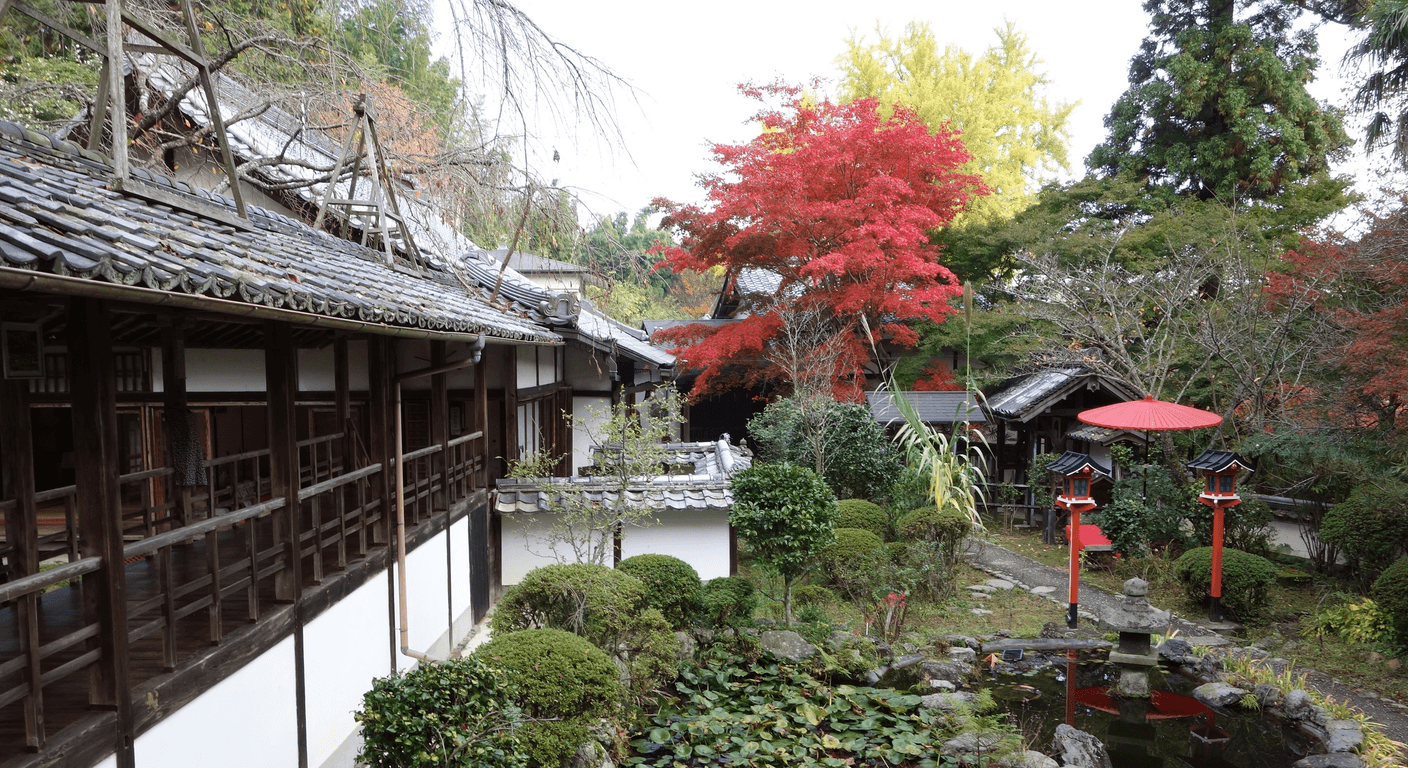
A two-to-three week itinerary anchored in Kyoto — with temple districts like Higashiyama and Arashiyama, the Fushimi Inari shrine, and day trips to Nara — gives a strong cultural foundation. From there, the shinkansen (bullet train) network opens up Hiroshima, Kanazawa, and the rural Tohoku or Kyushu regions for those willing to venture beyond the well-trodden path. The Japan Rail Pass, purchased before departure, covers most of these journeys and is genuinely good value for a multi-city itinerary. Budget roughly AUD 700–1,100 for a 14–21-day pass, but confirm current pricing at jrpass.com as rates change.
Effort level is moderate. Most temple precincts involve uneven stone paths and steps; Kyoto's older districts are hilly in places. That said, the city has excellent flat cycling paths, and taxis are affordable and widely available. Japan is best visited in spring (late March to early April for cherry blossom) or autumn (October to November for foliage) — both seasons are busy, so book accommodation well ahead. This destination works well independently for travellers comfortable with basic navigation apps and a little pre-planning, though a small-group cultural tour suits those who prefer structure.
2. Egypt and the Nile — river cruises, the Pyramids, and Luxor
There is nothing quite like standing at the base of the Great Pyramid of Giza and understanding, at a gut level, that it was already ancient when Rome was young. Egypt's cultural weight is immense, and for a traveller over 50 who has accumulated enough life experience to contextualise what they are seeing, it lands differently than it might have at 25.
A well-structured Egypt trip typically combines two to three days in Cairo (the Pyramids of Giza, the Egyptian Museum, and the Islamic quarter of Khan el-Khalili) with a four-to-seven night Nile cruise between Luxor and Aswan. The cruise format suits older travellers particularly well: you unpack once, meals are included, shore excursions are guided, and the gentle pace of river travel means you are never exhausted. The temples at Karnak, Luxor, Edfu, and Abu Simbel are genuinely awe-inspiring, and a good Egyptologist guide makes them comprehensible rather than overwhelming. For those interested in river cruising more broadly, our dedicated river cruise guide covers vessel types and what to look for in an operator.
Effort level is moderate to high in the heat. Egyptian sites involve a great deal of walking on sand and uneven stone, often in temperatures that can exceed 35°C from May to September. October to April is far more comfortable. Accessibility for those with significant mobility limitations is genuinely challenging at some sites — the interior of the Great Pyramid, for example, involves a low, narrow passage. A guided tour is strongly recommended for first-time visitors; reputable operators manage logistics, security considerations, and local guides efficiently. Indicative costs for a 10–14 day guided tour from Australia start from roughly AUD 6,000–10,000 including flights, but confirm with operators. Check smartraveller.gov.au for current Egypt advice before booking.
3. Sri Lanka — ancient ruins, tea country, and a gentler pace
Sri Lanka is one of those destinations that surprises travellers who arrive with modest expectations. The Cultural Triangle — Sigiriya, Polonnaruwa, Dambulla, and Kandy — packs more UNESCO World Heritage Sites into a manageable geography than almost anywhere else in Asia. The scale is human-sized: you are not covering vast distances, and the country's compact size means you can absorb a great deal of cultural richness without feeling like you are on a treadmill.
Sigiriya Rock Fortress is the headline attraction and involves a significant climb — roughly 1,200 steps to the summit. For travellers with knee concerns or a fear of heights, there is still considerable interest at the base and in the surrounding gardens without completing the full ascent, and the mirror wall and frescoes partway up are accessible to most. The hill country around Ella and Nuwara Eliya, with its working tea estates and cooler air, is a welcome contrast to the lowland heat and suits a slower, more restorative pace.
Sri Lanka works well as a small-group tour or as a semi-independent trip using a local driver-guide, which is a common and affordable arrangement — budget roughly AUD 80–120 per day for a quality driver-guide, though confirm current rates locally. The best season is December to March for the Cultural Triangle and west coast; the hill country is pleasant year-round. Indicative total trip costs from Australia for 10–14 days start from around AUD 4,500–7,500 depending on accommodation standard, but verify with operators. Sri Lanka suits travellers who want cultural depth without the logistical complexity of a larger country.
4. Uzbekistan and the Silk Road — Samarkand, Bukhara, and Khiva
Uzbekistan is genuinely underrated on the Australian travel radar, and that is part of its appeal. The Silk Road cities of Samarkand, Bukhara, and Khiva contain some of the most extraordinary Islamic architecture in the world — the Registan in Samarkand, the Kalon Minaret in Bukhara, the walled old city of Khiva — and because tourism infrastructure is still developing compared to more established destinations, the crowds are manageable and the sense of discovery is real.
Samarkand's Registan square, with its three tiled madrassas facing each other across the plaza, is one of those places that stops you mid-step. The tilework — deep cobalt, turquoise, and gold — is extraordinarily well-preserved, and the scale is grand without being alienating. Bukhara's old city is compact enough to walk entirely, and its teahouses and bazaars give a sense of the living city rather than a museum piece.
Effort level is relatively low — most sites are flat and walkable, though the heat in summer (June to August) is punishing and not recommended for older travellers. April to June and September to October are the sweet spots. High-speed rail now connects Samarkand and Bukhara, which is a genuine pleasure. A small-group tour with a knowledgeable guide is strongly recommended here: English-language signage is limited, and the cultural and historical context requires explanation to make sense of what you are seeing. Indicative costs from Australia for a 10–14 day guided tour start from roughly AUD 6,000–9,000 including flights, but confirm with operators. Check smartraveller.gov.au for current Uzbekistan advice.
5. Pompeii, Rome, and Italian cooking classes — history you can taste
Italy is a reliable destination for good reason, but the combination of Pompeii and Rome with a hands-on cooking class moves it from 'pleasant holiday' into genuine cultural immersion. Pompeii, the Roman city buried by Vesuvius in 79 AD, is one of the most viscerally affecting archaeological sites in the world — not because of its grandeur but because of its ordinariness. The plaster casts of victims, the ruts worn into cobblestones by cart wheels, the preserved frescoes in private homes: it is history made uncomfortably human.
Rome needs no extended introduction, but it rewards the traveller who slows down. The Colosseum, the Forum, the Vatican Museums, and the Borghese Gallery are the headline acts, but an afternoon wandering Trastevere or the Campo de' Fiori market is equally worthwhile. A cooking class — and there are many reputable operators offering half-day and full-day classes in Rome, Naples, and the surrounding countryside — adds a dimension that galleries cannot. Learning to make fresh pasta or a proper ragù in someone's kitchen is a memory that outlasts most museum visits.
Italy is well set up for independent travel, though a structured itinerary helps given how much there is to see. Effort level in Rome is moderate — the city is largely flat in its central districts, though cobblestones are hard on knees and ankles. Pompeii involves significant walking on uneven ancient surfaces; comfortable, flat-soled shoes are not optional. Best season is April to June or September to October. Indicative costs for 10–14 days in Italy from Australia start from around AUD 7,000–12,000 including flights and mid-range accommodation, but confirm with operators and airlines.
6. Petra, Jordan — the rose-red city on your own terms
Petra is one of those destinations that lives up to its reputation, which is a rarer thing than it should be. The Nabataean city carved into rose-red sandstone cliffs in southern Jordan is genuinely extraordinary, and the approach through the narrow Siq gorge — a kilometre-long slot canyon that opens suddenly onto the Treasury facade — is one of the great theatrical reveals in travel.
For travellers over 50, the honest assessment is this: Petra is physically demanding if you want to see it comprehensively. The main trail from the entrance to the Treasury and beyond to the Roman Colonnaded Street is manageable for most people at a steady pace — roughly 4 kilometres one way on a gradual descent. The climb to the Monastery (Ad Deir), however, involves around 800 carved rock steps and takes about 45 minutes each way; it is worthwhile but not for everyone. Horse-drawn carriages and donkeys are available for parts of the route, though their use raises animal welfare considerations that some travellers prefer to avoid. Electric vehicles are available for mobility-limited visitors on the main path.
Jordan itself is a welcoming and relatively straightforward destination for independent travellers. Amman is a comfortable base, and day trips to Petra, the Dead Sea, and Wadi Rum are easily organised. A two-night stay in Petra town (Wadi Musa) allows a more relaxed visit across two mornings, which is the sensible approach. Best season is March to May or September to November. Indicative costs for a 10-day Jordan trip from Australia start from roughly AUD 5,500–9,000 including flights, but confirm with operators. Check smartraveller.gov.au for current Jordan advice.
7. The Camino de Santiago — walked as gentle day stages
The Camino de Santiago — the ancient pilgrimage route across northern Spain to the cathedral city of Santiago de Compostela — has a reputation as a physically gruelling long-distance trek. That reputation is partly deserved and partly a matter of how you approach it. For travellers over 50 who want the cultural and spiritual experience without the punishment, the answer is to walk selected day stages rather than the full route, staying in comfortable guesthouses rather than dormitory-style albergues.
The most popular route, the Camino Francés, covers roughly 800 kilometres from the French border to Santiago. Walking the final 100 kilometres — the minimum required to receive the official Compostela certificate — takes about five to six days at a comfortable pace and passes through the Galician countryside, small stone villages, and eucalyptus forests. The towns of Sarria, Portomarín, and Padrón along this section have good accommodation options well above the albergue standard. For those who want to sample the experience without committing to days of walking, the Portuguese Coastal Way from Baiona or the last section of the Camino del Norte offer equally beautiful but less crowded alternatives.
Effort level on the final 100 kilometres is moderate — daily distances of 15–25 kilometres on mostly well-maintained paths, with some hills in the Galician section. Good walking shoes and poles make a significant difference. The route is well-marked with yellow arrows and scallop shell waymarkers, so navigation is not a concern. Late April to June and September to October are the best seasons — July and August are hot and very crowded. Indicative costs for a self-guided final-100km walk, including accommodation and meals, start from roughly AUD 150–250 per day in Spain, but confirm current rates. Luggage transfer services between towns are widely available and worth using.
8. Bagan, Myanmar — an honest assessment
Bagan's plain of ancient Buddhist temples — over 2,000 of them spread across a vast flat landscape in central Myanmar — is one of the genuinely singular landscapes in Asia. Hot-air ballooning over the temples at dawn, with the mist still on the Irrawaddy River, has long been considered one of the great travel experiences in the region. This guide would be dishonest if it did not describe that clearly.
It would be equally dishonest not to say this plainly: as of the time of writing, the Australian Government's Smartraveller advice for Myanmar is 'Do Not Travel' — the highest level of advisory — due to the ongoing military conflict, civil unrest, and risks to travellers including arbitrary detention. This situation has persisted since the 2021 military coup and shows no sign of near-term resolution. Including Bagan on this list is a recognition of its extraordinary cultural and experiential value, not a recommendation to go now.
Check smartraveller.gov.au for the current Myanmar advisory before considering this destination under any circumstances. If and when the situation changes and the advisory is downgraded, Bagan would suit a small-group tour with an experienced operator far more than independent travel, given infrastructure limitations and the need for local knowledge. Balloon flights over Bagan are operated seasonally (roughly October to April) by established operators. File this one under 'watch and wait.'
9. Prague old town — Central Europe's most walkable cultural city
Prague is one of Europe's most rewarding cities for the culturally curious traveller, and it suits a slower, more contemplative pace rather than a race between highlights. The old town — Staré Město — survived the Second World War largely intact, which means you are walking through genuinely medieval and baroque streetscapes rather than reconstruction. The astronomical clock on the Old Town Square, Charles Bridge at dawn before the crowds arrive, the castle district of Hradčany across the river: these are not overhyped.
For a solo traveller, Prague has practical advantages. It is compact enough to cover on foot, public transport (trams in particular) is excellent and easy to navigate, and English is widely spoken in the central districts. The Czech cultural calendar is rich — the National Theatre, the Rudolfinum concert hall, and a strong programme of classical music make it an appealing destination for those whose bucket list includes live performance as well as architecture and history. Day trips to Kutná Hora (the bone church at Sedlec Ossuary and the medieval silver-mining town) and Český Krumlov add considerable depth to a week-long stay.
Effort level is low to moderate. The old town is largely flat, though cobblestones are ubiquitous and can be taxing on knees over a long day. The castle district involves a significant uphill walk, though trams and taxis serve the area. Best season is April to June or September to October; July and August are crowded and warm. Prague is an excellent candidate for independent travel. Indicative costs from Australia for 10–12 days including flights and mid-range accommodation start from around AUD 5,500–9,000, but confirm with airlines and booking platforms.
10. Versailles — a day that earns its place on any list
Versailles is often dismissed as a day trip from Paris, which undersells it. The Palace of Versailles and its gardens represent the apex of French royal ambition — the Hall of Mirrors, the King's and Queen's State Apartments, and the formal gardens designed by André Le Nôtre are genuinely extraordinary as a unified artistic and political statement. For a traveller with an interest in European history, standing in the Hall of Mirrors where the German Empire was proclaimed in 1871 and the Treaty of Versailles was signed in 1919 is a layered experience that rewards prior reading.
The practical consideration is managing the crowds, which are significant year-round but particularly dense in summer. Arriving at opening time (check current hours at chateauversailles.fr) and heading directly to the State Apartments before moving to the gardens is the standard advice, and it works. The gardens alone cover 800 hectares; the Petit Trianon and Marie Antoinette's Estate are a 20-minute walk from the main palace and are considerably less crowded, offering a more intimate experience. Wheelchairs and mobility aids are available to borrow at the entrance.
Versailles is best treated as part of a broader France itinerary rather than a standalone destination from Australia. A week in Paris combined with a day or two at Versailles, plus perhaps a few days in Burgundy or Provence, makes the long-haul flight worthwhile. Best season is April to June or September to October. Indicative costs for a 10–14 day France trip from Australia start from roughly AUD 7,000–13,000 including flights and mid-range accommodation in Paris, but confirm with operators. This destination is entirely manageable independently, and the RER C train from central Paris to Versailles-Rive Gauche station takes around 40 minutes.
Planning these trips: practical notes for over-50 Australian travellers
Travel insurance is non-negotiable for any of these journeys. Policies must explicitly cover pre-existing medical conditions — read the fine print before purchasing, and if in doubt, call the insurer and ask them to confirm cover in writing. Medical evacuation coverage is particularly important for destinations like Egypt, Uzbekistan, and Sri Lanka where hospital standards vary significantly by region.
Most of these destinations are manageable as independent travel for confident, organised travellers. However, several — Egypt, Uzbekistan, and any future Myanmar visit — genuinely benefit from a reputable small-group tour, not because independent travel is impossible but because a good guide adds layers of context and manages logistics that would otherwise consume significant time and energy. Operators like Intrepid Travel (intrepidtravel.com/au) offer small-group cultural itineraries for many of these destinations; compare several operators before booking.
Pacing is the variable that most determines whether a trip is memorable for good or difficult reasons. Building in at least one rest day per week, booking accommodation with lifts where needed, and resisting the urge to fill every hour are habits that experienced older travellers develop and newer ones often learn the hard way. These are bucket-list journeys — they deserve the space to breathe.
Quick planning guide
| Ideal pace | Slow and unhurried, with generous buffer time built in |
|---|---|
| Best months | Spring or autumn shoulder seasons, varying by destination |
| Suggested stay | 10 to 21 days depending on the journey |
| Mobility level | Moderate overall — ranges from easy river cruising to strenuous climbs at sites like Sigiriya and Petra |
| Cost level | Mid-range to premium, roughly AUD 4,500-12,000 per trip including flights |
| Comfort level | Comfortable, with cruise-style or guided itineraries reducing daily exertion |
| Best for | Culturally curious over-50 travellers who prefer depth and context over ticking off sights quickly |
| Main planning consideration | Check Smartraveller advisories and arrange insurance covering pre-existing medical conditions before booking |
Key takeaways
- Japan by rail is the most self-sufficient bucket-list trip for over-50 solo travellers: safe, logical, and culturally inexhaustible.
- A Nile cruise is one of the best formats for older travellers — unpack once, let the itinerary come to you, and absorb 5,000 years of history at a manageable pace.
- Myanmar's Bagan remains extraordinary on paper but is off-limits under the current 'Do Not Travel' advisory — check smartraveller.gov.au before considering it.
- Walking the final 100 kilometres of the Camino de Santiago with luggage transfers and comfortable guesthouses is a genuine option for fit travellers over 60 who want the experience without the endurance test.
- Uzbekistan's Silk Road cities — Samarkand, Bukhara, Khiva — are among the most underrated cultural destinations in the world for Australian travellers.
- Travel insurance covering pre-existing medical conditions and emergency evacuation is essential for every destination on this list — do not leave without it.
Recommended partners and links
Indicative prices only — always confirm with the operator before booking.
Frequently asked questions
Which of these cultural trips is easiest for travellers over 60 with moderate fitness?
Prague and Japan are the most accessible for travellers over 60 with moderate fitness. Prague's old town is compact and largely flat, and Japan's rail network makes long distances effortless. Both have excellent medical facilities, English-language navigation, and a wide range of accommodation with lift access. Sri Lanka and Versailles are also relatively manageable. Egypt and Petra involve more physical effort and heat, and require honest self-assessment before booking.
Which of these trips are better done on a small-group tour rather than independently?
Egypt, Uzbekistan, and Sri Lanka benefit most from a guided small-group tour, primarily because the cultural and historical context is much richer with a knowledgeable local guide, and because logistics — transfers, entry permits, site access — are considerably more complex than in Western destinations. Japan, Prague, and Italy are all very manageable independently. The Camino de Santiago is typically walked independently, with a self-guided package handling accommodation bookings.
Is Myanmar safe for Australian travellers who want to visit Bagan?
No — as of the time of writing, the Australian Government's Smartraveller advice for Myanmar is 'Do Not Travel', the highest advisory level, due to ongoing military conflict and civil unrest. Travellers should not book any Myanmar trip without first checking the current advisory at smartraveller.gov.au. If the situation changes and the advisory is downgraded, a reputable small-group tour would be the appropriate way to visit, not independent travel.
What is the best time of year for most of these bucket-list trips?
For the majority of these destinations, April to June and September to October represent the best travel windows — temperatures are moderate, major sites are open, and crowds are more manageable than in peak summer. Japan's cherry blossom season (late March to early April) and autumn colour season (October to November) are exceptional but require accommodation booked well in advance. Egypt and Jordan are best visited October to April to avoid extreme heat. Always confirm seasonal conditions with your operator before booking.
How much should an Australian over 50 budget for these international cultural trips?
Indicative costs from Australia vary considerably. Shorter regional trips like Sri Lanka or Japan can start from around AUD 4,500–7,000 for 10–14 days including flights and mid-range accommodation, while longer or more complex itineraries like Egypt, Uzbekistan, or Italy may start from AUD 6,000–12,000 or more. These figures are indicative only and based on general knowledge at time of writing — confirm current pricing with airlines, tour operators, and accommodation providers before making any commitment. Travel insurance is an additional essential cost.
- Smartraveller – Australian Government travel advisories
- Tourism Japan – official Japan tourism information
- JR Pass – Japan Rail Pass for overseas visitors
- Visit Jordan – official Jordan tourism board
- Château de Versailles – official palace website
- Intrepid Travel Australia – small-group cultural tours
- Scenic Luxury Cruises & Tours – river and expedition cruising
- Visit Victoria – travel inspiration for Victorians