Dalgety, on the Snowy River in southern NSW, was briefly gazetted as Australia's national capital in 1902 before Canberra was chosen in 1908. Best visited September to May, it suits a two-to-three-hour stop rather than a full day, centred on the flat, free heritage riverside walk and the 1888 Dalgety Bridge. Mobility needs are easy — flat, gentle terrain. There's no public transport or fuel in town, so it's a self-drive destination, typically combined with Cooma or Jindabyne.
The Capital That Wasn't: What Happened at Dalgety?
In 1902, the Commonwealth Parliament gazetted Dalgety as the site of Australia's new national capital. It seemed a reasonable choice at the time — a reliable water supply from the Snowy River, good grazing country, and a position that satisfied neither Sydney nor Melbourne entirely, which in federation politics counted as a virtue. A royal commission had visited and approved. The decision looked settled.
It wasn't. The debate over the capital site dragged on for years, tangled in state rivalries, competing surveys, and political fatigue. By 1908, Parliament had selected a different location entirely — the Limestone Plains site that became Canberra. Dalgety returned to being a small pastoral service town, and largely stayed that way. The population today numbers in the dozens.
What's left is not a ghost town in the dramatic sense — buildings are occupied, the pub operates, and the 1888 Dalgety Bridge still carries vehicles across the Snowy River. But the scale of what might have been, set against the quietness of what is, gives the place an atmosphere that's genuinely thought-provoking. It's the kind of history that doesn't announce itself.
How to Get to Dalgety from Victoria and Canberra
From Melbourne, the most practical route is to drive to Canberra (around 650 kilometres, roughly seven hours) and continue south-east from there. Dalgety sits about 100 kilometres south of Canberra via the Monaro Highway and then the Barry Way turn-off — allow around two hours from the capital, more if you stop in Cooma. From Albury-Wodonga, the drive via Cooma is around three and a half hours.
There is no public transport to Dalgety. This is a self-drive destination, full stop. The roads are sealed and generally in good condition, though the final approach on Barry Way is narrow and winding in sections — perfectly manageable in a standard car, but worth knowing before you arrive in a large motorhome. Confirm road conditions with the Snowy Monaro Regional Council before travelling, particularly after winter.
One practical matter that cannot be overstated: there is no fuel available in Dalgety. Fill up in Cooma or Jindabyne before heading out. Neither town is far, and the detour is straightforward, but running low on a quiet country road is a situation worth avoiding entirely.
The Heritage Riverside Walk: What You'll Actually See
The flat riverside walk along the Snowy River is the centrepiece of any visit to Dalgety, and it's free to access. The path takes in views of the 1888 bridge — a handsome iron and timber structure that remains one of the oldest road bridges still in use in New South Wales — along with a scattering of heritage buildings dating from the late nineteenth and early twentieth centuries. Interpretive signage along the route explains the federation story and the town's pastoral history.
The walk itself is gentle. The terrain is largely flat with a mix of grassed and gravel surfaces, and there are no significant gradients. For travellers with mobility considerations, the riverside sections are the most accessible; some of the town's unpaved laneways and paddock edges are less predictable underfoot, so sensible flat shoes are the right call. The whole circuit takes perhaps forty-five minutes to an hour at a relaxed pace.
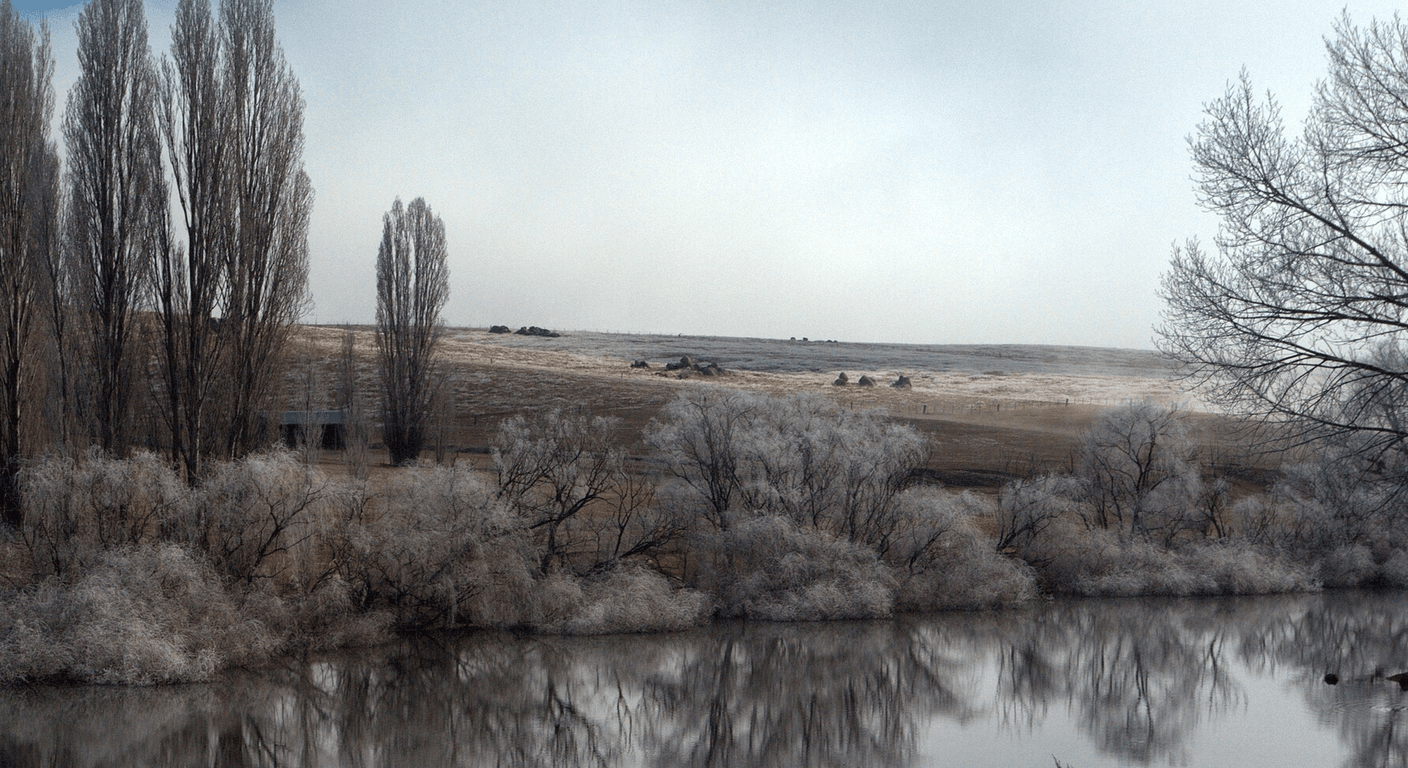
The Snowy River here looks nothing like the mountain torrent of Banjo Paterson's poem — at Dalgety it runs wide and calm, lined with river gums that are particularly lovely in the golden afternoon light of autumn. Birdlife is reliable. It's a genuinely pleasant spot to sit for a while, which is reason enough to visit even if the federation history isn't your primary interest.
The 1888 Dalgety Bridge: A Closer Look
The Dalgety Bridge is the kind of structure that earns quiet admiration rather than loud praise. Built in 1888, it predates federation itself, and the fact that it's still carrying traffic — farm vehicles, tourists, the occasional local — across the Snowy River more than 135 years later says something about both its construction and the pace of change in this part of New South Wales.
Visitors can walk across the bridge on foot, which gives a good sense of its scale and the river below. The ironwork is original in significant sections. It's worth pausing mid-span: the river views upstream and downstream are the best you'll get from anywhere in town, and the structure itself, framed against the surrounding hills, makes for a genuinely good photograph.
Heritage listing protects the bridge, and it appears on the NSW State Heritage Register. Confirm current access and any maintenance closures with the Snowy Monaro Regional Council before your visit, as occasional works do occur on heritage structures of this age.
Services, Food and What to Realistically Expect
Honesty serves travellers better than optimism here. Dalgety is a very small town with very limited services. The Dalgety Hotel — the pub — is the primary option for food and drink, and it's a genuine country pub with character. Hours vary by season and day, so checking ahead is essential rather than optional. There are no cafes, no supermarkets, and no fuel. Mobile reception can be patchy depending on your carrier.
This is not a criticism of the place. It's simply what Dalgety is: a quiet pastoral town that hasn't needed to reshape itself for tourism, which is part of what makes it interesting. The experience of arriving in a settlement that was once considered for the highest civic purpose in the nation, and finding it composed and unhurried, is itself a kind of pleasure. But it's a pleasure that works best when you've eaten beforehand or timed your visit around the pub's lunch service.
If you're planning a longer day, combining Dalgety with Cooma (around 55 kilometres to the north-west) makes good sense. Cooma has solid cafe options, the Snowy Mountains Scheme discovery centre at Cooma Cottage, and the Monaro Heritage Centre. Between the two towns, you have a genuinely satisfying historical day out rather than a very short one.
When to Visit and How to Combine It with the Snowy Mountains
September through May is the comfortable window. Dalgety sits at around 800 metres elevation, and the winters here are cold — not ski-field cold, but cold enough that an overcast July day on the river can feel more endurance than pleasure. Spring brings wildflowers and birdlife; autumn delivers the river gums at their most photogenic. Summer is warm and clear, though December and January can be hot on the Monaro plain.
Grey nomads doing a Snowy Mountains loop will find Dalgety a natural addition to an itinerary that already includes Jindabyne, Kosciuszko National Park and the alpine villages. From Jindabyne, Dalgety is less than an hour's drive — close enough to work as a morning excursion before lunch back in town. The Barry Way between Jindabyne and Dalgety is a scenic drive in its own right, following the Snowy River downstream through open grazing country.
For Victorian travellers specifically, a weekend based in Canberra can absorb Dalgety comfortably as a Sunday drive. Two hours each way, two or three hours in town, and you're back in Canberra for a decent dinner. The combination of Australia's actual capital and the town that almost was it has a certain satisfying symmetry.
Is Dalgety Worth the Drive for Over-50 Travellers?
The honest answer is: it depends entirely on what you're looking for. If you want a day out with multiple activities, good food options and a packed itinerary, Dalgety isn't the right destination on its own. But if you find genuine pleasure in places that carry historical weight quietly — where you can stand on a nineteenth-century bridge, read an interpretive sign that rewrites your understanding of how Australia came to be, and then sit by a calm river for half an hour — then yes, absolutely.
The accessibility makes it particularly well-suited to travellers who appreciate a gentle pace. The flat riverside walk, the manageable distances on foot, and the unhurried atmosphere all work in its favour. There's nothing to rush through and nothing that demands physical effort. A folding chair from the boot of the car, a thermos of tea, and the sound of the Snowy River moving past — some days, that's exactly enough.
Dalgety is the sort of place that tends to stay with people longer than more obviously spectacular destinations. The question it leaves you with — what would Australia have looked like if the decision had gone the other way? — is one worth sitting with on the drive home.
Quick planning guide
| Ideal pace | Slow-paced and unhurried |
|---|---|
| Best months | September to May |
| Suggested stay | 2-3 hours, paired with Cooma or Jindabyne |
| Mobility level | Easy - flat riverside walk with gentle terrain |
| Cost level | Free to visit |
| Comfort level | Basic - one pub, no cafes or supermarkets |
| Best for | History-minded travellers and grey nomads on a Snowy Mountains loop |
| Main planning consideration | Self-drive only, no public transport and no fuel in town - fill up in Cooma or Jindabyne beforehand |
Key takeaways
- Dalgety was officially gazetted as Australia's proposed national capital in 1902 before Canberra was selected in 1908.
- The 1888 Dalgety Bridge is one of the oldest road bridges still in use in New South Wales and is free to walk across.
- The flat heritage riverside walk is accessible for most mobility levels and takes around 45 minutes to one hour at a relaxed pace.
- There is no fuel available in Dalgety — fill up in Cooma or Jindabyne before you arrive.
- The Dalgety Hotel is the only food and drink option in town; confirm opening hours before your visit as they vary seasonally.
- Dalgety works best as a two-to-three-hour stop combined with Cooma or Jindabyne rather than a standalone full-day destination.
Recommended partners and links
Indicative prices only — always confirm with the operator before booking.
Frequently asked questions
Why was Dalgety chosen as Australia's proposed capital?
Dalgety was gazetted as Australia's proposed national capital in 1902 primarily because of its reliable water supply from the Snowy River, its central position in New South Wales, and its distance from both Sydney and Melbourne — a political requirement under the federation agreement. A royal commission endorsed the site, but ongoing parliamentary debate eventually led to the selection of the Canberra site in 1908.
Is there fuel available in Dalgety?
No. Dalgety has no petrol station. Travellers should fill up before arriving, either in Cooma (around 55 kilometres to the north-west) or Jindabyne (around 50 kilometres to the west). Running low on fuel on the quiet roads surrounding Dalgety is a genuine inconvenience, so this is worth planning carefully.
Is the Dalgety heritage walk suitable for older or less mobile travellers?
Yes, for most older travellers. The riverside walk is largely flat, with grassed and gravel surfaces, and no significant hills. It's rated Easy for mobility. Some unsealed laneways within the town are less predictable underfoot, so flat, supportive shoes are recommended. The 1888 bridge is also accessible on foot.
How far is Dalgety from Canberra and Melbourne?
Dalgety is approximately 100 kilometres south of Canberra, taking around two hours to drive via the Monaro Highway and Barry Way. From Melbourne, the drive is around 650 kilometres — roughly seven to eight hours — making it best approached via an overnight stay in Canberra or Cooma rather than as a direct day trip from Victoria.
What else can you combine with a visit to Dalgety?
Cooma, around 55 kilometres to the north-west, offers good cafes, the Monaro Heritage Centre, and the Snowy Mountains Scheme history at Cooma Cottage. Jindabyne, roughly 50 kilometres to the west, is the gateway to Kosciuszko National Park. Either town makes a natural pairing with Dalgety for a well-rounded historical or scenic day out.