Devonport's Mersey Bluff lighthouse walk is a free, flat, sealed foreshore path around two kilometres return, best tackled in the morning for the light on its red-banded tower, though an afternoon visit before an evening sailing works just as well. Rated easy for mobility, it sits roughly three to four kilometres (five to eight minutes by car) from the Spirit of Tasmania terminal, making it a natural half-day stop either side of the crossing.
Why Devonport deserves more than a drive-through
For most Victorian travellers, Devonport is the punctuation mark of a Tasmanian trip — the place where you roll off the Spirit bleary-eyed and point the car south, or where you queue to board on the way home. That habit sells the city short. Devonport has a compact, walkable foreshore, a genuine maritime history, and a lighthouse that offers one of the more quietly satisfying short walks in northern Tasmania.
The key is to treat Devonport as a destination in its own right, even if only for a few hours. If you are sailing overnight, arriving the afternoon before your departure gives you time to park the car, stretch your legs along the bluff, and settle into dinner without any rush. If you are disembarking in the morning, the foreshore walk is a fine way to ease back into the mainland pace before the drive south to Launceston or beyond.
The city centre is small enough to navigate without a map. The terminal, the bluff, and the main retail and arts precinct along Rooke Street and the waterfront are all within a short drive or, for those who are comfortable on flat ground, a manageable walk.
What is the Mersey Bluff lighthouse walk actually like?
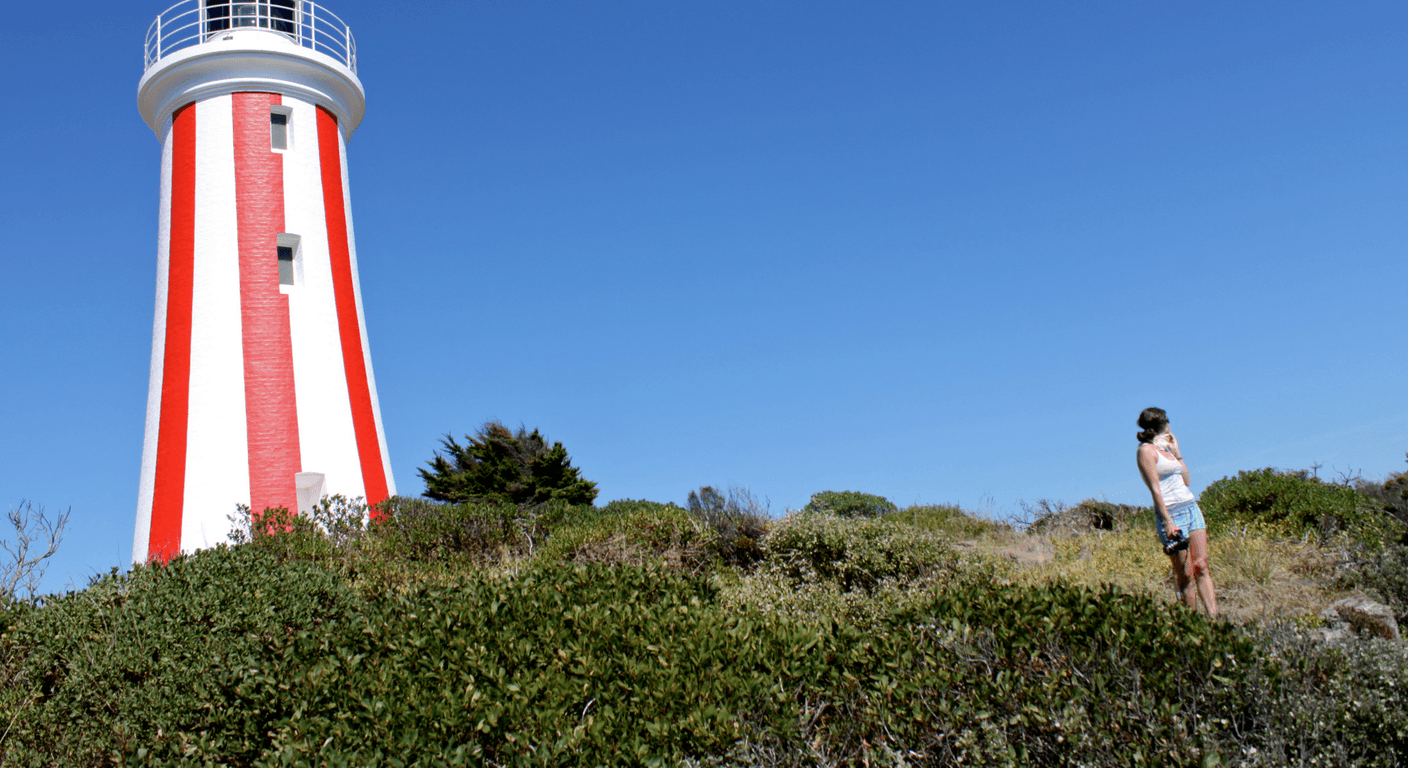
The Mersey Bluff lighthouse is the kind of landmark that looks even better in person than in photographs. Its distinctive white tower with horizontal red panels sits at the tip of the bluff, a low headland that juts into the mouth of the Mersey River where it meets Bass Strait. The lighthouse has been guiding ships since 1889 and the red banding makes it immediately recognisable.
The path out to the lighthouse is sealed and essentially flat, running along the foreshore from the car park at Bluff Reserve. The return walk is roughly two kilometres in total, though you can shorten it by parking closer to the lighthouse end of the reserve. There are benches along the route and a grassed picnic area. The surface is suitable for walking frames and most mobility aids, though uneven ground exists if you venture off the sealed path toward the rockier shoreline sections.
Entry is free and there is no ticketing or booking required. The lighthouse exterior and the surrounding reserve are accessible at any time. Bass Strait can be brisk even in summer, so a light layer is sensible. The walk is best done in the morning when the light falls on the red panels cleanly, though an afternoon visit before an evening sailing works just as well.
How far is Mersey Bluff from the Spirit of Tasmania terminal?
The terminal sits on the eastern bank of the Mersey River, and the bluff is on the western side, roughly three to four kilometres by road via the Bluff Road approach. By car, it is around five to eight minutes depending on traffic near the terminal precinct. There is a free car park at Bluff Reserve, which makes this a practical stop even if you are travelling with luggage in the boot.
For those who prefer not to drive, the Devonport CBD is accessible on foot from the waterfront, and local taxi services operate in the city. Confirm current local transport options with your accommodation or the Devonport Visitor Information Centre, as service frequency in regional Tasmanian cities can vary.
If you are travelling as a couple and one partner has limited mobility, the arrangement works well: the sealed path allows for a comfortable shared walk, and the car park is close enough that you can turn back at any point without having committed to a long circuit.
The Bass Strait Maritime Centre: is it worth the entry fee?
The Bass Strait Maritime Centre sits on the Devonport waterfront, a short distance from the bluff. It covers the history of Bass Strait shipping, including a sobering number of shipwrecks along the Tasmanian coast. For anyone who has crossed Bass Strait on the Spirit, the exhibits offer context for what the strait can look like in winter or during a storm — a reminder that the overnight crossing in a modern ship is a considerable comfort compared with the vessels that navigated these waters in the nineteenth century.
The centre is small and can be covered in around an hour, which suits a half-day itinerary well. It is staffed and the volunteers are generally knowledgeable and happy to talk through the exhibits. Entry carries a modest fee; confirm the current adult price directly with the centre before visiting, as prices are updated periodically. Check the centre's website at bassstraitmaritimecentre.com.au for opening hours, as these can vary by season.
Accessibility inside the centre is reasonable for a heritage building, though it is worth contacting them directly if you use a wheelchair or walking frame, to confirm current access arrangements. The waterfront location means there is easy seating nearby if you want to rest before or after.
paranaple arts centre: culture in the city centre
The paranaple arts centre (the lowercase spelling is intentional and reflects the centre's branding) anchors Devonport's cultural precinct on Stewart Street. It houses a regional gallery, performance spaces, and community arts facilities. The gallery component is generally free to enter and rotates exhibitions from local and Tasmanian artists. It is a calm, unhurried space that suits an hour of browsing before lunch.
The centre is modern, fully accessible, and centrally located. If there is a performance or special exhibition on during your visit, tickets can be booked through the centre's website at paranaple.com.au. For a half-day visit, the gallery alone is sufficient — it pairs well with a coffee at one of the nearby cafes on Rooke Street or the waterfront.
The paranaple name references the Mersey River and reflects the centre's connection to the local Devonport community. For travellers interested in regional Australian arts and culture, it is a more interesting stop than it might appear from the outside.
Planning the half-day: morning arrival or afternoon departure
The Spirit of Tasmania typically docks in Devonport in the early morning when sailing overnight from Melbourne. This gives arriving travellers a natural window before the drive south. A practical sequence: disembark, collect the car, drive to Bluff Reserve for the lighthouse walk (allow ninety minutes including the drive and a rest stop), then head into the city centre for the Bass Strait Maritime Centre or paranaple arts centre before a late morning coffee and the road south.
For those departing Devonport on an overnight sailing, the sequence reverses comfortably. Check-in for the Spirit typically opens several hours before departure; confirm exact times with Spirit of Tasmania when you book. An afternoon arrival in Devonport, a walk at the bluff, a browse through paranaple, and an early dinner near the waterfront leaves you relaxed and ready to board rather than sitting in a terminal queue.
If you are booking accommodation in Devonport for a night either side of the sailing, the area around the foreshore and the CBD has a range of options from motel-style rooms to smaller hotels. Confirm accessibility requirements directly with your chosen property. The Devonport City Council tourism page is a practical starting point for accommodation listings.
Practical notes on pace, comfort, and what to bring
The Mersey Bluff walk is genuinely flat and sealed, which makes it one of the more accessible short walks in Tasmania for travellers who find uneven terrain difficult. That said, Bass Strait weather is changeable and the bluff is exposed. Even on a calm day, the wind off the strait can be sharp. A waterproof layer, comfortable flat shoes, and a hat are sensible regardless of the season.
There are public toilets at Bluff Reserve near the car park. The picnic area has shelter and seating. If you are combining the walk with a visit to the Maritime Centre or paranaple, carry a water bottle and snack; the city centre has cafes but the bluff itself has no food or drink facilities.
For travellers managing fatigue — which is common after an overnight crossing — the lighthouse walk is forgiving because you set your own pace and can turn back whenever you choose. There is no loop that commits you to a fixed distance. Many travellers find that even a short walk in the sea air after a night on the ship is restorative before a long drive.
Quick planning guide
| Ideal pace | Slow-paced, half-day itinerary |
|---|---|
| Best months | Year-round; mornings favour the light on the lighthouse, weather can be brisk any season |
| Suggested stay | A few hours to a half-day |
| Mobility level | Easy — flat, sealed path suitable for walking frames and most mobility aids |
| Cost level | Budget-friendly — lighthouse and gallery free, modest fee for the Maritime Centre |
| Comfort level | Comfortable, though exposed to Bass Strait wind; a light layer is sensible |
| Best for | Travellers arriving or departing on the Spirit of Tasmania, including those with limited mobility |
| Main planning consideration | Timing the visit around Spirit of Tasmania arrival or check-in times |
Key takeaways
- The Mersey Bluff lighthouse walk is free, flat, sealed, and around two kilometres return from the main car park at Bluff Reserve.
- Devonport is roughly three to four kilometres from the Spirit of Tasmania terminal to the bluff by car — around five to eight minutes.
- The Bass Strait Maritime Centre charges a small entry fee; confirm the current price directly with the centre before visiting.
- paranaple arts centre in the Devonport CBD offers free gallery access and is fully accessible.
- Bass Strait weather is variable year-round — a wind layer and flat shoes are practical regardless of the season.
- A half-day in Devonport fits naturally at either end of a Spirit of Tasmania sailing without adding pressure to your itinerary.
Recommended partners and links
Indicative prices only — always confirm with the operator before booking.
Frequently asked questions
Is the Mersey Bluff lighthouse walk suitable for older travellers with limited mobility?
Yes, the main foreshore path to the Mersey Bluff lighthouse is sealed and essentially flat, making it suitable for most walking frames and mobility aids. The path becomes uneven if you move off the sealed surface toward the rocky shoreline, so it is best to stay on the main track. There are benches along the route and the car park is close enough that you can walk only as far as is comfortable.
How much does it cost to visit the Mersey Bluff lighthouse?
The Mersey Bluff reserve and foreshore path are free to visit with no entry fee or booking required. The lighthouse exterior can be viewed at any time. Note that entry into the lighthouse tower itself may not be available; confirm current access with the Devonport City Council or the visitor information centre.
How long does the Mersey Bluff walk take?
Allow around sixty to ninety minutes for the return walk from the main Bluff Reserve car park, including time to stop and take in the views. If you park closer to the lighthouse end of the reserve, the walk is shorter. The route is unhurried and there is no set pace required.
What are the opening hours of the Bass Strait Maritime Centre in Devonport?
Opening hours at the Bass Strait Maritime Centre can vary by season. Check the current hours directly on their website at bassstraitmaritimecentre.com.au or contact them before your visit to avoid disappointment, particularly if you are working around a Spirit of Tasmania departure time.
Can you do the Mersey Bluff walk and the Spirit of Tasmania on the same day?
Yes, many travellers do this comfortably. If you are departing on an evening sailing, an afternoon visit to the bluff works well before check-in opens at the terminal. If you are arriving on a morning sailing, the walk fits into the first hour or two after disembarkation. Confirm your Spirit of Tasmania check-in and boarding times when you book so you can plan accordingly.