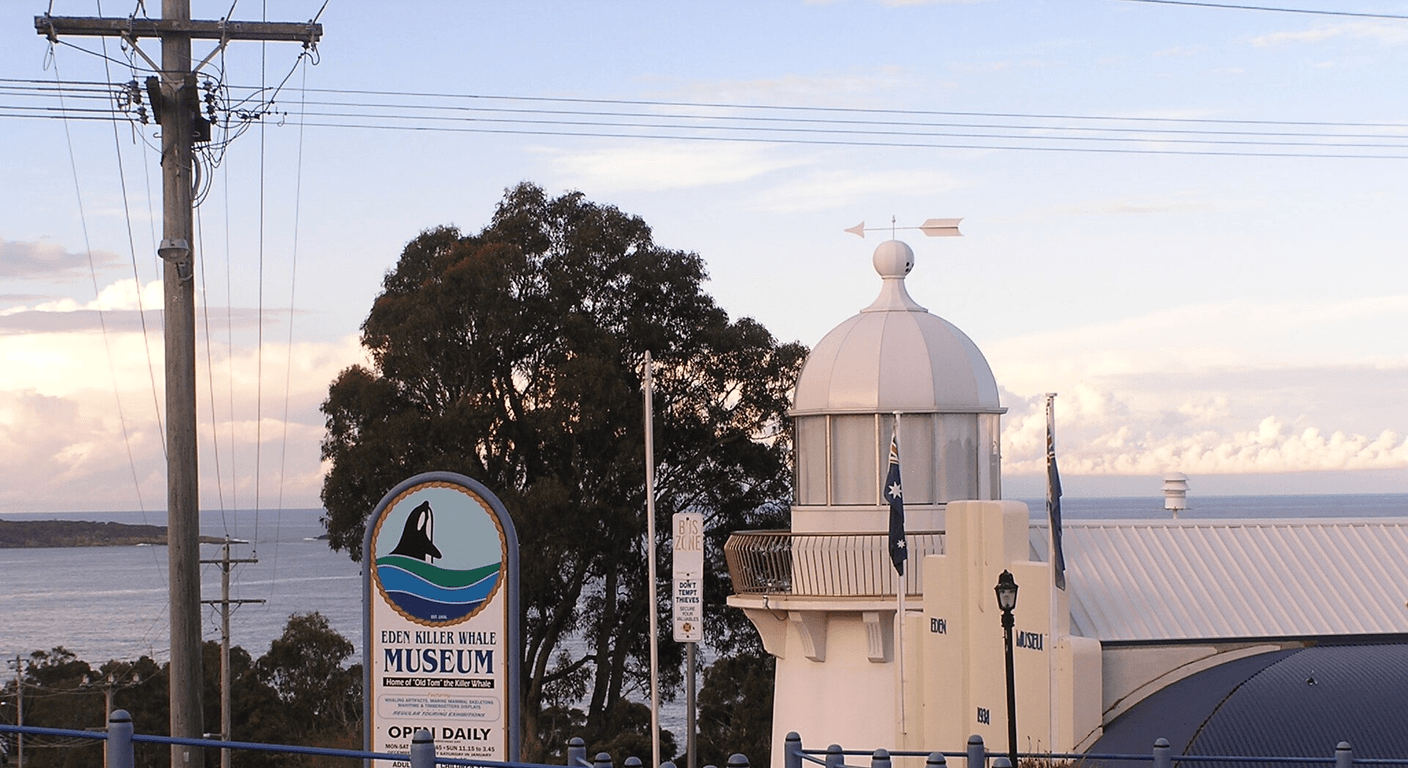
The Eden Killer Whale Museum on the NSW South Coast houses the preserved skeleton of Old Tom, an orca that worked alongside human whalers in Twofold Bay for decades. Allow about ninety unhurried minutes, noting some stairs and a hillside approach — a moderate mobility level. September to November brings migrating humpbacks past the foreshore. Eden is reached mainly by car via the Princes Highway, with infrequent coach connections and occasional cruise stopovers.
Why Eden and Old Tom belong on any serious cultural itinerary
There are heritage museums, and then there is the Eden Killer Whale Museum. Perched on a hillside above Twofold Bay in far south-eastern New South Wales, this modest but quietly remarkable institution holds something you will not find anywhere else on earth: the actual skeleton of Old Tom, an orca who participated in a working partnership with human whalers for roughly forty years in the early twentieth century.
The story is strange and entirely true. A pod of orcas — known locally by name, Old Tom among the most recognisable — would alert the Davidson family's whaling operation to the presence of humpback and other whales entering Twofold Bay. The orcas herded the prey and guided the rowing boats out; in return, the whalers left them the lips and tongue of the kill before towing the carcass ashore. This arrangement, documented by the whalers themselves, became known as the Law of the Tongue.
For a traveller who appreciates genuine history told without embellishment, this is the kind of place that stays with you. It is not a slick, high-budget attraction. It is a well-curated regional museum with deep local knowledge, run by people who clearly care about the story they are entrusting to visitors.
What does the museum actually contain?
The centrepiece is Old Tom's skeleton, displayed in full and in good condition. Old Tom died in 1930 and was recovered from Twofold Bay by the local community, who recognised immediately that they were preserving something irreplaceable. The skeleton shows wear on the teeth consistent with the rope-grabbing behaviour described by whalers — physical evidence that corroborates the oral history.
Beyond the skeleton, the museum holds whaling equipment, photographs, logbooks, and personal artefacts connected to the Davidson family and the broader Eden whaling industry. There is genuine depth here: the displays trace not just the orca partnership but the full arc of Twofold Bay's whaling era, the social history of a working port town, and the Indigenous Yuin people's own deep relationship with the sea and its creatures.
A separate section covers the natural history of orcas and cetaceans more broadly, which provides useful context for visitors who want to understand what made Old Tom's behaviour so extraordinary from a scientific perspective. Interpretive panels are clearly written and well-paced — you are not rushed through the story.
How accessible is the museum, and how long should you allow?
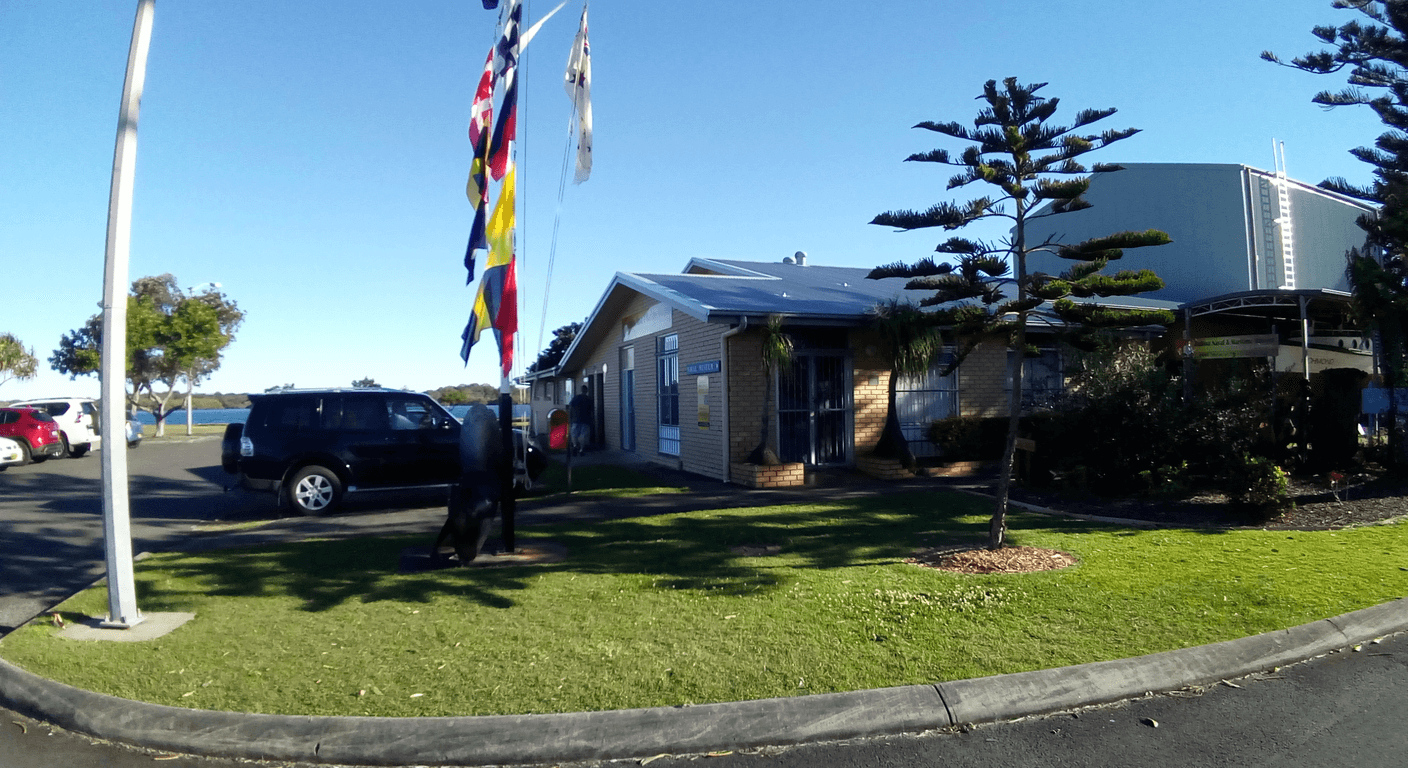
The museum sits on Imlay Street on a hillside above the town centre. There are some stairs involved in approaching and moving through the building, and the hilltop position means a modest incline from street level. Travellers with limited mobility or those who use a walking aid should contact the museum directly before visiting to confirm current accessibility arrangements — the staff are helpful and will give you honest information about what to expect.
For most visitors in reasonable health, ninety minutes is a comfortable and unhurried pace through the full collection. This is not a race-through experience; the story rewards slow reading and quiet reflection. Couples often find they linger longer than expected, particularly around the Old Tom skeleton and the whaling boat displays.
The museum has a small gift shop and friendly staff who are genuinely knowledgeable. Entry is modestly priced with concession rates available — indicatively under $20 for adults and lower for concession holders, though you should confirm current pricing directly with the museum or via their website before you visit, as these figures can change.
What is the view from the hilltop, and can you spot whales from here?
The museum's elevated position delivers genuine harbour views over Twofold Bay, one of the deepest natural harbours on the Australian east coast. On a clear day the panorama is broad and calming — the kind of view that makes you understand immediately why this bay became a centre of maritime activity.
During the whale migration season, roughly September to November, humpback whales pass through Twofold Bay on their southward return journey and are regularly spotted from the Eden foreshore and surrounding lookouts. The museum itself and the area immediately around it offer good elevated vantage points. For more dedicated whale watching, the lookouts within nearby Ben Boyd National Park — a short drive from Eden — are well regarded; check the National Parks NSW website for access details and any vehicle entry fees that may apply.
Even outside whale season, the bay is active with fishing vessels, timber ships using the deep-water port, and the occasional cruising yacht. Eden is a working port, not a resort, and that honest character is part of its appeal.
What is Eden like as a town for an overnight stay?
Eden sits about 480 kilometres south of Sydney and roughly 530 kilometres from Melbourne via the Princes Highway — close enough to the Victorian border to feel like a natural first or last overnight stop on a coastal drive between the two cities. It has the relaxed, self-sufficient atmosphere of a town that does not depend on tourism to function, which many older travellers find refreshing.
The main street has a handful of good cafes and restaurants, most with a focus on local seafood. The Snug Cove area near the wharf is pleasant for a slow walk after the museum — flat, sheltered, and with views back across the bay. There are motel and holiday-park accommodation options at various price points; the town is not a budget destination but neither is it expensive by coastal NSW standards. Confirm current accommodation availability and rates through booking platforms or the Sapphire Coast Tourism website.
For travellers who prefer a quieter, less-crowded coastal experience over the busy holiday towns further north, Eden rewards a full day or even two nights. The surrounding Sapphire Coast region — Merimbula, Pambula, Tathra — adds further options if you are building a longer itinerary.
How do you get to Eden, and what should you know about the drive?
Eden is not on a rail line. The practical way to reach it is by car, either your own or a hire vehicle. The Princes Highway from Melbourne through Gippsland to the NSW border and on to Eden is a well-maintained route, though it includes some sections through bushland that require attentive driving. The drive from the Victorian border township of Genoa to Eden takes under an hour.
V/Line operates coach services from Melbourne to the South Coast region, with connections possible to Eden, though schedules can be infrequent and journey times are long. Check current timetables and connections at vline.com.au before planning around public transport, particularly if you are travelling without a car.
If you are on a cruise that docks at Eden — several expedition and small-ship coastal cruise itineraries include Twofold Bay as a port call — the museum is walkable from the wharf, though the uphill section to the museum building is worth noting if mobility is a consideration. The cruise lines that include Eden in their itineraries generally provide shore excursion options; confirm details directly with your operator.
Practical tips for making the most of your visit
Arrive when the museum opens rather than mid-afternoon — the staff have more time to chat early in the day, and a conversation with a knowledgeable local about the Davidson family or the orca behaviour adds considerably to the experience. The museum's opening hours can vary by season, so confirm before you travel via killerwhalemuseum.com.au.
Wear comfortable shoes with some grip. The hillside setting and any stairs mean flat-soled shoes are more practical than sandals. If the weather is fine, allow time after the museum to walk down to the foreshore at Snug Cove and sit with the view for a while — it takes the story from the display cases and places it back in its real geography.
If you are travelling as a couple and one partner is less interested in maritime history, the combination of the museum, the harbour walk, and a long lunch in town makes for a well-balanced half-day that works for different interests and energy levels. Eden is the kind of place where a relaxed pace suits it best.
Quick planning guide
| Ideal pace | Slow and unhurried |
|---|---|
| Best months | September to November for whale sightings, though the museum itself is open year-round |
| Suggested stay | Ninety minutes for the museum; a full day or two nights to enjoy Eden and the foreshore |
| Mobility level | Moderate — stairs and a hillside incline to reach and move through the building |
| Cost level | Budget-friendly, with entry under $30 and concession rates available |
| Comfort level | Relaxed, low-key working port town rather than a polished resort |
| Best for | History-minded couples and travellers road-tripping the coast between Sydney and Melbourne |
| Main planning consideration | Confirm accessibility and current opening hours before visiting, and plan for car travel since Eden has no rail line and coach services are infrequent |
Key takeaways
- Old Tom's skeleton at the Eden Killer Whale Museum is physical evidence of one of the most documented human-animal working partnerships in recorded history.
- The museum's hilltop position provides genuine views over Twofold Bay, one of the deepest natural harbours on Australia's east coast.
- Entry is modestly priced with concession rates available — indicatively under $20 for adults, but confirm current pricing directly with the museum.
- Ninety unhurried minutes is a comfortable pace for most visitors; the story rewards slow reading rather than a quick pass-through.
- Humpback whales migrate through Twofold Bay from roughly September to November and are regularly spotted from Eden's foreshore and nearby lookouts.
- Eden is a working port town with an honest, unpolished character that suits travellers who prefer authenticity over resort polish.
Recommended partners and links
Indicative prices only — always confirm with the operator before booking.
Frequently asked questions
Where exactly is the Eden Killer Whale Museum?
The Eden Killer Whale Museum is located on Imlay Street in Eden, New South Wales, on the Sapphire Coast — approximately 480 kilometres south of Sydney and close to the Victorian border. It sits on a hillside above Twofold Bay with views over the harbour.
Is the Eden Killer Whale Museum accessible for visitors with limited mobility?
The museum involves some stairs and a modest incline from street level due to its hilltop position. Visitors with mobility concerns or those who use a walking aid are advised to contact the museum directly before visiting to confirm current accessibility arrangements.
What is the Law of the Tongue, and why does it matter?
The Law of the Tongue was the informal agreement between the Davidson family whalers and the local orca pod at Twofold Bay. The orcas herded large whales into the bay and guided the rowing boats to the kill; in return, the whalers allowed the orcas to feed on the lips and tongue before towing the carcass ashore. It is one of the most documented examples of cooperative hunting between humans and wild animals.
When is the best time to visit Eden for whale watching?
Humpback whales migrate through Twofold Bay on their southward return journey roughly between September and November, and are regularly spotted from Eden's foreshore and nearby lookouts in Ben Boyd National Park. The Eden Killer Whale Museum can be visited year-round regardless of whale season.
Can you reach Eden without a car?
Eden is not on a rail line. V/Line operates coach services from Melbourne to the South Coast region with possible connections to Eden, but schedules are infrequent and journey times are long. Check current timetables at vline.com.au. For most travellers, a private or hire car is the practical option.