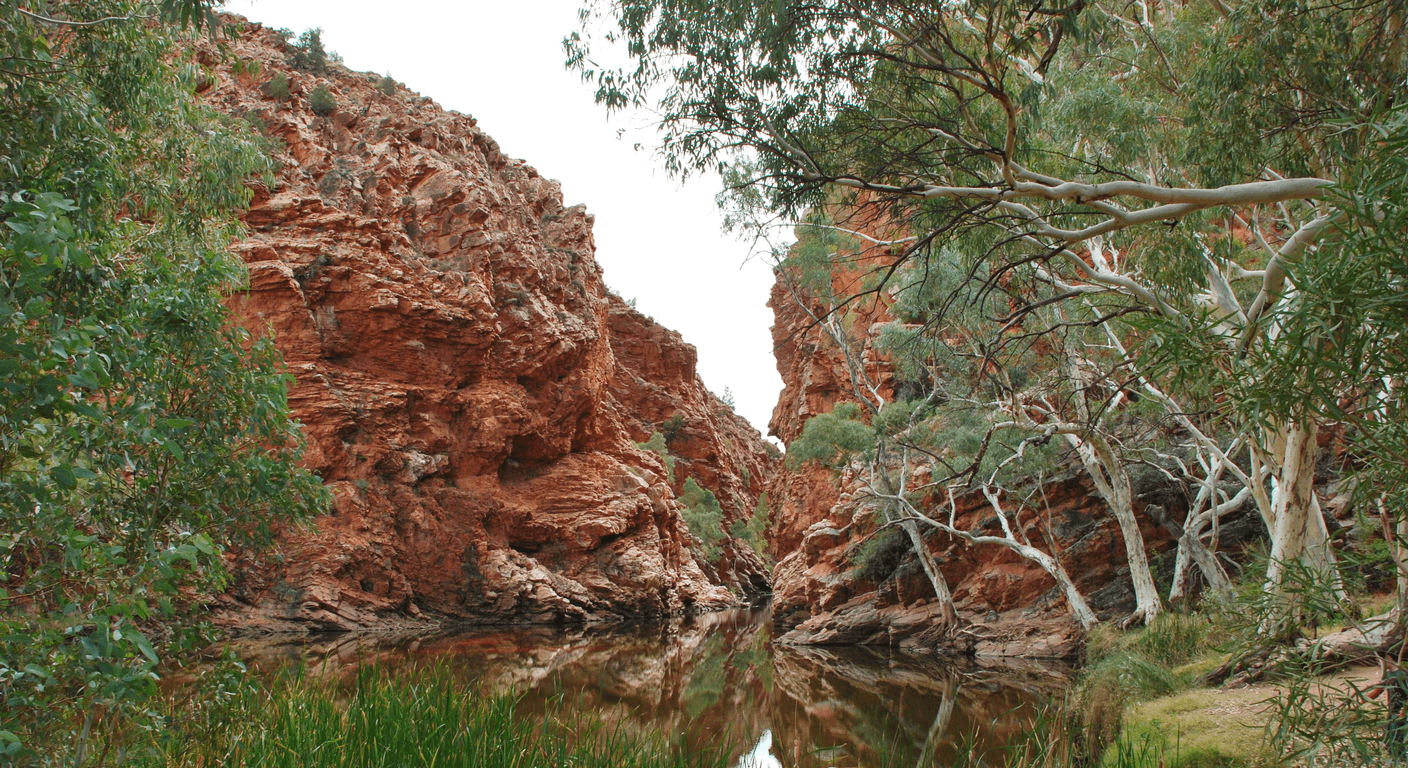
Ellery Creek Big Hole, about 90 kilometres west of Alice Springs in the West MacDonnell Ranges, is a permanent, free waterhole framed by red quartzite cliffs. Best visited May to August when days are mild, it suits a half-day stop combined with nearby sights. The walk in is a short, mostly flat 300-metre sandy track — easy mobility overall — reached via a sealed road with one unsealed final stretch, best checked before departure.
What Makes Ellery Creek Big Hole Worth the Drive
There are waterhole experiences across the Red Centre that require four-wheel drives, long hikes, or a fair amount of luck with seasonal water levels. Ellery Creek Big Hole is none of those things. The waterhole is permanent — fed by a deep natural basin that retains water even through the harshest dry seasons — and it sits at the end of a short, mostly flat sandy walk from the car park. That combination of reliability and accessibility is exactly what makes it the most visited spot along the West MacDonnell National Park corridor.
The setting is genuinely striking without needing to oversell it. The waterhole is enclosed by walls of ancient red and purple quartzite that rise sharply from the water's edge, and the colour contrast between the rock, the sky, and the surprisingly clear water is the kind of thing that stays with you. For travellers who have done Uluru and want to see more of the Centre's geological drama at a slower pace, this is a natural next chapter.
It is also a place that rewards stillness. Bring a chair, find a patch of shade near the bank, and simply sit with it for a while. There is no entry gate, no ticket booth, and no timed session. You are sharing the space with the landscape on its own terms, which feels quite different from the more managed tourist experiences in the region.
Getting There: The Road from Alice Springs
Ellery Creek Big Hole is roughly 90 kilometres west of Alice Springs, reached via Namatjira Drive. The majority of the drive is sealed and straightforward. The final access stretch into the car park is unsealed — a dirt road that is generally well-graded and passable in a standard 2WD vehicle under normal conditions. However, conditions can change after rain, and this is the outback: what was fine yesterday may not be fine today.
Before leaving Alice Springs, check the NT Government road conditions portal at roadreport.nt.gov.au or call the Alice Springs Visitor Information Centre. This is not overcaution — it is simply how travel in Central Australia works, and locals will tell you the same. If you are hiring a car, confirm with the rental company what their policy is for unsealed roads, as some standard rental agreements restrict unsealed access.
Allow around an hour and a half each way from Alice Springs, accounting for the slower pace on the dirt section and a stop or two along the way — the Ochre Pits are about 11 kilometres further west and worth a brief pause if you have the energy. Most travellers combine Ellery Creek with one or two other West MacDonnells stops as a full day out, departing Alice Springs in the morning and returning before late afternoon.
The Walk In: What to Expect Underfoot
The walk from the car park to the water's edge is short — around 300 metres — and the terrain is sandy and largely flat. There is no significant elevation change and no scrambling required to reach the main swimming area. For travellers who manage well on flat ground but find uneven rocky terrain challenging, this is genuinely one of the more accessible waterhole walks in the region.
The sandy surface can be soft in places, which means it requires a little more effort than a sealed path, and sturdy footwear with good grip is sensible. Walking poles are worth bringing if you use them at home — the return walk in the heat of the day, even a short one, will be more comfortable with that support. The car park itself has a basic shelter and toilet facilities, which is more than many remote spots in the West MacDonnells offer.
If mobility is a significant concern, it is worth noting that the final section closest to the water involves some uneven ground and flat rocks near the bank. Some travellers are comfortable sitting at the water's edge; others prefer to settle on the sandy flat slightly back from the water where it is more stable. There is no formal viewing platform, so assess the terrain on arrival and choose your spot accordingly.
The Water Itself: Cold, Clear, and Honest About It
Ellery Creek Big Hole is famous in the Red Centre for one thing in particular: the water is cold. Not refreshingly cool — genuinely cold, year-round. The deep quartzite basin and the shade of the surrounding cliffs mean the water temperature stays low regardless of the air temperature above it. On a 38-degree day in October, stepping into Ellery Creek is a physical shock, and that needs to be named plainly.
For older travellers, sudden cold-water immersion carries real physiological considerations. If you have a heart condition, circulatory issues, or have been advised by a doctor to avoid cold-water swimming, take that advice seriously here. Easing in slowly rather than diving in is always the wiser approach. For those who are in good health and simply want to cool off after a hot morning drive, the cold is manageable once you acclimatise — many visitors wade in to knee or waist depth and find that entirely satisfying.
The water is generally clear and the depth in the main basin is significant — this is not a shallow splash pool. There are no lifeguards, no safety flags, and no rescue infrastructure. Swimming is at your own risk, and this applies to any age group. If you are not a confident swimmer, wading and sitting at the edge is a perfectly complete experience — the setting is the thing, not the lap count.
What to Bring: No Services Means Everything Comes With You
There are no kiosks, cafes, or food vendors at Ellery Creek Big Hole. The toilet at the car park is the extent of the infrastructure. Everything else — water, food, sunscreen, shade, first aid — travels with you from Alice Springs. This is not unusual for remote Central Australian sites, but it catches travellers off guard more often than it should.
Water is the non-negotiable. The NT heat is dehydrating even in the cooler months, and the drive out and back adds to the exposure time. A general guide for Central Australia is around a litre of water per person per hour of activity in warm weather — adjust upward in summer. Bring more than you think you need and keep some in the vehicle. A wide-brimmed hat, UV-protective clothing, and high-SPF sunscreen are standard kit for any Red Centre day trip.
A portable folding chair or a lightweight picnic rug makes the visit considerably more comfortable, particularly for travellers who find sitting on rock or sand for extended periods difficult. A small esky or cooler bag with lunch and cold drinks transforms the stop from a quick dip into a genuine midday rest. The shade near the cliffs can be limited depending on the time of day, so an umbrella or personal shade structure is worth the small extra weight.
Best Time of Day and Best Season to Visit
The classic advice for Central Australia applies here: early morning or late afternoon. Arriving at Ellery Creek by 8 or 9am means cooler air temperatures, softer light on the cliffs, and fewer other visitors. The light on the quartzite walls in the morning is particularly warm and rich. By midday in the hotter months, the sun is directly overhead, shade is scarce, and the temperature can be brutal.
The most comfortable season for the West MacDonnells overall is the dry season, roughly May through August, when daytime temperatures are pleasant (often 18 to 25 degrees Celsius), nights are cold, and the air is clear. September and October are still very manageable but temperatures start climbing. November through March is the wet season in Central Australia — the heat becomes extreme (regularly above 40 degrees), and while rain is not constant, roads can become impassable quickly. Most experienced travellers over 60 plan their Red Centre trips firmly in the May to August window.
Keep in mind that even in the dry season, the water at Ellery Creek will be cold. The air temperature and the water temperature are largely independent of each other here. The cold water is actually part of the appeal in the warmer shoulder months — September visitors in particular tend to appreciate it far more than June visitors, who sometimes decide that wading to the ankles is entirely sufficient.
Cultural Respect and the Country Around You
The West MacDonnell Ranges — Tjoritja in Western Arrernte — is Country of deep significance to the Arrernte people, whose connection to this landscape spans tens of thousands of years. Ellery Creek Big Hole sits within this Country. Visiting respectfully means staying on marked paths, not climbing the rock faces, and taking nothing from the site — no rocks, no sand, no plant material.
There are no specific cultural restrictions on swimming at Ellery Creek Big Hole that are publicly listed, but it is worth being mindful that the landscape you are moving through is not simply a scenic backdrop. Parks Australia and Tourism NT both provide cultural context information for the West MacDonnells, and spending a few minutes reading their materials before the trip adds genuine depth to the experience.
Photography of the landscape is generally unrestricted, but as with any culturally significant Country, photographing other visitors without permission and posting images that sensationalise or trivialise the site is worth thinking twice about. The place deserves to be shared thoughtfully.
Quick planning guide
| Ideal pace | Slow-paced, sit-and-soak stop rather than a hike |
|---|---|
| Best months | May to August (dry season, mild days and reliable roads) |
| Suggested stay | Half a day, often paired with other West MacDonnells stops like the Ochre Pits |
| Mobility level | Easy — flat 300-metre sandy walk, with some uneven rocky ground near the water's edge |
| Cost level | Free entry, but bring all food, water and supplies from Alice Springs |
| Comfort level | Basic — car park toilet and shelter only, no kiosk or shade infrastructure |
| Best for | Older travellers wanting striking scenery and a swim without a strenuous walk |
| Main planning consideration | Check unsealed road conditions before leaving, and note the water stays cold year-round regardless of air temperature |
Key takeaways
- Ellery Creek Big Hole is a permanent, free-entry waterhole in the West MacDonnell Ranges, around 90 kilometres west of Alice Springs.
- The walk from car park to water is roughly 300 metres on flat sandy ground, making it one of the more accessible waterhole sites in the region.
- The water is famously cold year-round regardless of air temperature — older travellers with heart or circulatory conditions should seek medical advice before swimming.
- There are no services on site: bring all water, food, shade, and first aid from Alice Springs.
- The final access road is unsealed and usually 2WD-accessible, but road conditions must be checked before departure at roadreport.nt.gov.au.
- The dry season (May to August) offers the most comfortable visiting conditions, with mild daytime temperatures and reliable road access.
Recommended partners and links
Indicative prices only — always confirm with the operator before booking.
Frequently asked questions
Is Ellery Creek Big Hole suitable for older or less mobile travellers?
The walk from the car park to the waterhole is around 300 metres on sandy, flat ground with no significant elevation change, which makes it one of the more accessible waterhole walks in the West MacDonnells. The area near the water's edge involves some uneven flat rock, so travellers with balance or mobility concerns should assess on arrival and choose a stable spot to settle. Walking poles are useful on the sandy surface.
How cold is the water at Ellery Creek Big Hole?
The water at Ellery Creek Big Hole is cold year-round — noticeably so, even on very hot days. The deep quartzite basin and cliff shade keep water temperatures consistently low. Older travellers with heart conditions or circulatory issues should consult their doctor before swimming, and all visitors are advised to enter slowly rather than diving in.
Is Ellery Creek Big Hole accessible by a 2WD hire car?
The final access stretch to the car park is unsealed but is generally graded and passable in a standard 2WD vehicle under dry conditions. Road conditions can change quickly after rain, so always check the NT Government road conditions portal at roadreport.nt.gov.au before leaving Alice Springs. Confirm with your car hire company whether their policy permits unsealed road access.
Is there a cafe, toilet, or shade structure at Ellery Creek Big Hole?
There is a toilet and a basic shelter at the car park. There are no cafes, kiosks, or food services on site. Natural shade near the cliffs varies with the time of day. Travellers should bring all food, water, sunscreen, and any personal shade equipment from Alice Springs.
What is the best time of year to visit Ellery Creek Big Hole?
The dry season from May to August offers the most comfortable conditions, with mild daytime temperatures typically between 18 and 25 degrees Celsius, clear skies, and reliable road access. September and October are manageable but warmer. The November to March wet season brings extreme heat and occasional road closures, and is generally not recommended for day trips to remote sites.