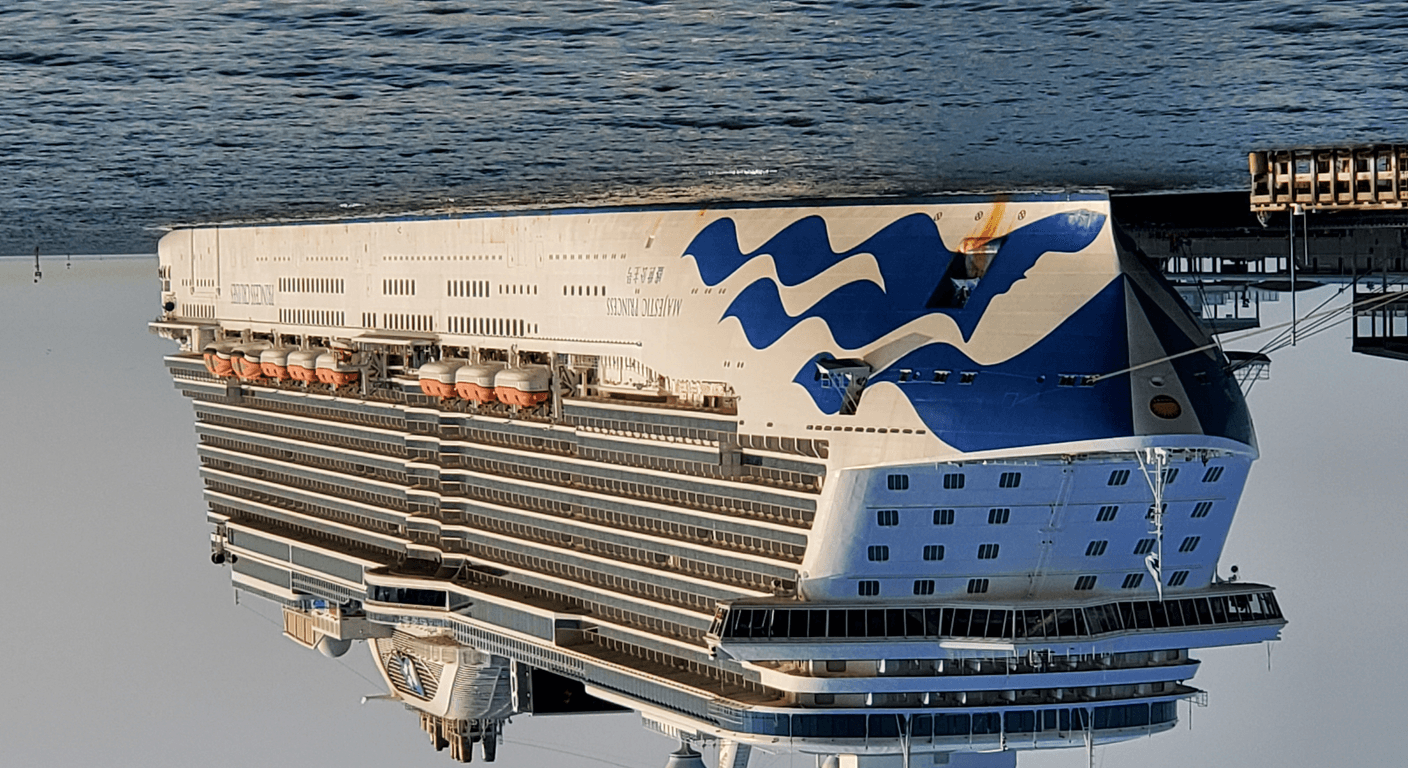
Grand Princess suits Australian over-50 cruisers best in spring and autumn shoulder seasons. A 10–14 night voyage is the ideal duration to settle into the ship's rhythm. The defining highlight is the range of cabin categories — from inside to full suite — spread across 15 decks, with accessible cabins, multiple lifts, and quieter mid-ship lounges. Mobility rating: Moderate (long corridors; stairs avoidable with planning). Access: Princess Cruises sails from Sydney and Melbourne, plus international homeports.
What is Grand Princess and why does the deck plan matter for over-50 travellers?
Grand Princess entered service in 1998 and has been refitted several times since. It carries around 2,600 passengers across 15 decks, with a gross tonnage of roughly 109,000 — large enough to have extensive facilities, compact enough that you can learn the ship within two days. That matters more than most brochures admit. On a mega-ship with 5,000 passengers, the walk from a forward cabin to the main dining room can top 400 metres. On Grand Princess, the geography is more forgiving — but only if you choose the right deck and position.
For travellers who want to avoid unnecessary steps, the deck plan is essentially a floor plan of your home for the next fortnight. Lift locations, the proximity of your cabin to dining venues, the distance from your stateroom door to the nearest accessible toilet on public decks — these are the details that determine whether a sea day feels restful or exhausting. Princess Cruises publishes the deck plan on its official site at princess.com; print it, mark your shortlisted cabin numbers, and cross-reference with the dining and lounge locations before you finalise anything.
One caveat worth stating plainly: ships are reconfigured. Grand Princess has had cabin categories renumbered and public spaces repositioned through successive refits. Any deck plan reproduced in a third-party article — including this one — can lag behind the current reality. The authoritative source is always princess.com, and a call to the Princess Cruises Australia reservations line (or your travel agent) can confirm specifics before you commit.
Which decks work best for over-50 cruisers?
The general principle on any large ship: mid-ship, mid-height. Decks 8 to 10 on Grand Princess sit above the waterline (better natural light, reduced engine noise) and below the pool decks (less foot traffic overhead). Mid-ship placement minimises the sensation of pitch and roll in open water — relevant for Bass Strait crossings or anything south of Sydney in autumn. If either traveller is prone to motion sickness, mid-ship on Deck 8 or 9 is worth a small premium over a forward or aft cabin at the same category.
Aft cabins on Grand Princess have their advocates — particularly the aft-facing balconies on the higher decks, which offer unobstructed wake views and surprising quiet. The trade-off is a longer corridor walk to the main lifts and, depending on the itinerary, more vibration from the propellers at speed. For a traveller with a knee that protests long flat walks, an aft cabin sounds romantic until day four.
Forward cabins are generally the least recommended for comfort-focused travellers on this ship. They tend to be the furthest from the main lift banks, and the motion in heavy swells is more pronounced at the bow. That said, forward inside cabins are often the most affordable category on the ship — if budget is the primary driver and mobility is not a concern, they're worth considering with eyes open.
Accessible cabins: what's available and how to secure one
Grand Princess carries a number of fully accessible staterooms across multiple cabin categories — inside, oceanview, balcony, and mini-suite. Accessible cabins on Princess ships are designed to meet US ADA standards, which means wider doorways (typically around 81cm), roll-in showers, lowered beds, grab rails, and turning space for a wheelchair or mobility aid. The exact number and deck locations of accessible cabins on the current configuration should be confirmed directly with Princess Cruises, as this is one area where post-refit changes occur.
Book an accessible cabin as early as possible — this isn't a soft suggestion. These categories sell out well ahead of standard cabins, particularly on Australian-homeported sailings where demand from the over-60 demographic is concentrated. If you or your travel companion uses a walking frame, a rollator, or a wheelchair, note that Princess requires a mobility needs declaration at the time of booking. This isn't bureaucratic gatekeeping; it's how the ship's team ensures the right equipment is in place and that your lifeboat drill station is accessible.
One practical note on balcony accessible cabins: the balcony threshold on some older Princess ships has a small raised lip — not a full step, but enough to catch a walking frame. Confirm the specific threshold height for your chosen cabin with Princess Cruises before booking if this is relevant. The ship's accessibility team is generally responsive to direct enquiries at the reservations stage.
Lifts, corridors and the reality of getting around
Grand Princess has three main lift banks — forward, mid-ship, and aft — which serve most decks. The mid-ship lifts are the most central and the most contested at peak times: just before dinner service and during embarkation and disembarkation days. On a sea day, wait times are minimal. On a port day when 2,000 passengers are heading ashore simultaneously, the forward and aft lifts are your friends. Learn all three banks by day two.
The main corridors on the cabin decks run the full length of the ship and are genuinely long. From a mid-ship cabin to the forward dining room can be a five-to-seven minute walk each way on a still day. Factor this in if you're planning multiple trips back to the cabin between meals and activities — it adds up. Comfortable shoes are not optional; this is a ship where the distance walked in a day can rival a moderate city stroll even without leaving the vessel.
Stairs between decks are available throughout but are not required if you're strategic about lift use. The Lido deck (typically the open pool deck, usually Deck 14 on Grand Princess) is accessible by lift, as are all main dining and entertainment venues. The exception is some outdoor walkways and tender-port gangways, which involve steps and require crew assistance if mobility is limited. Ask at Guest Services on day one about the assistance available at each port on your itinerary — they'll have a port-by-port briefing and can arrange crew support for gangway access.
What does a sea day actually look like, hour by hour?
A sea day on Grand Princess has a rhythm that suits the over-50 traveller well, provided you don't let the activity programme pressure you into over-scheduling. Here's a realistic shape of the day, with the caveat that exact times vary by itinerary and season — confirm the daily programme (the 'Princess Patter') in your cabin each evening for the following day.
Breakfast runs from roughly 7:00 to 9:30 in the main dining room (sit-down, waiter service, unhurried) or from around 6:30 in the Horizon Court buffet on the Lido deck for early risers. The buffet has seating indoors and outdoors; the main dining room requires a short wait at peak times but is considerably quieter and better paced. By 10:00, the pool deck fills up — if you want a sun lounger, the aft deck areas and the quieter side promenades are your alternative. The promenade deck wraps around the ship and is flat, wide, and useful for a morning walk without the pool-deck crowd.
Morning enrichment lectures (destination talks, history sessions, wine tastings) typically run from 10:00 to 11:30 in one of the main showrooms or lounges — these are seated, air-conditioned, and genuinely good on Princess ships. Lunch runs from noon to 1:30 in the dining room or buffet. The afternoon from 2:00 to 5:00 is the quietest period on the ship: the pool deck empties slightly, the library and card rooms are calm, and the spa offers afternoon rates that are usually lower than morning slots. Dinner service starts at around 5:30 for early seating or 7:30 for late seating in the main dining rooms. The Horizon Court buffet runs until around 9:30 for those who prefer flexibility. Evening entertainment — the main theatre show — runs twice, at roughly 7:15 and 9:15, each running 45–50 minutes. If the 9:15 show is too late, the 7:15 session suits most over-50 travellers and is just as well attended.
Dining tiers and quiet lounges: where to eat and where to escape
Grand Princess operates a tiered dining structure that's worth understanding before you board. The main dining rooms (typically three on Grand Princess, named Botticelli, Michelangelo, and Da Vinci — confirm current names on princess.com as these can change post-refit) are included in your fare and offer full waiter service at breakfast, lunch, and dinner. The Horizon Court buffet is also included. Specialty restaurants — Sabatini's Italian Trattoria and the Crown Grill steakhouse on most Princess ships — carry a cover charge of roughly $35–$55 AUD per person (indicative; confirm current pricing). The Crown Grill in particular suits a special-occasion dinner without the formality of the main dining room dress code nights.
For a Greek-Australian traveller, Sabatini's will feel familiar in spirit if not in exact execution — Princess's version leans toward Italian-American rather than Aegean, but the antipasto and pasta courses are solid. The main dining room menus rotate daily and include Mediterranean-influenced dishes on most Princess itineraries through Australian and Asian waters. The sommelier in the main dining room can guide wine selections, and the list leans toward Australian and New Zealand bottles on Pacific itineraries.
Quiet lounges on Grand Princess include the Wheelhouse Bar (a traditional nautical-themed bar, usually mid-ship on a lower deck, with comfortable seating and lower noise levels than the atrium bars), the library (small but genuinely useful, with puzzles, books, and tables), and the Explorers Lounge. The Wheelhouse Bar is the pick for a pre-dinner drink without the entertainment-venue noise — it tends to attract the over-50 demographic naturally and has a calm, unhurried atmosphere. Avoid the atrium bar area on formal nights unless you enjoy the crowd; it becomes the social centrepiece of the ship and is lively (and loud) accordingly.
Solo travellers, single supplements, and the honest maths
Princess Cruises charges a single supplement on most cabin categories — typically 100% of the per-person double-occupancy fare, which effectively means a solo traveller pays the full cabin cost. On a 14-night voyage in a balcony cabin priced at roughly $350 per person per night AUD, a solo traveller is looking at around $9,800 for the cabin alone, before extras. That's a steep penalty, and it's worth naming it plainly.
Princess does offer a share-match programme on some sailings — the Solo Traveller programme pairs same-gender solo passengers in a twin cabin to avoid the supplement. Availability is limited and not guaranteed on every sailing or cabin category. Some Australian-focused travel agencies that specialise in over-50 and solo cruising (Cruise Guru and similar) occasionally negotiate reduced single supplements on specific sailings — worth asking directly. The Princess Cruises website also periodically lists sailings with a reduced solo supplement; check the promotions section at princess.com.
For a solo traveller who absorbs the single supplement, the upside is genuine: a private balcony cabin is a meaningful comfort on a 14-night voyage, and the structured social environment of a Princess cruise — dining with tablemates, enrichment programmes, organised shore excursions — makes solo travel less isolating than many land-based options. The maths are harsh; the experience, for the right traveller, is worth the calculation.
Quick planning guide
| Ideal pace | Relaxed — one sea day between ports where possible |
|---|---|
| Best months | October to April for Australian-homeported itineraries; confirm current schedule on princess.com |
| Suggested stay | 10–14 nights minimum to justify the embarkation effort and settle into the ship |
| Mobility level | Moderate — long corridors on lower decks, lifts available throughout, cobblestoned tender ports are the wildcard |
| Cost level | Inside cabins from roughly $180–$250 per person per night AUD; balcony cabins from around $280–$400 per person per night AUD; suites from $600+ per person per night AUD — all indicative, confirm with Princess Cruises |
| Comfort level | High — stabilisers, multiple dining venues, quiet lounges, spa facilities |
| Best for | Couples seeking a structured, well-serviced voyage; solo travellers willing to negotiate the single supplement |
| Main planning consideration | Deck plan and cabin numbering can change after refits — always verify the current layout on princess.com before final booking |
Key takeaways
- Mid-ship cabins on Decks 8–10 offer the best balance of comfort, reduced motion, and lift access on Grand Princess.
- Accessible cabins sell out early on Australian-homeported Princess sailings — book as far ahead as possible and declare mobility needs at the time of booking.
- The deck plan on princess.com is the only authoritative source; third-party layouts can lag behind post-refit reconfigurations.
- Solo travellers typically face a 100% single supplement on Princess Cruises — ask about share-match options or reduced-supplement sailings before accepting the full penalty.
- The Wheelhouse Bar is the quietest and most comfortable pre-dinner lounge on Grand Princess for travellers who want to skip the atrium crowd.
- Tender-port gangways involve steps and require crew assistance if mobility is limited — ask Guest Services on day one for a port-by-port briefing.
Recommended partners and links
Indicative prices only — always confirm with the operator before booking.
Frequently asked questions
Does Grand Princess have accessible cabins with roll-in showers?
Yes. Grand Princess carries fully accessible staterooms across multiple categories, including inside, oceanview, balcony, and mini-suite. These cabins are designed to US ADA standards and typically include roll-in showers, grab rails, wider doorways, and lowered beds. The exact number and deck locations should be confirmed directly with Princess Cruises at princess.com, as these details can change after refits.
How long are the corridors on Grand Princess, and is it manageable for someone with limited mobility?
The main cabin corridors on Grand Princess run the full length of the ship and can take five to seven minutes to walk end to end. For travellers with limited mobility, a mid-ship cabin close to the central lift bank significantly reduces daily walking distances. All main venues — dining rooms, showrooms, spa, and pool deck — are accessible by lift. The promenade deck is flat and wide, making it a comfortable walking circuit.
What is the single supplement on Princess Cruises for solo travellers?
Princess Cruises typically charges a 100% single supplement on most cabin categories, meaning a solo traveller pays the full cost of a double-occupancy cabin. Princess offers a share-match programme on some sailings that pairs same-gender solo passengers to avoid the supplement, but availability is not guaranteed. Some travel agencies and periodic Princess promotions offer reduced single supplements — check princess.com or ask your travel agent before booking.
Can I trust third-party Grand Princess deck plans when choosing a cabin?
Third-party deck plans — including those in travel articles — can lag behind the current configuration of the ship, particularly after refits. Cabin numbering, category boundaries, and the placement of public spaces can all change. The authoritative source is the official Princess Cruises website at princess.com. Always cross-reference your shortlisted cabin numbers against the current official deck plan before confirming your booking.
What AUD fare range should Australians expect for a Grand Princess cruise?
As a rough, indicative guide: inside cabins start from around $180–$250 per person per night AUD; balcony cabins from roughly $280–$400 per person per night AUD; mini-suites and suites from around $600 per person per night AUD and above. These figures are indicative only and vary significantly by itinerary, season, and booking timing. Always confirm current fares directly with Princess Cruises or a licensed Australian travel agent.