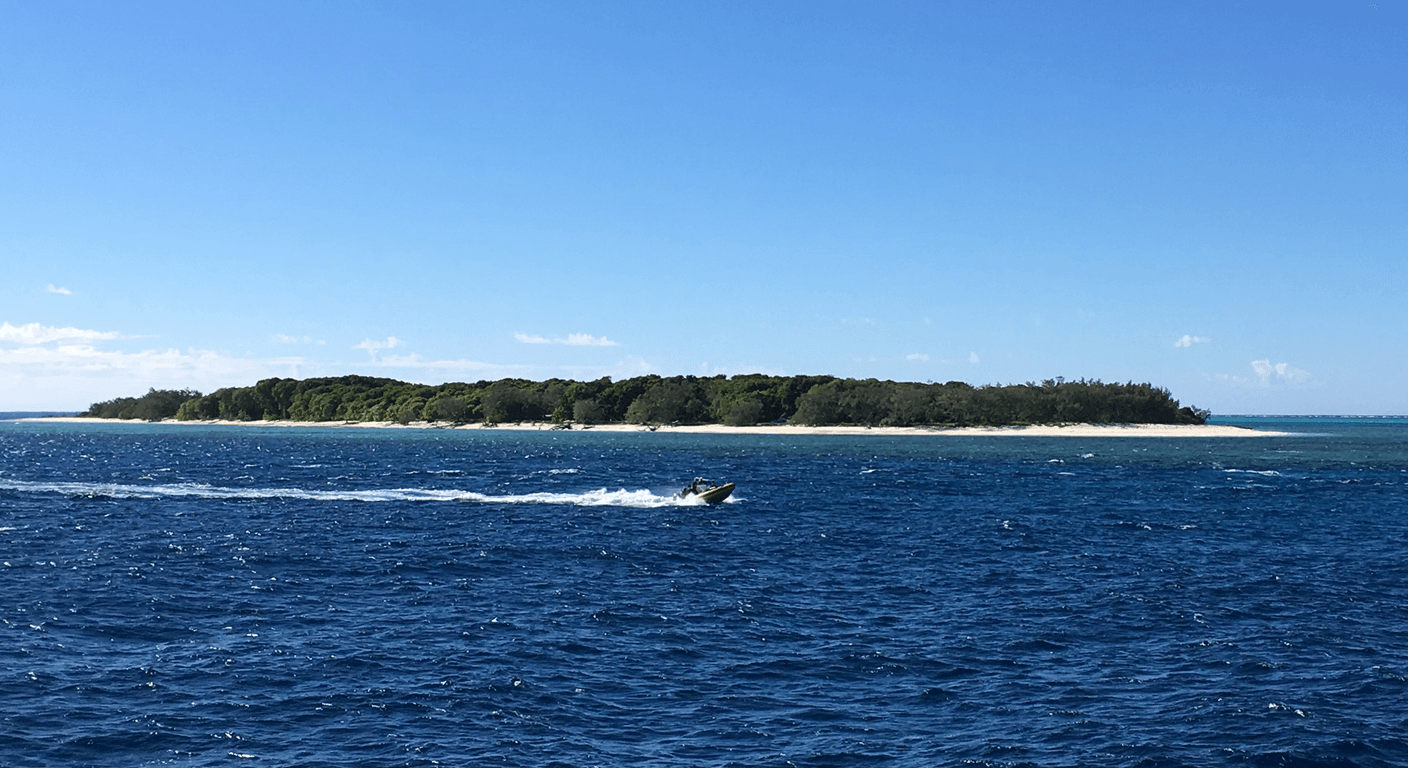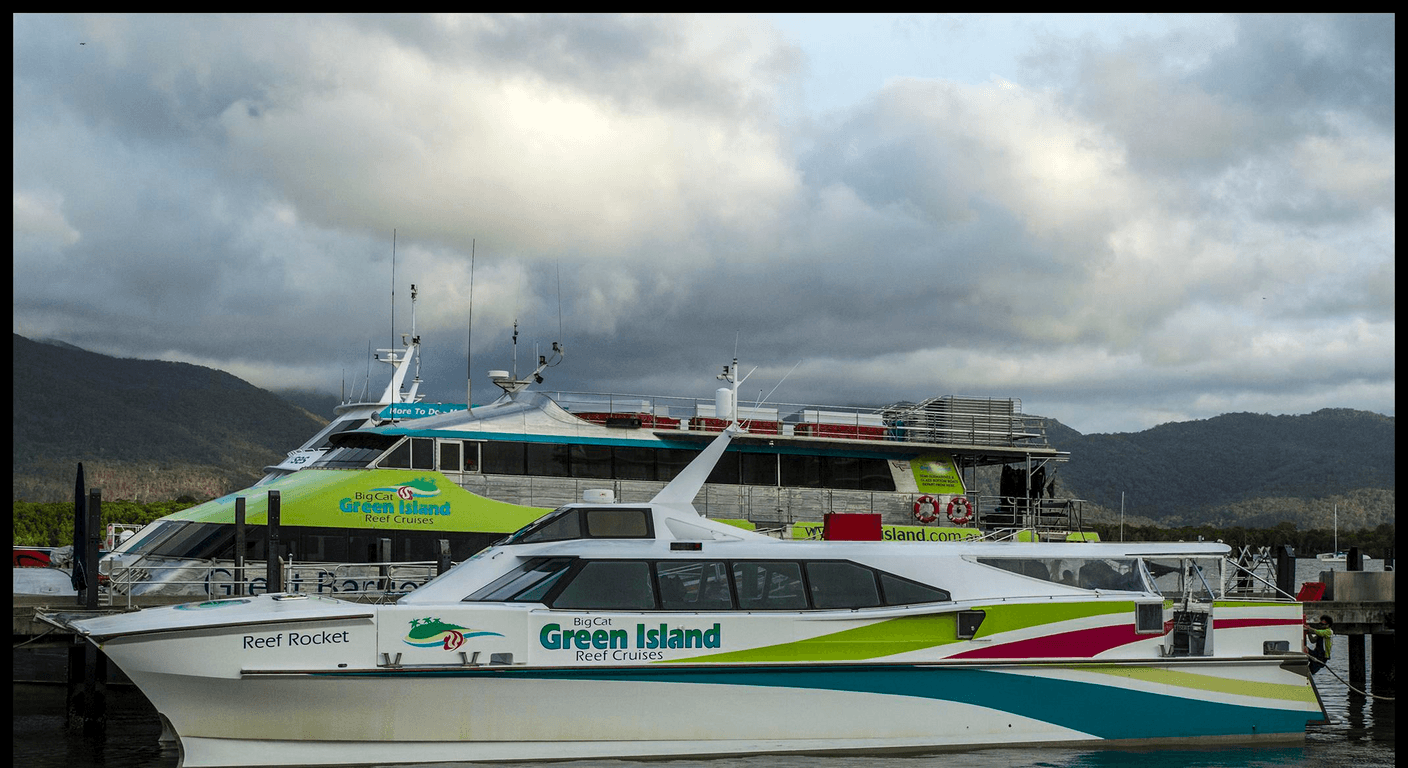
Green Island is a coral cay 27 kilometres off Cairns, reached by a 45-minute catamaran crossing, best visited during the dry season (April to October) when seas are calmest. A single day trip suits most travellers, with glass-bottom boat and semi-submersible tours the defining highlight, letting visitors view the reef without swimming. Mobility is easy, thanks to flat boardwalks and level access, though boarding assistance should be arranged with operators in advance.
Why Green Island Works So Well for Travellers Over 50
The Great Barrier Reef has a reputation for demanding things of you — wetsuits, fins, a certain willingness to tumble backwards off a boat. Green Island quietly sidesteps all of that. It is a true coral cay: a small, forested island that has grown directly on the reef itself, sitting 27 kilometres off Cairns in protected inner-reef water. The sea here is calmer than the outer reef by a considerable margin, which matters enormously if you've ever felt uneasy on open water.
The island is compact — you can walk its perimeter boardwalk in under 20 minutes — and the resort core is flat, shaded by rainforest canopy and equipped with proper café and restaurant facilities. There are no steep paths, no mandatory physical challenges and no pressure to do anything beyond settle into a sun lounger with a view of improbable turquoise water. The reef is right there, visible through glass-bottom boats and semi-submersible tours that are included in most standard day packages.
For a couple travelling together, or a solo traveller who values a well-organised, low-stress day out, Green Island offers something the outer reef rarely can: the option to engage with the reef entirely on your own terms. You decide how much you do. That's not a compromise — it's the point.
Getting There: The Catamaran from Cairns
The crossing takes roughly 45 minutes aboard a modern catamaran departing from the Cairns Reef Fleet Terminal on the city's waterfront. The terminal is accessible, with level boarding ramps and seating inside the vessel. Catamarans are twin-hulled and considerably more stable than older mono-hull ferries, so the ride is smooth for most conditions — though the dry season (April to October) consistently delivers the calmest crossings.
There are typically two or three departure times each morning. The earliest — often around 9 am — is the one worth choosing. By mid-morning, school groups and larger tour parties have arrived and the island's compact beach fills quickly. An early departure gives you the island at its quietest, with the best light for photography and first access to glass-bottom boat sessions. Confirm current departure schedules directly with the operator before you book.
Cairns itself is straightforward to reach from Melbourne or Sydney by direct flight — roughly three hours from Melbourne, around two and a half from Sydney. There's no international connection or jet lag to factor in, and the city's accommodation options along the Esplanade are a short taxi or rideshare from the terminal. A night in Cairns before the island day is a sensible rhythm.
What's Included — and What Costs Extra
Standard day packages, indicatively priced around $100–$150 per adult (confirm current pricing and any available senior concessions directly with operators), typically include return catamaran transfers, use of the island's beach and grounds, and at least one glass-bottom boat tour or semi-submersible ride. These are the heart of the experience for anyone who'd rather not get wet. The semi-submersible, in particular, is excellent — you sit below the waterline in an air-conditioned cabin watching coral and fish pass by the windows. No snorkel, no wetsuit, no exertion.
Snorkelling gear hire and guided snorkel tours are usually available as add-ons, and the inner-reef water is genuinely calm and shallow enough for first-time or nervous snorkellers if you want to try. Introductory scuba sessions are also on offer for those keen to go deeper — instructors are experienced and the conditions are among the most forgiving on the reef. But neither is compulsory, and many guests spend a thoroughly satisfying day without entering the water at all.
Lunch is generally available at the resort café or restaurant for an additional cost, or you can bring your own food. Lockers are available for bags. The resort also has a small gift shop and, worth noting for those interested in marine life, a small crocodile and marine exhibit on the island. It's a modest but diverting addition to the afternoon.
Accessibility Honestly: What to Expect on the Island
The island's main paths and boardwalks are flat and well-maintained, making it one of the more manageable reef day-trip destinations for travellers with limited mobility. The resort area — where the café, loungers, shade structures and toilets are concentrated — is compact and easy to navigate. Getting from the jetty to the resort core is a short, level walk.
Beach wheelchair availability is worth investigating before you book. Some operators and the resort have offered beach wheelchairs — designed with wide, sand-friendly wheels — on a request basis. Contact the operator directly when booking to confirm current availability, as this can vary by season and demand. It's a detail that makes a meaningful difference for some travellers, and operators are generally responsive when asked in advance.
The catamaran boarding process involves stepping onto the vessel from the terminal dock. For travellers with significant mobility considerations, it's worth calling the operator ahead of time to discuss boarding arrangements — staff are generally helpful and solutions can often be organised when the need is flagged early. The vessel itself has interior seating and deck seating, with shade available on board.
Reading the Reef Without Getting Wet
The glass-bottom boat tour is typically a 20-to-30-minute guided circuit over the coral surrounding the island. A guide narrates what you're seeing — coral formations, fish species, the occasional turtle — which turns a pleasant view into something genuinely informative. For many travellers over 50, this is the highlight of the day: the reef in full colour, close enough to feel immersive, with no physical effort required.
The semi-submersible takes the experience a step further. You descend into the hull, the cabin sits below the waterline, and the reef drifts past through large panoramic windows. It's cooler than sitting on deck, the viewing angle is better than a glass bottom, and the whole thing feels pleasantly cinematic. On a good day — clear water, mid-morning light — the coral gardens here are genuinely striking.
Both experiences are well-suited to travellers who may have vision concerns or who find peering through glass-bottomed viewing holes uncomfortable. The semi-submersible in particular offers a relaxed seated position with wide windows, which suits a range of physical needs. If reef viewing is the priority and swimming isn't on the agenda, these two inclusions alone justify the day.
Planning the Day: Timing, Pacing and a Few Practical Notes
The dry season runs April to October and is the clear preference for a Green Island day. Temperatures are warm rather than oppressive, humidity is manageable, and sea conditions on the inner reef are at their most predictable. The wet season (November to March) brings higher humidity, afternoon storms and the presence of marine stingers in the water — another reason the glass-bottom boat and semi-submersible options are particularly sensible at that time of year, though most operators do provide stinger suits for swimmers.
A natural rhythm for the day: take the early catamaran, walk the boardwalk before the crowds arrive, join the first glass-bottom boat session, then settle somewhere shaded for a late morning break before the semi-submersible session after lunch. That leaves the early afternoon for the beach, a coffee, the marine exhibit, or simply watching the water. The return catamaran in the late afternoon gets you back to Cairns in time for dinner along the Esplanade.
One practical note for travellers staying in Cairns: the Reef Fleet Terminal is a 10-to-15-minute walk from most Esplanade hotels, or a short taxi ride. Parking is available nearby if you've driven. The terminal has seating, toilets and a café for those arriving early. Bring sunscreen, a hat, light layers for the air-conditioned vessel and — if you plan to enter the water — a rash vest or swimwear. Everything else can be left at the hotel.
Is Green Island Right for You?
Green Island is not the outer reef. The coral diversity and marine life density of a live-aboard dive expedition or a full-day outer reef trip are simply different experiences, and it's worth being honest about that. What Green Island offers is access to a genuinely beautiful section of the Great Barrier Reef in conditions that are comfortable, well-organised and forgiving — and it does that exceptionally well.
For a traveller who has always wanted to see the reef but wondered whether the physical demands were manageable, this is the answer. For a couple where one partner is keen on snorkelling and the other isn't, Green Island accommodates both on the same day without compromise. For a solo traveller who values a structured, sociable day out without the pressure of keeping pace with a group, the day package format works naturally.
The reef is one of Australia's great natural experiences. Green Island is the version of it that asks the least of you physically while still delivering something real. That's not a lesser version — it's a considered one.
Quick planning guide
| Ideal pace | Slow-paced, unhurried day trip |
|---|---|
| Best months | April to October (dry season, calmest seas) |
| Suggested stay | Full day trip from Cairns, with an overnight in Cairns beforehand recommended |
| Mobility level | Easy — flat boardwalks and level resort grounds, though catamaran boarding should be arranged ahead for those with mobility needs |
| Cost level | Mid-range (around $100–$150 per adult, before add-ons) |
| Comfort level | High — shaded rainforest canopy, café and restaurant facilities, resort-style grounds |
| Best for | Couples with differing activity levels, solo travellers wanting a structured low-stress day, and those who prefer not to swim or dive |
| Main planning consideration | Confirm beach wheelchair availability and boarding arrangements with the operator in advance, and choose the earliest departure to avoid crowds |
Key takeaways
- Green Island is 45 minutes by catamaran from Cairns and offers flat, shaded grounds suitable for most mobility levels.
- Glass-bottom boat and semi-submersible tours are typically included in standard day packages — no swimming required to see the reef.
- Indicative day package pricing is around $100–$150 per adult; confirm current prices and senior concessions directly with operators before booking.
- The dry season (April to October) delivers the calmest water and most comfortable conditions for the crossing and the island.
- Beach wheelchair availability varies — contact the operator when booking to confirm and arrange in advance.
- The earliest catamaran departure, typically around 9 am, gives you the island at its quietest and the best conditions for glass-bottom boat tours.
Recommended partners and links
Indicative prices only — always confirm with the operator before booking.
Frequently asked questions
Do you have to swim or snorkel to enjoy Green Island?
No. Standard day packages include glass-bottom boat tours and semi-submersible rides that put the reef on display without any swimming. Many travellers spend a full and satisfying day on Green Island without entering the water.
How rough is the catamaran crossing from Cairns to Green Island?
The crossing takes roughly 45 minutes across inner-reef water, which is considerably calmer than the outer reef. Modern catamarans are stable and the ride is smooth for most conditions, particularly during the dry season from April to October. Travellers prone to seasickness may wish to take precautions, but the crossing is generally well-tolerated.
Is Green Island accessible for travellers with limited mobility?
The island's main paths and resort core are flat and manageable for most travellers with limited mobility. Beach wheelchairs may be available on request — contact the operator directly when booking to confirm current availability. For significant mobility concerns, it's worth calling the operator in advance to discuss catamaran boarding arrangements.
What is the best time of year to visit Green Island?
April to October is the recommended period. The dry season brings calmer seas, lower humidity and more predictable weather. The wet season (November to March) brings higher humidity, afternoon storms and marine stingers in the water, though glass-bottom boat and semi-submersible options remain available year-round.
How much does a Green Island day cruise cost from Cairns?
Indicative pricing for a standard adult day package is roughly $100–$150, though this varies by operator and inclusions. Senior concessions may be available. Confirm current pricing directly with the operator before booking, as prices change seasonally.