Lady Musgrave Island, at the southern Great Barrier Reef about 100km off Bundaberg, is best visited May to October when seas are calmer and humpback whales are often spotted en route. The day cruise takes roughly two hours each way from Bundaberg Port Marina, with a two-night stay in town recommended either side. The highlight is the moored pontoon's underwater observatory, where coral, fish and turtles can be viewed seated and dry. Mobility is easy on the pontoon itself, with an optional, short but uneven island walk for those who want it.
What makes Lady Musgrave different from other reef day trips?
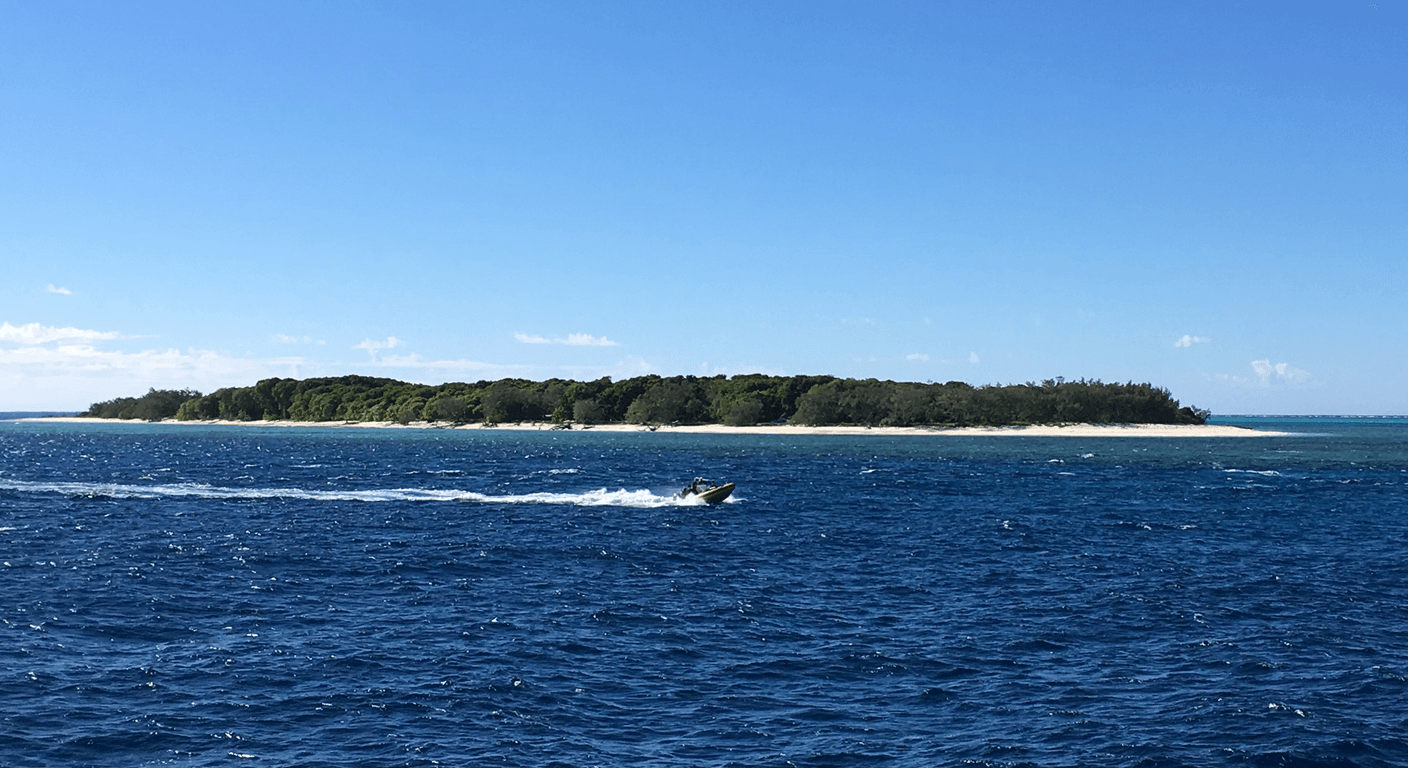
Most Australians picture the Great Barrier Reef as something accessed from Cairns or Port Douglas — big catamarans, large pontoons, hundreds of fellow visitors. Lady Musgrave sits at the reef's southern end, and the experience is genuinely different in scale. The island is an uninhabited national park: a coral cay ringed by a turquoise lagoon, with a resident colony of seabirds and one of the few lagoons on the reef calm enough to allow safe, sheltered swimming directly off a moored pontoon.
The operator runs a purpose-built vessel from Bundaberg Port Marina. Passenger numbers are limited — this isn't a floating resort. You'll share the lagoon with serious snorkellers, a few families, and, increasingly, travellers in their fifties and sixties who've decided the northern reef crowds aren't for them. That's not an accident. The southern reef suits a slower pace.
The crossing: two hours of open water — be prepared
This is the part of the day that deserves the most planning. The crossing from Bundaberg Port Marina to Lady Musgrave Island takes around two hours each way across open ocean. On calm winter days it can be smooth and scenic — on rougher days, it's a proper ocean swell. Seasickness is common even among people who've never experienced it before, and there's no shelter from the motion once you're underway.
The practical advice is simple and worth taking seriously: take seasickness medication the evening before and again the morning of departure. Cinnarizine (Stugeron) or hyoscine patches, available from pharmacies, work better than ginger tablets for open-water conditions — but speak with your GP or pharmacist beforehand, particularly if you're managing other medications. Sitting outside on the lower deck, keeping your eyes on the horizon, and eating only lightly before departure all help.
For travellers with heart conditions, severe motion sickness history, or balance issues, it's worth a frank conversation with your doctor before booking. The vessel has indoor seating and the crew is experienced, but the crossing is real and shouldn't be underestimated. That said, thousands of older Australians make it each year without drama — preparation is everything.
The pontoon: reef access without getting wet
Once moored in the lagoon, the experience shifts entirely. The pontoon is the centrepiece — a stable, shaded platform anchored in calm, clear water. The underwater observatory is the quiet highlight for many travellers: a semi-submerged chamber with large viewing windows where you can sit, in a chair, and watch coral formations, reef fish, and — if you're fortunate — green sea turtles moving through the water below. No wetsuit, no fins, no physical exertion. Just the reef, framed like a slow-moving painting.
Snorkelling directly off the pontoon's steps is available for those who want it. The entry is gentle — steps into shallow, sheltered water — and the coral is close enough to the surface that even inexperienced snorkellers see plenty. Fins and masks are provided. Travellers who haven't snorkelled in years often find it surprisingly manageable in these conditions; the lagoon's calm is the difference between an anxious experience and a joyful one.
The pontoon also has a shaded deck for those who simply want to sit above the water, watch the colours shift, and let the day unfold at their own pace. A hot and cold buffet lunch is included in the fare. There's no obligation to be active — the reef comes to you.
The island walk: stepping onto a coral cay
For those with steady footing and comfortable shoes, a guided walk onto Lady Musgrave Island itself is one of the more memorable parts of the day. The cay is small — you can walk its perimeter in under an hour — and the interior is dense with pisonia trees, home to thousands of nesting seabirds: noddy terns, wedge-tailed shearwaters, and white-capped noddies that show almost no fear of humans.
The track is sandy and can be uneven in places. Flat, closed-toe shoes are genuinely useful here — thongs are workable but not ideal. The guide explains the island's ecology and the Marine Park protections that keep it in this condition. It's a short walk, but the scale of the bird colony and the strangeness of standing on a coral cay in the middle of the ocean tends to stay with people.
Travellers with limited mobility or those who'd prefer to rest on the pontoon are under no pressure to join the island walk. The day is structured so that each activity is optional — you choose how much or how little you do.
Whale watching en route: a winter bonus
Between June and October, humpback whales migrate along the Queensland coast, and the crossing to Lady Musgrave passes through active whale habitat. Sightings aren't guaranteed — this is wild ocean, not a whale-watching cruise — but they're genuinely common during peak season. A whale breaching alongside the vessel on the morning crossing is the kind of thing that makes an already good day feel like a gift.
The crew knows the signs and will alert passengers when whales are spotted nearby. Having a light jacket and a camera with a decent zoom on the open deck during the crossing is worthwhile. Early morning light on the way out is often the best for photography.
Getting to Bundaberg and planning your stay
Bundaberg is around four hours' drive north of Brisbane, or accessible by Queensland Rail's Tilt Train service from Brisbane's Roma Street Station — journey time is roughly four to five hours; check current schedules and fares at queenslandrail.com.au. Flying into Bundaberg Airport from Brisbane is an option, with Rex Airlines operating that route; confirm current schedules directly with the airline.
The cruise departs early — typically around 7.30am from Bundaberg Port Marina — so staying overnight in Bundaberg the night before is strongly recommended rather than attempting an early-morning drive. The marina precinct has accommodation options, and the town itself has a relaxed regional character: good coffee, the famous rum distillery for an afternoon visit, and the Mon Repos turtle rookery (seasonal, November to March) for those extending their stay.
For a group of friends travelling together, Bundaberg works well as a two-night base — one night before the cruise, one night after to recover and debrief over dinner. The post-cruise evening meal together, somewhere comfortable with a glass of something cold, is a perfectly reasonable way to process what was likely a very full day.
Practical considerations for travellers over 50
Travel insurance is essential and worth reading carefully. Australian reef day cruises involve open-water crossings and snorkelling activities, and some policies have exclusions around pre-existing conditions or water-based activities. Compare policies through a reputable comparison service and declare everything honestly — it matters if something goes wrong.
Sun protection on the pontoon is more demanding than most people expect. The lagoon reflects UV from every direction, and shade on the pontoon, while available, isn't total. A long-sleeved rash vest for snorkelling, SPF 50+ sunscreen applied before boarding, a wide-brimmed hat, and sunglasses with UV protection are the practical kit. Reef-safe sunscreen is required in the Marine Park — the operator will advise on this.
Fares are indicatively in the $200–$250 range per adult for the full day cruise including lunch, snorkelling equipment, and the guided island walk. Confirm current pricing directly with the operator before booking, as costs can vary by season and any concession rates available. The Environmental Management Charge (a reef levy) may be included or additional — clarify this at the time of booking.
Quick planning guide
| Ideal pace | Relaxed — activities on the pontoon are optional and self-paced |
|---|---|
| Best months | May to October, for calmer crossings and possible whale sightings |
| Suggested stay | Two nights in Bundaberg (one before, one after the cruise) |
| Mobility level | Moderate — pontoon activities are easy and seated, but the open-water crossing can be rough and the island walk is on uneven sandy track |
| Cost level | Mid-range, roughly $200–$250 per adult including lunch and equipment |
| Comfort level | Shaded pontoon deck with buffet lunch, though sun exposure and crossing motion require preparation |
| Best for | Older travellers wanting reef access without swimming or diving |
| Main planning consideration | Manage seasickness on the two-hour crossing and book overnight accommodation in Bundaberg before the early departure |
Key takeaways
- The two-hour open-water crossing is genuinely rough on some days — take seasickness medication the night before and the morning of departure, without exception.
- The pontoon's underwater observatory lets you watch coral and turtles seated, dry, and in shade — no swimming required.
- May to October is the best window: calmer seas, cooler temperatures, and humpback whales often visible on the crossing.
- Day cruise fares are indicatively $200–$250 per adult including lunch and equipment; confirm current pricing directly with the operator.
- Stay overnight in Bundaberg the night before departure — the early morning start makes a pre-cruise night in town essential, not optional.
- Lady Musgrave's lagoon is one of the few places on the Great Barrier Reef where a sheltered, calm-water snorkelling and reef experience is accessible without scuba certification or a long flight north.
Recommended partners and links
Indicative prices only — always confirm with the operator before booking.
Frequently asked questions
How long is the boat trip to Lady Musgrave Island from Bundaberg?
The crossing from Bundaberg Port Marina to Lady Musgrave Island takes approximately two hours each way across open ocean. The total day, including time at the island and lagoon, is typically around 10 hours return. The vessel departs early — around 7.30am — so an overnight stay in Bundaberg the night before is strongly recommended.
Is the Lady Musgrave day cruise suitable for people with limited mobility?
The pontoon and underwater observatory are accessible and comfortable for most travellers with limited mobility — you can view coral and turtles seated, without swimming. The optional island walk involves sandy, uneven ground and is Moderate in effort. The open-water crossing requires you to manage movement on a vessel at sea. Travellers with significant mobility concerns or balance issues should contact the operator directly to discuss suitability before booking.
Do you need to be able to swim to enjoy the Lady Musgrave day cruise?
No. The underwater observatory on the pontoon gives you a clear, seated view of the coral and marine life without entering the water at all. Snorkelling off the pontoon steps is optional. Many travellers over 50 spend the day between the observatory, the shaded deck, and the island walk without snorkelling, and find the experience completely satisfying.
Can you see whales on the Lady Musgrave cruise?
Humpback whale sightings during the crossing are common between June and October, when whales migrate along the Queensland coast. Sightings are not guaranteed — this is a day reef cruise, not a dedicated whale-watching tour — but the route passes through active whale habitat and the crew will alert passengers when whales are spotted nearby.
What should I take on the Lady Musgrave day cruise?
Take seasickness medication (taken the night before and morning of departure), reef-safe SPF 50+ sunscreen, a long-sleeved rash vest or light long-sleeved shirt, a wide-brimmed hat, polarised sunglasses, closed-toe flat shoes for the island walk, a light waterproof layer for the open-deck crossing, and a camera. Snorkelling equipment is provided. Reef-safe sunscreen is required in the Marine Park — check with the operator if you're unsure which products qualify.