Hamilton Island, at the southern end of the Whitsundays, is best visited April to June or September to October for calm, dry-season conditions and fewer crowds. Over-50 travellers typically stay four to five nights, centred on sheltered Catseye Beach and outer reef day trips. The car-free island is hilly, making it Moderate for mobility — a hired golf buggy is genuinely useful. Direct flights from Sydney, Melbourne and Brisbane reach Hamilton Island's own airport in about two to two-and-a-half hours; a ferry from Airlie Beach is the slower alternative.
What kind of island is Hamilton, really?
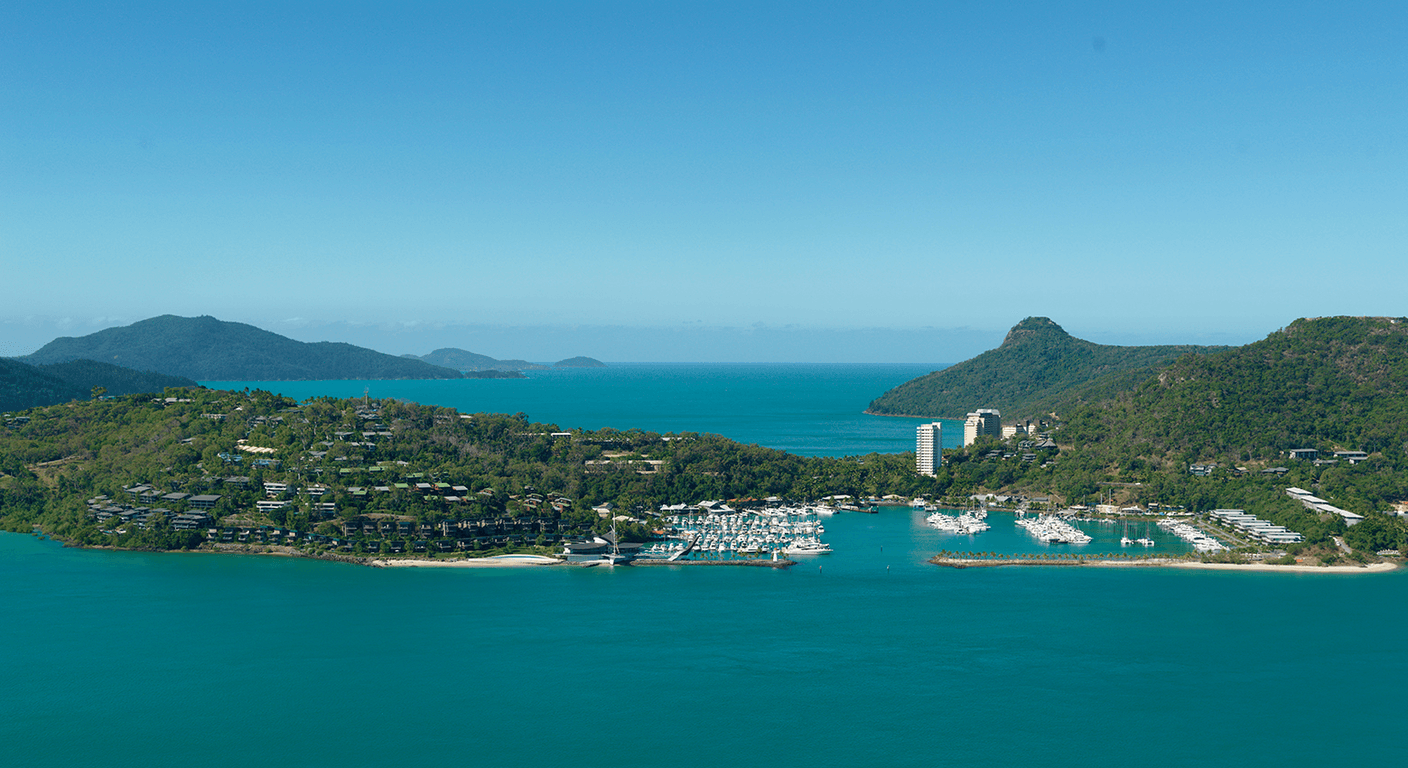
Hamilton Island is not a wilderness escape. It's a well-run, privately managed resort island with a commercial marina, a proper airport, a main street of cafes and bottle shops, and accommodation ranging from budget hotel rooms to some of the most sought-after private villas in Queensland. That's neither a criticism nor a boast — it's simply useful to know before you arrive expecting untouched tropics.
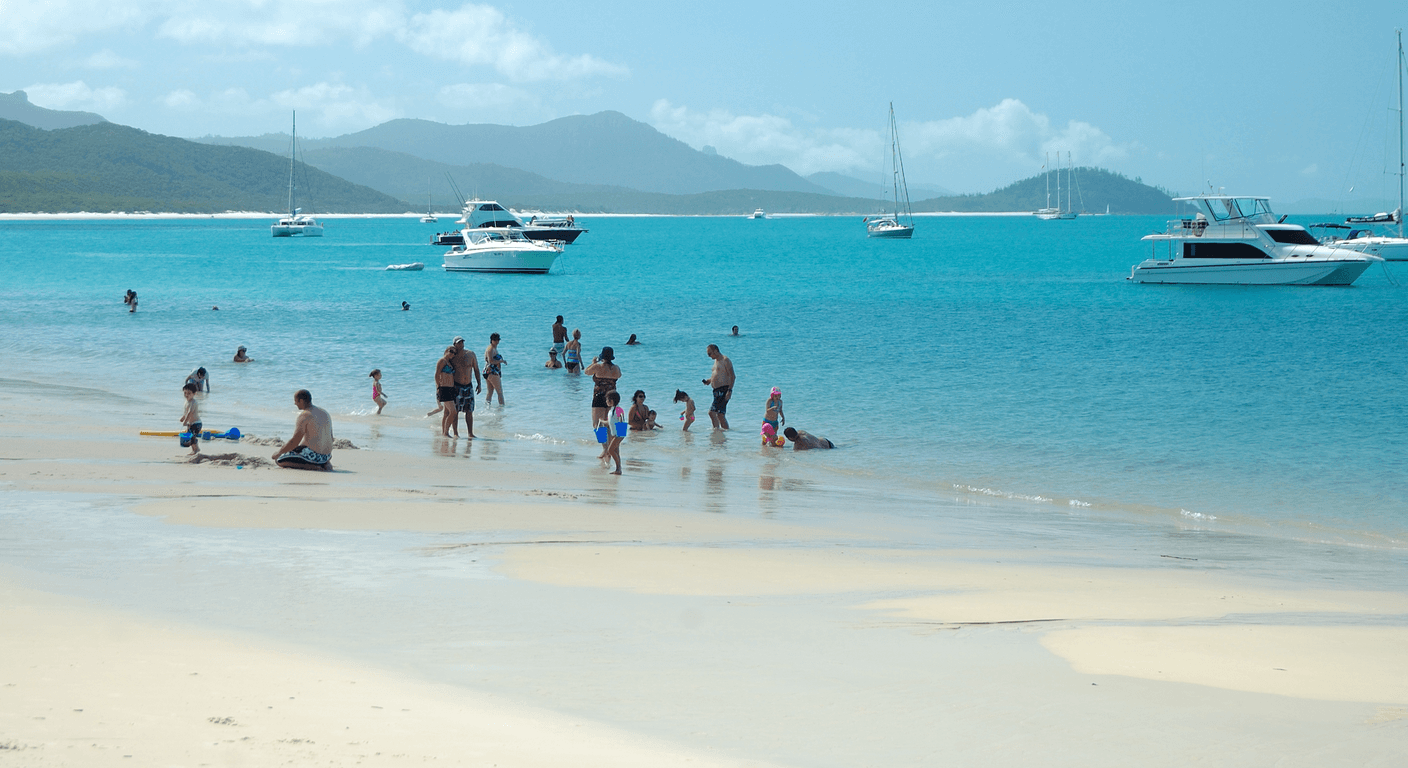
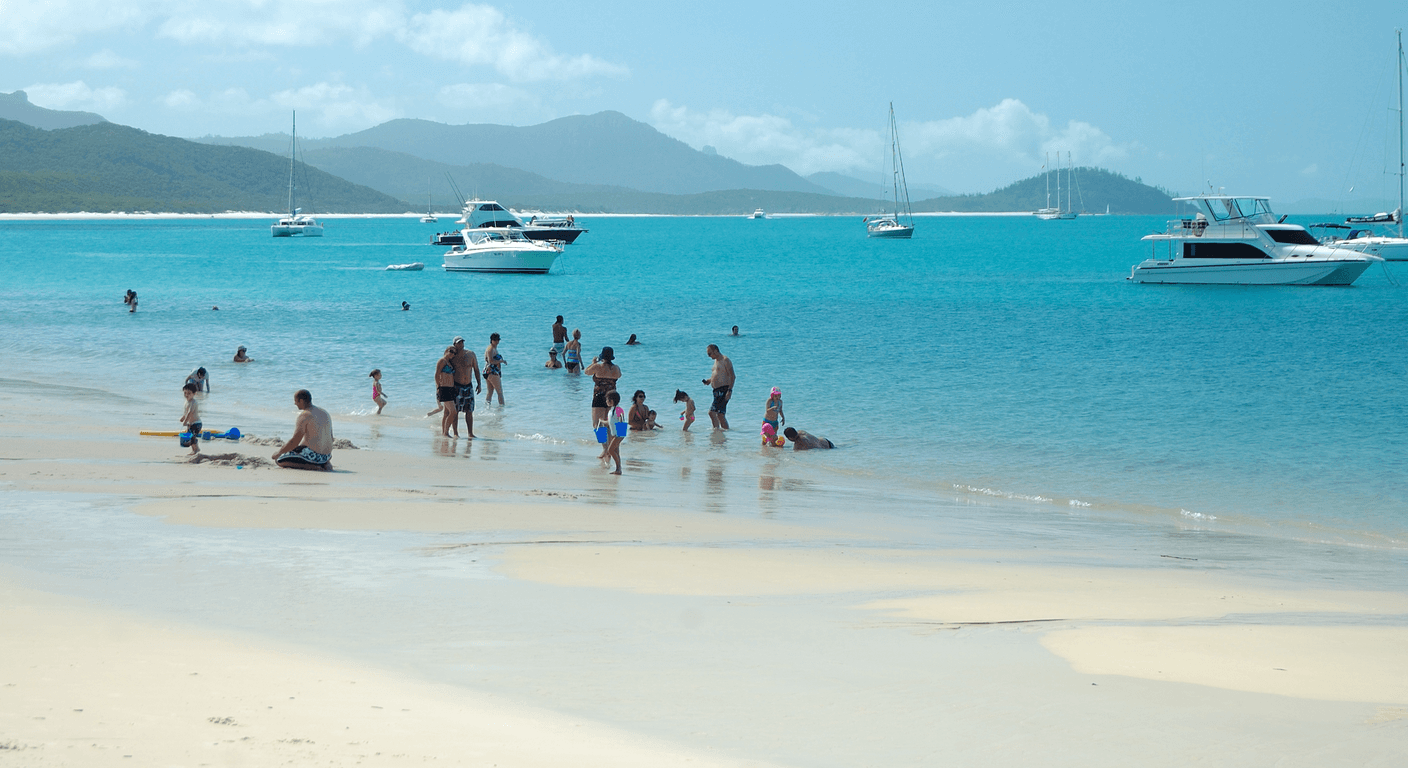
What it does deliver, genuinely, is proximity. The Whitsunday Islands and the outer Great Barrier Reef are right there. Catseye Beach — the island's main swimming beach — is sheltered, calm and free of the dangerous marine stingers that make Queensland coastal swimming fraught between November and May. And the car-free roads, while hilly, create a particular kind of quiet that larger resort destinations rarely manage.
For travellers in their 50s, 60s and 70s, the island rewards a certain approach: slow mornings, one or two organised excursions, good food and early evenings. Push it harder than that and the heat, the hills and the prices start to feel like obstacles rather than minor inconveniences.
Getting there — fly direct or ferry from Airlie Beach?
Hamilton Island has its own commercial airport, which is one of its most practical advantages. Direct flights operate from Sydney, Melbourne and Brisbane with Qantas and Jetstar; flight times run roughly two to two-and-a-half hours from the southern capitals. Luggage transfers smoothly to accommodation, and you're on the island within minutes of landing. For travellers who prefer to minimise transit complexity — particularly those with joint replacements, fatigue considerations or simply a preference for directness — flying in is the clear choice.
The alternative is flying into Proserpine (Whitsunday Coast Airport) or Mackay, then connecting by road transfer to Airlie Beach and boarding a Cruise Whitsundays ferry across to the island. The journey takes considerably longer in total, but Airlie Beach itself is worth a night if you'd like to ease into the Whitsundays gradually. The ferry crossing takes roughly one hour and the views across the archipelago are genuinely lovely — though the vessel is a fast catamaran, and anyone prone to seasickness should choose a calm-weather day or take precautions.
Whichever route you choose, confirm current schedules directly with the operators. Timetables shift seasonally, and the 2026 dry season has seen schedule changes across multiple carriers. Booking transfers in advance, particularly if you have mobility considerations, avoids the kind of stress that no view is worth.
The buggy question — and the hills nobody warns you about
Golf buggies are the island's primary private transport, and hiring one is how most visitors spend their days. They're easy to drive, they hold two people comfortably with luggage, and they open up the quieter roads on the island's eastern and upper reaches that you'd never reach on foot. Hire is available through Hamilton Island's own operations; rates run to roughly $80–$120 per day depending on season and buggy type, though you should confirm current pricing directly with the island before budgeting.
What the promotional photography tends not to show is that Hamilton Island is built on a hill — actually several hills — and some of the gradients are steep enough that walking them in tropical heat is genuinely tiring. The main resort precinct around Catseye Beach and Marina Village is relatively flat, but venture toward One Tree Hill lookout or some of the private villa roads and you'll understand why buggies exist. For travellers with knee or hip concerns, or anyone managing cardiovascular conditions, the buggy isn't a luxury — it's sensible planning.
The island also runs a free shuttle service on a loop circuit covering the main accommodation areas, the airport and Marina Village. It's reliable for core routes but doesn't cover everywhere, and timetables mean some waiting. Most couples who stay four nights or more find that hiring a buggy for at least two or three of those days makes the island feel considerably more manageable. The alternative — walking everywhere — is fine for fit travellers in the cooler morning hours, less appealing by midday.
Where to stay — from honest hotel rooms to serious luxury
Hamilton Island's accommodation is all managed under the one island brand, which simplifies booking but limits competition. At the accessible end of the range, the Hotel rooms in the Reef View Hotel offer standard resort-style comfort with good views — nothing that would embarrass a four-star mainland property, and practical for travellers who want a clean, comfortable base without paying villa prices. Indicative rates sit around $250–$450 per night in the shoulder season; peak dry-season weeks push higher. Confirm directly.
The Beach Club is the island's adults-only boutique property, positioned directly on Catseye Beach. It carries a higher price point — roughly $600–$900+ per night at indicative rates — but includes breakfast, a private pool and a quieter atmosphere that many over-50 travellers find worth the premium. The staff-to-guest ratio is noticeably better, and the beach access is immediate. It books well ahead for the April-to-October window.
At the top end, the private villas and Qualia — the island's standalone luxury retreat on its northern headland — operate at a different level entirely. Qualia is frequently cited among Australia's finest small resorts; rates reflect that, running to $1,500 and well beyond per night. It's genuinely beautiful, with exceptional food and an adults-only policy. Whether it represents value depends entirely on what you're celebrating and how you feel about spending that amount on accommodation. No judgement either way — but go in clear-eyed about the cost.
Catseye Beach and the reef — what's actually worth doing
Catseye Beach is the island's practical heart. It's a genuine swimming beach — protected, calm, with clear water and a gently sloping sandy floor — and it's where most guests spend their mornings. Sun loungers are available, water sports hire operates from the beach, and the Beach Club's pool is visible from the sand. For travellers who simply want to sit beside warm, clear water without the logistics of a boat trip, Catseye delivers that without complication.
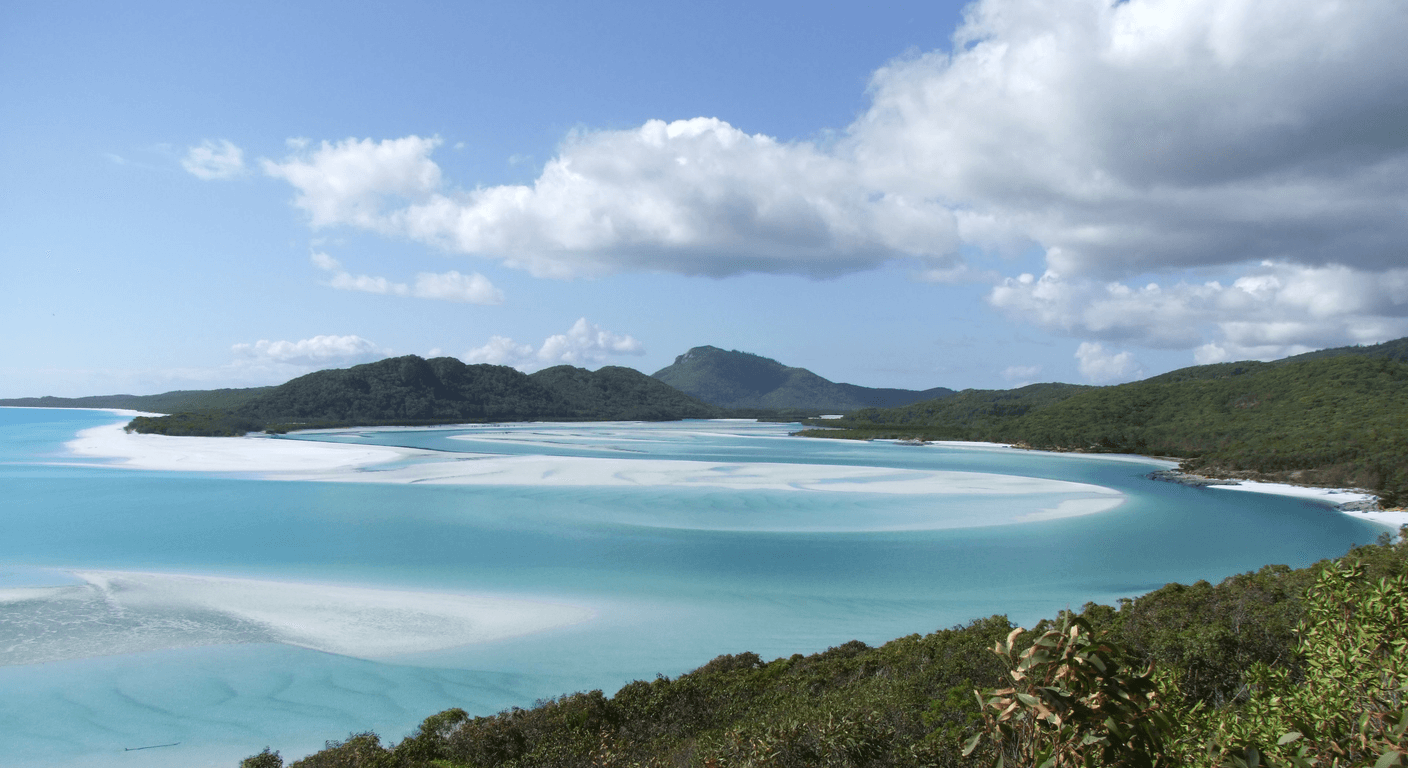
For reef access, Cruise Whitsundays and other operators run day trips to the outer reef and to Whitehaven Beach, widely considered among the finest silica-sand beaches in Australia. The Whitehaven trip involves a boat transfer and some walking on uneven sand — it's manageable for most, though the fine white silica does get into everything, and the walking track to Hill Inlet lookout involves a moderate climb. Worth confirming with the operator what the physical requirements are before booking.
Snorkelling directly off Catseye is possible but modest — the reef life improves considerably on the day trips. Several operators also offer semi-submersible or glass-bottom boat options for those who'd prefer to see coral without getting wet, which is worth knowing if swimming in open water isn't comfortable. The island's dive school caters to beginners, including older first-timers — introductory dives in calm, sheltered conditions are a different proposition from ocean diving.
What does it actually cost to eat and drink on Hamilton Island?
Everything on Hamilton Island arrives by barge. That simple fact explains the restaurant pricing, which runs noticeably higher than comparable mainland dining. A main course at a mid-range island restaurant typically sits around $35–$55; at the finer venues, considerably more. Breakfast at a resort café — the kind with eggs, toast and decent coffee — will rarely come in under $25 per person. This isn't gouging; it's logistics. But it's worth factoring into your budget before you arrive.
The Marina Village has a small supermarket where self-catering basics can be sourced, which helps if your accommodation has kitchen facilities. Some villa guests manage their own breakfasts and lunches and reserve the restaurants for dinner only — a sensible approach that reduces daily spend without sacrificing the evening experience. The island's bottle shop means you're not entirely at the mercy of resort bar prices for a sundowner.
For a couple staying five nights — mid-range accommodation, a buggy for three days, breakfasts at the café, a mix of restaurant dinners and one self-catered evening, two reef day trips — a realistic indicative budget sits somewhere between $4,500 and $7,000 all up, before flights. That's a wide range because accommodation choice drives it dramatically. Go in with a number in mind and a clear sense of where you're willing to spend and where you're not. The island rewards those who plan for it.
When to go — and why the shoulder season deserves more attention
The Whitsundays sit in a tropical climate zone, which means the year divides fairly cleanly into a dry season (roughly April to October) and a wet season (November to March). The dry season brings lower humidity, calmer seas, reliable sunshine and cooler evenings — and consequently, higher room rates and more visitors. April to June and September to October offer the dry season's conditions with marginally less pressure on availability and, sometimes, marginally better pricing. These shoulder months are worth targeting.
July and August are peak school holiday months and the island fills. If you're travelling as a couple or solo and prefer a quieter atmosphere, those months are best avoided unless you're booking well in advance and are comfortable with the premium. The Christmas-to-January period brings the wet season — afternoon thunderstorms, higher humidity, stinger risk in the water and rougher sea crossings — and is generally not recommended for first-time visitors to the region.
One practical note for travellers from Victoria and South Australia: the seasonal reversal is real. Leaving a Melbourne winter for the Whitsundays in July is a genuine pleasure — warm days, cool evenings, perfect reef conditions. The contrast alone makes the trip feel more significant. Pack light layers for evenings regardless of the month; the island cools down once the sun drops, especially in May and June.
Quick planning guide
| Ideal pace | Slow mornings with one or two organised excursions a day |
|---|---|
| Best months | April–June and September–October (dry-season shoulder months) |
| Suggested stay | 4–5 nights |
| Mobility level | Moderate — car-free but genuinely hilly; buggy hire recommended for knee, hip or fatigue concerns |
| Cost level | Premium — everything arrives by barge, so dining and accommodation cost more than mainland equivalents |
| Comfort level | Resort-standard throughout, ranging from simple hotel rooms to high-end adults-only properties |
| Best for | Couples wanting easy reef access combined with resort comfort |
| Main planning consideration | Book flights, ferry transfers and a golf buggy in advance, particularly if mobility is a factor |
Key takeaways
- Hamilton Island is car-free but genuinely hilly — a hired golf buggy at around $80–$120 per day is practical planning, not indulgence.
- Flying direct into Hamilton Island Airport from Melbourne, Sydney or Brisbane is the simplest option; the ferry from Airlie Beach adds time but suits those who want to explore the mainland coast too.
- Catseye Beach is sheltered and swimmable year-round, with stinger risk largely avoided from April to October.
- Everything from meals to sunscreen arrives by barge, so restaurant and shop prices run noticeably higher than mainland equivalents — budget accordingly.
- April to June and September to October offer dry-season conditions with fewer crowds than the July–August peak.
- Accommodation spans modest hotel rooms (roughly $250–$450/night indicative) to Qualia's luxury at the top of the market — the choice drives your total budget more than anything else.
Recommended partners and links
Indicative prices only — always confirm with the operator before booking.
Frequently asked questions
Is Hamilton Island suitable for travellers with limited mobility?
Hamilton Island is manageable for many travellers with limited mobility, but it requires honest planning. The island is hilly and some paths involve gradients. Golf buggies — available for hire — significantly reduce the physical effort of getting around, and the free shuttle covers main areas. Catseye Beach has a gently sloping sandy entry. Anyone using a walking frame, wheelchair or scooter should contact Hamilton Island's accommodation team directly before booking to confirm which areas and rooms are accessible.
Can you swim at Hamilton Island without worrying about stingers?
Catseye Beach is the island's main swimming beach and is generally considered safe for swimming from April to October, outside the main stinger season. Between November and May, marine stingers including box jellyfish and Irukandji are a real risk in Queensland waters. Stinger suits are available for hire if you visit during this period, but most over-50 travellers find the dry season far more comfortable for water activities. Always check current conditions with the island's beach team on arrival.
How long should you spend on Hamilton Island?
Four to six nights is the sweet spot for most over-50 travellers. Two nights feels rushed once you factor in a travel day and settling in; a week or more suits those combining reef day trips with genuine rest. The island is small enough that you'll cover its main areas within the first two days, so the remaining nights are for slowing down, repeating what you enjoyed and genuinely unwinding — which is, arguably, the point.
What's the cheapest way to reach Hamilton Island from Melbourne?
Jetstar operates direct flights from Melbourne to Hamilton Island Airport, and these are typically the most affordable option. Fares vary considerably by season and booking window; checking both Jetstar and Qantas directly and comparing with flight aggregators gives the clearest picture. Flying via Proserpine and ferrying across to the island can occasionally be cheaper but adds significant travel time and complexity — worth calculating only if the fare saving is substantial.
Is Hamilton Island worth the cost for a couple?
That depends on what you value. Hamilton Island is objectively expensive — accommodation, food, activities and transport all carry island premiums. What it offers in return is genuine ease: one location, no driving, excellent reef and beach access, and a level of hospitality infrastructure that's hard to match in the Whitsundays. Couples who appreciate comfort, don't want to organise multiple destinations and are happy to pay for simplicity tend to find it worthwhile. Those expecting value-for-money by mainland standards will likely be frustrated.