The Whitsundays and Hamilton Island suit over-50 couples best from May to October, when humidity drops and seas calm. A 5–7 night stay gives time for Whitehaven Beach, Heart Reef scenic flight, Catseye Beach snorkelling and proper rest days. Mobility rating: Moderate — golf buggies handle most of the island, but Whitehaven involves soft-sand walking. Direct flights from Sydney, Melbourne and Brisbane reach Hamilton Island Airport; Perth travellers connect through one of those cities, adding a full travel day.
Getting there: flight reality from your city
Hamilton Island Airport is a proper jet airport — not a prop-plane strip — and that matters. Qantas and Virgin Australia both operate seasonal direct services from Sydney (roughly 2 hours 20 minutes), Melbourne (roughly 2 hours 50 minutes) and Brisbane (roughly 1 hour 20 minutes). Direct is the word to confirm when booking, because both airlines also sell connections through other Queensland ports that add time and a luggage transfer. Check the flight number carefully.
From Perth, the honest answer is a full travel day. There are no direct services. You'll connect through Brisbane or Sydney, and with airport transit time that's a realistic 8–10 hours door-to-airport-arrival. Perth-based travellers should build in an overnight in Brisbane or Sydney on arrival — or book the earliest connecting flight and accept you'll arrive on Hamilton Island in the late afternoon. Trying to squeeze a Whitehaven cruise into day one after a Perth connection is a recipe for exhaustion.
Once you land at Hamilton Island Airport, the island's own ferry or resort transfer takes you to your accommodation — this is handled, not self-managed, and takes around 15–20 minutes. Your resort will confirm the transfer arrangement at booking. There's no hired car on the island; golf buggies are rented from the resort and cost around $80–$110 per day — confirm current hire rates. For couples, a buggy for the week is one of the best decisions you'll make.
Where to stay: reading the room (and the room type)
Hamilton Island Resort operates the overwhelming majority of accommodation on the island, which means you're largely booking through one operator. That's not a complaint — the range is genuinely wide, from Reef View Hotel rooms (solid, comfortable, sea-facing from around $350/night) through to the Beach Club adults-only property (quieter, more polished, from around $500/night) and the private bures and villas that push well past $800. For a week, the Beach Club makes sense for couples who want calm — it's adults-only, the pool is less chaotic, and breakfast is included in most packages.
Ask specifically about room position when booking. A Reef View Hotel room facing the Coral Sea gives you sunrise from bed and the reef in the distance. A room facing the resort's internal areas gives you considerably less. This is not a minor distinction after a week. The operator's reservations team will tell you what's available — it's worth a phone call rather than a click.
Solo travellers booking Hamilton Island packages should know that single-supplement pricing is real and steep here. Most resort packages are priced per room for two people; booking the same room solo typically adds 50–100 per cent to the per-person cost, or you pay the full room rate alone. There's no formal share-match programme through the resort. Solo travellers are better off booking a standard room rate independently rather than a couples package, and comparing the net cost honestly. The resort's solo pricing isn't punitive by intention — it's just a double room with one person in it — but the maths is worth doing before you commit.
Whitehaven Beach: what it's actually like to get there and back
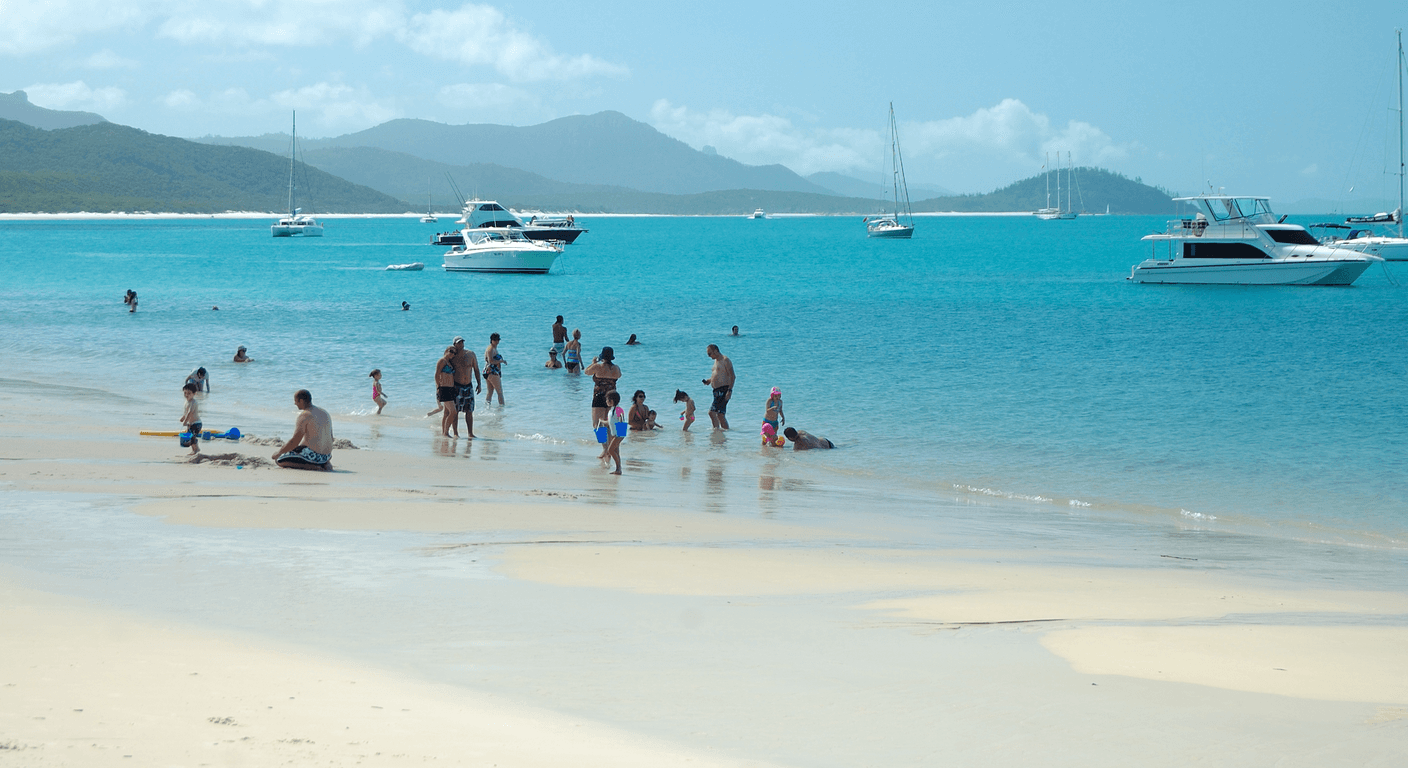
Whitehaven Beach is the image that sells the Whitsundays — 7 kilometres of silica-white sand on Whitsunday Island, reachable only by boat or seaplane. The day cruise from Hamilton Island with Cruise Whitsundays takes around 45 minutes each way on a large, stable catamaran. The crossing can be choppy between June and August when south-easterlies run; if you're prone to seasickness, take something before you board rather than hoping for flat water.
The access reality: the boat doesn't pull up to a jetty at Whitehaven. You transfer by tender — a smaller inflatable or aluminium dinghy — from the catamaran to the beach. This involves stepping down into the tender, a short ride, and then stepping out into ankle-to-knee-deep water or onto soft sand. It's manageable for most people, but if you have significant balance issues, bad knees or difficulty stepping over the side of a boat, it's worth flagging with the operator before you book. They're experienced with this and will tell you honestly whether it's feasible.
Once on the beach, there's no shade structure, no seating, no facilities beyond a basic composting toilet. The sand is deep and soft — beautiful to look at, harder to walk on than a packed beach. Wear beach shoes rather than thongs, bring a hat and SPF50, and don't underestimate the midday heat even in the dry season. The cruise typically allows 2–3 hours on the beach. If you'd rather see Whitehaven from above without the tender transfer, a scenic seaplane or helicopter flight over Hill Inlet — where the tidal sandbars create those swirling blue-and-white patterns — gives you the visual without the walk. It costs more (seaplane flights from around $450–$600pp — confirm with operators), but it's a legitimate alternative, not a lesser option.
Heart Reef scenic flight: small aircraft, big picture
The Heart Reef scenic flight is one of those experiences that sounds gimmicky and turns out not to be. The reef's naturally heart-shaped coral formation is about 75 kilometres from Hamilton Island, visible only from the air, and operators like GSL Aviation run dedicated scenic flights from Hamilton Island Airport in small fixed-wing aircraft or helicopters. Flights run from around $350–$500pp for a fixed-wing scenic, more for a helicopter — confirm current pricing directly with the operator.
The aircraft are small. A typical fixed-wing scenic seats 4–6 passengers, and the boarding involves a step up into a low-slung cabin. If you have difficulty bending at the hip or knee, or if enclosed spaces cause anxiety, this is worth thinking through before booking. The flight itself is not long — typically 45–60 minutes in the air — and the views are extraordinary on a clear day. Motion sickness can be an issue in turbulence at low altitude over reef; the same advice applies as for the boat crossing.
A helicopter alternative covers the same visual territory and is easier to board for some people — the door is wider and the step is different. It costs more (from around $550–$700pp for a comparable flight — confirm with operators), but for anyone who finds the fixed-wing step or seating difficult, it's worth the price difference. Both options are weather-dependent; operators will reschedule for cloud cover because there's simply no point flying over the Heart Reef if you can't see it.
What a day on Hamilton Island actually looks like (hour by hour)
Take a Whitehaven Beach day cruise as the template. The Cruise Whitsundays departure from Hamilton Island's marina is typically around 8:00–8:30am — confirm the exact time at booking, as it shifts by season and tidal window. You're aboard by 8:15, moving by 8:30. The crossing to Whitehaven takes 40–50 minutes; there's a toilet aboard (important to note, and yes, it's a boat toilet — functional but not spacious). Most cruises stop at Hill Inlet lookout first, which involves a 20–25 minute walk up a well-formed but moderately inclined path through bush. The view of the swirling sandbars from the top is worth it. If the incline is a concern, you can wait at the bottom — the boats anchor and there's no pressure to climb. There's a basic shelter and seating at the base.
Beach time at Whitehaven is typically 11:00am to 1:30pm. Lunch is served aboard on the return leg — a light buffet or packed lunch depending on the operator and package. You're back at the marina by around 3:00–3:30pm. That leaves the afternoon genuinely free. Most couples find that's enough: back to the resort, a swim at Catseye Beach (a five-minute buggy ride), and dinner at one of the island's restaurants by 7:00pm. The day is full but not frantic.
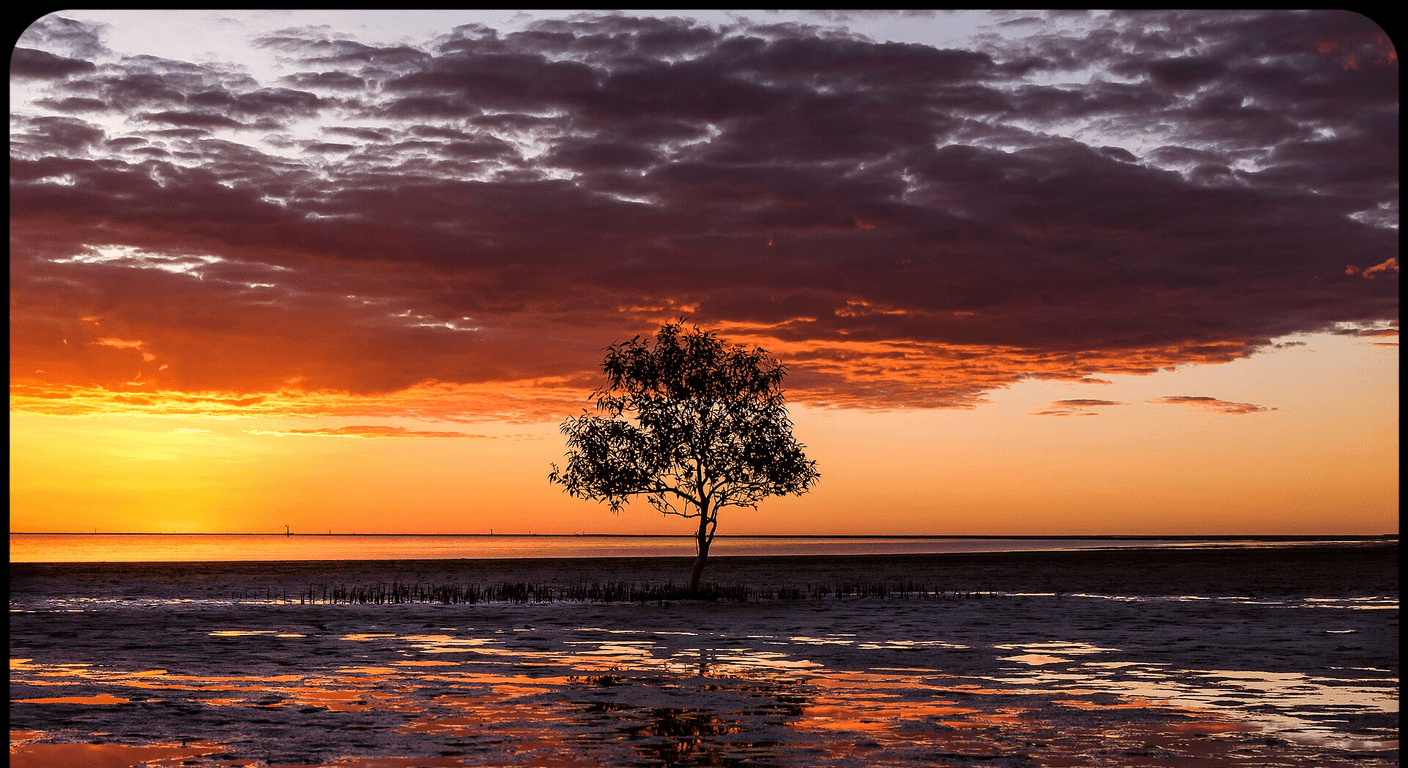
A rest day looks like this: breakfast at the Beach Club or the hotel, a slow morning at Catseye Beach, a glass-bottom boat or semi-submersible reef viewing trip in the late morning (roughly 90 minutes, fully seated, no swimming required — from around $80–$120pp, confirm with Cruise Whitsundays), lunch at one of the marina restaurants, afternoon nap, sunset from the resort pool or One Tree Hill. One Tree Hill is the island's signature sunset spot — it involves a moderate uphill buggy drive and then a 10–15 minute walk on an uneven path. It's doable, but if that sounds like too much effort at the end of a day, the resort pool deck and the marina foreshore both face west and give you the same sunset colours without the path. That's not settling; that's just choosing comfort with good information.
Snorkelling, swimming and the gentler reef options
Catseye Beach — the main beach directly in front of the resort — is the easiest reef-adjacent swimming on the island. The water is calm, clear and patrolled; stinger suits are available seasonally (the Whitsundays sit inside the marine stinger zone from October to May, so if you're visiting in the dry season from June to September, the risk drops significantly but never entirely disappears — confirm the current stinger advisory with the resort). Snorkelling from the beach is possible for confident swimmers; the coral isn't as dramatic as an outer reef site, but the fish life is real and the entry is gentle.
For anyone with joint issues, breathing conditions or simply a preference for staying dry, the semi-submersible or glass-bottom boat tours run by Cruise Whitsundays let you see reef life from a seated, air-conditioned cabin with large underwater viewing windows. This is not a compromise — the visibility on a good day is excellent, and you're sitting down for the entire experience. It's also a sensible option if the water temperature on a winter morning feels uninviting.
The Hamilton Island Wildlife Park is worth an easy morning — it's low-exertion, shaded and genuinely pleasant. Koala encounters are the draw (from around $25–$35pp entry; koala photo experiences are separately ticketed — confirm current pricing at the park). The walk through the park is flat and takes about an hour at a comfortable pace. For couples who want a morning that doesn't involve boats, reef or sun exposure, this is a good call.
Medical access, insurance and the practical reassurances
Hamilton Island has a medical centre on the island — the Hamilton Island Medical Centre operates with a GP and nursing staff. It's not a hospital, but for routine needs, minor injuries, medication scripts and the kind of thing that happens when you're away from home, it's there. The nearest hospital with full facilities is in Mackay, about 145 kilometres away by air or sea. If you have a complex cardiac or respiratory condition, it's worth discussing the destination with your GP before booking rather than after.
Travel insurance with pre-existing condition cover is not optional here — it's the difference between a manageable incident and a financial disaster. Policies vary enormously in what they cover and at what premium loading. Get several quotes, read the pre-existing condition definitions carefully, and confirm in writing that your specific conditions are covered before paying. The government's Smartraveller website (smartraveller.gov.au) has guidance on domestic travel insurance considerations; for the reef specifically, confirm whether your policy covers water-based activities and light aircraft scenic flights, as some policies exclude these.
A pharmacy operates on the island through the medical centre — for regular prescriptions, bring enough supply for your trip plus a few days' buffer. The island is not a place to discover you've run out of a daily medication. Bring a printed medication list (generic names, not just brand names) and your most recent scripts. If you use a CPAP machine, the resort can arrange power access; confirm this at booking and bring your own adaptor and distilled water supply. These are not dramatic concerns — they're the kind of logistics that, sorted in advance, make the holiday relaxed rather than anxious.
Quick planning guide
| Ideal pace | 5–7 nights, with at least one full rest day built in between excursions |
|---|---|
| Best months | May to October (dry season, lower humidity, calmer Coral Sea) |
| Suggested stay | 6 nights as the sweet spot — long enough to do Whitehaven, Heart Reef and still linger |
| Mobility level | Moderate — golf buggies cover the island well; some excursions involve soft sand, boat tenders or light aircraft boarding |
| Cost level | From around $350–$600/night for a resort room, plus $350–$500pp for key excursions; budget $5,000–$9,000 for two for a comfortable week |
| Comfort level | High — Hamilton Island Resort infrastructure is well-maintained; tender transfers and sand walking are the main comfort variables |
| Best for | Over-50 couples wanting reef and island beauty without a backpacker pace; also works for solo travellers prepared for the single-supplement reality |
| Main planning consideration | Book scenic flight and Whitehaven cruise well ahead for preferred dates; confirm travel insurance covers pre-existing conditions before any reef or light-aircraft activity |
Key takeaways
- Direct flights to Hamilton Island Airport operate seasonally from Sydney, Melbourne and Brisbane; Perth travellers face a full connection day and should budget for it.
- Golf buggies are the primary transport on Hamilton Island and make the island genuinely accessible for most over-50 travellers — hire one for the week.
- Whitehaven Beach involves a tender transfer and soft-sand walking with no shade; a scenic flight over Hill Inlet is a legitimate and comfortable alternative.
- The Heart Reef scenic flight uses small aircraft — those with claustrophobia or hip or knee mobility limits should check boarding requirements with the operator before booking.
- Solo travellers face real single-supplement costs on Hamilton Island resort packages; booking a standard room rate independently and comparing the net cost is the smarter approach.
- Travel insurance covering pre-existing conditions and light aircraft activities is essential — confirm the specific inclusions in writing before you pay for the policy.
Recommended partners and links
Indicative prices only — always confirm with the operator before booking.
Frequently asked questions
Is Hamilton Island suitable for over-50 travellers with limited mobility?
Hamilton Island is well-suited to travellers with moderate mobility. Golf buggies are the main transport and handle most of the island's terrain easily. The key activities to assess individually are Whitehaven Beach (tender transfer and soft-sand walking), the Heart Reef scenic flight (small aircraft boarding) and the One Tree Hill sunset walk (uneven uphill path). Each has a seated or lower-exertion alternative, and operators are experienced with mobility questions — contact them directly before booking.
What is the best time of year to visit the Whitsundays for over-50 couples?
May to October is the dry season in the Whitsundays — lower humidity, calmer seas and reduced marine stinger risk compared to the wet season from November to April. June to August can bring south-easterly swells that make the boat crossing to Whitehaven Beach choppy. September and October offer settled conditions and are widely considered the most comfortable months for reef and beach activities.
How much does a week on Hamilton Island cost for two people?
A realistic budget for two people for six nights, including resort accommodation, key excursions and meals, sits between roughly $5,000 and $9,000 depending on room category and activity choices. Resort rooms start from around $350 per night; the Beach Club adults-only property from around $500 per night. A Whitehaven day cruise runs about $180–$250 per person, a Heart Reef scenic flight around $350–$500 per person, and buggy hire around $80–$110 per day. All prices are indicative — confirm current rates directly with each operator.
Is there a marine stinger risk at Hamilton Island?
The Whitsundays are within Queensland's marine stinger zone. Box jellyfish and Irukandji risk is highest from October to May (the wet season). During the dry season from June to September the risk drops significantly but is never entirely zero. Stinger suits are available at Catseye Beach seasonally, and the resort will advise on current conditions. For those with concerns, the glass-bottom boat and semi-submersible tours offer a fully out-of-water reef experience at any time of year.
Is there medical care available on Hamilton Island?
Hamilton Island has an on-island medical centre with GP and nursing staff, suitable for routine needs, medication scripts and minor injuries. The nearest full hospital is in Mackay, approximately 145 kilometres away. Travellers with complex medical conditions should discuss the destination with their GP before booking, carry printed medication lists with generic drug names, and ensure their travel insurance explicitly covers pre-existing conditions and any planned activities including water sports and light aircraft flights.
- Hamilton Island — Official Resort and Island Information
- Cruise Whitsundays — Day Cruises and Reef Tours
- GSL Aviation — Heart Reef Scenic Flights
- Tourism Whitsundays — Official Destination Guide
- Smartraveller — Australian Government Travel Advice and Insurance Guidance
- FlyingTheNest — Whitsundays and Hamilton Island Video Guide (YouTube)