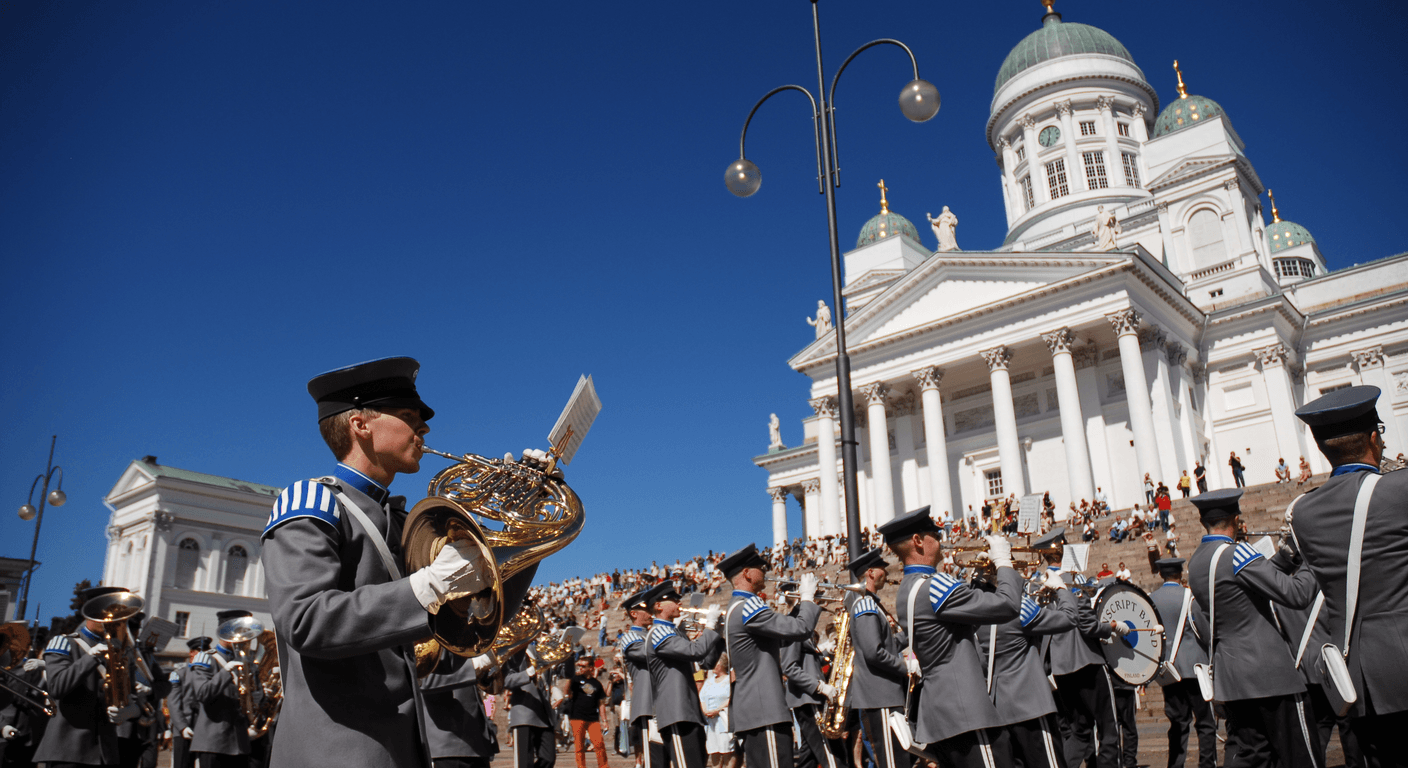
Helsinki rewards a two-to-three-day stay, with summer's long daylight making Suomenlinna ferries and sauna sessions easiest. The highlight combines the 18th-century island fortress, Design District craft culture and an authentic public sauna ritual. Mobility is moderate: streets are flat and tram-served, though uneven island paths and cobblestones call for sturdy shoes. Australians face a long journey, about 22 hours via an Asian or Gulf hub, landing at Helsinki Vantaa before a 30-minute train into the city.
Why Helsinki deserves more than a layover
There's a particular kind of traveller — and many Australians over 50 are exactly this — who arrives in a city, takes a breath, and actually looks at it. Helsinki suits that traveller well. The Finnish capital sits on a peninsula jutting into the Baltic, surrounded by islands, and the city itself is compact enough to cover meaningfully on foot and by tram. It doesn't dazzle you immediately. It grows on you, quietly and with some confidence.
For a solo traveller flying from Melbourne, the appeal is partly practical: Helsinki is genuinely safe, English is spoken almost universally, and the public transport system is so logical it becomes a minor pleasure to use. But the real draw is cultural. Finnish design — the clean lines, the respect for materials, the absence of fuss — turns out to be a useful lens for understanding the country itself. And the sauna, which Finns treat not as a luxury but as a social institution, offers an experience that doesn't translate to anywhere else.
Two full days is the honest minimum. Three is better. Treat the first day as a recovery day after the long flight from Australia, keep it gentle, and you'll find the city opens up properly from the second morning onwards.
Getting there from Australia: what the 22-hour routing actually looks like
There are no direct flights from Australia to Helsinki. From Melbourne, Sydney or Brisbane, the realistic routing runs roughly 22 hours in total, with one stopover through an Asian hub (Singapore, Bangkok, Kuala Lumpur, Doha or Dubai are the most common). Finnair operates its own services out of several Asian hubs; other carriers connect through Gulf cities. The flight from a Gulf hub to Helsinki Vantaa Airport runs around eight to nine hours — manageable but worth booking a seat with good legroom if that matters to you.
Jet lag on this route is significant. Helsinki sits nine to ten hours behind Australian eastern time in summer. Most travellers find the first 36 hours disorienting — either wired at midnight or asleep by five in the afternoon. The practical answer is to book your hotel for arrival night, plan nothing for that first evening, eat a light meal at local dinner time regardless of how you feel, and resist the temptation to nap past 3pm. A gentle walk along the South Harbour on arrival afternoon — flat, beautiful, low-stakes — is about the right level of activity.
Helsinki Vantaa Airport is around 30 minutes from the city centre by the I and P commuter trains (part of the HSL network), which run directly to Helsinki Central Station. A taxi or rideshare is straightforward but considerably more expensive — indicatively around AUD 45–60 one way, though confirm current fares. The train costs a fraction of that and is easy to navigate with luggage.
Entry, insurance and the Schengen practicalities
Finland is a Schengen Area member, and as of 2025, Australian passport holders can enter without a visa for short stays. However, the European Travel Information and Authorisation System (ETIAS) — a pre-travel authorisation — was still in a phased implementation process at the time of writing. Confirm exactly what's required for your travel dates on smartraveller.gov.au and the official Finnish Immigration Service site before booking anything. Rules can change, and the cost of checking takes five minutes.
Travel insurance deserves more attention on a trip like this than it sometimes gets. Finland's healthcare is excellent but private medical treatment is expensive for visitors. Any policy should clearly cover the pre-existing conditions that are simply part of life at 68 — whether that's blood pressure medication, a replaced hip, or managed diabetes. Read the policy document, not just the summary. The Australian Government's Smartraveller site has useful, current guidance on Finland travel advice and insurance considerations.
It's also worth registering your travel on Smartraveller before departing — a five-minute step that means the Department of Foreign Affairs and Trade can reach you in an emergency. Small effort, sensible habit.
Suomenlinna: the island fortress that earns a half-day
The ferry to Suomenlinna leaves from Market Square (Kauppatori) on the South Harbour, runs year-round, and takes around fifteen minutes. It's part of the regular HSL public transport network, so a day ticket covers the crossing in both directions. In summer the boats run every twenty minutes or so; in winter, less frequently. Confirm the current timetable at hsl.fi.
Suomenlinna is a UNESCO World Heritage Site — a sea fortress built by Sweden in the 1740s, later used by Russia, and now a living neighbourhood of around 800 residents alongside museums, walking paths, historic bastions and a submarine you can climb through. The terrain is uneven in places, with grassy slopes and stone pathways, but the main visitor routes are walkable at a comfortable pace. Allow two to three hours. There are cafes on the island, which matters on a cold day.
What makes Suomenlinna work as a half-day rather than a tick-box is the quality of the light over the Baltic in summer. Sitting on the old ramparts with a coffee and watching the container ships pass on the horizon — it's the kind of unhurried moment that justifies building a proper itinerary around Helsinki rather than treating it as an airport city.
The Design District: what Finnish design actually means on the ground
Helsinki's Design District covers around 25 city blocks southwest of the South Harbour — walkable, though the streets between Bulevardi and Fredrikinkatu are where the concentration of studios, galleries and shops is densest. The official Design District Helsinki site (designdistrict.fi) maps the current participants, which rotate. It's worth downloading before you go.
Finnish design is not decorative in the way Italian or French design can be. It tends to be functional, material-honest and often quietly beautiful — think Iittala glassware, Arabia ceramics, Marimekko textiles. The Design Museum on Korkeavuorenkatu (designmuseum.fi) provides useful context and is well worth an hour or two before you start browsing. The permanent collection traces Finnish design from the 19th century to the present; the temporary exhibitions are usually sharp.
For a traveller with an Italian-Australian background, the comparison is genuinely interesting. Where Italian design celebrates craft and emotion, Finnish design tends toward restraint and silence. Neither approach is superior; they're just very different philosophies about what objects are for. That contrast is, in itself, worth thinking about over lunch at one of the neighbourhood's many small cafes.
Finnish sauna culture: what to expect and how to approach it
The sauna is not a spa treatment in Finland. It's closer to what the Sunday meal is in an Italian-Australian household — a regular, social, restorative ritual with its own etiquette and considerable emotional weight. There are reportedly more saunas than cars in Finland, and public saunas in Helsinki are making a return after decades of decline. Löyly (loylyhelsinki.fi) on the Hernesaari waterfront and Allas Sea Pool (allasseapool.fi) near Market Square are the two most visitor-friendly options, both with Baltic swimming access in summer.
The Finnish sauna custom is traditionally nude — gender-separated sessions, no swimwear. For visitors who find that uncomfortable, it's worth asking directly when booking whether swimsuit-friendly sessions are available. Löyly, for instance, has had mixed-gender sessions where swimwear is permitted, but confirm the current schedule before you go. The etiquette inside the sauna is simple: be quiet, pour water on the stones (kiuas) gently, and don't rush. The heat, the steam, the cold plunge, the sitting quietly afterwards — it's a sequence, not just a hot room.
For older travellers, a few sensible notes. If you have cardiovascular conditions, consult your doctor before using a sauna — the temperature and cold contrast are significant stressors on the body. Stay well hydrated. Sit on the lower bench if the heat feels intense — it's genuinely cooler lower down. None of this is complicated, and the experience, done at your own pace, is one of the more memorable things Helsinki offers.
Practical Helsinki: moving around, eating well and pacing yourself
Helsinki's tram network is the easiest way to move around the central city. Trams run frequently, stops are clearly marked, and the HSL app (available in English) shows real-time departures. A day ticket covers trams, buses, metro and the Suomenlinna ferry — good value if you're moving around. The city centre is also very walkable on flat ground; the Design District and the South Harbour area are both gentle on the legs. The main caution is the cobblestones around Senate Square and the Market — wear shoes with grip and ankle support.
Finnish food has moved well past the clichés. Helsinki has a genuine restaurant culture now, with a focus on Nordic ingredients — reindeer, Arctic char, cloudberries, rye. The covered Market Hall (Vanha Kauppahalli) on the South Harbour is a good first stop for grazing — smoked fish, local cheeses, open rye sandwiches. For a proper dinner, the neighbourhood around Punavuori in the Design District has a range of mid-range restaurants that won't require a reservation made three weeks in advance. Indicative dinner cost at a mid-range restaurant: around AUD 50–80 per person including a glass of wine — Finland is not cheap, and alcohol particularly so.
A word on the light. In June and July, Helsinki barely gets dark — the sky stays a pale grey-blue through midnight, which is genuinely disorienting for the first night or two. Pack an eye mask and don't assume your body will naturally wind down at 10pm when it looks like 5 o'clock outside. By the third night, most travellers have adjusted. In December, the reverse applies — dark by three in the afternoon, which has its own atmospheric quality but requires leaning into warmth and candlelight rather than fighting it.
Quick planning guide
| Ideal pace | Slow and unhurried, with a built-in recovery day on arrival |
|---|---|
| Best months | Summer (June–August) for long daylight, frequent Suomenlinna ferries and Baltic sauna swimming; winter offers a quieter, darker alternative |
| Suggested stay | Two to three days minimum |
| Mobility level | Moderate — flat, tram-served city centre, but uneven island paths and cobblestones require sturdy shoes |
| Cost level | Premium — Finland is expensive by Australian standards |
| Comfort level | High — safe, English widely spoken, logical public transport |
| Best for | Unhurried travellers drawn to design, culture and an authentic sauna experience |
| Main planning consideration | Allowing for a 22-hour flight with recovery time, and confirming current Schengen/ETIAS entry requirements before booking |
Key takeaways
- Helsinki is a genuine two-to-three-day destination, not a stopover — Suomenlinna, the Design District and public sauna culture each warrant their own half-day.
- Australians fly roughly 22 hours to Helsinki via an Asian or Gulf hub; building a recovery night into the first day is not optional, it's just good planning.
- The Suomenlinna ferry is part of Helsinki's public HSL transport network — a day ticket covers the crossing and is the most economical way to get there.
- Finnish public sauna etiquette is traditionally nude in gender-separated sessions; swimsuit-friendly sessions exist at some venues — confirm when booking.
- Finland is an expensive country by Australian standards; indicative mid-range accommodation runs around AUD 280–380 per night, and dinner with wine around AUD 50–80 per person.
- Check Schengen entry requirements and ETIAS authorisation status on smartraveller.gov.au before booking — rules were still evolving at time of publication.
Recommended partners and links
Indicative prices only — always confirm with the operator before booking.
Frequently asked questions
Do Australians need a visa to visit Finland?
Finland is part of the Schengen Area, and Australian passport holders can currently enter for short stays without a traditional visa. However, the European ETIAS pre-travel authorisation system was in phased implementation at the time of writing and may apply to your travel dates. Confirm current requirements on smartraveller.gov.au and the Finnish Immigration Service website before booking.
How long is the flight from Australia to Helsinki?
There are no direct flights from Australia to Helsinki. The total journey from Melbourne, Sydney or Brisbane runs roughly 22 hours with one stopover, typically through a Gulf hub (Dubai, Doha) or Asian hub (Singapore, Kuala Lumpur, Bangkok). The onward leg from the hub to Helsinki Vantaa Airport is around eight to nine hours.
Is Helsinki suitable for older travellers with mobility considerations?
Helsinki is rated Moderate for mobility. The city centre is compact and largely flat, public transport is excellent, and English is widely spoken. The main caution is cobblestones around Senate Square, the South Harbour market area and parts of the Design District — sturdy shoes with grip are strongly recommended. The Suomenlinna ferry is easy to board, though the island terrain is uneven in places.
What is the best time of year to visit Helsinki?
May to August offers the best conditions for most visitors — mild temperatures, very long daylight hours and an active outdoor culture. June and July bring near-continuous daylight, which is extraordinary but can disrupt sleep; pack an eye mask. December is atmospheric with festive markets and snow, but days are very short. Avoid March and November, which tend to be grey and uninspiring.
Are Helsinki's public saunas appropriate for visitors who prefer not to go nude?
Traditional Finnish public sauna etiquette involves nudity in gender-separated sessions. Several Helsinki venues, including Löyly on the Hernesaari waterfront, have offered mixed-gender swimsuit-friendly sessions, but availability and scheduling change. Contact the venue directly when booking to confirm current options if swimwear is a preference.