The Hozugawa River boat ride runs roughly 16 kilometres from Kameoka to Arashiyama, taking around two hours on a traditional wooden vessel through a steep-sided river gorge. Best months are March–April (cherry blossom) and October–November (autumn colour). Tickets run around AUD 50–70 per person; confirm current rates with the operator. Mobility rating: Moderate — boarding requires stepping down into a low, open boat without handrails. Access from Australia involves a direct or one-stop flight to Osaka or Kyoto, then a short train journey to Kameoka.
What is the Hozugawa River boat ride, and why does it suit travellers over 50?
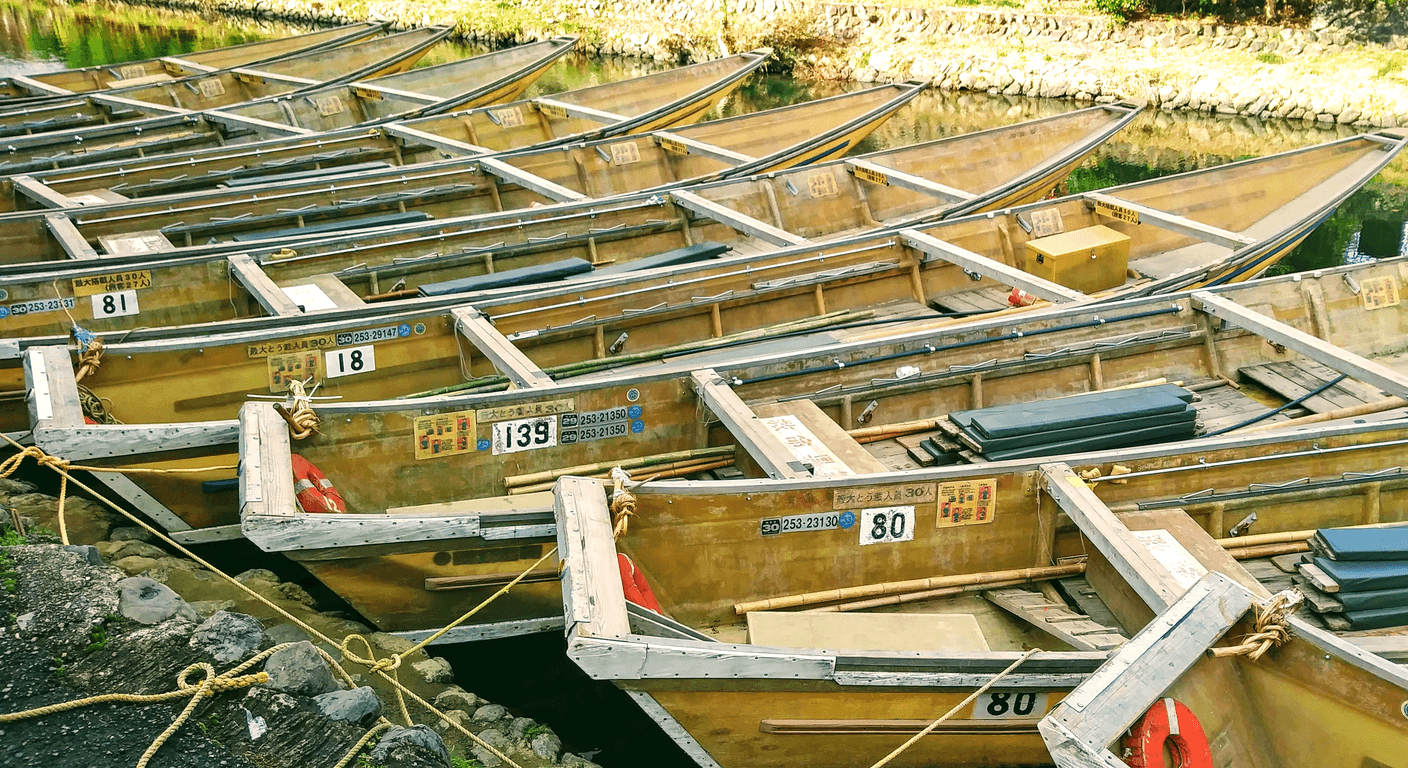
The Hozugawa River descends from the mountains behind Kameoka — a small city about 25 kilometres west of central Kyoto — through a gorge of folded granite, pine forest and seasonal colour, arriving at Arashiyama roughly two hours later. The boats are traditional flat-bottomed wooden vessels, each carrying around 20 passengers, and the boatmen navigate the rapids and shallows using long poles and oars. It's a working river ride, not a performance of one, and that distinction matters.
For a traveller who's done his share of crowded temple circuits and prefers something that moves at its own pace, this is a good fit. You're seated the entire time. The scenery changes every few minutes — a heron on a rock, a waterfall thread, a wall of maple or cherry depending on the season. There's no audio guide talking over the top of it. The boat carries enough passengers to feel lively without being overwhelming, and the boatmen often play to the crowd in a low-key way, cracking jokes or demonstrating a particularly tricky bit of navigation.
That said, it's worth being clear about what this isn't. It's not a luxury river cruise. The benches are low and firm. The boat is open to the elements — in spring it's glorious, in summer it's hot, in autumn it can be cool and occasionally wet. There are no on-board toilets. The gorge is genuinely wild in places, and the boat moves through actual small rapids. None of this is alarming, but it's worth knowing before you go.
Getting from Kyoto (or Melbourne) to Kameoka: what the journey actually looks like
From Melbourne, the most common routing is a direct Qantas or Japan Airlines flight to Tokyo, then the Shinkansen to Kyoto (around 2 hours 15 minutes), or a direct flight to Osaka Kansai and a 75-minute train to Kyoto. Either way, plan a full recovery day in Kyoto before attempting any early-morning excursions — jet lag at 73 is real, and a 15-hour eastbound flight followed by a dawn start is a recipe for a miserable morning on a cold river. From Sydney and Brisbane, Osaka is often the more convenient gateway.
From central Kyoto to Kameoka, the JR Sagano Line from Kyoto Station runs to Kameoka Station in around 25 minutes. The boat departure point — Kameoka Kameoka Kudari Noriba — is a short taxi ride or a manageable 15-minute walk from the station, though the path is not entirely flat. If mobility is a concern, the taxi is the sensible call (around 800–1,000 yen, roughly AUD 8–10; confirm current fares). The JR Sagano Line is covered by the Japan Rail Pass, which many Australian visitors purchase before departure — worth doing if you're spending more than a week in Japan. Confirm pass eligibility and current pricing at jrpass.com before travelling.
For the return, most travellers either walk from the Arashiyama boat landing into the Arashiyama precinct — Tenryu-ji, the bamboo grove, a late lunch — and then catch the train back to Kyoto from Arashiyama Station. Alternatively, the Sagano Scenic Railway (Torokko train) runs from Torokko Arashiyama back toward Kameoka through the same gorge you've just descended, which some travellers find a satisfying bookend. It's a separate ticket, around AUD 10–15 one-way; book in advance during peak seasons.
Boarding the boat: the honest mobility picture
This is the part most guides skip past, and it's the part that matters most for travellers with any knee, hip or balance considerations. Boarding involves stepping down from a wooden dock into a low, open boat that sits perhaps 40–50 centimetres below the dock level. The boat moves slightly with the current. There are no handrails on the boarding side. A boatman will typically offer a steadying hand, but it's a hand, not a harness.
Once seated, you're stable. The benches run along the sides and across the middle, and you can brace your feet on the floor. The boat does move through small rapids, and there will be moments of gentle rocking and spray. For someone with good balance and reasonable knee flexibility, none of this is a serious obstacle. For someone who's recently had a hip replacement, uses a walking stick, or has vertigo, it warrants a direct conversation with the operator before booking — contact Hozugawa Yusen via their official site at hozugawakudari.jp to ask about boarding assistance and any current accessibility provisions.
The operator also publishes weight and capacity guidelines; confirm these before travelling, particularly if you have any concerns. There are no on-board toilets, so use the facilities at the Kameoka departure point before boarding — there are toilets available there. The ride is approximately two hours with no stops.
What does the day actually look like? An honest hour-by-hour guide
Departures from Kameoka run at scheduled intervals throughout the day, typically from around 9:00am, with the last departure in the early afternoon (exact times vary by season and operator schedule — confirm current timetables on the official site before travelling). A practical plan for a Kyoto-based traveller: leave your hotel by 7:30am, take the JR Sagano Line from Kyoto Station (trains run frequently), arrive Kameoka Station around 8:00–8:15am, taxi or walk to the departure point, collect tickets, use the toilets, and board for the 9:00am departure. That gives you a comfortable buffer without an unreasonable start.
The boat ride itself runs approximately two hours, arriving at the Arashiyama landing around 11:00–11:15am. From there, it's a five-minute walk to the main Arashiyama precinct. The bamboo grove is immediately north of the Tenryu-ji garden entrance — it's a short, flat walk, though it can be crowded by mid-morning. If you're pacing carefully, consider Tenryu-ji's garden first (entry around AUD 5–8; confirm current fees) — it opens at 8:30am but you'll arrive after the first rush, and the garden has plenty of seating. The bamboo grove is free and takes 10–15 minutes to walk through.
Lunch in Arashiyama: the main street (Saga-Toriimoto area) has numerous restaurants and cafes, many with English menus. A two-course lunch with a drink runs roughly AUD 20–40 per person at a mid-range restaurant. By 1:30–2:00pm you can be at Arashiyama Station for the return to Kyoto — either JR or the private Hankyu line. Back at your hotel by 3:00pm, which leaves the afternoon free for a rest before dinner. That's a full but not punishing day.
Seasonal scenery: which time of year is worth the extra planning effort?
The gorge looks good year-round, but cherry blossom (late March to mid-April) and autumn colour (mid-November to early December) are genuinely in a different category. In cherry blossom season, the pale pink canopy over the dark water is the kind of thing that stops conversation. In autumn, the gorge walls turn deep red and orange in a way that even a sceptic would find hard to dismiss. Both periods are also the most crowded and the most expensive — accommodation in Kyoto during peak autumn and cherry blossom weeks can be two to three times the off-season rate.
If you'd rather avoid the crowds, late May and early June (before the summer heat and rainy season arrives) offer fresh green foliage and far fewer visitors. September can work too, though it's still warm and humid. Winter (December to February) is quiet, cold and occasionally overcast — the gorge has its own austere quality in grey light, and the boats still run, but dress accordingly and check the operator's schedule, as some departure times are reduced in winter.
Whatever the season, the yen-to-AUD exchange rate in 2026 continues to favour Australian travellers. Budget roughly AUD 150–200 per person per day for accommodation, food and transport in Kyoto at a comfortable standard — that's a rough guide only, and costs vary significantly by hotel tier and dining choices. Travel insurance that covers pre-existing conditions is non-negotiable for this trip; confirm your policy covers medical evacuation from Japan before you leave Australia.
Costs, booking and what to confirm before you travel
The boat ticket costs roughly AUD 50–70 per person at current exchange rates (indicative only — confirm current pricing at hozugawakudari.jp before booking). There is no single supplement on the boat itself; it's a per-person ticket regardless of whether you're travelling solo or as a couple. Solo travellers should note, however, that the wider Japan trip costs — particularly accommodation — will carry the usual solo penalty. Many Kyoto hotels charge a per-room rate rather than per-person, which means solo travellers effectively pay double. Budget-conscious solo travellers might consider guesthouses or smaller ryokan where per-person pricing is more common; Kyoto has excellent options in both categories.
Book boat tickets in advance online via the operator's official site, particularly for cherry blossom and autumn departures. The site has English-language booking options, though some travellers report the interface is easier to navigate on a desktop than a phone. If you encounter difficulties, JNTO Australia (japan.travel/en/au) can provide guidance on booking channels. Tickets are typically non-refundable or carry a cancellation fee — check the terms carefully before paying.
A few things to confirm with the operator before travelling: current departure times for your travel dates; any weight or mobility restrictions; whether boarding assistance is available; and whether the boats operate on the specific day you plan to visit (they do occasionally close for maintenance or extreme weather). Also check the Japan Meteorological Agency forecast for the Kameoka region in the week before your visit — heavy rain can make the gorge trip less pleasant and occasionally affects scheduling. Smartraveller.gov.au lists Japan as a destination requiring standard precautions; check the current advisory before departure.
A solo traveller's perspective and a couple's perspective
For a couple, this is a natural fit. You share the bench, point things out to each other, take each other's photos against the gorge walls, and split the cost of a ryokan dinner in Arashiyama afterward. The two-hour boat ride gives you something to talk about that isn't the itinerary. It's one of those days that tends to sit well in the memory — not because it was dramatic, but because it was unhurried.
For a solo traveller, the boat is sociable without being forced. You're seated close to other passengers, and the shared experience of the rapids tends to generate brief, easy conversation. That said, the logistics of getting to Kameoka alone, navigating a foreign train system with luggage considerations, and managing the boarding step without a travel partner to steady you — these are worth thinking through in advance. A solo traveller with any mobility concerns might consider joining an organised Kyoto day tour that includes the Hozugawa ride, where a guide handles logistics and boarding assistance is more reliably available. JNTO's website lists licensed tour operators offering English-language guided day trips from Kyoto that include this route.
Quick planning guide
| Ideal pace | Half-day excursion from Kyoto; pair with Arashiyama's bamboo grove or Tenryu-ji garden in the afternoon |
|---|---|
| Best months | March–April (cherry blossom) and October–November (autumn foliage); avoid July–August heat and humidity |
| Suggested stay | Base in Kyoto for at least four nights to do this comfortably without rushing |
| Mobility level | Moderate — low, open wooden boat, wet conditions underfoot, no handrails on boarding; deck seating is low benches |
| Cost level | Around AUD 50–70 per person for the boat; budget separately for the Sagano Scenic Railway return from Arashiyama to Kameoka if you use it |
| Comfort level | Comfortable once seated; the boat is open-sided, so dress for the weather and bring layers |
| Best for | Culturally curious couples, grey nomads with an interest in Japanese history and nature, travellers who prefer a seated experience over long walks |
| Main planning consideration | Book tickets well in advance for cherry blossom and autumn periods — these sell out weeks ahead. Confirm weight limits, boarding assistance and current schedules directly with the operator before travelling. |
Key takeaways
- The Hozugawa boat ride takes around two hours from Kameoka to Arashiyama and costs roughly AUD 50–70 per person — confirm current prices with the operator before booking.
- Boarding requires stepping down into a low, open wooden boat without handrails; travellers with knee, hip or balance concerns should contact the operator directly before travelling.
- Cherry blossom (late March–April) and autumn colour (mid-November) are the standout seasons, but both require advance booking and carry higher accommodation costs.
- There are no on-board toilets — use the facilities at the Kameoka departure point before boarding.
- The Japan Rail Pass covers the JR Sagano Line to Kameoka; confirm current pass pricing and eligibility at jrpass.com before departure.
- Solo travellers face the standard single supplement on Kyoto accommodation; per-person pricing at guesthouses and smaller ryokan can reduce this penalty significantly.
Recommended partners and links
Indicative prices only — always confirm with the operator before booking.
Frequently asked questions
How long does the Hozugawa River boat ride take?
The boat ride from Kameoka to Arashiyama takes approximately two hours. There are no stops along the way, and there are no on-board toilets, so plan accordingly before boarding.
How much does the Hozugawa boat ride cost in Australian dollars?
At current exchange rates, tickets cost roughly AUD 50–70 per person. This is an indicative figure only — confirm current pricing directly with the operator at hozugawakudari.jp before travelling.
Is the Hozugawa boat ride suitable for travellers with limited mobility?
The ride itself is seated and stable, but boarding requires stepping down into a low wooden boat without handrails, which can be challenging for travellers with knee, hip or balance issues. Contact the operator directly to ask about boarding assistance before booking.
When is the best time to do the Hozugawa River boat ride?
Late March to mid-April for cherry blossom, and mid-November to early December for autumn foliage, are the most scenic periods. Both are also the busiest and most expensive. Late May and early June offer good conditions with fewer crowds.
How do you get from Kyoto to the Hozugawa boat departure point?
Take the JR Sagano Line from Kyoto Station to Kameoka Station (around 25 minutes). From Kameoka Station, the departure point is a short taxi ride or roughly 15-minute walk. The JR leg is covered by the Japan Rail Pass; confirm current train schedules and taxi availability before travelling.