Norway's Hurtigruten sails 2,500 nautical miles from Bergen to Kirkenes, calling at 34 working ports large cruise ships cannot reach. Best visited late May to mid-July for midnight sun, or November to February for northern lights, with voyages typically running around 12 nights. The ship suits reduced mobility, with lifts and wide corridors, though some shore excursions involve uneven ground or cobblestones. Reaching Bergen from Australia requires at least one stopover and 24–30 hours flying, making a recovery night before boarding worthwhile.
What exactly is the Hurtigruten — and why does it suit travellers over 50?
The Hurtigruten is not a cruise ship in the conventional sense, and that distinction matters. Since 1893 it has operated as Norway's coastal express — a lifeline postal and passenger service connecting Bergen in the south to Kirkenes on the Russian border, stopping at 34 ports along the way. Locals board to commute. Cargo is loaded at midnight. The ship keeps moving whether or not a passenger is watching the scenery. That working reality is precisely what makes it interesting.
For travellers over 50, the appeal is structural as much as scenic. The vessels carry lifts between passenger decks, wide corridors, and the kind of unhurried sea-day rhythm that no touring itinerary can replicate. You are not expected to sprint between bus tours or queue for a buffet beside a thousand fellow passengers. The ships carry between 500 and 1,000 guests depending on the vessel — substantially smaller than the mega-ships that anchor in Flåm or Geiranger. Ports like Ålesund, Bodø, Hammerfest and Honningsvåg appear on the schedule not because they are photogenic (though several are) but because people actually live and work there.
The honest caveat: gangways at smaller ports can involve a short step or uneven quayside, and some shore excursions include cobblestone streets or stairways. The ship itself is manageable; Norway's smaller fishing villages are built for function, not tourism infrastructure. Anyone with significant mobility limitations should discuss specific ports and excursion options with Hurtigruten before booking.
Midnight sun or northern lights — which season is right for you?
This is the question that shapes everything else, and there is no universally correct answer. From late May to mid-July, the sun does not set above the Arctic Circle. Sailing past Tromsø or rounding the North Cape at 11pm in full golden light is a genuinely disorienting experience — the kind that stays with you. Summer also brings the warmest temperatures (roughly 10–18°C in the north), the calmest seas, and the most accessible shore excursions. The ship is busier, and fares are at their highest.
Winter — November through February — is a different proposition entirely. The northern lights are not guaranteed; they require clear skies and solar activity, and the Hurtigruten is honest about that. What is guaranteed is atmosphere: snow-covered peaks dropping into dark fjords, the blue half-light of the Arctic noon, and a ship that carries fewer passengers and a noticeably quieter pace. Temperatures can drop well below zero in Kirkenes, so layering properly is non-negotiable. For travellers from Melbourne or Sydney accustomed to a warm summer, the seasonal reversal adds to the sense of genuine departure.
Shoulder seasons — late August to September and March to April — offer a practical middle ground. The midnight sun has faded but the light is extraordinary; northern lights become possible from late August; and passenger numbers and fares ease. September in particular brings autumn colour to the lower fjords that rivals anything in Scandinavia's tourist brochures.
Getting there from Australia — the honest flight picture
There are no direct flights from Australia to Bergen. From Melbourne or Sydney, the most common routings connect through Dubai (with Emirates), Singapore (with Singapore Airlines or SAS), or a major European hub such as Amsterdam, Frankfurt or London before a connecting flight to Bergen Airport Flesland. Total travel time is typically 24–30 hours depending on connections and layover length. That is a long day — or two — in the air.
A recovery night in Bergen is not optional luxury; it is sensible planning. Bergen is a rewarding city in its own right, with the Bryggen Wharf (a UNESCO World Heritage site), the Fløibanen funicular offering panoramic views without a strenuous hike, and a compact centre that is walkable in comfortable shoes. Two nights before boarding gives the body time to adjust, allows for any delayed luggage to arrive, and lets you find the ship without the fog of long-haul fatigue.
Jet lag between Australia and Norway (a roughly 7–9 hour time difference depending on daylight saving) tends to affect sleep for four to seven days. Arriving a little early, staying well hydrated on the flight, and resisting the urge to nap through the Bergen afternoon on arrival all help. The ship's gentle rhythm — meals at regular hours, sea air, early darkness in winter or endless light in summer — tends to reset the body clock in its own time. Confirm current visa and entry requirements for Australian passport holders at smartraveller.gov.au before booking, as European entry conditions are subject to change.
Ports worth knowing — beyond the famous fjords
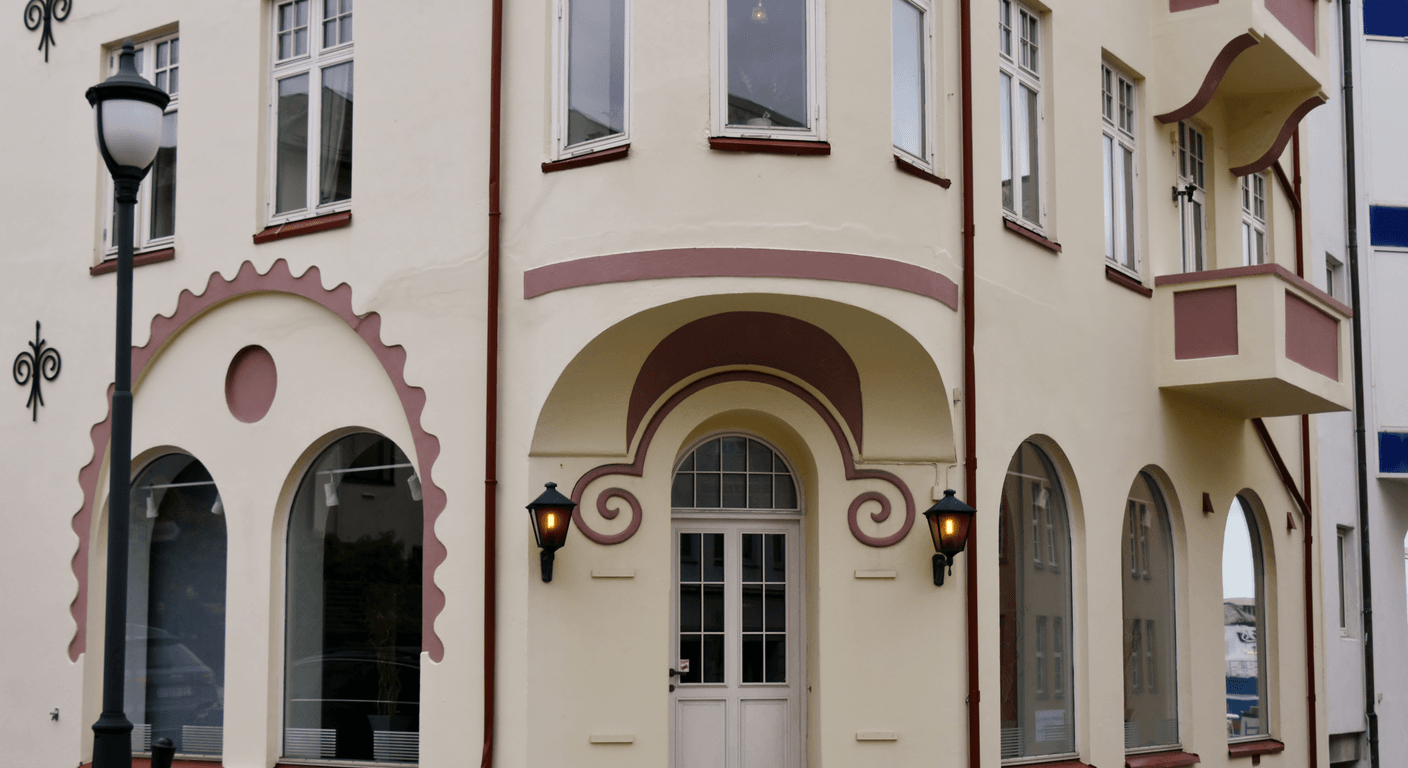
Ålesund is the first port many travellers remember clearly, and with reason. The town was rebuilt almost entirely in Art Nouveau style after a fire in 1904, leaving a coherent architectural streetscape that is unusual in Norway. The harbour is compact enough to explore on foot in two hours. A lift serves the viewpoint at Aksla hill — no stair-climbing required — and the views over the islands and waterways are worth the 20-minute round trip.
Tromsø, roughly 350 kilometres above the Arctic Circle, is the largest city on the route and the best base for northern lights excursions in winter. The Arctic Cathedral (Ishavskatedralen) is one of the more architecturally considered modern churches in Scandinavia, and the Tromsø University Museum covers Sami culture with genuine depth. The city has good cafés, a covered market, and the kind of efficient Norwegian public transport that makes independent exploration easy without a hire car.
Kirkenes, the terminus, sits just kilometres from the Russian border and has a history shaped by WWII occupation and Cold War proximity. The Andersgrotta war tunnel museum runs guided tours that contextualise what this remote town actually endured. It is a long way from anywhere — and that remoteness is part of the point. Travellers doing the one-way voyage end here; those on the round trip turn south and discover that the same coastline looks entirely different from the other direction, in different light, at different times of day.
Life on board — pacing, sea days and what to expect
The Hurtigruten's daily rhythm is built around arrival and departure announcements, meal times, and the gradual accumulation of coastline. There are no production shows or casino floors. What there is: a good restaurant serving Norwegian ingredients (reindeer, Arctic cod, cloudberries), a well-stocked bar, a library corner, and evening talks on the northern lights, Sami culture or Norwegian maritime history depending on the season. The lectures are genuinely informative rather than promotional.
Sea days — the stretches between ports — are the underrated part of the voyage. Sitting with a coffee and watching the Lofoten Islands slide past in low winter light, or standing on the open deck at midnight as the sun refuses to set, are experiences that require nothing more than presence. The ship provides binoculars at the observation lounge. Seabirds, sea eagles, and the occasional whale are sightings the crew will alert you to over the PA.
Meals are included in most cabin categories, though this varies by fare type — confirm what is included when booking. The dining room operates at set times, which suits travellers who prefer structure to grazing. Dress is smart casual at dinner; nobody is expected to pack formal wear. The ship is well heated throughout, which matters considerably in the Norwegian winter, and cabins are equipped with adequate storage for the layered clothing the voyage demands.
Travel insurance with pre-existing conditions — what you need to sort before you board
A 12-night voyage into Arctic waters with ports that include small fishing communities hours from a major hospital is not the journey to take without comprehensive travel insurance. For travellers over 50 — particularly those managing common conditions such as heart disease, diabetes, arthritis, or respiratory conditions — securing a policy that explicitly covers pre-existing conditions is essential, not optional.
Australian insurers including Cover-More, 1Cover, and Allianz Travel offer policies that can cover pre-existing conditions, but the premiums and the specific conditions covered vary considerably. The key questions to ask any insurer: Does the policy cover medical evacuation from a remote Arctic port? Is emergency repatriation to Australia included? What is the claims process if something happens in Kirkenes at 2am in January? Get the answers in writing, and read the Product Disclosure Statement before paying.
The Hurtigruten itself offers onboard medical services, and Norway's healthcare system is excellent in the larger ports. But the gap between a small northern village and a fully equipped hospital can be measured in hours. Arranging insurance before any pre-existing condition changes — and before paying for flights or cabins — is the practical approach. The smartraveller.gov.au website maintains current advice on Norway and links to the government's general guidance on travel insurance for Australians, which is a useful starting point.
Costs, cabin categories and what honest budgeting looks like
Hurtigruten fares vary significantly by season, cabin category, and how far in advance you book. As an indicative guide only — and readers should confirm all current pricing directly with Hurtigruten — an inner cabin on a one-way Bergen-to-Kirkenes voyage might start from roughly AUD 4,500 to 5,500 per person in shoulder season, with outside cabins and suites climbing well beyond that. Winter aurora season and peak summer midnight-sun periods attract premium pricing. All indicative figures should be treated as a starting point for budgeting conversations, not a quote.
Beyond the cabin fare, the realistic budget includes: return flights from Melbourne or Sydney to Bergen (indicatively AUD 2,500 to 4,000 per person depending on class and timing), two or more nights in Bergen pre-voyage and Tromsø or Kirkenes post-voyage (Norwegian hotels are not cheap — budget roughly AUD 250 to 400 per night for a comfortable mid-range option), shore excursions (Hurtigruten's own excursions range from roughly NOK 400 to NOK 2,000 per person; confirm AUD equivalents at current exchange rates), and travel insurance (which for a couple in their 70s with pre-existing conditions could be a meaningful cost — get several quotes).
The voyage is not inexpensive. But the cost-per-experience calculation is different from a package tour: accommodation, most meals, and transport along 2,500 nautical miles of coastline are bundled into one fare. For travellers who have done the European highlights and are ready for something that requires more engagement and less airport shuffling, the value holds up. Norway is also an expensive country on the ground — a coffee and pastry in Tromsø will remind you of that promptly — so factoring in daily spending money is wise.
Quick planning guide
| Ideal pace | Slow-paced, built around sea days rather than shore-tour sprints |
|---|---|
| Best months | Late May–mid-July for midnight sun; November–February for northern lights; shoulder months (Aug–Sept, Mar–Apr) for a quieter middle ground |
| Suggested stay | Around 12 nights for the full Bergen–Kirkenes voyage, plus recovery nights before boarding |
| Mobility level | Ship has lifts, wide corridors and a calm rhythm, but some gangways and port excursions involve uneven or cobbled surfaces |
| Cost level | Premium — cabin fares, long-haul flights, pre/post-voyage hotels and insurance add up |
| Comfort level | Functional and well-heated rather than luxurious — a working coastal ferry with cruise comforts added |
| Best for | Travellers over 50 wanting genuine coastal communities, reduced mobility-friendly pacing, and less airport shuffling than a multi-country tour |
| Main planning consideration | Arranging travel insurance that covers pre-existing conditions and remote medical evacuation, plus allowing recovery time for the long flight to Bergen |
Key takeaways
- The Hurtigruten calls at 34 Norwegian coastal ports — the working fishing towns and Arctic communities that large cruise ships cannot access.
- Summer (late May to mid-July) offers midnight sun and calm seas; winter (November to February) offers northern lights and a quieter ship — neither season is wrong, just different.
- Flights from Melbourne or Sydney to Bergen require at least one stopover and typically 24–30 hours of travel; one or two recovery nights in Bergen before boarding are strongly advisable.
- Travel insurance that explicitly covers pre-existing conditions and medical evacuation from remote Arctic locations is essential — arrange it before paying for flights or cabins.
- The ship has lifts, level decks and a calm sea-day rhythm that suits reduced mobility well, though gangways and shore excursions at smaller ports can involve uneven surfaces.
- Confirm current visa and entry requirements for Australian passport holders at smartraveller.gov.au, as European entry rules are subject to change.
Recommended partners and links
Indicative prices only — always confirm with the operator before booking.
Frequently asked questions
Do I need a visa to visit Norway as an Australian passport holder?
As of mid-2025, Australian passport holders can enter Norway visa-free for short stays as part of the Schengen Area. However, the European Travel Information and Authorisation System (ETIAS) has been under implementation and entry requirements are subject to change. Always check the current requirements at smartraveller.gov.au before booking.
Is the Hurtigruten suitable for travellers with limited mobility?
The ships have lifts connecting passenger decks, wide corridors, and level public areas, making the voyage manageable for many travellers with reduced mobility. The main variables are gangways at smaller ports, which can involve a short step or uneven quayside, and shore excursions, which often include cobblestones or stairs. Discuss specific accessibility needs directly with Hurtigruten before booking.
What is the best time of year for Australians to do the Hurtigruten voyage?
Late May to mid-July offers the midnight sun, the warmest temperatures and the calmest seas — generally the most comfortable introduction to the route. November to February offers the best chance of seeing the northern lights and a quieter ship, but temperatures in the far north can drop well below zero. Shoulder seasons in late August to September and March to April offer a balance of moderate prices, possible northern lights, and manageable weather.
How long does the full Bergen-to-Kirkenes voyage take?
The one-way voyage from Bergen to Kirkenes takes approximately 6 days; the full round trip takes 12 nights. Many travellers choose to do the one-way southbound voyage from Kirkenes to Bergen, which covers the same ports in reverse and is equally well serviced. Segment bookings — joining or leaving the ship at intermediate ports such as Tromsø or Bodø — are also possible.
What is the difference between Hurtigruten and other cruise lines on Norway's coast?
Hurtigruten operates as both a working coastal ferry and a passenger cruise service, calling at 34 ports including small fishing communities that larger cruise ships cannot access. The ships are significantly smaller than conventional ocean cruise liners, the on-board experience is focused on the landscape and Norwegian culture rather than entertainment programmes, and the pace is dictated by the coastal timetable rather than a resort schedule. It is a genuinely different experience from a standard cruise.