Ireland suits a slow, 12–14 day trip built around three bases: Dublin, a western coastal region and a heritage town such as Kilkenny. The defining highlight is the combination of accessible medieval sites, the Cliffs of Moher and genuine pub culture. Mobility is moderate — major museums and cliff platforms are step-free, but cobblestones and narrow rural roads favour a driver-guide. Flights from Melbourne or Sydney take 24–26 hours with one stopover, so a Dublin recovery night is essential.
Why Ireland Works Particularly Well for Over-50 Australians
There's a reason Ireland keeps appearing on the bucket lists of Australians in their fifties, sixties and beyond — and it's not entirely about the scenery. For travellers of Anglo-Celtic heritage, particularly those with Irish, Scottish or English ancestry, Ireland carries a personal charge that most destinations simply don't. Standing in a medieval churchyard in County Clare or tracing a family name on a famine memorial, the country becomes something more than a holiday. It becomes context.
Beyond the ancestral pull, Ireland is genuinely well-suited to the rhythms of slower travel. The country is small enough that you're never far from the next interesting thing, yet varied enough to hold your attention for a fortnight without repetition. The language is English (with an accent worth savouring), the food has improved dramatically in the past decade, and the culture of hospitality — particularly in smaller towns and rural pubs — is not a performance for tourists. It's just how things are done.
The caveat is cost. Ireland is not a budget destination, and Australians arriving with expectations shaped by Southeast Asia or even parts of Europe will need to recalibrate. Mid-range accommodation, a decent dinner and a couple of pints in a good pub can add up to AUD 200–280 per day per person without much effort. That said, value is there if you choose well — and a slower pace naturally reduces the impulse to over-spend on rushed activities.
Getting There: The Long Haul Reality from Australia
Dublin is the primary entry point for most international visitors, and from Australian east-coast cities the journey involves one stopover — typically Dubai (Emirates), Doha (Qatar Airways) or Singapore (Singapore Airlines or Qantas codeshare). Total travel time from Melbourne or Sydney runs roughly 24–26 hours, including the transit. Flights from Perth add a different routing consideration; confirm options with your travel agent or airline direct.
Return airfares from Melbourne or Sydney to Dublin in economy class run indicatively around AUD 2,200–3,500 per person depending on season and how far in advance you book — these figures are indicative only and subject to significant change, so treat them as a planning starting point rather than a quote. Business class, which becomes a serious consideration on a 24-hour journey for travellers with back or joint issues, sits considerably higher; confirm current pricing with airlines directly.
A recovery night in Dublin on arrival is not a luxury — it's a sensible travel decision. Crossing nine or ten time zones with a stopover in the Middle East is a physiological event, not just an inconvenience. Book your Dublin accommodation for arrival night before you do anything else, give yourself a full day to find your feet, and resist the urge to start sightseeing the same afternoon you land. The castles will still be standing the following morning. Jet lag on a trip this significant deserves respect.
A Realistic 12–14 Day Itinerary Framework
Rather than prescribing a rigid day-by-day plan, a framework of bases works better for travellers who want flexibility. Three bases across a fortnight is the sweet spot: Dublin for three nights to open and ideally one night to close; a western coastal region (the Ring of Kerry, the Cliffs of Moher and the Burren, or Connemara) for four to five nights; and a heritage town — Kilkenny, Westport or Galway — for three nights in between or at the end. That structure allows genuine immersion rather than the frantic one-night-stand approach that leaves most travellers exhausted and oddly unsatisfied.
Dublin anchors the trip well. The National Museum of Ireland (free entry, excellent accessibility), Trinity College and the Book of Kells, a walk along the Grand Canal, and an evening in the Liberties or along Baggot Street give you a city that's genuinely walkable at a pace you choose. The DART coastal rail line to Howth or Dún Laoghaire makes for an easy half-day excursion without needing a car. For a solo traveller, Dublin is comfortable and legible — it has the scale of a large regional city rather than an overwhelming metropolis.
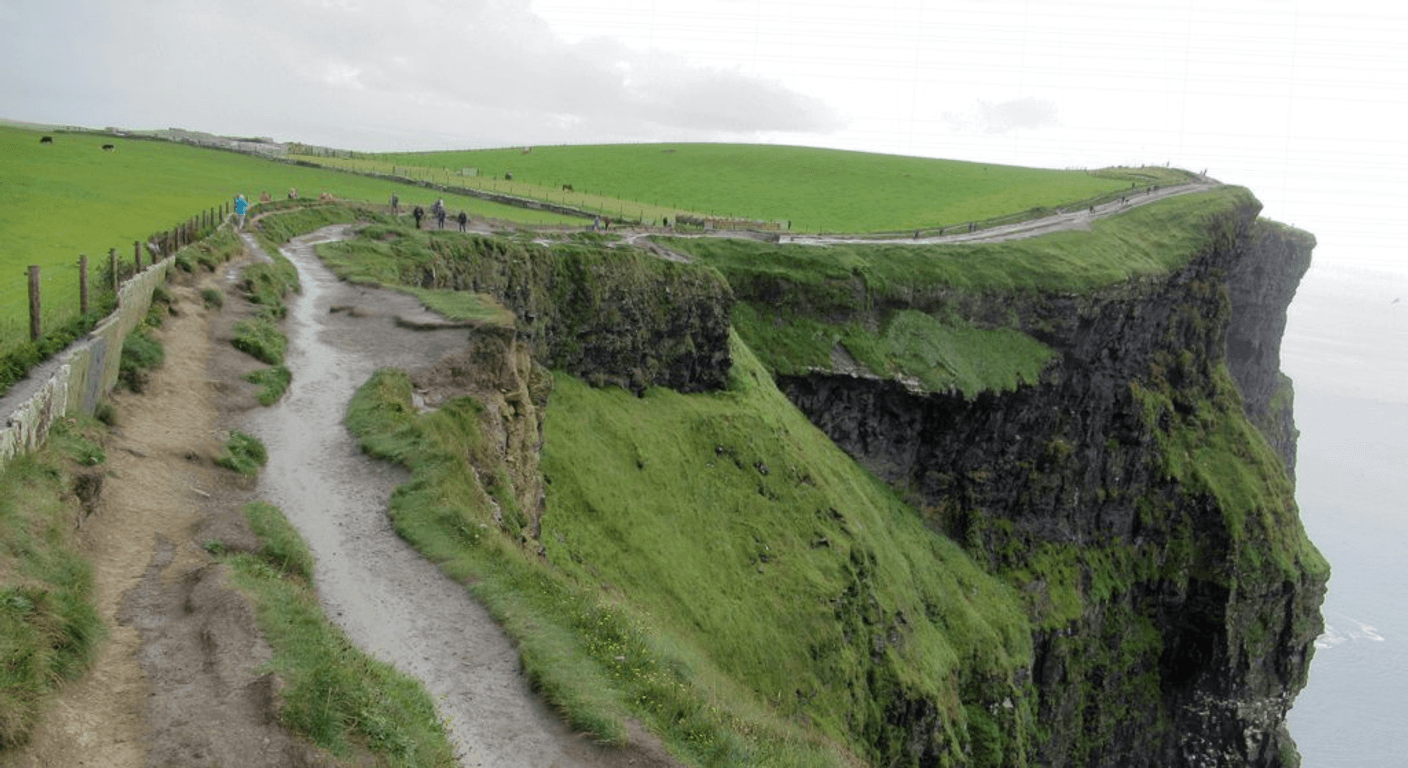
The western regions are where Ireland's landscape earns its reputation. The Cliffs of Moher stand 214 metres above the Atlantic; the official visitor centre has step-free access to the main viewing platforms, though the cliff-edge path itself is uneven and exposed. The Ring of Kerry is a 179-kilometre loop through mountain and coastal scenery that is genuinely spectacular — but attempting it by hire car on your first day out of Dublin is an exercise in anxiety. More on that shortly. Kilkenny, for the heritage-town base, offers a well-preserved medieval streetscape, Kilkenny Castle (accessible ground floor), and a food scene that punches well above its size.
Driving in Ireland: The Honest Case for a Driver-Guide
Irish roads are, technically, left-hand drive — which is familiar enough for Australians. What is less familiar is the width, or rather the lack of it. Rural roads in Kerry, Clare and Connemara are frequently single-lane with passing places, hedgerows that reduce visibility to metres, and the occasional tractor appearing around a blind bend. Driving them in an unfamiliar hire car, jet-lagged, on roads you don't know, in weather that can change from sunshine to horizontal rain inside twenty minutes, is an experience that some travellers find exhilarating and others find genuinely stressful.
For a solo traveller in his late sixties, the case for hiring a private driver-guide for the rural sections is worth taking seriously. A good Irish driver-guide doesn't just navigate — they provide running commentary, know which viewpoint is worth the detour, can recommend where to eat in a town of three pubs, and handle the logistics of parking (which in tourist areas can be its own minor ordeal). Indicative cost for a private driver-guide runs roughly AUD 500–900 per day depending on the region and operator; confirm pricing directly with Irish operators. That's a real cost, but divided across a full day of travel and genuine local knowledge, it compares favourably to the stress of self-navigation on a narrow Munster back road.
The alternative to a private driver-guide is an escorted coach tour. Operators such as CIÉ Tours run itineraries specifically designed for international visitors, with modern coaches, included accommodation and a guide for the duration. These suit travellers who prefer not to make daily logistical decisions, and the social dimension — particularly valuable for solo travellers — can be a genuine bonus. The trade-off is less flexibility and a pace set by the group rather than yourself. Many experienced travellers combine approaches: independent in Dublin and Kilkenny, joined coach or private guide for the western coastal routes.
Accessibility: What to Expect on the Ground
Ireland's major visitor sites have made significant progress on accessibility, though the country's medieval heritage means perfection is architecturally impossible. The Cliffs of Moher visitor centre and main platforms are step-free. Dublin's major museums — the National Museum, the Chester Beatty Library, the Irish Museum of Modern Art — are fully accessible. Trinity College's main campus is largely navigable, though the Old Library building (where the Book of Kells is displayed) involves some steps; check current access arrangements directly with the college before visiting.
Cobblestones are the recurring challenge. Dublin's Temple Bar area, Kilkenny's medieval lanes and many heritage town centres feature uneven stone surfaces that are beautiful to look at and uncomfortable to navigate with a walking stick, rollator or simply a pair of knees that have seen better decades. Sensible footwear is not a style suggestion — it's a functional requirement. Bring shoes with genuine grip and ankle support. Many heritage towns have parallel smooth-pavement routes if you ask locally.
Accommodation accessibility varies considerably. Newer hotels and those that have undergone recent renovation generally meet modern standards; older guesthouses and B&Bs — charming as they often are — may have steep internal stairs and no lift. When booking, call ahead and ask specific questions rather than relying on website descriptions. Fáilte Ireland's accessibility resources (failteireland.ie) provide a useful starting filter. Travel insurance that covers pre-existing conditions is non-negotiable on a trip of this length and distance; Australian travellers should sort this before booking flights, not after.
The Pub: Not Optional, and Not Just About the Drinking
The Irish pub is a cultural institution that resists accurate description to those who haven't experienced it — which is precisely why it appears in every Ireland travel piece ever written, including this one. The point is not the Guinness (though a well-poured pint in the country of its origin is a different thing from what arrives in an Australian hotel). The point is that the Irish pub is one of the last genuinely democratic public spaces: a place where a 69-year-old solo traveller from Melbourne can sit at the bar, accept a conversation from the person next to him, and spend two hours learning more about County Kerry than any guidebook will tell him.
For solo travellers particularly, a good pub evening is the antidote to the mild loneliness that can accompany independent travel. Sit at the bar rather than a table. Order slowly. Don't rush to fill the silence. Traditional music sessions — common in pubs in Doolin, Dingle, Westport and dozens of smaller towns — happen informally, often mid-week, and are not tourist performances but working musicians playing for the pleasure of it. Asking the bar staff when the next session is tends to yield accurate information.
Budget-wise, a pint of Guinness runs indicatively around AUD 8–12 in most pubs (confirm current prices — the euro exchange rate and local pricing vary). A pub meal — fish pie, lamb stew, smoked salmon starter — is typically AUD 25–45 per main. Dinner at a proper restaurant in a larger town adds to that. Food quality across Ireland has risen substantially; the days of the apologetic boiled vegetable are largely over, particularly in towns with active farmers' markets and a younger generation of Irish chefs.
Practical Tips for Planning Your Ireland Trip
Australian passport holders do not require a visa to enter Ireland for stays up to 90 days — but confirm current entry requirements with the Irish Naturalisation and Immigration Service or the Department of Foreign Affairs before booking, as regulations can change. Ireland uses the euro; carry a small amount of cash for rural areas, markets and older pubs, but card payment is accepted almost everywhere in towns. A travel card or low-fee international debit card will save on transaction fees over a fortnight.
Packing for Irish weather requires a philosophy adjustment. Even in summer, the west coast operates on its own meteorological agenda: a morning of sharp Atlantic light can become an afternoon of sideways rain and back again by evening. Layers, a compact waterproof jacket that actually works (not a fashion windbreaker), and waterproof walking shoes are not pessimism — they're experience. The travellers who are miserable in Irish weather are generally the ones who packed for Tuscany.
For inspiration before you go, the YouTube channel jordentually (see: youtube.com/watch?v=XdjbkVavvzg) offers an honest, well-observed ground-level view of travelling Ireland that complements the practical planning detail here. It's the kind of content that helps you visualise what a day actually feels like — the light, the scale, the rhythm — in a way that static photography rarely captures. Use it as a mood calibration tool, then build your own version of it.
Quick planning guide
| Ideal pace | Slow, three-base itinerary rather than daily moves |
|---|---|
| Best months | No single best season noted; weather is changeable year-round, even in summer |
| Suggested stay | 12–14 days minimum |
| Mobility level | Moderate — accessible major sites, but cobblestones and narrow rural roads require care |
| Cost level | Mid-to-upper-mid, roughly AUD 200–280 per person per day |
| Comfort level | Comfortable with planning; recovery night on arrival strongly recommended |
| Best for | Australians of Anglo-Celtic heritage wanting castles, coastal scenery and pub culture at an unhurried pace |
| Main planning consideration | Managing the long-haul flight and jet lag, then choosing between self-drive, private driver-guide or escorted coach for the western rural routes |
Key takeaways
- A minimum of 12–14 days is needed to experience Ireland at a pace that doesn't feel like a commute between highlights.
- Hiring a private driver-guide for rural western routes is a legitimate alternative to self-driving on narrow Irish roads — particularly for solo travellers.
- The Cliffs of Moher, Dublin's national museums and Kilkenny Castle all offer step-free or accessible options, but cobblestoned historic lanes require sturdy, grippy footwear.
- Flights from Melbourne or Sydney to Dublin involve one stopover and roughly 24–26 hours of travel; a recovery night on arrival in Dublin is essential, not optional.
- Ireland is a mid-to-upper-mid cost destination; budget indicatively AUD 200–280 per person per day for accommodation, meals and activities, subject to exchange rates.
- Travel insurance covering pre-existing conditions must be arranged before booking — not as an afterthought — for a trip of this distance and duration.
Recommended partners and links
Indicative prices only — always confirm with the operator before booking.
Frequently asked questions
How long should Australians over 50 spend in Ireland?
A minimum of 12–14 days is recommended for Australians over 50 visiting Ireland. This allows at least two to three nights in each base — Dublin, a western coastal region such as Kerry or Clare, and a heritage town like Kilkenny — without the exhaustion of constant one-night stops. Shorter trips are possible but tend to feel rushed, particularly given the long-haul flight from Australia.
Is Ireland suitable for travellers with mobility limitations?
Ireland is manageable for travellers with moderate mobility considerations, but requires planning. Major visitor sites including the Cliffs of Moher visitor centre and Dublin's national museums offer step-free access. The challenge is historic town centres, where cobblestone lanes and uneven surfaces are common. Booking accommodation with lift access and calling ahead to confirm accessibility details is strongly recommended.
Should older Australian travellers hire a car or use a driver-guide in Ireland?
For rural routes such as the Ring of Kerry or the Burren, a private driver-guide is worth serious consideration over self-driving. Irish country roads are frequently narrow, with passing places and blind bends that can be stressful for drivers unfamiliar with the terrain. A driver-guide also provides local knowledge and removes logistical pressure. Escorted coach tours are an alternative that suits travellers who prefer a fully organised experience.
What is the best time of year for Australians to visit Ireland?
May through September offers the longest daylight hours and the mildest, most settled weather — though 'settled' in Ireland is a relative term. June and July are the peak months, with more visitors and higher accommodation prices. May and September offer a reasonable balance of good conditions and fewer crowds. Irish weather is changeable year-round; a waterproof jacket and layers are required regardless of the month.
Do Australians need a visa to visit Ireland?
Australian passport holders do not currently require a visa to enter Ireland for short stays. However, entry requirements can change, and travellers should confirm current rules with the Irish Naturalisation and Immigration Service or the Australian Department of Foreign Affairs and Trade before booking. Do not rely on secondhand information for visa requirements.
- Tourism Ireland — Official Travel Planning
- Fáilte Ireland — Accessible Tourism
- National Museum of Ireland
- Cliffs of Moher Visitor Experience
- CIÉ Tours International — Escorted Ireland Tours
- jordentually — Ireland travel vlog (YouTube)
- Trinity College Dublin — Visitor Information
- Irish Naturalisation and Immigration Service — Entry Requirements