Japan suits over-50 Australian travellers best in May or October, when cherry blossom and autumn crowds have eased but the weather stays comfortable. A well-paced two to three week itinerary across four or five cities—Tokyo, Kyoto, Osaka, Hiroshima or Kanazawa—covers temples, gardens and onsen towns without rushing. Mobility is moderate, given uneven temple paths and stairs at some older stations. Direct flights from Australia's east coast take nine to ten hours, and Australian passport holders currently enter visa-free.
Getting to Japan from Australia: flights and entry requirements
From Melbourne, Sydney, or Brisbane, direct flights to Tokyo (Narita or Haneda) or Osaka (Kansai International) take roughly nine to ten hours — long enough to warrant a business or premium economy seat if the budget allows, but manageable in economy with a decent neck pillow and a deliberate plan to move around the cabin. Qantas, Japan Airlines, ANA, and Jetstar all operate routes between Australia's east coast and Japan's major airports; departure city and season affect prices considerably, so comparing across carriers is worthwhile. Confirm current schedules and codeshares before booking, as airline routes continue to shift.
Australian passport holders currently enter Japan visa-free for tourist stays of up to 90 days, but entry rules can change. Always check the current requirements on the Australian Government's Smartraveller website (smartraveller.gov.au) well before you travel. Japan requires a return or onward ticket and may ask for evidence of sufficient funds. Registering your trip on Smartraveller is a practical step for any international travel, and particularly useful if you are travelling solo.
Kansai International Airport near Osaka is a strong alternative arrival point if your itinerary leans toward Kyoto, Osaka, and western Japan. Flying into Osaka and out of Tokyo — or the reverse — as an open-jaw booking can reduce backtracking and suits a logical west-to-east or east-to-west itinerary. Confirm open-jaw pricing with your travel agent or airline, as it does not always cost more than a return.
Where to base yourself: the best cities for over-50 travellers
Tokyo is a logical starting point for first-time visitors: the airport connections are strong, the English signage in tourist areas is reasonable, and the city's neighbourhoods each have a distinct character. For older travellers, basing yourself in Shinjuku, Asakusa, or Ginza puts you within walking distance of a great deal without requiring long subway journeys each day. Tokyo can feel overwhelming, but it rewards those who pick two or three neighbourhoods and explore them properly rather than trying to cover the whole city.
Kyoto is, for many over-50 travellers, the emotional centre of a Japan trip. The temples, gardens, and traditional streetscapes of Gion and Higashiyama are what many Australians picture when they think of Japan. The city is walkable in parts, though some temple complexes involve uneven stone paths and steps — worth researching individually before you go. Kyoto is also a logical base for day trips to Nara (deer park, ancient temples) and to smaller towns in the surrounding Kansai region.
Osaka has a warmer, more informal atmosphere than Kyoto and is an outstanding city for food-focused travellers. Hiroshima, accessible by Shinkansen in around 45 minutes from Osaka, carries profound historical weight and deserves more than a day trip — staying overnight and visiting Miyajima Island the following morning is a far more considered way to experience it. For those wanting fewer crowds and a more traditional atmosphere, Kanazawa on the Sea of Japan coast is one of Japan's most rewarding mid-sized cities: a preserved geisha district, one of Japan's most celebrated gardens (Kenroku-en), and a fraction of Kyoto's visitor numbers.
Transport passes explained: JR Pass, regional passes, and IC cards
The nationwide Japan Rail Pass — the JR Pass — allows unlimited travel on most JR-operated trains, including the Shinkansen bullet trains, for a set number of days. It has long been considered essential for tourists, but a significant price increase in 2023 changed the calculation. A 7-day ordinary-class JR Pass now costs indicatively around AUD 700 or more (confirm current prices on the official JR Pass website before purchasing); a 14-day pass is considerably more. Whether it pays off depends entirely on your itinerary.
If your trip covers the Tokyo–Kyoto–Osaka–Hiroshima corridor, a 7-day JR Pass can still represent reasonable value when compared to buying individual Shinkansen tickets — a single Tokyo-to-Kyoto Shinkansen ticket is indicatively around AUD 180–200 each way at current exchange rates, confirm before travelling. However, if your itinerary is more concentrated — say, a week in Tokyo followed by a week in Kansai — a regional JR pass is almost certainly better value. The JR Kansai Wide Pass and JR East Tohoku passes cover specific regions at a lower price point. Research your planned routes on the Hyperdia or Google Maps Japan transit tools before committing.
For city travel — metro systems in Tokyo, Osaka, and Kyoto — an IC card is the practical choice. The Suica card (issued by JR East, linked to Tokyo) and the Pasmo card are interchangeable on most urban transit networks across Japan and can also be used to pay at convenience stores and many vending machines. Load them with yen at any station machine. IC cards remove the need to buy individual metro tickets, which involves navigating fare maps in Japanese. They are a small but genuinely life-improving detail of a Japan trip.
How much does a Japan trip cost from Australia?
Japan has a reputation for being expensive, but at current exchange rates — roughly 95–100 yen to the Australian dollar as a rough reference point, though this fluctuates and you should check current rates before travelling — it is considerably more affordable than Western Europe or the United Kingdom for Australian visitors. A couple travelling at a comfortable midrange standard — good hotel or occasional ryokan, sit-down meals twice a day, entry fees, local transport — should budget indicatively around AUD 300–400 per couple per day in-country, excluding international flights. This is a broad indicative figure; your actual spend depends heavily on accommodation choices and dining habits.
Accommodation is the biggest variable. A clean, well-located business hotel in central Tokyo or Kyoto runs indicatively from around AUD 180–250 per night for a double room — comfortable and functional, if compact by Australian standards. A traditional ryokan (Japanese inn) with dinner and breakfast included costs more, indicatively from around AUD 350–600 per couple per night, but the experience — tatami rooms, yukata robes, multi-course kaiseki dinner — is genuinely distinct from Western hotel travel. Mixing business hotels with one or two ryokan nights is a sensible approach for most budgets.
Food in Japan is outstanding value. A bowl of ramen or a set lunch at a neighbourhood restaurant can cost indicatively around AUD 12–18 per person; a sit-down dinner at a mid-range restaurant, around AUD 35–60 per person. Convenience store food (onigiri, sandwiches, hot snacks) is cheap, fresh, and surprisingly good — a practical option for lunches on travel days. Alcohol, particularly imported spirits, is the one category that adds up quickly; Japanese beer and sake are more reasonably priced. Confirm all costs locally and treat any figures here as a starting framework only.
When to go: seasons, cherry blossoms, and the quieter windows
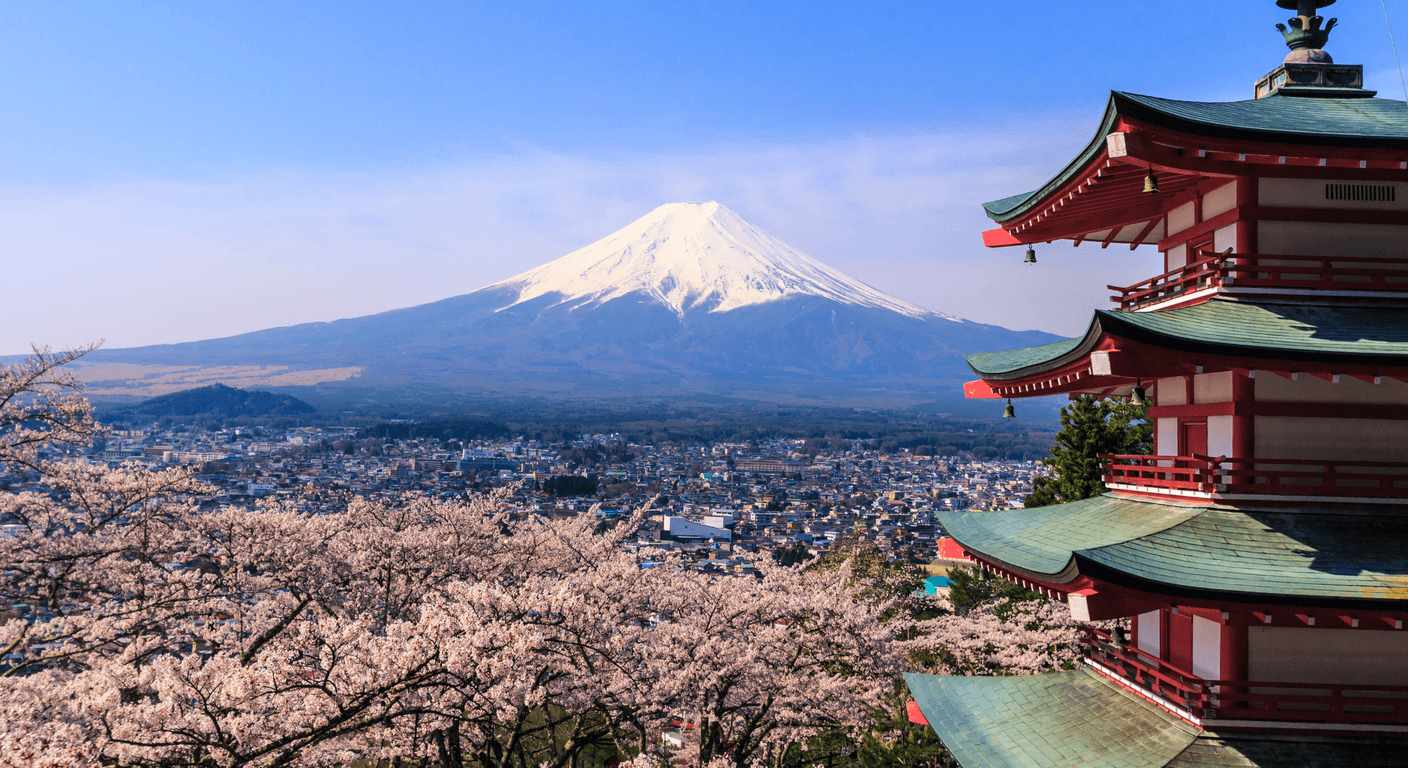
Spring cherry blossom season (late March to mid-April) and autumn foliage season (mid-November to early December) are Japan's two most celebrated travel periods — and its two most crowded. Prices rise, popular spots like Maruyama Park in Kyoto and Philosopher's Path become extremely busy, and accommodation books out months in advance. For travellers who want to experience these seasons, it is entirely doable, but it requires booking accommodation and the JR Pass well ahead and accepting that some sites will be crowded.
The shoulder months offer a better balance of pleasant weather and manageable crowds. May, after the cherry blossom rush subsides, is warm and green and still beautiful. October, before the autumn colour peaks, is similarly comfortable. For those who want fewer crowds entirely, late June through July (before peak summer heat and humidity hits) or February (cold but quiet, with occasional plum blossoms) are worth considering. Japan's summers — July and August — are hot and humid, particularly in Kyoto and Tokyo, which can be taxing for older travellers not accustomed to that kind of heat.
For a full breakdown of the quieter spring windows and smaller towns that reward a slower pace, see our companion guide on Japan's quieter spring destinations (link to be inserted). For travellers specifically interested in onsen culture, our dedicated onsen guide covers the etiquette, accessibility considerations, and best regions in more detail (link to be inserted).
Cultural experiences suited to the over-50 traveller
Japan's cultural offerings suit a slower, more contemplative travel style particularly well. Traditional Japanese gardens — Kenroku-en in Kanazawa, Kokedera (the Moss Garden) in Kyoto, Shinjuku Gyoen in Tokyo — are designed for unhurried walking and quiet observation. A tea ceremony, offered at many traditional venues in Kyoto and Kanazawa, typically lasts 45–60 minutes and requires no Japanese language; it is a genuinely absorbing experience rather than a tourist tick-box.
A stay in a ryokan is one of the most distinctive experiences Japan offers. The rhythm of a ryokan night — arriving in the late afternoon, changing into yukata, bathing before dinner, sitting down to a multi-course kaiseki meal — is unhurried by design. For couples, it is a particularly memorable way to mark a milestone trip. Note that traditional ryokan rooms feature low furniture and futons on the floor, which can be challenging for those with knee or hip issues; ask when booking whether Western-style beds are available, as many modern ryokan now offer both.
Onsen (hot spring bathing) is central to Japanese travel culture and genuinely therapeutic. Most onsen are gender-segregated and require bathers to be fully unclothed, which surprises some first-time Western visitors. Tattoos are prohibited at many traditional onsen facilities — worth checking in advance if relevant. Some onsen towns, such as Hakone (accessible from Tokyo) and Kinosaki Onsen (accessible from Kyoto), are structured around the experience of moving between multiple public bathhouses during a stay, and are well suited to a dedicated overnight or two-night visit.
Accessibility and pacing: what over-50 travellers need to know
Japan's rail network is, by any measure, one of the most reliable and well-organised in the world. Shinkansen trains run to the minute, station staff are helpful, and major stations in Tokyo, Osaka, and Kyoto have lifts and step-free access on most lines. That said, some older metro stations in Tokyo have stairs only between platforms, and some rural or heritage train lines have limited accessibility. Researching specific routes before you go — using the Tokyo Metro accessibility map or asking your accommodation for advice — is time well spent.
Luggage forwarding, known in Japan as takkyubin, is one of the most practical and underused tools for older travellers. For a modest fee (indicatively around AUD 15–25 per large bag, confirm current rates locally), courier services such as Yamato Transport will collect your luggage from your hotel in the morning and deliver it to your next hotel by the following day. This means you travel between cities on the Shinkansen carrying only a day bag — a significant comfort improvement when navigating busy stations. Most hotels and convenience stores can arrange takkyubin; ask at your hotel front desk.
Pacing is everything in Japan. The temptation to cover too much ground in a two-week trip is real, but a well-paced itinerary of four or five cities over 14–16 days, with at least two or three nights in each, will leave you far more satisfied than a rushed nine-city sprint. Build in at least one full rest day per week with no planned activities. Japan's convenience stores, coffee shops, and public parks make unscheduled downtime genuinely pleasant rather than wasted.
Quick planning guide
| Ideal pace | Slow-paced — four or five cities with two to three nights each, plus a rest day weekly |
|---|---|
| Best months | May and October (shoulder season, fewer crowds than cherry blossom or autumn peak) |
| Suggested stay | 14–16 days for a well-paced multi-city trip |
| Mobility level | Moderate — reliable, accessible rail network overall, but some older stations and temple paths involve stairs and uneven ground |
| Cost level | Midrange — indicatively AUD 300–400 per couple per day in-country, excluding flights |
| Comfort level | High with planning — business hotels are comfortable and compact; ryokan futons can be challenging for knee or hip issues, so ask about Western-style beds |
| Best for | Couples and returning visitors wanting a slower, culturally rich trip covering temples, food, and onsen towns |
| Main planning consideration | Weighing the nationwide JR Pass against regional passes based on your specific route, and researching accessibility of individual stations and temple sites in advance |
Key takeaways
- Direct flights from Australia's east coast to Tokyo or Osaka take roughly nine to ten hours, and Australian passport holders currently enter Japan visa-free for short tourist stays — always confirm current entry rules on smartraveller.gov.au before travelling.
- The nationwide JR Pass is no longer automatically the best-value option after its 2023 price rise; compare it against regional JR passes based on your specific itinerary before purchasing.
- A comfortable midrange budget for a couple in Japan runs indicatively around AUD 300–400 per day in-country excluding flights — more affordable than many Australians expect at current exchange rates.
- Spring cherry blossom (late March to mid-April) and autumn foliage (mid-November to early December) are the most beautiful but most crowded seasons; May and October offer a more relaxed experience with pleasant weather.
- Luggage forwarding (takkyubin) is a practical essential for over-50 travellers: for a small fee, your bags travel separately between hotels while you ride the Shinkansen unencumbered.
- Kanazawa, often overlooked in favour of Kyoto, offers preserved geisha districts, celebrated gardens, and a fraction of the crowds — a strong choice for travellers wanting a more contemplative experience.
Recommended partners and links
Indicative prices only — always confirm with the operator before booking.
Frequently asked questions
Is Japan a good destination for over-60 travellers?
Japan is an excellent destination for travellers over 60. The rail network is reliable and largely accessible, the food culture rewards slow exploration, and the country's emphasis on service quality means hotels and restaurants are attentive without being intrusive. The main practical considerations are the prevalence of steps at some older temple sites and metro stations, and the physical demands of long walking days — both manageable with good planning and a paced itinerary.
Is the JR Pass worth buying for a Japan trip in 2025 or 2026?
It depends on your itinerary. After a significant price rise in October 2023, the nationwide JR Pass is no longer automatically good value for every visitor. If you plan to travel the full Tokyo–Kyoto–Osaka–Hiroshima Shinkansen corridor within a 7-day window, it can still pay off. For trips concentrated in one region, a regional JR pass — such as the JR Kansai Wide Pass — is likely better value. Calculate your planned routes against individual ticket costs before purchasing; confirm current JR Pass prices at japanrailpass.net.
How much does a two-week Japan trip cost from Australia?
As a broad indicative guide, a couple travelling at midrange comfort should budget roughly AUD 3,000–5,000 for international return flights (varies significantly by carrier, season, and booking window), plus indicatively around AUD 300–400 per couple per day in-country covering accommodation, meals, local transport, and entry fees. A 14-night trip in-country therefore comes to roughly AUD 4,200–5,600 in-country costs. These are indicative figures only; actual costs depend on accommodation choices, dining habits, and exchange rates. Always confirm current prices before travelling.
What is the best time of year for Australians to visit Japan?
May and October are the most comfortable months for most travellers: the weather is mild, crowds are lower than during the cherry blossom and autumn colour peaks, and accommodation is easier to secure. Cherry blossom season (late March to mid-April) is beautiful but very busy and requires advance planning. Summer (July–August) is hot and humid, particularly in Kyoto and Tokyo, which can be demanding for older travellers.
Do Australian travellers need a visa to visit Japan?
Australian passport holders currently enter Japan visa-free for tourist stays of up to 90 days. However, entry requirements can change, and travellers should always check the current rules on the Australian Government's Smartraveller website (smartraveller.gov.au) before booking and again before departing. Registering your trip on Smartraveller is also recommended.