Japan and South Korea both suit over-50 Australian travellers, with May and October offering cherry blossom or autumn colour without peak-season crowds. A one to three-week stay works well, whether visiting one country or combining both via the short Tokyo/Osaka–Seoul flight. Japan offers ryokan and onsen immersion; Korea offers jjimjilbang culture and the DMZ tour. Mobility is moderate, with direct ten-hour flights from Melbourne to Japan and one-stop routes to Seoul.
Two remarkable destinations, one real decision
Japan has held a kind of mythic status for Australian travellers for decades — the temples of Kyoto, the bullet trains, the precise hospitality. South Korea has been catching up fast, and travellers who have made the crossing to Seoul tend to come back surprised by how much the country offers beyond K-pop and Korean barbecue. For a woman in her 60s travelling with friends from regional Victoria, both destinations are genuinely accessible, genuinely safe, and genuinely worth the long-haul flight.
The honest difference comes down to what you are after. Japan rewards travellers who want depth, ritual, and a sense of stepping into something ancient and carefully preserved. South Korea rewards travellers who want energy, value for money, and a culture that is simultaneously rooted in Confucian tradition and thoroughly modern. Neither is a consolation prize for the other — they are simply different journeys.
This guide does not try to declare a winner. It lays out the practical realities so you can make the call that suits your group, your budget, and your pace. And if you are feeling ambitious, the two countries sit less than two hours apart by air — a point worth keeping in mind.
Getting there from Australia: how do the flights compare?
From Melbourne, direct flights to Tokyo (Narita or Haneda) operate with Qantas and Japan Airlines, with flight times of roughly ten hours. Direct flights to Osaka (Kansai) are also available. From other Australian capitals, connections are frequent. Return economy fares to Japan from Melbourne sit at roughly AUD 1,200–2,000 in shoulder season, though prices shift considerably — treat those figures as indicative only and confirm current fares directly with airlines or a travel agent.
Flights to Seoul (Incheon) from Melbourne typically involve one stop, often in another Asian hub, though Korean Air and Qantas have operated more direct routing at various points. Flight time is roughly ten to eleven hours with a connection. Indicative return fares to Seoul from Melbourne in economy are often slightly lower than comparable Japan fares, broadly in the AUD 1,000–1,800 range in shoulder season — again, confirm current prices before planning a budget.
Incheon Airport is widely regarded as one of the most passenger-friendly airports in the world, with excellent accessibility support, clear signage in English, and smooth connections to central Seoul via the AREX train. Narita and Haneda are both well-organised, with Haneda closer to central Tokyo and generally preferred by travellers who want a less taxing arrival. Both countries require Australian passport holders to check current entry and visa requirements before departure — always verify through smartraveller.gov.au, as conditions can change.
What does it cost on the ground? South Korea vs Japan
South Korea is, in general, the more affordable destination once you land. A comfortable mid-range hotel in Seoul — the kind with a proper bed, good bathroom, and central location — might cost roughly AUD 120–200 per night for a standard room, though prices vary significantly by neighbourhood and season. A filling meal at a local restaurant, the sort of place where the kimchi arrives without being ordered and the portions are generous, might cost AUD 10–18 per person. Public transport in Seoul is inexpensive and efficient. All figures are indicative — confirm current costs before budgeting.
Japan has a reputation for being expensive, and while that reputation is not entirely undeserved, the picture is more nuanced than it used to be. The yen's relative weakness in recent years has made Japan more affordable for Australian dollar holders, and a mid-range ryokan or business hotel can be found for roughly AUD 150–250 per night in many cities. Food in Japan covers an enormous range — a bowl of ramen at a local shop might cost AUD 12–16, while a kaiseki dinner in Kyoto is a different proposition entirely. The Japan Rail Pass, purchased before departure, remains an important cost consideration for travellers planning to move between cities; check current pricing at the Japan National Tourism Organization's Australian site.
Both countries have excellent convenience store cultures — Japan's 7-Eleven and FamilyMart, Korea's CU and GS25 — where a decent, fresh meal can be assembled for a few dollars, which matters when you are managing a budget or simply too tired to find a restaurant after a long day of sightseeing. Tipping is not customary in either country, which simplifies things considerably.
Food, culture, and history: what each country actually feels like
Japan's food culture is so embedded in daily life that eating well requires almost no effort. From the choreography of a sushi counter in Tokyo to the quiet discipline of a tea ceremony in Kyoto, food in Japan is inseparable from the broader experience of the culture. Dietary requirements can be harder to navigate — vegetarians and those avoiding certain allergens should do some preparation, as dashi (fish stock) appears in many dishes that look vegetarian on the surface. Japanese food tends toward subtlety: umami, restraint, presentation.
Korean food is bolder, more communal, and built around the table as a social event. A Korean barbecue meal with a group of friends — the kind where everyone grills their own meat over a table burner and the banchan (small side dishes) keep appearing — is one of the more convivial dining experiences in Asia. The food is spicier on average than Japanese cuisine, though most restaurants can accommodate requests to reduce heat. Seoul's street food scene, particularly around markets like Gwangjang and Namdaemun, is accessible, inexpensive, and genuinely exciting for food-curious travellers.
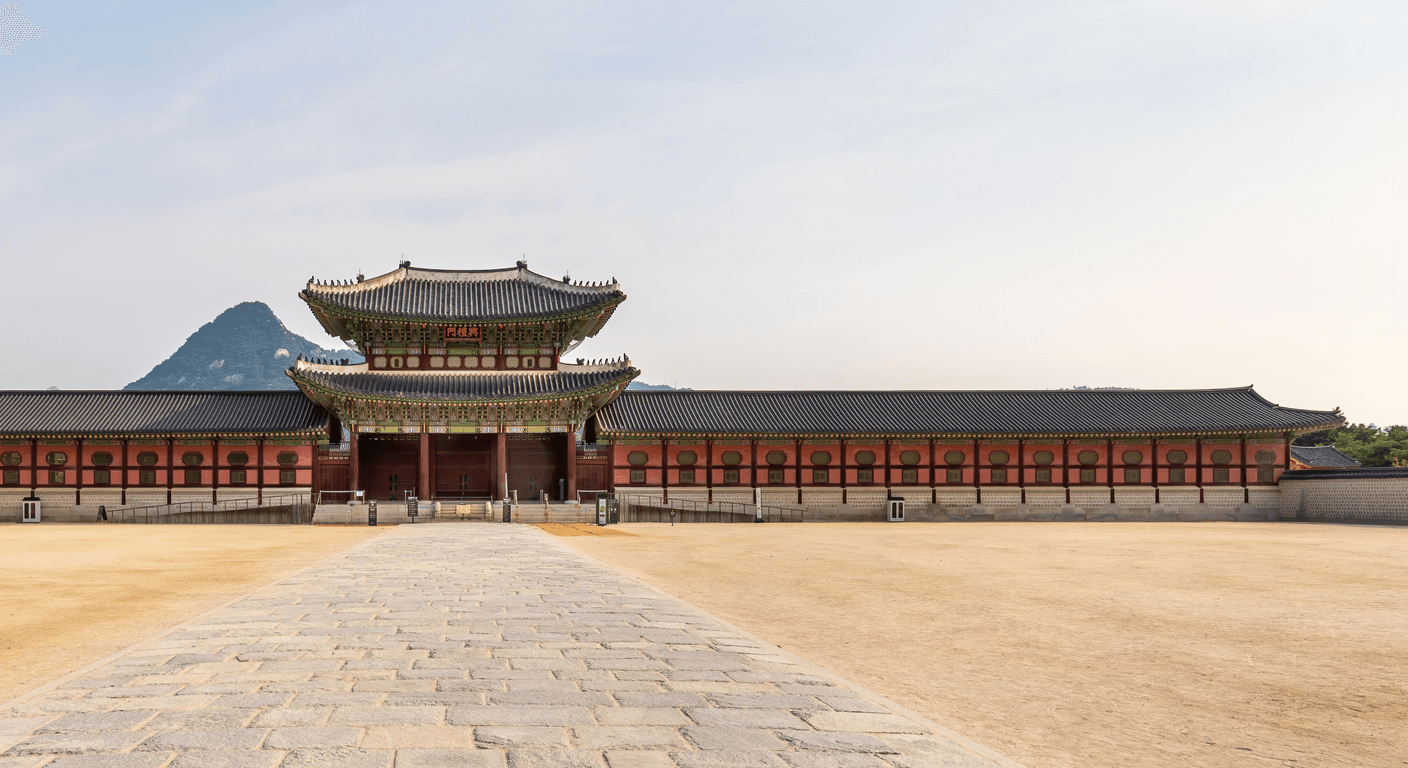
Culturally, Japan offers a density of temples, shrines, gardens, and preserved historic districts that is hard to match anywhere in the world. Kyoto alone could absorb two weeks without repetition. South Korea's cultural landmarks are equally significant — the five grand palaces of Seoul, the ancient capital of Gyeongju, the Buddhist temples of the southern mountains — but the country also wears its modernity more visibly. Seoul is a genuinely dynamic city in a way that Kyoto, for all its beauty, is not. Which of those qualities appeals to you is a matter of personal temperament.
How easy are both countries for older travellers?
Both Japan and South Korea have public transport systems that are among the best in the world for reliability, cleanliness, and frequency. Tokyo's subway is famously complex, but the signage is in English and Roman script throughout, and IC cards (like Suica or Pasmo) remove most of the friction of buying individual tickets. Seoul's Metro is similarly well-signed in English, and the T-money card works across buses and trains. Neither system requires any particular tech savvy — they work like Melbourne's Myki, and the cards are purchased at station kiosks.
Accessibility for travellers with mobility considerations is worth thinking through honestly. Both countries have invested heavily in lifts and step-free access at major stations, but older urban infrastructure — particularly in Kyoto's traditional neighbourhoods and Seoul's hillside districts like Bukchon — involves uneven paving, stairs, and inclines. Comfortable, supportive footwear is not optional. Pacing matters: trying to cover too much ground in a day is the most common mistake in either country, and it is one that catches up with travellers in their 60s more than it did at 40.
Language is a real consideration. In Japan, English is spoken at most tourist-facing businesses, hotels, and transport hubs, but outside those contexts it can be limited. In South Korea, English signage is broadly excellent in Seoul, and younger Koreans often have functional English. In rural areas of both countries, translation apps (Google Translate's camera function is particularly useful for menus) are a practical tool worth having on your phone before you leave home. Neither country presents a serious barrier to independent travel for a prepared older traveller.
Seasons, standout experiences, and the case for each country
Both Japan and South Korea share two of the most celebrated seasonal events in Asia: cherry blossom season in late March to early April, and autumn foliage in November. Both are genuinely worth travelling for, and both attract large crowds — particularly cherry blossom season in Japan, which is one of the busiest travel periods in the region. If crowds are a concern, shoulder season travel in May or October offers much of the natural beauty with considerably fewer people.
Japan's standout experiences for older travellers tend to cluster around sensory immersion and ritual. Staying in a ryokan — a traditional inn with tatami rooms, yukata robes, and multi-course kaiseki meals — is a distinctive experience that most travellers remember for years. Soaking in an onsen (hot spring bath) is deeply restorative after days of walking, though travellers should be aware that most traditional onsen require full undress and do not permit swimwear; some facilities have private baths available. The Shinkansen network makes moving between Tokyo, Kyoto, Hiroshima, and Osaka smooth and time-efficient in a way that changes the whole logic of a Japan itinerary.
South Korea's standout experiences are different in character. A jjimjilbang — a public bathhouse and sauna complex — is the Korean equivalent of the onsen experience, more social and less formal, and most welcome mixed-gender common areas with full coverage required. The DMZ tour from Seoul, which takes visitors to the heavily fortified border between North and South Korea, is a sobering and genuinely thought-provoking experience that puts the modern history of the peninsula into sharp relief. Seoul's night markets, the templestay programmes at Buddhist monasteries, and the ancient streetscapes of Jeonju's hanok village round out a country that offers far more than its capital.
Can you visit Japan and South Korea in one trip — and should you?
The flight between Tokyo and Seoul takes under two and a half hours, and between Osaka and Seoul under two hours. Budget carriers including Jeju Air and Peach Aviation operate the route at prices that can be genuinely low, though baggage fees and booking conditions vary — check current options on the airlines' own sites and confirm what is included. The short crossing makes a combined itinerary entirely feasible for a three-week trip: a week to ten days in Japan, a short flight, and a week in South Korea, or the reverse.
Whether you should do both depends on your group's appetite for complexity and pace. Two countries in three weeks is manageable if you keep the itinerary light within each destination — two or three cities in Japan, Seoul plus one regional excursion in Korea — and resist the temptation to fill every day. For a group of women in their 60s who travel well together and have some Asia experience, a combined trip is a genuinely rewarding option. For first-time Asia travellers, one country done well is almost always more satisfying than two countries done at a sprint.
If the combination appeals, consider the direction of travel. Many travellers find it useful to begin in Japan — which has a slightly higher learning curve for independent navigation — and end in Seoul, which tends to feel more immediately legible. Incheon Airport is an excellent exit point, with long connection times manageable thanks to the airport's extensive facilities. Always confirm current entry requirements for both countries before booking; visit smartraveller.gov.au for up-to-date Australian Government travel advice.
Quick planning guide
| Ideal pace | Slow and unhurried — two or three cities per country, with rest days built in |
|---|---|
| Best months | May or October for fewer crowds; late March–April and November for cherry blossom and autumn foliage (busier) |
| Suggested stay | One to three weeks — a week to ten days per country, or both combined |
| Mobility level | Moderate — excellent public transport but stairs and uneven paving in older districts like Kyoto and Bukchon |
| Cost level | Mid-range overall; South Korea generally more affordable than Japan on the ground |
| Comfort level | High — reliable trains, English signage, safe cities, and convenience-store food options |
| Best for | Over-50 Australians wanting cultural depth and ritual (Japan) or energy and value (South Korea) |
| Main planning consideration | Pace the itinerary to avoid overexertion, wear supportive footwear, and confirm current fares and entry requirements via smartraveller.gov.au |
Key takeaways
- South Korea is generally cheaper on the ground than Japan, making it the stronger choice for budget-conscious travellers — but both countries are accessible on a mid-range budget.
- Both Japan and South Korea have world-class public transport with English signage, making independent travel realistic for older Australians without specialist knowledge.
- Japan suits travellers seeking cultural depth, historic immersion, and a first major Asia experience; South Korea suits those wanting energy, value, and something beyond the familiar.
- Cherry blossom season (late March to early April) and autumn foliage (November) are spectacular in both countries but also the most crowded periods — shoulder seasons offer a quieter alternative.
- A combined Japan-South Korea trip is feasible in three weeks given the short flight between Tokyo or Osaka and Seoul, but only makes sense if the pace is kept genuinely relaxed.
- Always check current entry requirements and travel advice for both Japan and South Korea at smartraveller.gov.au before booking, as conditions can change.
Recommended partners and links
Indicative prices only — always confirm with the operator before booking.
Frequently asked questions
Is Japan or South Korea cheaper for Australian travellers?
South Korea is generally the more affordable destination on the ground. Meals, accommodation, and public transport in Seoul and other Korean cities tend to cost less than comparable options in Tokyo or Kyoto. The yen's relative weakness in recent years has made Japan more accessible than its expensive reputation suggests, but South Korea still holds the edge on everyday costs. Both countries are manageable on a mid-range budget; South Korea simply stretches that budget further. All cost comparisons are indicative — confirm current exchange rates and prices before planning your budget.
Which country is easier for older travellers to get around independently?
Both Japan and South Korea are genuinely well-suited to independent older travellers. Both have clean, safe, reliable metro systems with clear English signage and easy-to-use prepaid transit cards. South Korea's Seoul Metro is slightly more straightforward to navigate than Tokyo's network, which is larger and more complex, though Tokyo is well-signed throughout. Language is manageable in both countries at tourist-facing businesses and transport hubs. The main practical challenge in both is physical: uneven paving and stairs in older neighbourhoods mean comfortable footwear and a realistic daily pace matter more than navigation skills.
Can you visit both Japan and South Korea in one trip?
Yes. The flight between Tokyo or Osaka and Seoul takes under two and a half hours, and budget carriers operate the route at relatively low fares. A three-week combined itinerary — roughly ten days in Japan and ten days in South Korea, with travel days — is realistic if you keep each leg focused on a manageable number of destinations. For first-time Asia travellers, doing one country thoroughly is usually more rewarding than rushing through two. For experienced travellers or those returning to the region, the combination works well and adds genuine contrast.
What are the best times of year to visit Japan or South Korea?
Both countries are at their most celebrated during cherry blossom season (late March to early April) and autumn foliage season (October to November). Both periods are also among the busiest and most expensive for travel. Spring and autumn shoulder periods — mid-April to May, and early October — offer similar scenery with fewer crowds. Summer (June to August) is hot and humid in both countries, with Japan's rainy season in June a factor. Winter travel is cold but rewarding, particularly in Japan where snow-covered temples and winter onsen are a draw.
Do Australian travellers need a visa for Japan or South Korea?
As of 2025, Australian passport holders do not require a pre-arranged tourist visa for either Japan or South Korea for short stays, but entry conditions can change and specific requirements apply. Always check the current position at smartraveller.gov.au before booking, and verify directly with the relevant embassy or consulate. Japan has introduced a tourist tax and, at various points, visitor registration requirements — confirm what applies at the time of your travel.