Karumba, at the mouth of the Norman River on the Gulf of Carpentaria, is the only Queensland coastal town where the sun sets over open sea. Best visited May to September, a few days allow time for the nightly sunset ritual, fresh Gulf prawns and barramundi, and the flat, easy-access Barramundi Discovery Centre. There's no commercial flight into town; visitors fly to Cairns or Mount Isa and drive in via Normanton. Mobility is easy.
Why Karumba Is Unlike Anywhere Else on the Queensland Coast
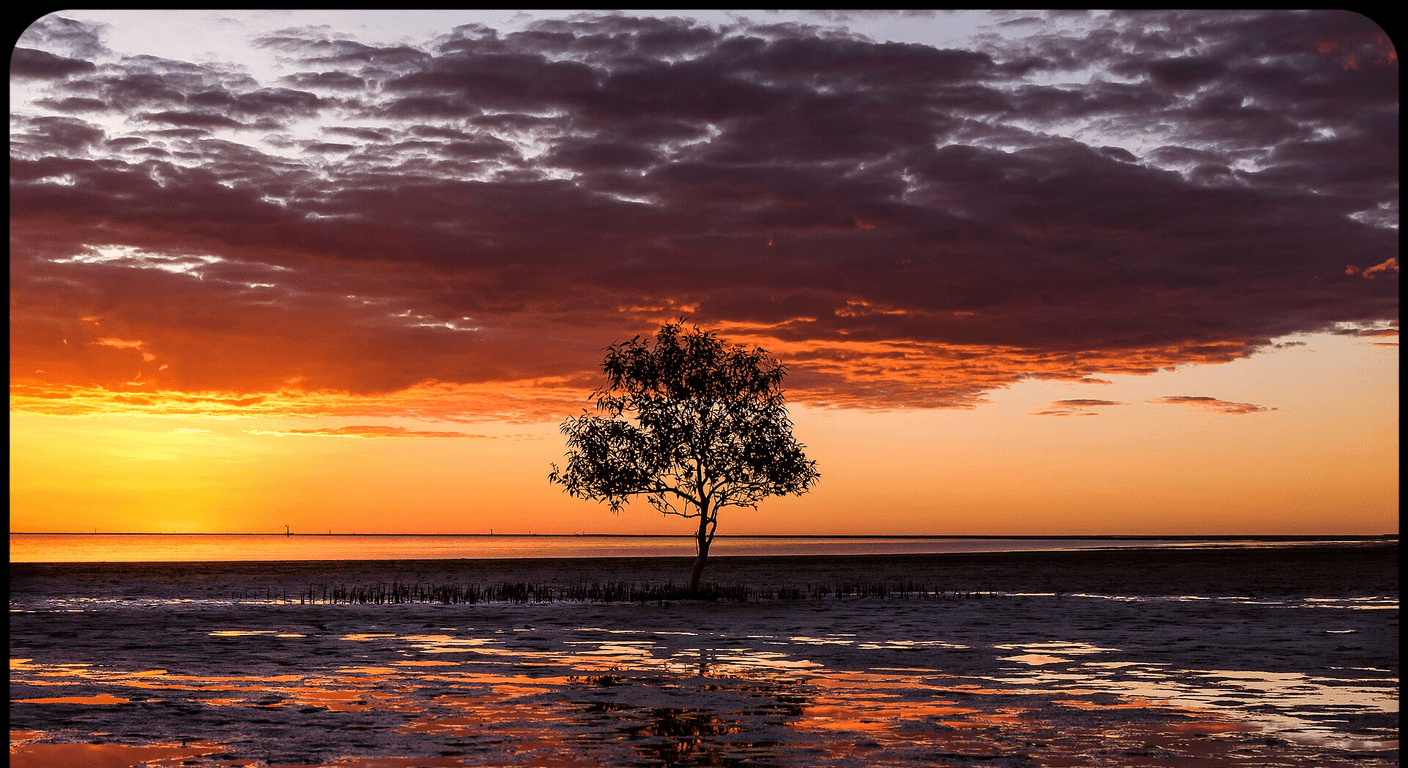
Queensland's coastline faces east. Every sunrise is a coastal event; every sunset disappears over land. Karumba is the exception — a small fishing town at the top of the Gulf of Carpentaria where the western horizon is open water all the way to the Northern Territory. The sun sets over the sea here, and that single geographic fact has given the town an identity that no marketing campaign could manufacture.
It is not a polished destination. The main street is functional rather than pretty. The Gulf is shallow, tidal, and the colour of milky tea for much of the dry season — not the Whitsundays. What Karumba offers instead is atmosphere: the smell of brine and diesel, pelicans on the boat ramp, prawn trawlers heading out at dusk, and a sky that turns colours you will not see anywhere further south. For a traveller who has done the east-coast circuit a few times and wants something that feels genuinely different, that is worth a good deal.
The town divides loosely into Karumba township — where the Norman River meets the Gulf and the commercial fishing fleet operates — and Karumba Point, a couple of kilometres around the shore, where the tavern, a caravan park, and a handful of holiday units face the open Gulf. Sunset-watching happens at the Point. Everything else happens in between.
Getting There from Victoria: The Honest Journey
Karumba is roughly 2,200 kilometres from Melbourne by road, and there is no commercial air service into the town itself. The most practical approach from Victoria is to fly to Cairns or Mount Isa, hire a car, and drive in. From Cairns the drive runs around 760 kilometres via the Atherton Tablelands and Undara, taking most travellers two days at a sensible pace. From Mount Isa it is around 650 kilometres via Cloncurry and Normanton — also two days if you stop in Normanton overnight, which is worth doing regardless.
Normanton is the last proper town before Karumba and the regional hub for the Gulf Savannah. The sealed road between Normanton and Karumba is around 70 kilometres of dead-flat Gulf country — pandanus, termite mounds, the occasional brolga — and takes under an hour. It is one of the easier final approaches to a remote Queensland destination, which suits a solo driver who has already logged a few hundred kilometres that day.
Long-distance coach services operate into Normanton from Mount Isa via Greyhound Australia (confirm current routes and schedules at greyhound.com.au), though onward transport to Karumba requires a hire car or a pre-arranged transfer. Many grey nomads drive from Victoria or New South Wales in their own vehicles, typically over a week or more. If that is your plan, the Gulf Developmental Road from Cloncurry to Normanton is sealed and manageable, but check road conditions through Queensland's official 511 road information service before departure — the wet season can leave damage that persists into May.
When to Go — and When to Stay Away
The dry season runs May to September. Temperatures are warm rather than brutal — days in the high twenties, nights cool enough for a light layer. Humidity is low, the sky is clear, and the sunsets are at their most reliable and vivid. This is when Karumba is at its best, and also when it is at its most crowded, by local standards. By June and July the caravan parks are full and the tavern lawns are lively with grey nomads who have driven up from the south.
The wet season — October through to April — is a different matter. Humidity climbs, afternoon storms are routine, and roads in the broader Gulf Savannah region can become impassable. Karumba itself stays open, but a number of tourist operations reduce hours or close entirely. For a Victorian traveller making a long drive, arriving to find limited services and uncomfortable heat is a real risk. May is a good compromise: the wet has cleared, the roads are in reasonable shape, and the peak crowds are still a few weeks away.
Barramundi season is another consideration. Barra fishing in Queensland's Gulf waters is subject to a closed season typically running from November through January — confirm current dates with the Queensland Department of Agriculture and Fisheries (daf.qld.gov.au) before building a fishing trip around the calendar. Prawn trawling operates largely independently of tourist seasons, but fresh local prawns are most reliably available from the wharf and local seafood outlets when the trawlers are active, generally through the dry season months.
The Sunset Ritual — and How It Actually Works
The Karumba Point Sunset Tavern is the centre of evening life, and its broad lawn facing the Gulf is where the daily gathering happens. People arrive from around 5 pm, claim a spot on the grass, order a drink from the bar, and wait. There is no countdown clock and no announcement. The sun simply moves toward the water and eventually drops below it, and for a few minutes the sky does something worth watching. Then everyone goes inside for dinner.
It sounds simple, and it is — which is partly the point. The ritual works because it is unhurried and unselfconscious. Nobody is trying to sell you anything while the sun goes down. The tavern serves barramundi and prawns alongside the usual pub menu, and the seafood is local and fresh when the fleet is running. A meal here on a clear dry-season evening, with the Gulf turning copper and the pelicans doing their final circuits overhead, is the kind of experience that stays with you without needing to be dramatised.
Go on a weeknight if you can. The weekend crowd is noticeably larger. Solo travellers tend to find the tavern lawn one of those rare public spaces where sitting alone with a cold drink and a view feels entirely natural rather than conspicuous — there is a communal ease to the place that the Gulf setting seems to produce.
The Les Wilson Barramundi Discovery Centre
On the edge of Karumba township, the Les Wilson Barramundi Discovery Centre is a working barramundi research and aquaculture facility that opens to visitors during the dry season. The centre runs guided tours explaining the barra's remarkable biology — it is one of the few fish species that changes sex during its lifetime, beginning as males and transitioning to females as they age. That detail alone tends to produce a pause in the tour group.
Feeding sessions are a practical highlight: the tanks hold fish at various life stages, and watching a large barramundi take a feed with some enthusiasm is more engaging than it sounds. Entry is modest — around $10 to $15 as an indicative figure, though confirm current pricing and tour times directly with the centre before visiting, as hours vary through the season. The facility is flat, shaded in parts, and manageable for most mobility levels. It is a genuine working operation rather than a theme park, which gives it a credibility that polished tourist attractions sometimes lack.
The centre also provides useful context for the fishing culture that defines Karumba. Understanding something of the fish's biology and the aquaculture industry before you eat barramundi at the tavern that evening gives the meal an extra layer. It is the kind of stop that rewards curiosity without demanding much physical effort — well suited to a mid-morning visit before the heat builds.
Eating Well in Karumba: Prawns, Barra, and Managing Expectations
Karumba's seafood credentials are real. The Gulf prawn fleet operates out of the town, and during the active season fresh prawns are available directly from the wharf or from local seafood outlets at prices that reflect proximity to the source rather than a Sydney fish market. A kilo of fresh Gulf prawns eaten on a camp chair near the boat ramp, with a cold drink and no particular agenda, is one of the better arguments for making the drive.
Barramundi — wild-caught from Gulf waters — appears on most menus in town, though the quality varies with the season and whether the fish is fresh or frozen. Ask. The Karumba Point Sunset Tavern is the most reliable dinner option, with a menu that covers the basics competently and the seafood dishes that actually warrant ordering. There is also a small caravan park camp kitchen culture among the grey nomad crowd, with travellers sharing cooking duties and local catches — a social dimension that solo travellers sometimes find unexpectedly welcoming.
Karumba is not a place for culinary variety. There are no cafes doing elaborate breakfasts and no restaurants beyond the tavern. The local general store covers provisions, and there is fuel available in town — confirm opening hours and fuel availability before arrival, particularly if you are arriving late in the day. Stock up in Normanton if you have specific dietary requirements or preferences.
Accommodation: Book Well Ahead or Risk Missing Out
The accommodation options in Karumba are limited and they fill quickly in peak season. The main choices are the caravan parks at Karumba Point (which accommodate both vans and offer powered sites and cabins), a small number of holiday units, and the Karumba Lodge Hotel in the township. The caravan parks suit grey nomads travelling in their own vehicles or with a campervan; the holiday units work well for a solo traveller who has flown in and hired a car.
June and July bookings at the better-positioned properties — particularly anything with a Gulf view at the Point — should be made months in advance. This is not an exaggeration. Properties that might have availability in April can be fully booked by February for peak dry-season dates. Check directly with properties via the Gulf Savannah Tourism website or by calling ahead, as not all smaller operators maintain current online booking systems.
A practical approach for a Victorian traveller: book your first and last nights in Normanton as well, giving yourself flexibility on the drive in and out without the pressure of arriving at Karumba against a tight timeline. Normanton has a genuine historic character of its own — the Normanton Railway Station and the famous Purple Pub are worth a couple of hours — so the stop is not a sacrifice.
Quick planning guide
| Ideal pace | Slow-paced — built around a daily sunset ritual, not sightseeing |
|---|---|
| Best months | May to September (dry season); May offers the best balance of good roads and fewer crowds |
| Suggested stay | A few days, plus overnight stops in Normanton on the way in and out |
| Mobility level | Easy — flat terrain, flat-access attractions like the Barramundi Discovery Centre |
| Cost level | Budget-friendly to moderate — modest attraction fees, wharf-priced seafood, caravan park rates |
| Comfort level | Basic and functional rather than polished — limited dining and shopping options |
| Best for | Grey nomads, fishing enthusiasts, and travellers seeking a remote, unpolished Gulf experience |
| Main planning consideration | Book accommodation months ahead for June–July, and time travel around the dry season for road access and open services |
Key takeaways
- Karumba is the only town on mainland Queensland's coast where the sun sets over open sea — a geographic fact, not a marketing claim.
- The dry season window of May to September is the only practical time for most travellers; the wet season brings heat, humidity, and potential road closures.
- Accommodation is genuinely limited and books out months ahead for June and July — early planning is essential, not optional.
- The Les Wilson Barramundi Discovery Centre offers affordable, flat-access guided tours explaining barra biology and aquaculture; confirm hours before visiting.
- Fresh Gulf prawns and barramundi are the local food story, best experienced from the wharf or at the Karumba Point Sunset Tavern during the active trawling season.
- From Victoria, the most practical approach is fly to Cairns or Mount Isa, then drive in via Normanton — allow two driving days from either starting point.
Recommended partners and links
Indicative prices only — always confirm with the operator before booking.
Frequently asked questions
Is Karumba really the only Queensland town where the sun sets over the sea?
Yes. Queensland's coastline faces east, so sunsets disappear over land almost everywhere on the state's coast. Karumba sits on the Gulf of Carpentaria facing west, making it the one town on mainland Queensland where the sun sets directly over open water. This is a genuine geographic distinction, not a tourism tagline.
How do you get to Karumba from Melbourne?
There is no commercial air service to Karumba. From Melbourne, fly to Cairns (then drive roughly 760 kilometres via the Atherton Tablelands, allowing two days) or to Mount Isa (then drive around 650 kilometres via Cloncurry and Normanton, also two days). The final 70-kilometre stretch from Normanton to Karumba is sealed and straightforward. Many grey nomads drive from Victoria over a week or more in their own vehicles.
When is the best time to visit Karumba?
May to September is the dry season and the only comfortable time for most visitors. Temperatures are warm but manageable, skies are clear, and roads are reliably open. June and July are peak months for grey nomads. Avoid November to April — the wet season brings extreme humidity, afternoon storms, and potential road closures across the broader Gulf Savannah region.
What is the Les Wilson Barramundi Discovery Centre and is it worth visiting?
The Les Wilson Barramundi Discovery Centre is a working barramundi aquaculture and research facility near Karumba township that opens to visitors in the dry season. Guided tours cover the barra's biology — including the fact that the fish change sex from male to female as they age — and feeding sessions are included. Entry is around $10 to $15 (indicative; confirm current pricing and tour times directly with the centre). The site is flat and accessible for most mobility levels.
Is Karumba suitable for solo travellers over 60?
Karumba suits solo travellers well. The town is flat, distances are short, and the Karumba Point Sunset Tavern lawn has a relaxed, communal atmosphere where sitting alone with a drink and a view feels natural rather than awkward. Grey nomad culture in the caravan parks also tends to be sociable. The main practical requirements are advance accommodation booking, a hire car or your own vehicle, and timing the visit within the dry season window.