Kiama, about 120 kilometres south of Sydney on the Illawarra Line, is best visited midweek between April and October, when the swell is active but crowds are light. A full day suits it well: the train arrives almost at the blowhole, and the flat, paved precinct links easily to the lighthouse, harbour and Black Beach foreshore. Mobility is easy throughout, with no hills or steps, and access is straightforward via a direct 90-minute train from Central Station using a Gold Opal card.
Why Kiama Works So Well as a Day Trip
There are coastal towns that reward effort and coastal towns that reward good timing. Kiama is the latter. The train pulls in, the sea is already audible, and the blowhole point is a five-minute level walk from the platform. No hire car, no navigation, no hills to negotiate before you've had your morning coffee. For a solo traveller who wants the freedom of an unscheduled day without any logistical weight, that simplicity is the whole point.
The Illawarra Line runs direct from Sydney's Central Station to Kiama, with stops at Wollongong and several smaller stations along the way. The journey takes around 90 minutes on an express service — longer on stopping trains, so it's worth checking the timetable at transportnsw.info before you leave. A Gold Opal card covers the fare, and the daily cap means you won't pay more than a set amount regardless of how many times you tap on and off. Confirm the current cap with Transport for NSW, as fares are reviewed periodically.
Midweek is the sensible choice. Kiama's blowhole is well-known, and on a sunny Saturday in the school holidays the viewing platform gets genuinely crowded. A Tuesday or Wednesday in May or June offers mild air, a manageable swell, and the pleasure of having the lighthouse precinct largely to yourself — with the bonus that café tables are easier to come by at lunch.
The Blowhole: What to Expect (and What to Watch For)
Kiama's blowhole is a natural fissure in the volcanic headland through which the Southern Ocean periodically forces itself upward with considerable enthusiasm. The height and drama of each eruption depends on the swell — on a calm day it's a satisfying gurgle; after a decent storm it can shoot water fifteen to twenty metres into the air. Neither outcome disappoints. The not-knowing is part of the appeal.
The viewing area is paved and fenced, with solid railings along the most exposed sections. There are benches positioned at a sensible distance from the opening, which is useful if you want to sit and wait for a good blow rather than hovering at the railing. The path from the station to the point is flat and well-maintained — no steps, no significant gradient. Comfortable walking shoes are sufficient; nothing technical is required.
The spray, however, is real. On a swell-driven day, the mist carries well beyond the immediate area, and the rocks adjacent to the fissure are genuinely slippery. The fencing exists for a reason. Staying behind it isn't timidity — it's straightforward sense, and the view is identical from the safe side. Wet-weather gear or a light packable jacket is worth having in the bag, particularly in the cooler months when the swell is often at its most active.
The Lighthouse Precinct: A Proper Stroll with a View
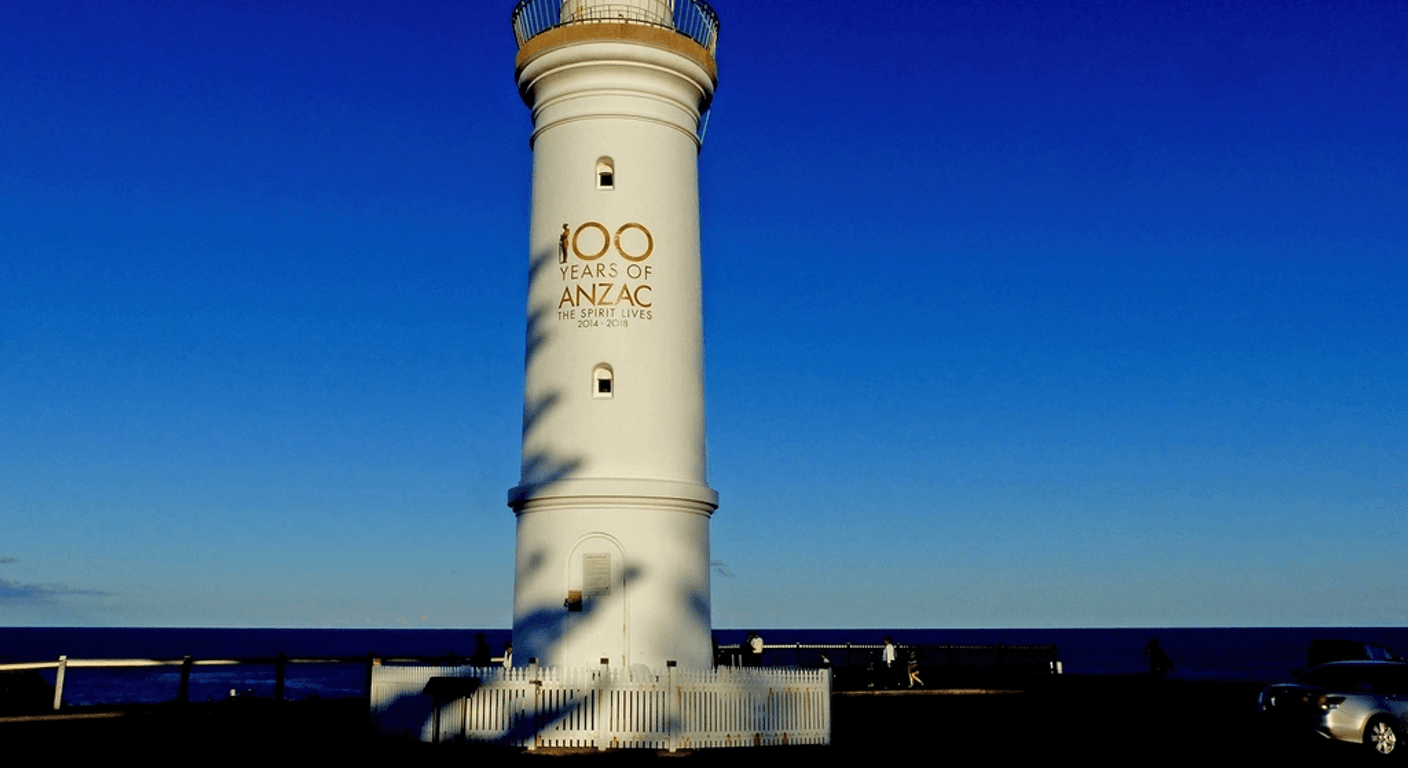
Kiama Lighthouse sits on the same headland as the blowhole, a short walk south along the paved path. Built in 1887, it's one of the smaller lighthouses on the NSW coast — compact and whitewashed, with a red lantern room that photographs well in morning light. The grounds are open and free to enter, and the path around the headland offers uninterrupted views south toward Gerroa and north back to the harbour.
The circuit from the blowhole to the lighthouse and back to the harbour takes around 30 to 40 minutes at an easy pace, with several natural stopping points — a low stone wall here, a bench there — that make it easy to pause and watch the sea without feeling like you're holding anyone up. Solo travellers often find this kind of unhurried, self-directed walking particularly satisfying. There's no commentary, no group pace to match, just the cliff path and the Tasman.
The lighthouse itself is not open for internal tours on a standard day-trip basis, but the exterior and grounds are the attraction. For heritage context, the National Trust of Australia (NSW) and Destination Kiama's website carry background on the site's history — worth a read the night before to give the visit a little more texture.
The Little Blowhole: Worth the Detour?
About two kilometres south of the main blowhole, at Tingira Crescent near Marsden Head, is the Little Blowhole — smaller, less frequented, and arguably more atmospheric precisely because it draws fewer visitors. The viewing area here is less developed: a short gravel path, a low fence, and the sound of the sea doing its work in a narrower fissure. It lacks the infrastructure of the main site, which means it also lacks the crowds.
Getting there on foot from the main precinct is a stretch — the terrain between the two sites isn't a straightforward coastal walk. The practical options are a short taxi or rideshare from the town centre, or a car if you've driven down. For travellers who've come by train and prefer to keep things walkable, the Little Blowhole is a pleasant addition if transport is easy to arrange, but it's not essential to the day. The main precinct is the anchor; this is a bonus for those with curiosity and a way to get there.
If the Little Blowhole is on the list, confirm conditions locally — the path surface and fencing arrangements can change after wet weather, and the Kiama Visitor Centre (kiama.com.au) is the best source of current information.
Harbourfront Lunch: Where to Sit and What to Order
Kiama's harbour is a short walk from the blowhole point, curving around a small working boat basin with a flat foreshore path and several cafés and fish-and-chip shops facing the water. It's the kind of harbour that doesn't try too hard — fishing boats, a few pleasure craft, pelicans with opinions. Lunch here is a straightforward pleasure.
The fish and chips are the obvious order, and they're reliably good. Several operators along the harbourfront serve fresh flathead, bream or whiting depending on the day's catch, with chips and a wedge of lemon. Prices are indicative around $18–$25 for a serve — confirm current pricing on site. There are also café options for those who'd prefer a sit-down meal with coffee, and a number of spots with covered outdoor seating that handle the sea breeze without drama.
Seating along the foreshore is generally accessible, with flat paving and no significant steps between the café precinct and the water's edge. There are public toilets near the harbour, which is a practical detail worth knowing before committing to a long lunch. The foreshore is also the starting point for a flat loop around Black Beach — a low-key addition to the afternoon if energy allows.
Black Beach Foreshore: The Afternoon Option
Black Beach sits just south of the harbour, named for its dark volcanic sand rather than any dramatic characteristic. It's a calm, sheltered bay — not a swimming beach in the serious sense, but a pleasant place to walk the foreshore path after lunch. The path is flat, the views back toward the lighthouse headland are good, and the pace is entirely your own.
The foreshore loop from the harbour to Black Beach and back takes around 20 to 30 minutes at a gentle stroll. There's shade from the Norfolk Island pines that line part of the route, and benches at intervals. It's the kind of walk that feels like a natural end to the day — digesting lunch, watching the light change on the headland, deciding whether to catch the 3pm or 4pm train home.
For travellers who find the afternoon energy dipping, the harbour precinct itself has enough to occupy an hour without any walking at all. A second coffee, a browse of the small shops along Collins Street, or simply sitting at the water's edge watching the pelicans — none of these require justification.
Practical Notes for the Day
The train from Central Station to Kiama runs regularly throughout the day, with the journey taking roughly 90 minutes on a direct service. Check the timetable at transportnsw.info and note the return times before you leave — the last direct service to Sydney departs Kiama in the early evening, though stopping services run later. A Gold Opal card is the easiest way to pay; if you don't have one, single-use Opal cards are available at station machines.
Kiama station is unstaffed at certain times of day, but the platform is accessible and the walk to the blowhole precinct is well-signposted. The town is compact enough to navigate without a map, though Destination Kiama's website has a downloadable walking guide that's useful for first-time visitors. There's no need to book anything in advance for a standard day trip — the town handles independent visitors comfortably.
Travel insurance is straightforward for a domestic day trip of this kind, but travellers with pre-existing conditions should confirm their policy covers any medical needs, particularly if travelling solo. The Kiama District Hospital is located in the town if needed. On the practical side: sunscreen, a hat, a light layer for sea spray, and a small bag for the day. That's the full kit required.
Quick planning guide
| Ideal pace | Slow and self-directed, with natural stopping points |
|---|---|
| Best months | April to October, midweek for best conditions and fewer crowds |
| Suggested stay | One full day trip from Sydney |
| Mobility level | Easy — flat, paved paths with no steps or significant gradients |
| Cost level | Budget-friendly — free attractions, train fare and a modest lunch |
| Comfort level | High — benches, shade, public toilets and accessible seating along the foreshore |
| Best for | Solo travellers wanting an unhurried coastal day without logistical hassle |
| Main planning consideration | Travel midweek to avoid blowhole crowds and confirm return train times before leaving |
Key takeaways
- Kiama's blowhole precinct is a flat, paved, five-minute walk from the railway station — one of the most accessible coastal spectacles in NSW.
- Direct trains run from Sydney's Central Station to Kiama in around 90 minutes on the Illawarra Line; a Gold Opal card covers the fare.
- Midweek visits in April to October offer the best combination of mild weather, active swell and manageable crowds.
- The blowhole viewing area is fenced and benched — the spray is real, and the railings are there for a reason.
- A harbourfront lunch of fresh local fish and chips, followed by the flat Black Beach foreshore loop, rounds out the day comfortably.
- Entry to the blowhole point and lighthouse grounds is free; the main cost of the day is the train fare and lunch.
Recommended partners and links
Indicative prices only — always confirm with the operator before booking.
Frequently asked questions
How do you get from Sydney to Kiama by train?
Take the Illawarra Line from Sydney's Central Station to Kiama. Direct services take around 90 minutes; stopping trains take longer. A Gold Opal card covers the fare under the daily cap system. Check current timetables and fares at transportnsw.info before travelling.
Is the Kiama blowhole accessible for people with limited mobility?
Yes. The path from Kiama station to the blowhole point is flat and paved, with no significant steps or gradients. The viewing area has solid railings and benches. It's one of the more accessible natural attractions on the NSW coast.
What is the best time of year to visit Kiama for the blowhole?
April to October generally offers the best combination of mild weather and active swell, which makes the blowhole more dramatic. The blowhole performs best after rain or during a solid southern swell — calm summer days can produce a quieter show.
Is there a cost to see the Kiama blowhole and lighthouse?
Entry to the blowhole viewing area and lighthouse grounds is free. The main expenses for the day are the train fare (Gold Opal card, confirm current fares) and food and drink at the harbour.
Is Kiama a good day trip for solo female travellers?
Kiama is well-suited to solo travellers. The town is compact and easy to navigate on foot, the main precinct is busy enough to feel safe without being overwhelming, and the day's itinerary — blowhole, lighthouse, harbour lunch, foreshore walk — is entirely self-directed with no need to book tours or rely on others.