The Lightning Ridge Bore Baths are a free, 24-hour open-air pool of naturally warm artesian mineral water from the Great Artesian Basin, with no booking or entry fee. May to August is the ideal window, avoiding the shadeless baths' summer heat above 40 degrees. A two-night stay suits most visitors. Mobility access is easy, with level concrete surrounds and gradual steps, though reaching Lightning Ridge from regional Victoria requires a full day's drive or a train-and-coach connection via Dubbo.
What exactly are the Lightning Ridge Bore Baths?
The Bore Baths sit on the edge of Lightning Ridge township in far northwest New South Wales, drawing water from the Great Artesian Basin — one of the largest and deepest freshwater aquifer systems on Earth, underlying roughly 22 percent of the Australian continent. The water emerges naturally warm, around 40 degrees Celsius, mineral-rich and slightly sulphurous in that way that tells you it's the real thing rather than a heated municipal pool.
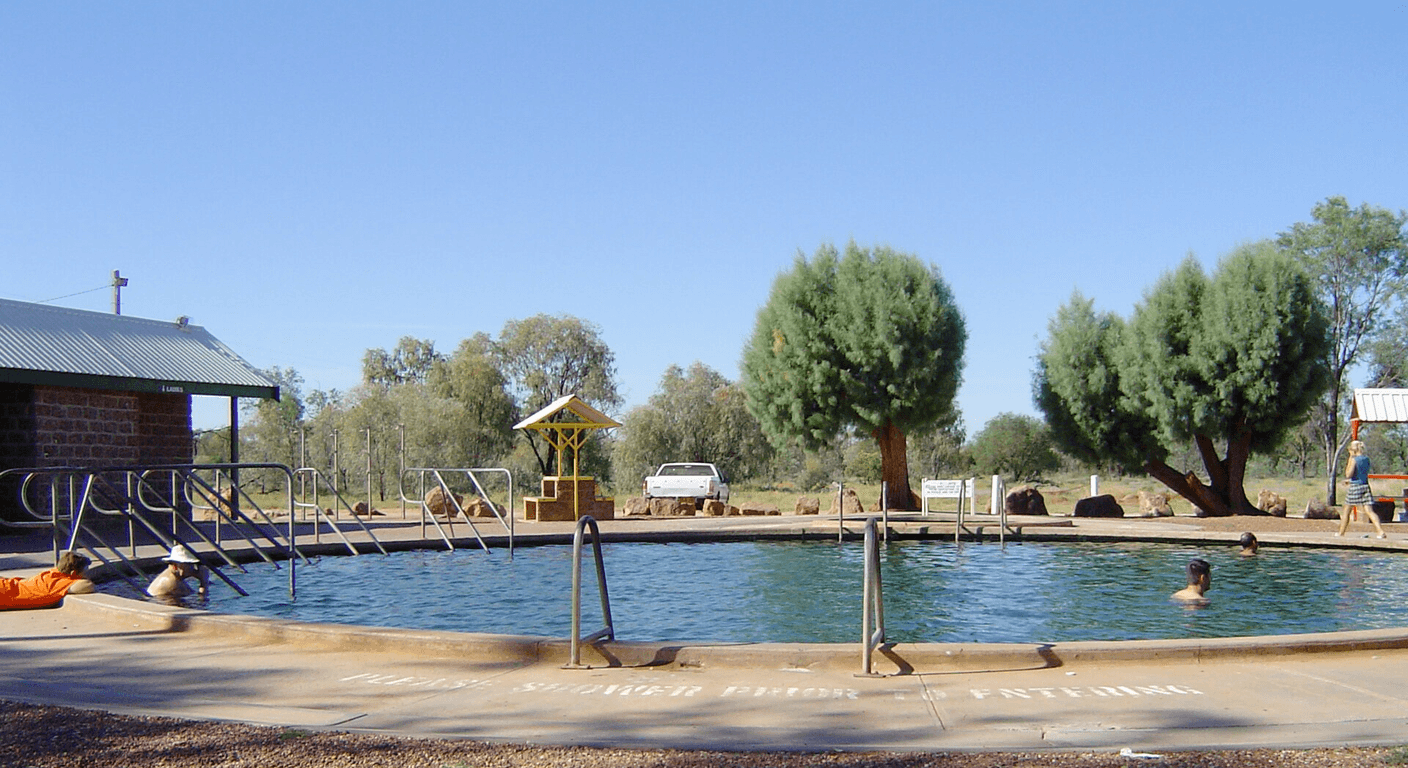
The facility is simple by design. A concrete pool, open to the sky, with level surrounds and steps descending into the water. There are change rooms nearby. No entry fee, no booking, no attendant checking you in. The baths are open at all hours, which means you can slide in at dusk when the outback light turns everything amber, or arrive at midnight when the stars over Lightning Ridge are doing things city skies simply cannot manage.
For travellers used to wellness retreats with timber decking and ambient playlists, the baths will require a small recalibration. The appeal here is authenticity — opal miners have been using these baths to unknot tired bodies for over a century, and that continuity is part of what you're soaking in.
Why the timing of your visit matters enormously
Lightning Ridge sits in the far northwest of New South Wales, and summer is not gentle here. Temperatures regularly exceed 40 degrees Celsius from December through February, sometimes climbing well beyond that. Soaking in 40-degree water when the air is also 40-plus degrees is less restorative than it sounds. The baths themselves have no shade — none. No trees, no pergola, no awning. That's an honest fact worth sitting with before you plan.
The shoulder and cooler months — May through August — transform the experience entirely. Days hover in the high teens to low twenties, nights drop sharply, and the warm water becomes genuinely therapeutic rather than merely warm. September and October are transitional and can work well if you're flexible. March and April can still carry the tail of summer heat, so err toward the later months if you have any choice.
For travellers coming from regional Victoria, the season reversal is less dramatic than an overseas trip, but the inland heat amplification is real. Pack sun protection regardless of when you travel — the UV index in outback NSW is unforgiving even on mild winter days.
Getting there from regional Victoria: the honest picture
Lightning Ridge is remote. That's not a complaint — it's the point. From regional Victoria, the most practical route is typically a drive north through Shepparton or Bendigo, connecting to the Newell Highway and heading through Dubbo, then northwest on the Castlereagh Highway through Walgett. Total driving time from, say, Bendigo is roughly eight to nine hours without stops — which means this is a trip that deserves at least one overnight break en route, in Dubbo or Narromine.
Those who prefer not to drive the whole distance can take NSW TrainLink services to Dubbo, then connect via coach. Greyhound Australia operates routes to Lightning Ridge via Dubbo, though services are infrequent — confirm timetables directly with the operator before building your itinerary around them. A hire car from Dubbo is another sensible option for those who'd rather share the long stretch of driving.
The road into Lightning Ridge is sealed and generally in good condition, but it's a long, flat, hypnotic drive through largely featureless scrub. Audio books, podcasts, and a strict stop-every-two-hours discipline are not optional. Fuel up whenever you can — service stations thin out considerably once you leave Walgett.
What to bring, and what the baths don't provide
The baths are free, which also means they're self-sufficient. Bring your own towel — there are no hire facilities. Bring water to drink, sunscreen, and a hat for before and after your soak. Thongs or sandals with grip are sensible for the concrete surrounds, which can be slick near the water's edge. A light cover-up for the walk back to your car is worth having, particularly in winter when the temperature differential between the warm water and the cool air can feel significant once you step out.
The change rooms provide basic privacy, nothing more. If you're travelling with a group of friends, the open-air, communal nature of the baths is part of the social texture — strangers chat, locals share opinions on opal prices and the weather, and the conversation tends to be the easy, unhurried kind that outback towns seem to produce naturally.
There's no café, no kiosk, no coffee van. The nearest amenities are back in town. Plan accordingly, and don't arrive hungry or under-hydrated.
Making the most of Lightning Ridge beyond the baths
The baths are the draw, but Lightning Ridge rewards a slower look. The town is the only place in the world where the prized black opal is found in significant quantity, and the mining culture shapes everything — the landscape, the people, the economy, and the slightly frontier-town atmosphere that still hangs over the main street. The Lightning Ridge Visitor Information Centre can point you toward legitimate fossicking areas where you can try your luck with a small rake, no experience required.
The Chambers of the Black Hand is worth an hour of your time — an underground gallery carved into sandstone by a single local artist over decades, its walls covered in bas-relief figures and scenes. It's eccentric, quiet, and unlike anything else in regional New South Wales. Entry costs are modest; confirm current pricing at the visitor centre.
The town also has a small but genuine arts community, partly drawn by the landscape and partly by the mining heritage. The local market, held on Saturday mornings in the cooler months, is where opal dealers, fossickers and artists converge — a good place to buy something real rather than something manufactured for tourists.
Accessibility and practical comfort for over-50 travellers
The baths themselves are genuinely accessible for most mobility levels. The concrete surrounds are flat and level, and the steps into the pool are gradual enough for most people to manage without difficulty. The water depth is not extreme, and the temperature is consistent. There's no current, no surf, no unpredictability — just warm, still mineral water.
The main physical consideration is the walk from the car park, which is short, and the general outback environment, which demands sun awareness at all times. For anyone with cardiovascular conditions or sensitivities to heat, the combination of warm water and hot ambient air in summer warrants a conversation with your GP before travelling. In the cooler months, this concern is largely moot.
Lightning Ridge's accommodation ranges from caravan parks with powered sites — popular with grey nomads who travel with their own setup — to motel-style rooms and a small selection of self-contained cottages. Booking ahead is advisable in the May-to-August window, when the town sees its highest visitor numbers. The Lightning Ridge Visitor Information Centre website lists current options.
Travel insurance and health planning for the outback
For any traveller with pre-existing health conditions, comprehensive travel insurance is worth considering even for domestic trips to remote areas. Lightning Ridge's nearest hospital is in Walgett, roughly 74 kilometres away; more complex medical care would mean a transfer to Dubbo or beyond. That's the honest geography, and it's the same geography that makes the place feel genuinely apart from the rest of the country.
The Royal Flying Doctor Service covers the region, which provides some reassurance — but the standard advice applies: carry any prescription medications in sufficient supply, know the location of the nearest medical facility, and don't push through fatigue on the long drives. The outback rewards the traveller who paces themselves.
Quick planning guide
| Ideal pace | Slow-paced and unhurried |
|---|---|
| Best months | May to August (cooler months) |
| Suggested stay | 2 nights |
| Mobility level | Easy — flat concrete surrounds and gradual steps |
| Cost level | Free to soak; budget-friendly overall |
| Comfort level | Basic and self-sufficient — no shade, no kiosk, bring your own supplies |
| Best for | Grey nomads, wellness seekers, and those interested in opal-mining culture |
| Main planning consideration | Remote access — allow a full day's drive with an overnight stop, or confirm train/coach connections via Dubbo in advance |
Key takeaways
- The Lightning Ridge Bore Baths are free, open 24 hours, and draw naturally warm artesian water from the Great Artesian Basin — no booking, no fee, no frills.
- May to August is the sensible window for a visit; summer temperatures regularly exceed 40 degrees and there is no shade at the baths.
- From regional Victoria, expect a full day's drive — plan at least one overnight stop en route and confirm coach or train connections before committing.
- The baths are Easy for mobility — level concrete surrounds and gradual steps, suitable for most fitness levels in cooler months.
- Lightning Ridge rewards a 2-night stay: opal fossicking, the Chambers of the Black Hand, and the Saturday market all add genuine texture to the trip.
- Bring your own towel, drinking water, sunscreen and thongs — the baths provide the water, nothing else.
Recommended partners and links
Indicative prices only — always confirm with the operator before booking.
Frequently asked questions
Are the Lightning Ridge Bore Baths really free?
Yes. The Bore Baths in Lightning Ridge are free to use and open at all hours, every day of the year. There is no entry fee, no booking system and no attendant. Visitors simply arrive, use the change rooms, and soak.
What temperature is the water at the Lightning Ridge Bore Baths?
The artesian water emerges at around 40 degrees Celsius. The temperature is consistent year-round, as it reflects the underground source rather than the air temperature. In summer, when air temperatures can also reach 40 degrees or above, the contrast between water and air is minimal; in winter, the warm water feels genuinely therapeutic against cool outback air.
How do you get to Lightning Ridge from Victoria without driving the whole way?
NSW TrainLink services connect Melbourne and regional Victoria to Dubbo, from where Greyhound Australia operates coach services to Lightning Ridge. Services are infrequent, so check current timetables directly with both operators before planning your itinerary. Hiring a car in Dubbo for the remaining 370-kilometre drive is a practical alternative.
Is Lightning Ridge suitable for travellers with limited mobility?
The Bore Baths themselves are well suited to most mobility levels — the surrounds are flat concrete and the pool has gradual steps. The main challenges are the long drive to reach Lightning Ridge and the general outback environment, which requires sun awareness and self-sufficiency. The town's caravan parks and motels are generally accessible, but it's worth confirming specific room or site requirements when booking.
What else is there to do in Lightning Ridge beyond the baths?
Lightning Ridge is the world's primary source of black opal, and the mining culture underpins most of the town's visitor experiences. Legitimate fossicking areas, the underground Chambers of the Black Hand gallery, a Saturday morning market in cooler months, and opal dealers' showrooms all offer a full day or two of genuine local experience. The Lightning Ridge Visitor Information Centre is the best starting point for current opening hours and entry costs.