London suits a slow week rather than a sprint: one neighbourhood or timed-entry sight each morning, parks and matinees in the afternoon. May or September mornings suit St James's Park well, and seven days covers Westminster, the Tower, the South Bank and a free-museum day. Mobility is moderate — many Tube stations lack lifts, though the step-free Elizabeth line runs Heathrow to central London. Australians face a genuine 22-plus-hour journey, best broken with a stopover night in Dubai, Singapore or Doha.
The journey: surviving 22-plus hours with your energy intact
From Melbourne or Sydney, London is roughly 22 to 24 hours in the air depending on routing — and that's before you count airport time at both ends. Non-stop flights don't exist from Australia to London; every route involves at least one connection, typically through Dubai, Singapore, Doha or Abu Dhabi. That's not a hardship so much as an opportunity. A planned stopover of one night — even just 18 hours — in one of those hubs breaks the journey into two manageable flights, lets you sleep horizontally, and means you arrive in London tired but functional rather than wrecked.
Booking a stopover hotel near the hub airport doesn't have to be expensive; many mid-range airport hotels in Dubai and Singapore offer day-use or overnight rates that are worth every cent. Pack compression socks, a good neck pillow and any prescription medications in your carry-on — not your checked luggage. If you have pre-existing health conditions, confirm your travel insurance covers them before you book anything. Policies vary considerably, and the Australian Government's Smartraveller website has useful guidance on what to look for.
Jet lag between eastern Australia and London is a genuine 9-to-10-hour time difference. The single most effective strategy is to build a recovery day into your London itinerary — Day 1 is not Westminster Abbey, it's a slow walk around your neighbourhood, a long lunch, and an early night. Travellers who resist this tend to spend Day 3 fighting exhaustion. Those who accept it tend to genuinely enjoy the rest of the week.
Entry requirements and travel admin: what to sort before you leave
Since 2025, Australian passport holders need a UK Electronic Travel Authorisation (ETA) before arriving in Britain. This is a simple online application — not a visa — but it must be done in advance. Check the current process and fee at the official UK government website (gov.uk) and cross-reference with Smartraveller (smartraveller.gov.au/destinations/europe/united-kingdom), which carries the most current Australian-specific advice. Entry rules and fees can change; don't rely on what a friend did two years ago.
Travel insurance is non-negotiable for a trip of this length and cost. For travellers over 50 — particularly those with managed health conditions — read the policy fine print on pre-existing conditions, medical evacuation and trip cancellation. The Australian Government's Moneysmart website has a useful comparison guide. Keep a digital and physical copy of your policy number and the 24-hour emergency line. Your GP is also worth a visit before departure: an updated letter summarising current medications and conditions can be invaluable if you need medical attention abroad.
Getting around London: the Tube, step-free stations and contactless travel
The London Underground is older than Federation and it shows — many stations have no lifts, and the gap between train and platform can be startling. That said, Transport for London (TfL) has been steadily upgrading the network, and step-free access is now available at a meaningful number of stations. Before you travel, download TfL's step-free Tube map from tfl.gov.uk, which shows exactly which stations have lift access from street to platform to train. The Elizabeth line — London's newest — is fully step-free and connects Heathrow directly to Paddington and central London. It's a genuinely good first experience of the city.
Forget the Oyster card queue at the airport. Any Australian contactless debit or credit card (Visa or Mastercard) works directly on the Tube, buses and Overground — tap in, tap out, and TfL automatically caps your daily fare. Just make sure your bank doesn't charge foreign transaction fees on contactless payments, or use a travel card that waives them. The daily cap for Zones 1–2 is roughly £8–£9 (confirm current pricing at tfl.gov.uk); for a week of central London travel, this is very manageable.
London's black cabs are wheelchair accessible and driven by people who've passed the Knowledge — a reassuring combination. Uber operates widely. For a couple travelling together, a cab from the hotel to a dinner reservation is sometimes simply the right call, especially in the evening. The bus network is excellent and fully contactless, and the upper deck of a red double-decker along the Embankment is one of the better free views in the city.
The morning anchor: one great sight, done properly
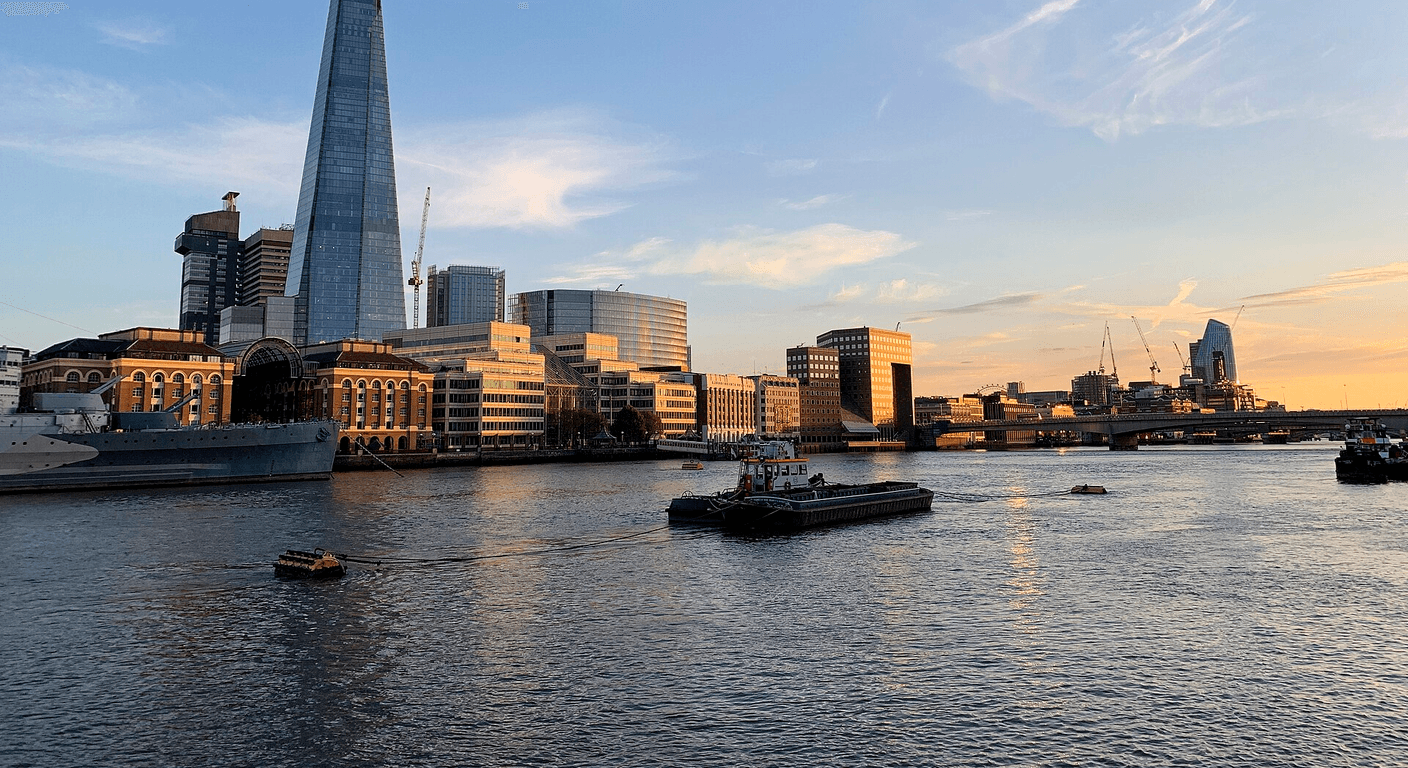
The rhythm that works is this: one serious, timed-entry sight in the morning — arrive at opening, spend two to three hours, and leave before the school groups hit full stride around 11am. The Tower of London is the most rewarding of the big-ticket experiences. Book timed entry in advance through the Historic Royal Palaces website (hrp.org.uk); indicative adult admission is around £30–£35, confirm current pricing. The Crown Jewels alone justify the fare, and the Yeoman Warder tours are unexpectedly entertaining. Allow a full morning and then walk across Tower Bridge for lunch on the South Bank.
Westminster is a half-day in itself — Westminster Abbey requires a timed ticket (around £27–£30, indicative, check westminster-abbey.org), while the Houses of Parliament offer free external viewing and occasional tours. The area around Parliament Square and St James's Park is eminently walkable and largely flat. St James's Park on a fine May or September morning, with the pelicans on the lake and Buckingham Palace at one end, is one of those London experiences that costs nothing and stays with you.
The British Museum on Great Russell Street is free, and its permanent collection — the Rosetta Stone, the Elgin Marbles, the Lewis Chessmen — is among the great concentrations of human history anywhere in the world. Arrive at 10am on a weekday, go straight to the galleries that matter most to you, and leave by noon. Trying to do more is how good museums become exhausting. For Indian Australian travellers, the South Asia galleries hold particular resonance; the museum's collection of Mughal manuscripts and South Asian sculpture is substantial and thoughtfully presented.
Afternoons: parks, long lunches and the West End matinee
London's parks are its underrated gift to the visitor. Hyde Park, Regent's Park, Green Park and Hampstead Heath are all free, all large enough to genuinely escape the city noise, and all well supplied with cafés and benches. A post-lunch hour in Hyde Park — perhaps walking to the Serpentine Gallery, which is also free — is not wasted time. It's the kind of afternoon that makes you feel like a Londoner rather than a tourist ticking boxes.
Theatre matinees are one of the great pleasures of a London week, and they suit the over-50 traveller particularly well — a 2:30pm curtain means you're out by 5pm with the whole evening ahead. The West End runs matinees most days, typically Wednesday, Thursday and Saturday, though schedules vary by production. The TKTS booth on Leicester Square (officiallondontheatre.com/tkts) sells same-day and advance tickets at genuine discounts — often 25 to 50 per cent off face value. Arrive when it opens, check the board, and choose. Booking directly through official theatre websites also avoids the ticket-agency markups that can be considerable.
For lunch, London's neighbourhood food scene rewards curiosity. Borough Market near London Bridge (boroughmarket.org.uk) is extraordinary for grazing — cheese, charcuterie, fresh bread, hot food from a dozen cuisines — and it's a short walk from the Tate Modern. Covent Garden has excellent options around the piazza. And for Indian Australian travellers, Southall in West London — easily reached on the Elizabeth line — is a proper, unhurried experience of subcontinental food and culture that no amount of tourist-area curry houses can replicate.
Free London: balancing the budget without missing anything
London is expensive. A mid-range hotel in a central postcode runs roughly £180–£280 per night (indicative; confirm current rates). A sit-down dinner for two with wine will likely cost £80–£120. The Tube, taxis and the occasional matinee ticket add up quickly. The counterbalance is that London's greatest institutions — the British Museum, the National Gallery, the Victoria and Albert Museum, the Natural History Museum, Tate Modern and Tate Britain, the National Portrait Gallery — are all free to enter. This is not a small thing. A week in London can include some of the finest art, natural history and design collections in the world at no cost.
The National Gallery on Trafalgar Square (nationalgallery.org.uk) holds works by Vermeer, Caravaggio, Turner and Van Gogh in a building you can walk into without booking or paying. The Victoria and Albert Museum in South Kensington (vam.ac.uk) is an entire day in itself — textiles, jewellery, fashion, architecture, South Asian and Islamic art — and it's free. These are not consolation prizes for travellers watching their budget; they are, by any measure, among the best museums in the world.
A useful rule of thumb: allocate budget for two or three paid experiences — the Tower, a West End show, perhaps a Thames river cruise — and let the free institutions fill the rest of the cultural programme. Afternoon tea at a proper hotel (Fortnum and Mason, Claridge's, The Savoy) is an indicative £60–£80 per person, which is a lot for sandwiches and scones, but as a one-off London ritual for a significant birthday or anniversary, it's understood.
A suggested seven-day rhythm (not a minute-by-minute schedule)
Day 1 is recovery: arrive, check in, walk the immediate neighbourhood, find a good café, sleep by 9pm local time. Day 2: Westminster morning — the Abbey, St James's Park, a long lunch near Victoria. Day 3: Tower of London at opening, walk Tower Bridge, South Bank afternoon, Borough Market. Day 4: British Museum morning, Covent Garden afternoon, evening matinee. Day 5: Victoria and Albert Museum (free, unhurried), South Kensington cafés, early dinner. Day 6: National Gallery morning (free), Trafalgar Square, afternoon at leisure — perhaps a river cruise or Hampstead Heath. Day 7: neighbourhood of choice — Notting Hill, Southall, Greenwich — then a final dinner somewhere that's been on the list all week.
This is a framework, not a contract. Some days the weather will be grey and a matinee will feel more appealing than a park walk. Some mornings the jet lag will surface again around Day 4 — it often does — and a slow breakfast followed by nothing more ambitious than the hotel neighbourhood is the correct response. London is not going anywhere. The Tower has stood for nearly a thousand years; it will wait until after a second coffee.
Quick planning guide
| Ideal pace | Slow-paced — one major sight per morning, free afternoons |
|---|---|
| Best months | May or September favoured for park weather; no single best season insisted on |
| Suggested stay | One week |
| Mobility level | Moderate — good walking, but plan around Tube stations without lifts using TfL's step-free map |
| Cost level | Premium overall, offset by free major museums |
| Comfort level | Comfortable, mid-range hotels and contactless transport |
| Best for | Over-50 first-timers and returners wanting depth over ticking off sights |
| Main planning consideration | Break the 22-plus-hour flight with a stopover night and sort the UK ETA before departure |
Key takeaways
- A planned stopover night in Dubai, Singapore or Doha turns a punishing 22-plus-hour journey into two manageable flights.
- Australian contactless bank cards work directly on the London Tube, bus and Overground — no Oyster card required.
- TfL's step-free Tube map (tfl.gov.uk) is essential planning for travellers who want to avoid stairs; the Elizabeth line from Heathrow is fully step-free.
- London's greatest museums — the British Museum, National Gallery, V&A, Tate Modern — are free, which meaningfully offsets the city's high hotel and dining costs.
- Australian visitors need a UK Electronic Travel Authorisation (ETA) before arrival; check current requirements at smartraveller.gov.au before booking.
- West End matinees (typically 2:30pm) suit the over-50 pace perfectly — out by 5pm, evening still ahead, tickets often discounted through the TKTS booth on Leicester Square.
Recommended partners and links
Indicative prices only — always confirm with the operator before booking.
Frequently asked questions
Do Australian travellers need a visa to visit the UK in 2026?
Australian passport holders do not need a traditional visa but are required to obtain a UK Electronic Travel Authorisation (ETA) before travelling. This is an online application, not a stamp in your passport. Check the current application process, fee and processing time at gov.uk and confirm advice for Australians at smartraveller.gov.au, as requirements can change.
What is the best way for over-50 Australians to get from Heathrow to central London?
The Elizabeth line is the most practical option — it's fully step-free, runs directly from Heathrow to Paddington and central London stations in around 20–40 minutes, and accepts contactless payment. A taxi or private transfer is comfortable but considerably more expensive, particularly in traffic. Confirm current fares at tfl.gov.uk.
How do I find step-free Tube stations in London?
Transport for London publishes a dedicated step-free Tube map on its website at tfl.gov.uk, showing which stations have lift access from street level to platform and train. The Elizabeth line and Jubilee line have the highest proportion of step-free stations. Planning your daily routes around step-free interchanges makes a significant difference to comfort.
Where is the best place to buy discounted West End theatre tickets in London?
The official TKTS booth, operated by the Society of London Theatre, is located on Leicester Square and sells same-day and advance tickets at genuine discounts — often 25 to 50 per cent below face value. The official website is officiallondontheatre.com/tkts. Buying directly through a theatre's own website also avoids third-party agency fees. Matinees are typically available Wednesday, Thursday and Saturday afternoons.
How should Australian travellers manage jet lag on a London trip?
The time difference between eastern Australia and London is approximately 9 to 10 hours. The most effective approach is to plan a stopover night at a hub city (Dubai, Singapore or Doha) on the way over, and to treat the first full day in London as a genuine rest day — short walks, no major sights, an early local bedtime. Travellers who skip the recovery day typically hit a wall around Day 3 or 4.
- Transport for London — step-free access and contactless travel
- Historic Royal Palaces — Tower of London
- Westminster Abbey — visitor information and tickets
- British Museum — free entry, visitor information
- National Gallery London — free entry
- Victoria and Albert Museum — free entry
- Tate Modern — free entry
- TKTS London — official discounted theatre tickets
- Borough Market — London food market
- Smartraveller — Australian Government advice for the United Kingdom