Two months in Vietnam suits Australian travellers over 60 who prefer depth over dashing. The sweet spot is October to April, avoiding the worst heat and the northern rainy season. Base yourself in Hội An or Đà Nẵng for central Vietnam's balance of comfort and culture, or Hà Nội for the north. Budget around AUD $3,500–$5,500 per month for a couple in a serviced apartment. Mobility rating: Moderate. Flights from Melbourne or Sydney take roughly 9–10 hours with one stopover.
Why Two Months Works Better Than Two Weeks
The first week in Vietnam is largely spent adjusting. The traffic noise that sounds alarming on day one becomes background by day four. The heat is a physical negotiation. The food — genuinely wonderful, but different in ways that take the gut time to accept — needs a fortnight to feel normal rather than adventurous. Two weeks means you leave just as you've settled. Two months means you actually live there, briefly.
For Australians over 60 who've spent decades working to deadlines, the slow-travel model asks something unfamiliar: permission to stay put. Basing in one city for three to five weeks, then moving once — say, from Hội An to Hà Nội — is a fundamentally different trip to the twelve-city, fourteen-night dash that tour operators tend to sell. You learn which café has the best cà phê trứng (egg coffee, Hà Nội's particular obsession), which pharmacy the expats trust, and which days the local market runs. That knowledge has real value when you're 70 and managing a health condition, or simply prefer not to repack every three days.
Monthly apartment rates make this financially sensible in a way that nightly hotel rates don't. A decent serviced apartment in Hội An that costs around AUD $80–$110 a night on booking platforms can often be negotiated to AUD $1,200–$1,800 per month for a direct, longer-term stay — sometimes significantly less in the dry-season shoulder period. Always negotiate directly with the property after an initial platform booking, and confirm what's included (electricity, which can be metered separately, is a real variable in hot months).
Visa Realities: What Australians Actually Need to Know
As of 2026, Australian passport holders can apply for a Vietnamese e-visa valid for up to 90 days, single or multiple entry. The application is done online through the official Vietnamese government portal. That 90-day window is genuinely useful for a two-month stay — it gives you a buffer without needing an extension. But visa rules change. Confirm current conditions at smartraveller.gov.au and the Vietnamese Embassy in Australia (vnembassy-australia.mofa.gov.vn) before you book anything else. Do not rely on forum posts from 2024.
If you want to stay beyond 90 days — or if the rules shift before your trip — a visa extension is possible but involves bureaucratic patience. Some long-stay travellers do a brief border run to Cambodia or Laos to reset; others extend in-country through a registered agent (costs vary, roughly AUD $60–$120 in agent fees, confirm locally). Neither is difficult, but neither is instantaneous. Build the complexity into your planning rather than your last week.
There is no specific senior visa category for Vietnam. Your Australian Seniors Card carries no weight at Vietnamese immigration — though it may occasionally get you a concession at a museum or heritage site, and it's always worth asking. Travel with your passport, e-visa confirmation, and a printed copy of your accommodation address for the first night, which you'll need on the arrival card.
What Does Two Months Actually Cost? A Realistic AUD Budget
Budget planning for a long Vietnam stay works best when you break it into four categories: accommodation, food, local transport, and health cover. Flights and travel insurance sit outside the monthly figure and should be calculated separately. For a couple in a decent serviced one-bedroom apartment in Hội An or Đà Nẵng, indicative monthly costs run roughly: accommodation AUD $1,200–$2,000 (negotiated monthly rate, air-conditioned, with Wi-Fi and basic kitchen); food AUD $600–$1,000 (a mix of local restaurants, market meals, and occasional splurges at mid-range Vietnamese or international restaurants); local transport AUD $100–$250 (Grab taxi app, the odd day tour, a bicycle rental); incidentals AUD $200–$400. Total: roughly AUD $2,100–$3,650 per month for the two of you, in-country. Always confirm current exchange rates — the Australian dollar's performance against the Vietnamese đồng has been variable.
Solo travellers pay more per head for accommodation (a one-bedroom apartment is rarely half the price of the same apartment for two people) and should factor the single supplement reality into their planning. Some long-stay solo travellers opt for a studio apartment rather than a one-bedroom, which can bring the monthly rate down to AUD $700–$1,100 in Hội An. The food and transport costs stay roughly the same whether you're one or two. For a solo traveller, expect AUD $1,500–$2,500 per month in-country, excluding insurance and flights.
Health cover is where Australian long-stay travellers consistently underestimate the cost. Standard Australian travel insurance policies often cap trip length at 45 or 60 days and apply strict pre-existing condition exclusions. A two-month policy with genuine pre-existing condition cover — cardiovascular, diabetes, joint replacements, the things that are simply common at 65-plus — can run AUD $600–$1,800 for the trip, depending on the insurer and your declared conditions. Get quotes from at least three providers, including Cover-More and 1Cover, both of which have long-stay and senior-specific products. Read the Product Disclosure Statement before you sign anything, specifically the 'change in condition' clauses. If your GP adjusts your medication before you leave, that may technically constitute a change that affects your cover — ask the insurer directly, in writing.
Where to Base: The Case for Hội An, Đà Nẵng and Hà Nội
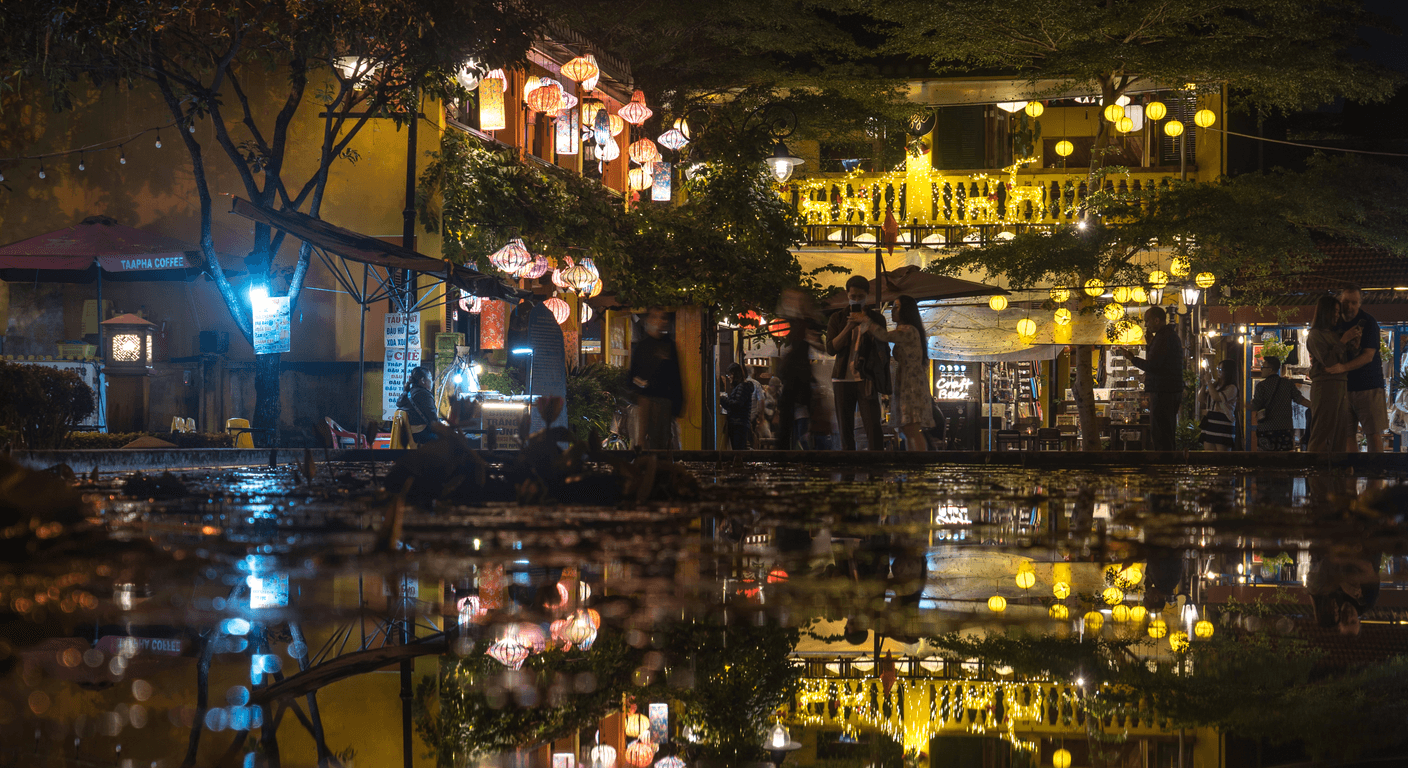
Central Vietnam — specifically the Đà Nẵng and Hội An corridor — is the practical choice for a first long stay. Đà Nẵng has an international airport with direct connections to several Asian hubs (meaning a manageable stopover from Melbourne or Sydney, roughly 9–10 hours total), a modern hospital with international-standard facilities (Đà Nẵng Hospital for the most serious cases, or Family Medical Practice for expat-level GP care), a reliable pharmacy network, and a large enough expat community that English is widely spoken in the service sector. Hội An, 30 kilometres south, offers the romance — the lantern-lit old town, the tailors, the cooking schools — but it's Đà Nẵng you'll want accessible when something goes wrong. Many long-stay couples base in Hội An for the lifestyle and treat Đà Nẵng as their practical city.
Hà Nội suits travellers who want cultural depth and don't mind a more demanding urban environment. The old quarter is extraordinary but physically challenging — narrow pavements, constant motorbike traffic, uneven surfaces, and limited seating for when your knees decide they've had enough. Air quality in Hà Nội is a genuine consideration, particularly November to February when the city sits under a persistent haze. The World Air Quality Index (iqair.com) gives live readings; on bad days, a KN95 mask is simply sensible, not alarmist. The upside: Hà Nội's food scene is arguably Vietnam's finest, the café culture is extraordinary, and the city has a density of history that rewards weeks of exploration. Family Medical Practice has a well-regarded clinic in Hà Nội for expat-level healthcare.
Hồ Chí Minh City (Saigon) is the third option and suits travellers who want a city pulse and excellent international medical facilities. It's louder, faster, and less immediately charming for long-stay visitors than Hội An — but the infrastructure is superb, the food is exceptional, and the surrounding Mekong Delta offers day and overnight trips that don't require constant relocation. For a couple where one person wants convenience and the other wants culture, Hội An for five weeks then Hồ Chí Minh City for three is a logical structure.
Heat, Humidity, Air Quality and the Real Seasonal Picture
Vietnam is a long, thin country and the climate varies dramatically by region and month — this is not a destination where 'go in winter' covers the whole picture. Central Vietnam (Hội An, Đà Nẵng) is at its best October to February: warm but not brutal, relatively dry, and the light is genuinely beautiful. March to May heats up fast; June to September is hot, humid, and brings the risk of typhoons on the coast. The north (Hà Nội) has a genuine winter — December and January can be cool enough for a light jacket, which surprises most Australians — but the haze is at its worst then. The south (Hồ Chí Minh City) is hot year-round with a wet season roughly May to October. For a two-month stay beginning in October or November, central Vietnam is the most comfortable entry point.
Heat management is a daily practice, not a one-off adjustment. Plan the day around it: be outside by 7am, back indoors by 11, rest through the hottest part of the afternoon (this is culturally normal — the Vietnamese do it too), then out again from 4pm. This is not laziness. It's smart physiology for anyone over 60, and it aligns naturally with the country's own rhythm. Air-conditioning in your apartment is non-negotiable for sleep quality; confirm it's in good working order before you commit to a monthly rate. Electricity can be metered separately from rent, and in a hot month, running the air-con at night adds up — ask the landlord for the previous tenant's monthly electricity bill before signing anything.
Pharmacy access is better than many Australians expect. Vietnamese pharmacies (nhà thuốc) are ubiquitous and many common medications — including some that require a prescription in Australia — are available over the counter at very low cost. That said, bring a minimum three-month supply of any regular prescription medication from Australia, along with a letter from your GP listing your conditions and current medications by generic name. Some medications are unavailable or available only in different formulations. Your travel insurer will also want evidence of your medication list. Do not rely on sourcing critical medication in Vietnam unless you've confirmed availability with your GP and a pharmacist before leaving.
What a Settled Day Actually Looks Like: The Shape of Slow Travel
The point of a long stay is that you stop having itinerary days. But the first two weeks often feel like a holiday rather than a life, and it takes conscious effort to shift into the slower gear. A settled day in Hội An might begin around 6:30–7am, when the air is actually pleasant and the market is at its freshest. Walk to the market (15 minutes from most apartments in the An Hội peninsula area), buy fruit, bánh mì if the mood strikes, and be back with coffee by 8am. Morning is for walking, a short bicycle ride, or a cooking class if you've booked one. By 10:30am the heat is building; by 11am you want to be sitting down somewhere with a fan or air-conditioning.
Lunch in Vietnam is a serious institution and usually the main meal. A proper sit-down lunch at a mid-range Vietnamese restaurant — the kind with cloth napkins and a wine list — runs roughly AUD $15–$30 for two, including drinks. A local restaurant serving the same quality of food without the tablecloths: AUD $6–$12 for two. The gap is real and worth knowing. After lunch, the 1–3pm window is the natural rest period. Read, nap, write, video-call family back in Melbourne. The streets genuinely quieten. From 3:30–4pm the city comes back to life and the light turns golden. This is the time for the old town, for the riverside, for the tailors if you're having something made. Dinner by 6:30–7pm, home by 9pm, and the day has been full without being exhausting.
The toilet and seating reality: Hội An's old town footpaths are narrow, uneven, and frequently blocked by parked motorbikes. There are no public toilets in the old town lanes — use the facilities at a café before you walk. Many cafés will let you use theirs if you buy a drink, which at AUD $1–$2 for a Vietnamese iced coffee is not a hardship. Sit-down points are plentiful; the old town is full of cafés with chairs on the street or balconies above. What's genuinely skippable: the boat lantern tours on the Thu Bồn River are beautiful but not essential if the evening is warm and you'd rather sit by the river with a drink. Skip the tour, walk the riverside path instead (flat, well-lit, benches every 50 metres). That's a better evening for many travellers over 60.
Staying Connected, Staying Safe and Staying Sane
A Vietnamese SIM card is the first practical task after clearing customs. Viettel and Vinaphone are the two most reliable networks for coverage outside cities; Mobifone is strong in urban areas. A SIM with 30 days of data (typically 20–30GB) costs around AUD $8–$15 from the airport or any phone shop. For two months, you'll buy two or three of these. It's easier than any roaming arrangement and the data speeds in cities are genuinely good. WhatsApp, Messenger and Zalo (Vietnam's dominant messaging app) are the communication tools you'll actually use. Download Grab before you land — it's the Uber of Southeast Asia, works reliably in all major Vietnamese cities, and removes the negotiation from every taxi ride.
Banking: notify your Australian bank before you leave. Most major Vietnamese ATMs accept Visa and Mastercard; Citibank and HSBC ATMs tend to have lower foreign transaction fees. Carry some cash — smaller restaurants and market stalls are cash-only, and internet outages (occasional) can knock out card terminals. Keep AUD $200–$300 equivalent in đồng at all times. Some Australian banks (check with yours) offer fee-free international withdrawals on specific accounts — this is worth investigating before you leave, as ATM fees across two months add up.
Mental health and social connection are the underrated logistics of a long stay. Two months is long enough to feel genuinely lonely if you haven't thought about it. For couples, the dynamic of spending every hour together is different from home life — some couples find it wonderful, others find that building in separate activities (a solo cooking class, a morning walk alone) maintains the relationship's equilibrium. For solo travellers, the expat café circuit, Facebook groups for long-stay foreigners in Hội An or Hà Nội, and organised activities (yoga classes, day tours) provide the social structure that a hotel's communal spaces might otherwise offer. Vietnam has a large, friendly, and surprisingly well-connected community of long-stay Australian retirees — finding them takes about a week once you know where to look.
Quick planning guide
| Ideal pace | Base in one or two cities for 3–5 weeks each; avoid moving more than once a fortnight |
|---|---|
| Best months | October to April (avoiding peak summer heat and northern rains; Tết in late Jan/early Feb brings closures) |
| Suggested stay | 8–10 weeks minimum to justify monthly apartment rates and to truly settle |
| Mobility level | Moderate — footpaths are uneven, kerbs are high, traffic is constant |
| Cost level | Around AUD $1,800–$2,800/month per couple for accommodation plus food; health cover and insurance add significantly |
| Comfort level | High if you choose serviced apartments in expat-friendly neighbourhoods; lower in old-town laneways |
| Best for | Culturally curious couples and solo travellers over 60 who want immersion, not itineraries |
| Main planning consideration | Travel insurance covering trips longer than 60 days with pre-existing conditions — this is harder to secure than most people realise and should be organised before any other booking |
Key takeaways
- A monthly serviced apartment rate in Hội An can be half the cost of nightly hotel pricing — always negotiate directly for stays of four weeks or more.
- Travel insurance for a two-month trip with pre-existing conditions requires specific long-stay products; standard policies often cap at 45–60 days.
- Bring at least three months of prescription medication from Australia, with a GP letter listing all medications by generic name.
- The Vietnamese e-visa allows up to 90 days for Australian passport holders as of 2026 — confirm current rules at smartraveller.gov.au before booking.
- Air quality in Hà Nội is a genuine consideration November to February; check iqair.com daily and carry a KN95 mask for high-pollution days.
- Solo travellers pay more per head than couples for accommodation but can contain costs with a studio apartment, with indicative monthly totals around AUD $1,500–$2,500 in-country.
Recommended partners and links
Indicative prices only — always confirm with the operator before booking.
Frequently asked questions
How long can Australians stay in Vietnam on a tourist visa?
As of 2026, Australian passport holders can apply for a Vietnamese e-visa valid for up to 90 days, single or multiple entry. Visa rules change — always confirm current conditions at smartraveller.gov.au and the Vietnamese Embassy in Australia before booking. A two-month stay comfortably fits within the 90-day window.
What does two months in Vietnam cost for an Australian couple over 60?
In-country costs for a couple in a serviced one-bedroom apartment in Hội An or Đà Nẵng run roughly AUD $2,100–$3,650 per month, covering accommodation, food, local transport and incidentals. Travel insurance, flights and any pre-departure medical preparation sit outside this figure. Confirm current exchange rates before budgeting.
Is travel insurance for two months in Vietnam difficult to arrange with pre-existing conditions?
Yes, more difficult than most people expect. Standard Australian travel insurance policies often cap trips at 45–60 days and apply strict pre-existing condition exclusions. Specialist long-stay products from providers such as Cover-More and 1Cover do cover longer trips with declared pre-existing conditions, but costs vary significantly. Get at least three quotes, read the PDS carefully, and ask your insurer in writing how a pre-departure medication change affects your cover.
What is the best base in Vietnam for a long stay for travellers over 60?
Hội An paired with nearby Đà Nẵng suits most travellers over 60 for a first long stay. Hội An offers lifestyle and culture; Đà Nẵng provides the international airport, expat-standard medical facilities and a reliable pharmacy network. For those who want a more urban experience, Hà Nội and Hồ Chí Minh City both have strong infrastructure and international healthcare options.
What is the best time of year for a long stay in central Vietnam?
October to February is the most comfortable window for central Vietnam, offering warm but manageable temperatures and relatively dry conditions. March to May heats up significantly; June to September brings humidity, heat and typhoon risk on the coast. A stay beginning in October or November gives two months of the best weather before the shoulder heat of March arrives.